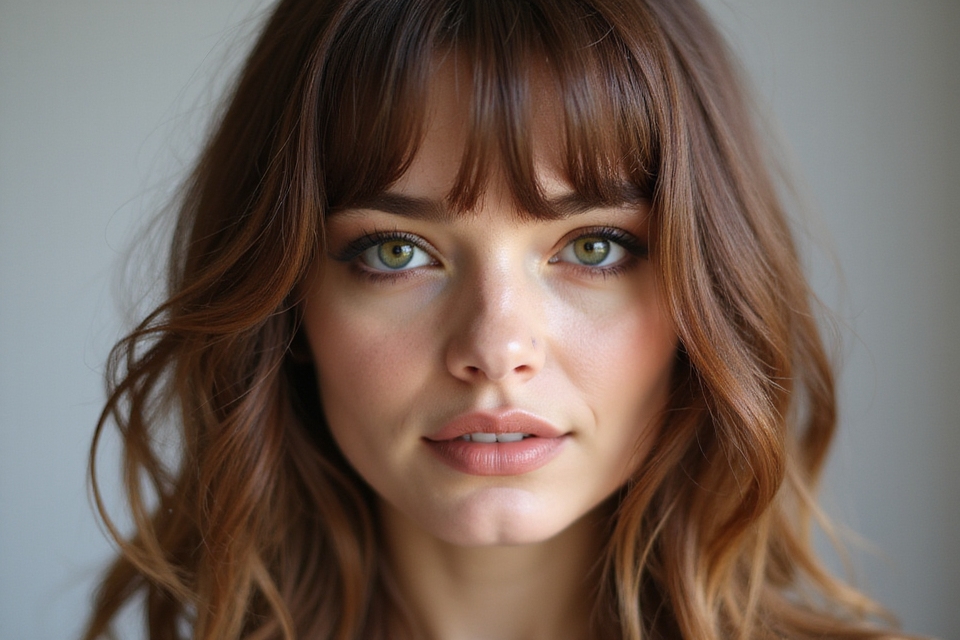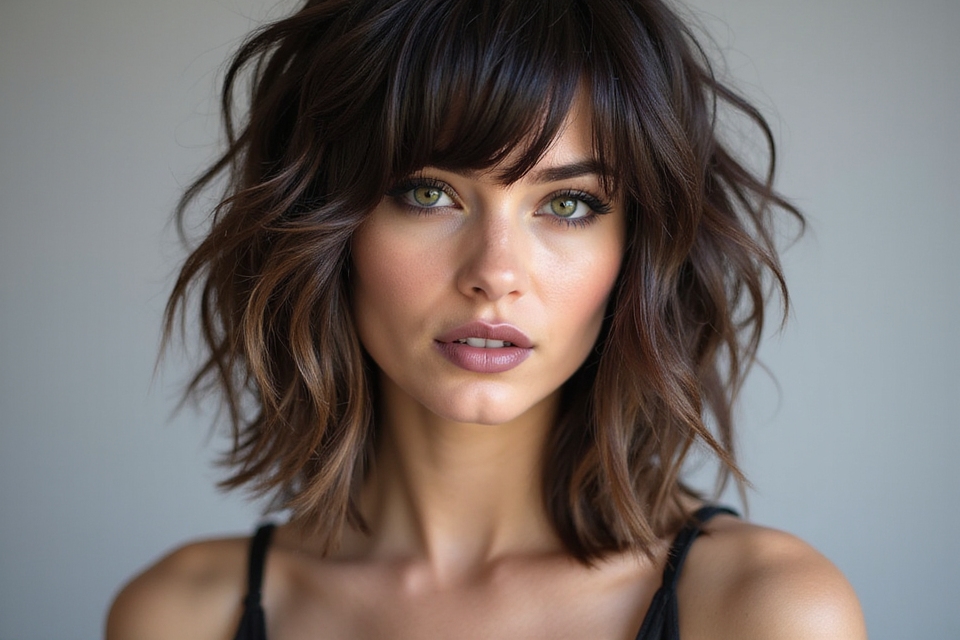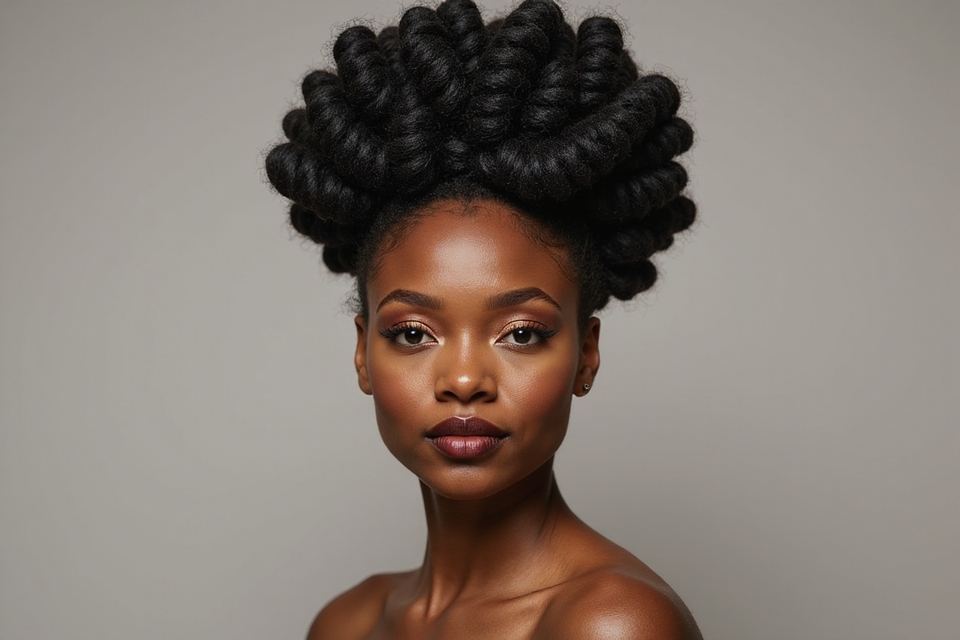

The first time a client asked me to weave thin gold cuffs through her box braids and hand her the biggest hoops in the drawer, I watched her sit up straighter in her seat. That moment is the whole appeal of short braided hairstyles worn with hoops and a slick of gloss.
The braids do the structural work. The hoops frame the face, and the gloss catches the light. Together they turn a protective style into a finished, head-turning look. Here is how to build it, care for it, and make it your own.
The Quick Version
- Short braids cover box braids, cornrows, knotless styles, and twists, all worn around the jaw or shorter.
- Hoops and gloss finish the look; match the metal to your undertone and keep gloss sheer for daytime.
- Protect your edges: braids should never feel painfully tight, since a too-tight set can damage your hairline over time.
- A fresh set lasts four to six weeks with nightly satin protection and a weekly moisturizing routine.
The Braids-and-Hoops Trend
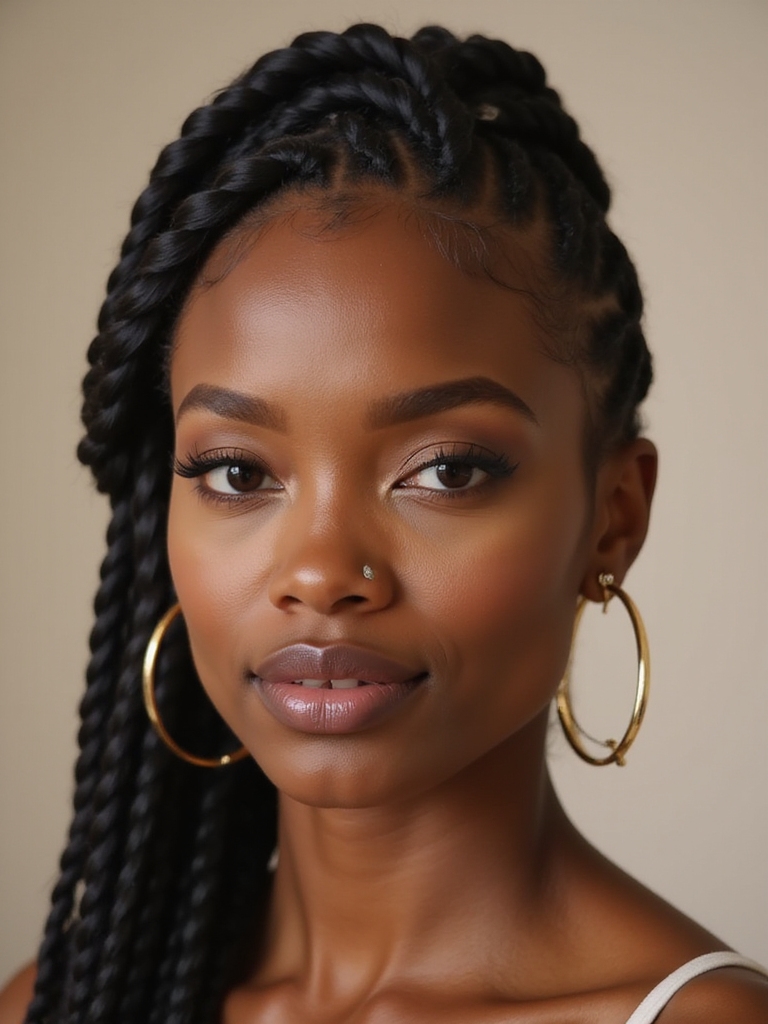
Braids paired with hoops are nothing new. They carry deep roots in Black culture, where braiding has long been craft, heritage, and connection passed hand to hand, from cornrows to box braids. What feels current is the styling built around them. Here is why the combination works so well:
- Braids give structure and last for weeks, the practical backbone of the look.
- Hoops frame the face and add a swing that a sleek braid alone cannot.
- A little gloss catches the light and ties the whole thing together.
The Appeal of Short Braids
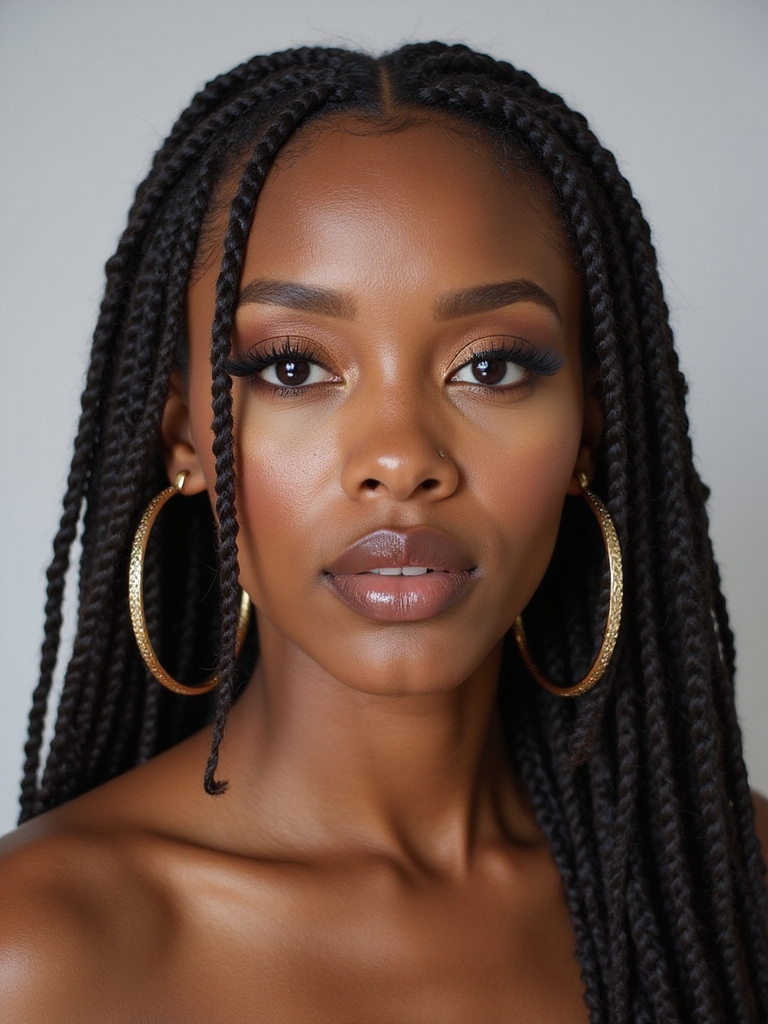
Short braids hit a sweet spot. They are light enough to wear all day without strain, quick to refresh, and they put your jaw and neck on display.
Why Shorter Wins
Less length means less weight pulling on your scalp, which is gentler on your edges than long, heavy braids. They also dry faster after washing and tuck easily under a scarf at night.
I tell clients new to braids to start short. You learn how your scalp handles the tension and how you like to finish the ends before committing to waist-length work that takes hours to install.
“Short braids are where I send first-timers. You get the protection and the style of braids with less weight on your scalp and a fraction of the install time, so you learn what your hair likes before committing to anything waist-length.”
Choosing the Right Braiding Style
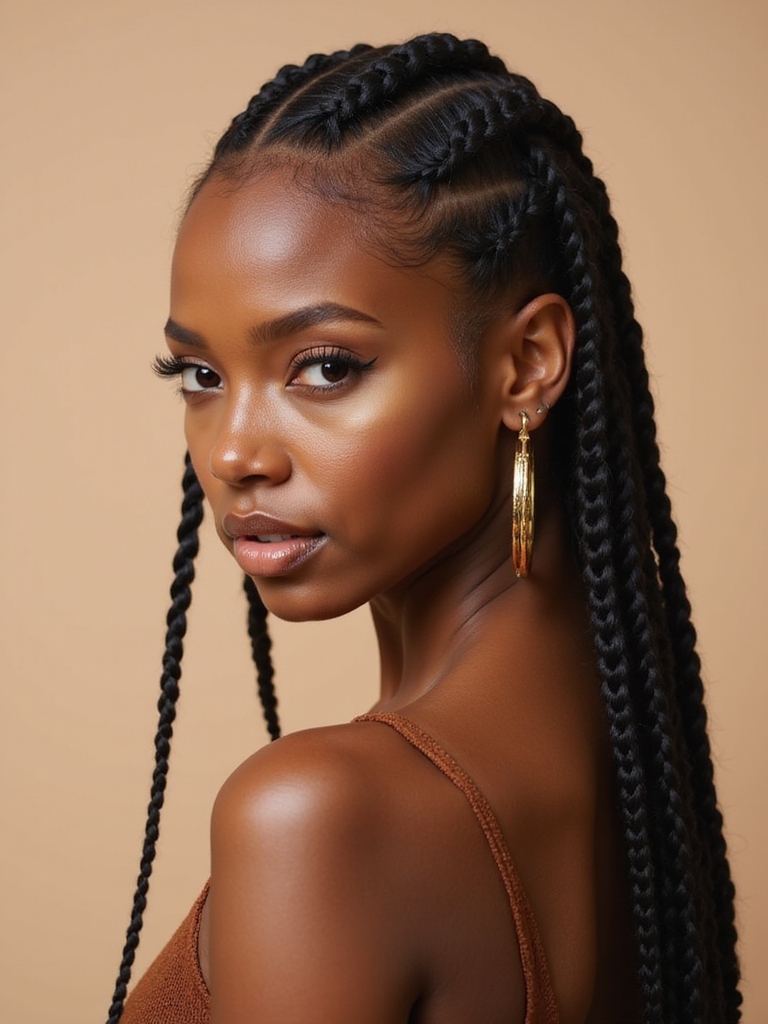
The right braid style comes down to your hair texture, your face shape, and how much upkeep you want. There is no single best braid, only the best one for your week.
Match the Braid to Your Life
Round faces suit braids with height or a side part for added length. Longer faces do well with width and softness around the cheeks. Your stylist can place the parting to flatter your features.
Texture matters too. Looser styles like Senegalese twists feel soft and airy, while braids for Black women such as box braids and knotless braids hold crisp definition for weeks.
Exploring Different Braid Types
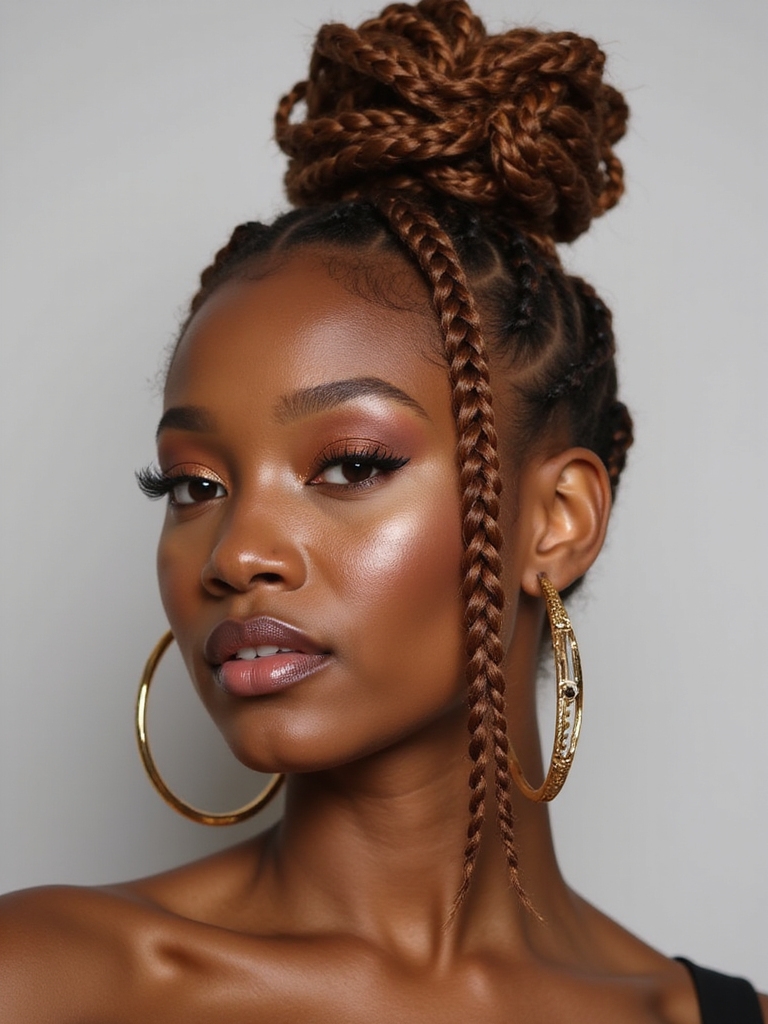
Part of the fun is how many braid types fit a short length. Each one brings its own texture, upkeep, and personality, so it pays to know the differences before you settle into the chair:
- Box braids: sectioned, versatile, and friendly for beginners to style.
- Knotless braids: gentler on the scalp, with no tight knot at the root.
- Cornrows and Fulani braids: close to the scalp, bold, and long-lasting.
- Senegalese twists: smooth, rope-like, and lighter than chunky braids.
Not sure which braid type fits you? Start here:
1Want the gentlest option?
Knotless braids skip the tight root knot and ease the tension on your scalp.
2Want long-lasting and bold?
Cornrows and Fulani braids stay crisp and defined for weeks.
3Want the easiest to style?
Box braids move and pin much like loose hair.
The Art of Accessorizing
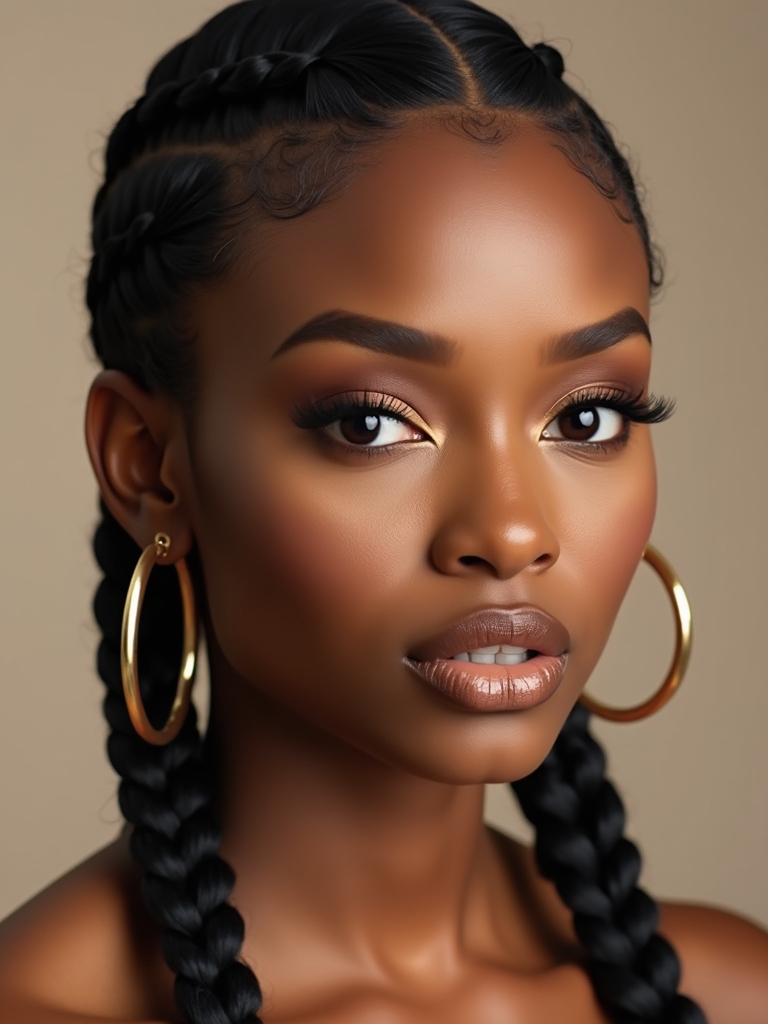
Accessories are where braids turn personal, the step that takes a clean set and makes it yours. Beyond hoops, think gold cuffs, cowrie shells, glass beads, and colored thread woven through a few chosen plaits.
The trick is restraint. Pick one or two accents and let them stand out, and resist loading every braid until the style competes with itself. A handful of braided looks prove how a single gold cuff can carry a whole style.
Highlights With Big Hoop Earrings
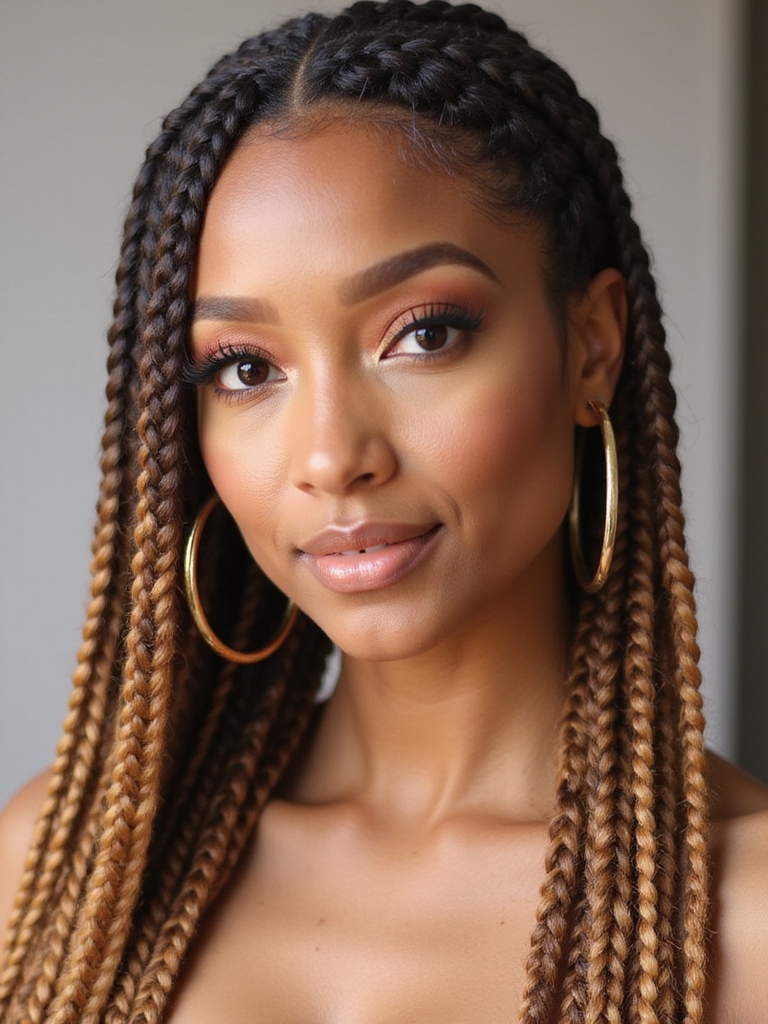
Color and hoops play off each other in a way that looks pulled-together and rich. A few honey or copper highlights woven through dark braids catch the same light as gold hoops, so the two echo each other across your face and tie the look together.
Keep the contrast intentional. Warm highlights with gold hoops read rich and cohesive, while cool, ashy tones sit better with silver. I see this pairing land best when the metal and the highlight share an undertone.
How to pair highlights and hoops in one cohesive look:
1Read your undertone
Warm highlights lean gold; cool tones lean toward silver.
2Echo the metal
Pick hoops in the same family as your brightest highlight.
3Balance the rest
Keep the lip sheer so the color story stays clean.
Matching Hoops With Hair Color
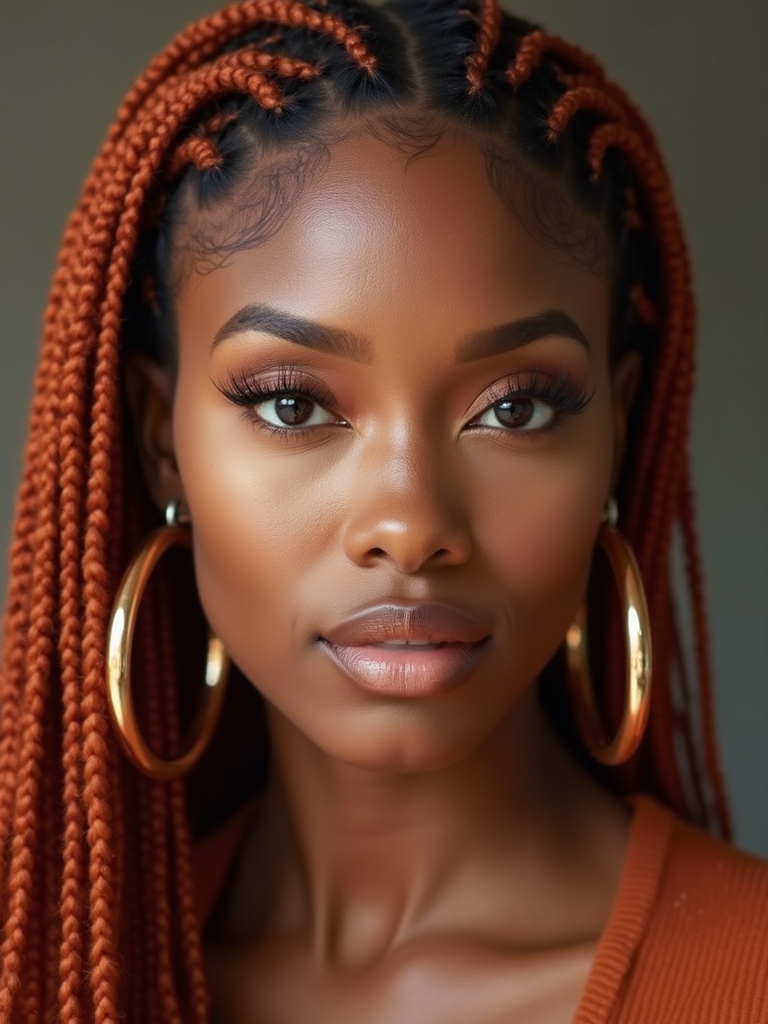
Your hair color is the easiest guide to picking hoops. The goal is harmony, not a perfect match.
Quick Pairing Guide
Gold hoops glow against dark brown and black braids. Silver and white gold lift blonde and ashy shades. Rose gold flatters auburn and red tones beautifully.
If your braids carry several tones, choose a metal that picks up one of them. A mixed-metal hoop is a safe bet when you cannot decide, since it bridges warm and cool at once.
Lips and a Touch of Gloss
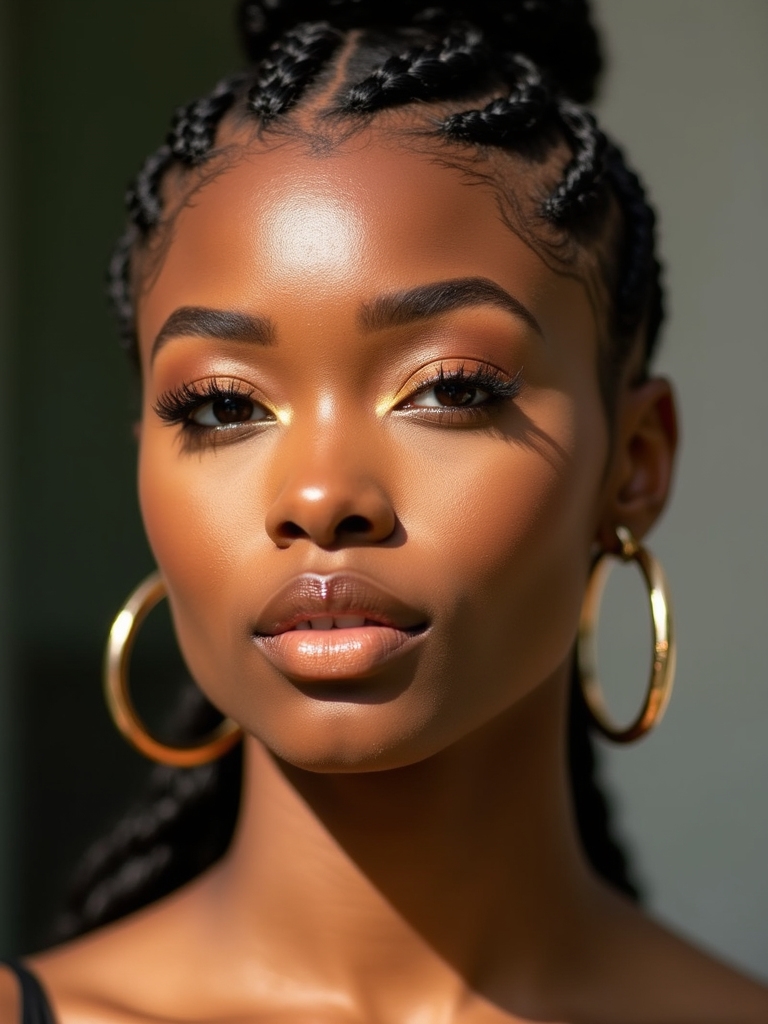
Gloss is the finishing note. A sheer, light-catching lip pulls the look together and keeps the focus balanced between your hoops and your smile.
Match the gloss to the occasion, not to a rulebook:
- Daytime: a clear or barely-tinted gloss for an easy, fresh face.
- Evening: a deeper berry or brick gloss to match bolder hoops.
- Deep, melanin-rich skin: rich plums, warm browns, and bright corals all sing, so do not shy away from pigment.
🅰️Sheer Gloss
A clear or barely-tinted gloss keeps daytime easy and lets your hoops lead the look.
🅱️Bold Gloss
A deep berry or brick gloss matches statement hoops and turns the same braids into an evening look.
Accessories That Complement Your Skin Tone
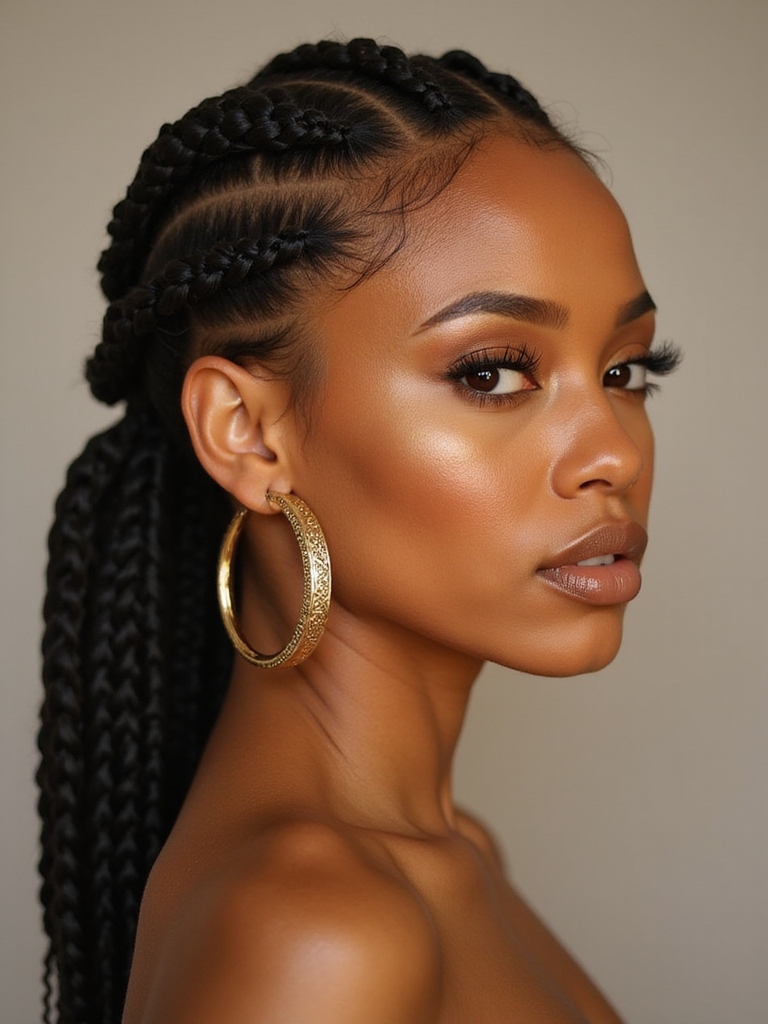
Your undertone is the quiet decider behind which metals make your skin look lit from within. A simple guide to get you started:
- Warm undertones: gold, brass, and copper bring out the warmth in your skin.
- Cool undertones: silver and platinum look crisp and clean.
- Neutral undertones: you get to play both sides, so mix metals freely.
- Deep, rich skin tones: bold gold and bright color both flatter, and the deeper the skin, the more saturated you can go.
Everyday Braids and Hoops
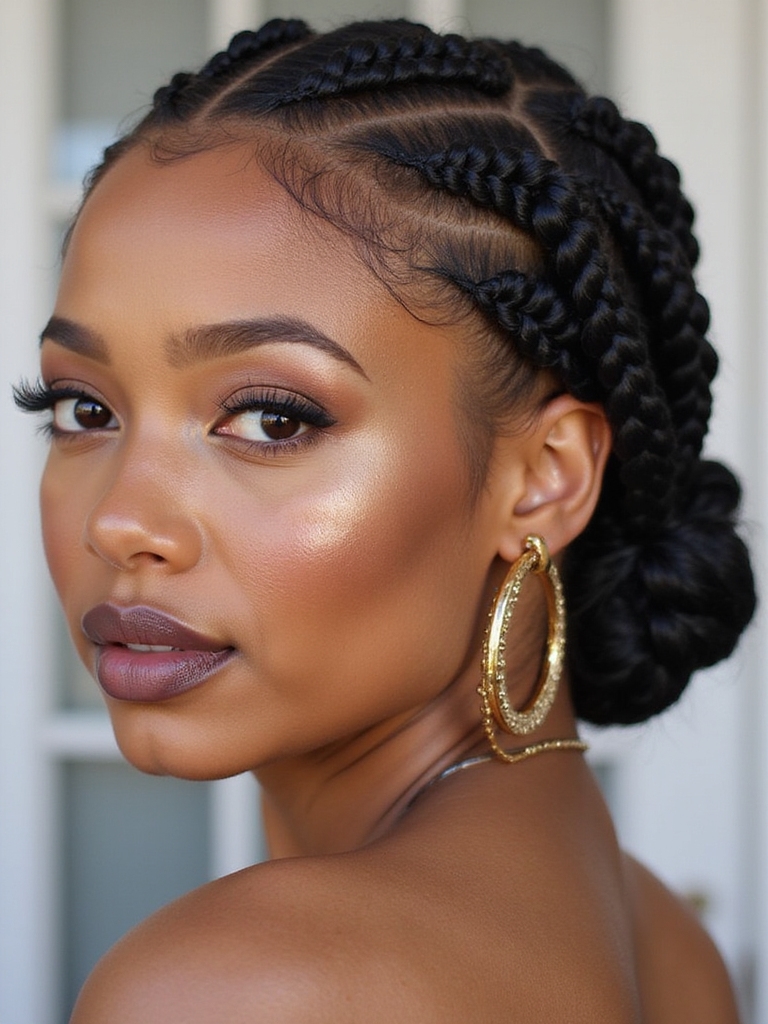
Most days call for a version you can do in two minutes and then forget about. Keep it simple:
- Pull the braids into a low pony or half-up to keep them off your face.
- Choose medium hoops that will not snag on a coat collar or bag strap.
- Refresh the parting with a little water and re-smooth any frizz at the crown.
- A dab of edge control and a light sheen finish it without fuss.
Transitioning to Evening Looks
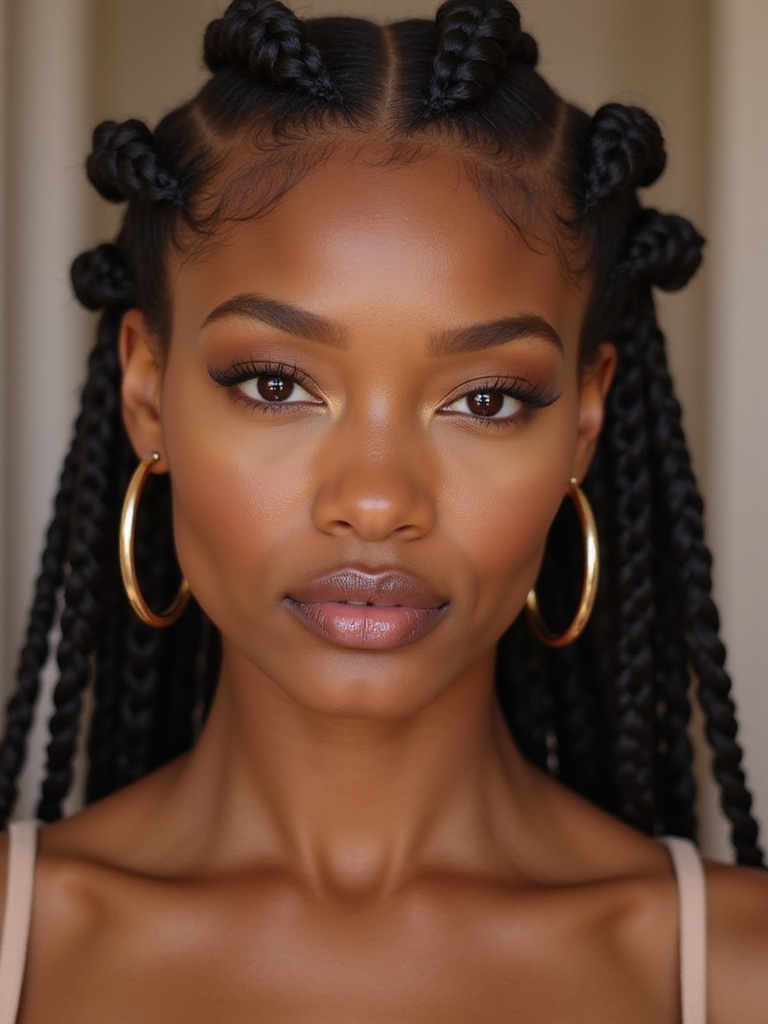
Taking braids from day to night is mostly about the framing, not a whole new style. A few swaps lift the look fast.
Five-Minute Evening Switch
Swap your everyday hoops for something larger or more sculptural, deepen the lip, and gather the braids up to bare your neckline. A high braided ponytail looks instantly more dressed.
A spritz of sheen spray over the length adds the polish evening light loves. Clients ask me how to dress braids up without redoing them, and this is the honest answer: change the frame and keep the braids.
The Balance of Bold and Subtle
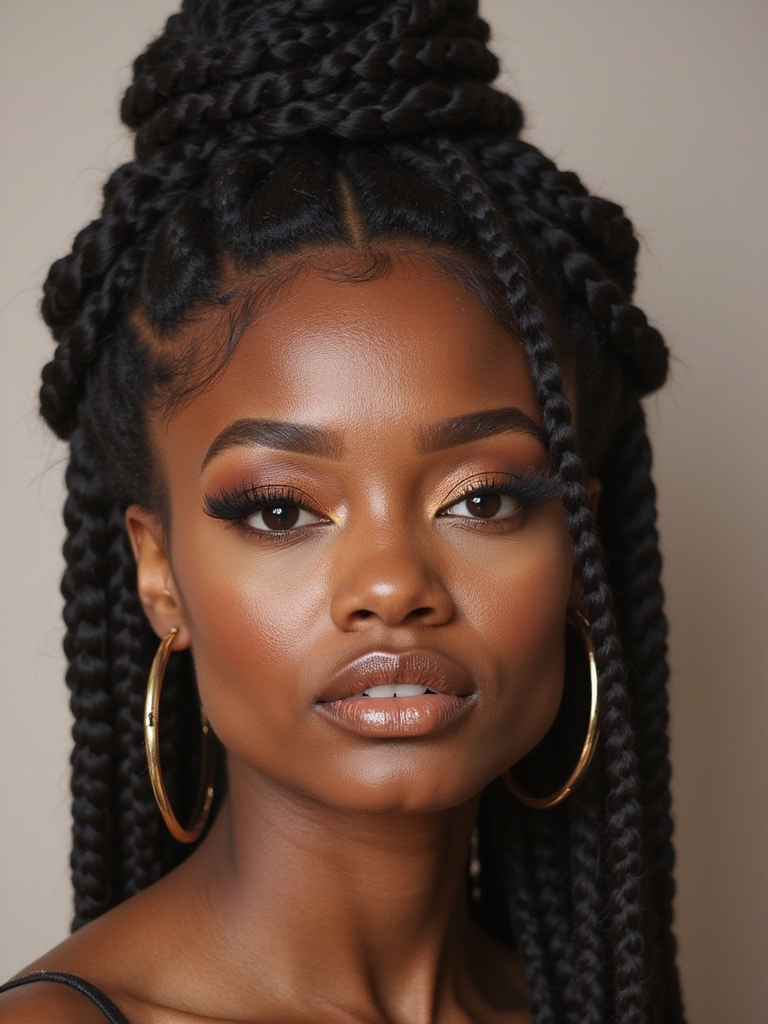
A great braid-and-hoop look balances one loud element against quiet ones. When everything shouts, nothing actually stands out.
Let One Thing Lead
If your hoops are huge, keep the gloss sheer and the braids simple. If your braids carry color and beads, scale the hoops down so they support the look and stay in their lane.
Think of it like an outfit. One statement piece, a couple of supporting players, and the whole thing looks calm and considered.
Playing With Texture and Shine
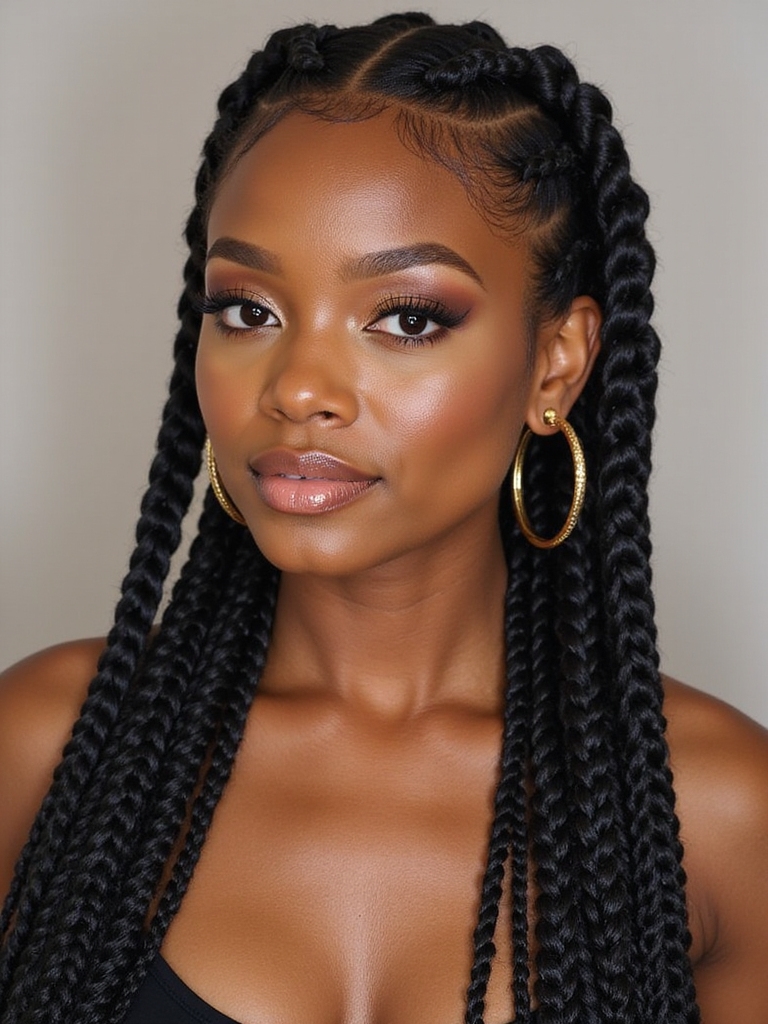
Texture keeps braids from looking flat. Mixing braid sizes, adding a few twists, or leaving the ends loose and curled gives the style real depth.
Shine is the other half. A light finishing product makes both the braids and the hoops catch the light:
- A pea of lightweight oil smooths flyaways without greasing the scalp.
- A sheen spray adds gloss across the length in seconds.
- Skip heavy butters on the braids themselves, since they build up and dull the shine.
The Role of Hair Products
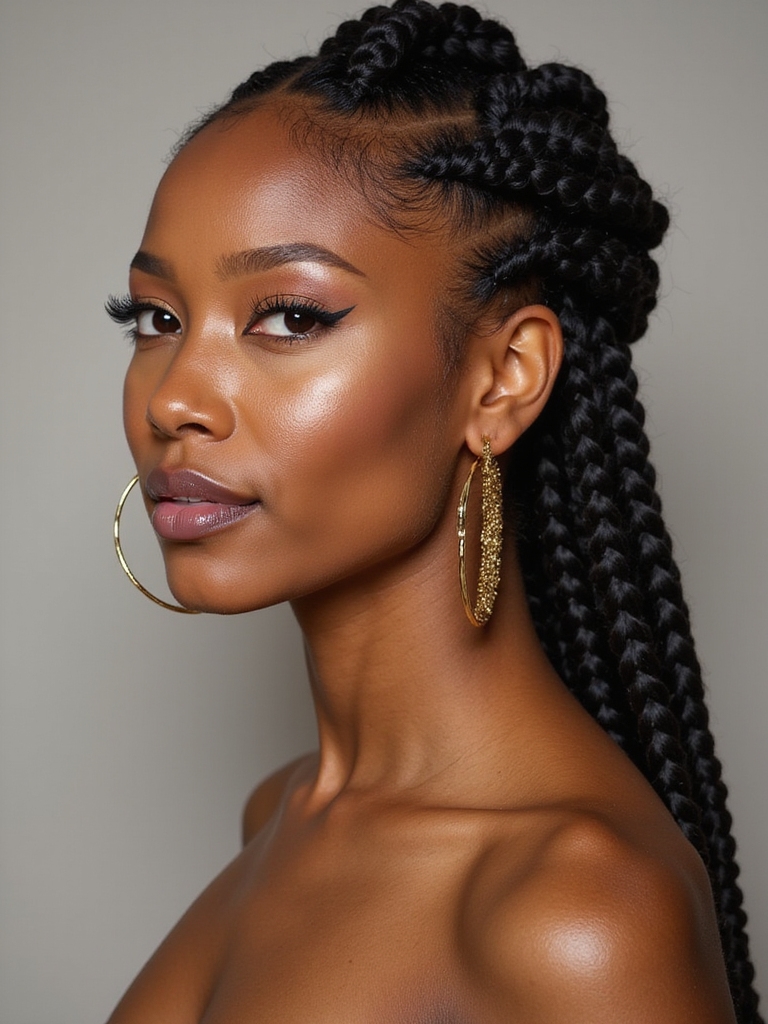
A short, smart product lineup keeps braids fresh for weeks without weighing them down or building up on your scalp. These four earn a permanent spot on the shelf:
- A water-based leave-in or braid spray to keep strands hydrated.
- A light oil or sheen spray for shine and flyaways.
- A gentle edge control that holds without flaking or building up.
- A satin scarf or bonnet, the single best thing for making a set last.
Moisturizing to Prevent Breakage
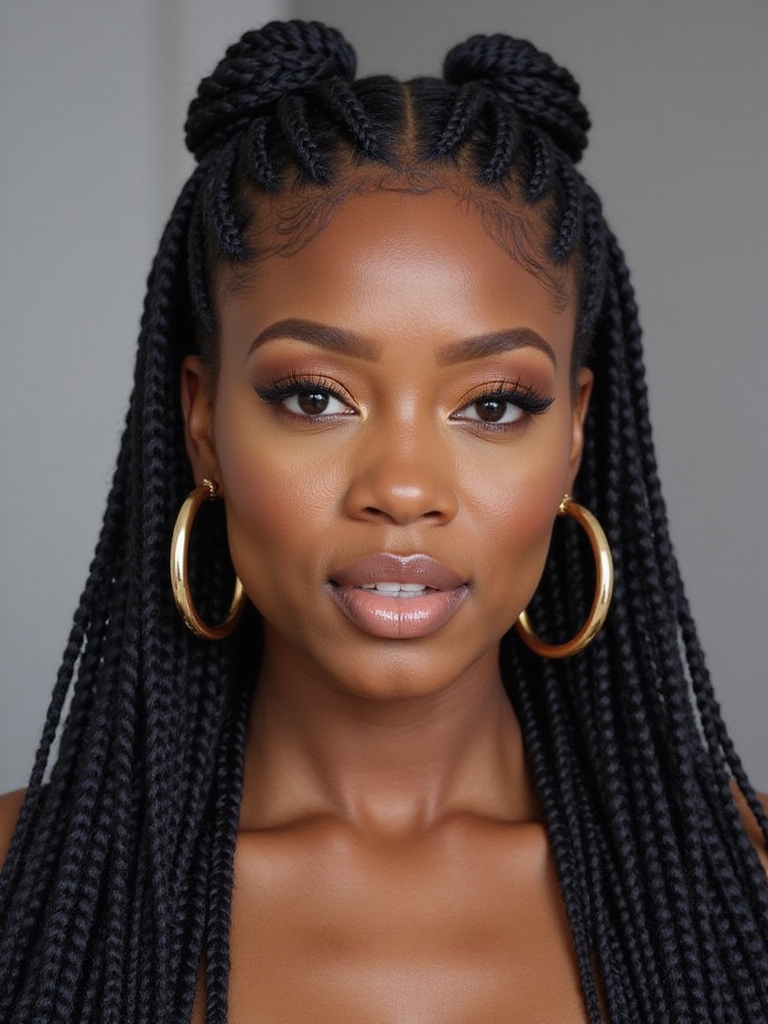
Braided hair still needs moisture, even when it is tucked away. Dry hair under braids is where breakage quietly starts:
- Mist a water-and-leave-in blend on your scalp and braids every two to three days.
- Seal with a few drops of light oil so the moisture stays put.
- Pay extra attention to your edges and nape, the first spots to dry out.
- Deep-condition before your next install to reset your hair’s strength.
Celebrity Braid-and-Hoop Looks
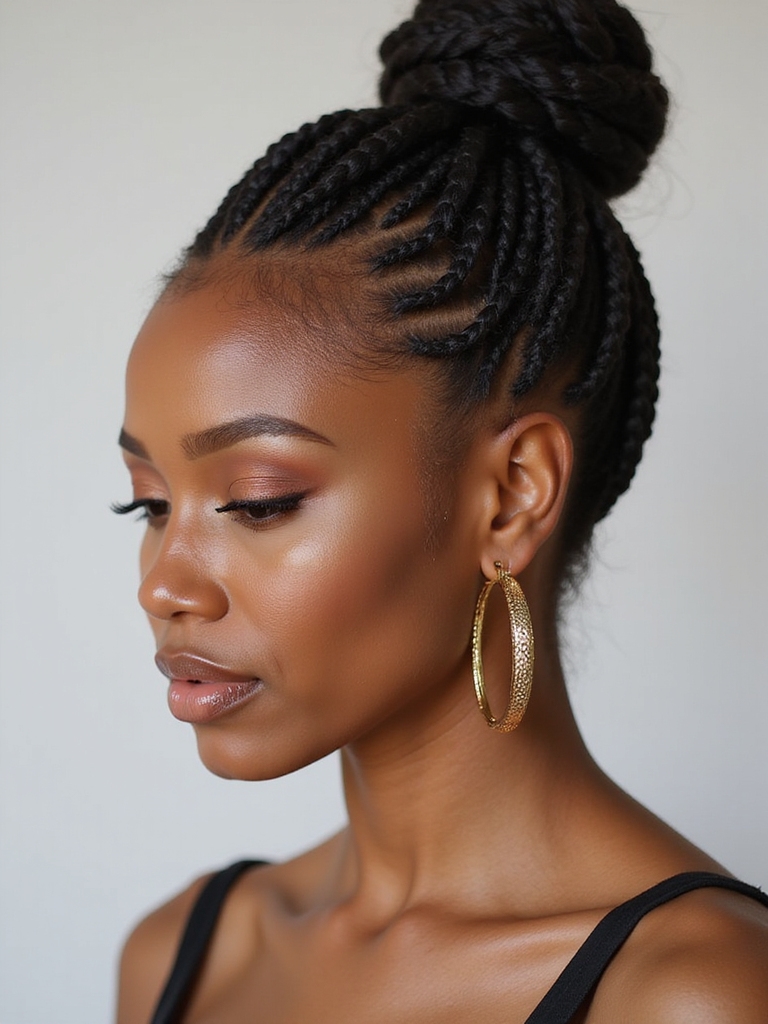
Plenty of public looks show how braids and hoops scale from a grocery run to the red carpet. A few combinations worth saving to your camera roll before your next appointment:
- Bob-length box braids with oversized gold hoops for clean drama.
- Cornrows gathered up high with slim hoops and a glossy lip.
- Color-dipped braids paired with sculptural statement hoops.
- Sleek braided updos finished with small huggie hoops for a polished evening.
Fashion-Forward Hoop Pairings
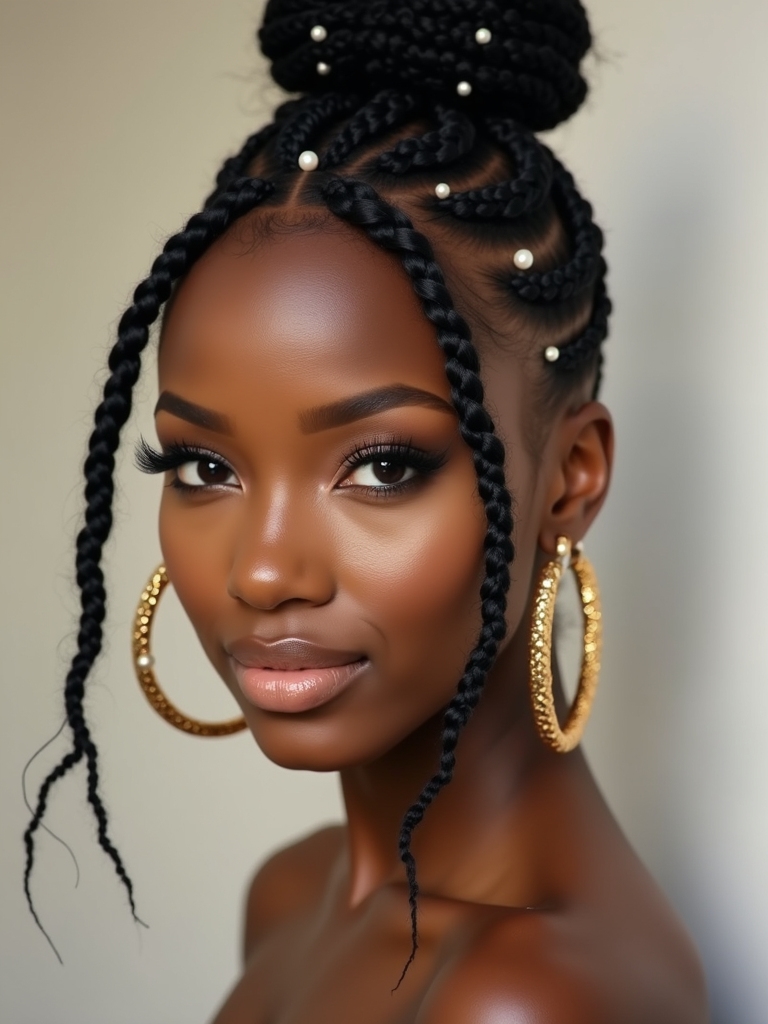
Braids and hoops are a styling shortcut for the rest of your outfit too. The right pairing pulls a simple look together.
Dress It Around the Braids
Clean braids with big hoops sharpen a plain tee and jeans into something deliberate. The same braids with delicate hoops soften a tailored blazer for the office.
Let the hoops set the tone. Bigger and brighter for a night out, slim and metallic for work, and your braids carry both with no recutting.
DIY Braids and Hoops at Home
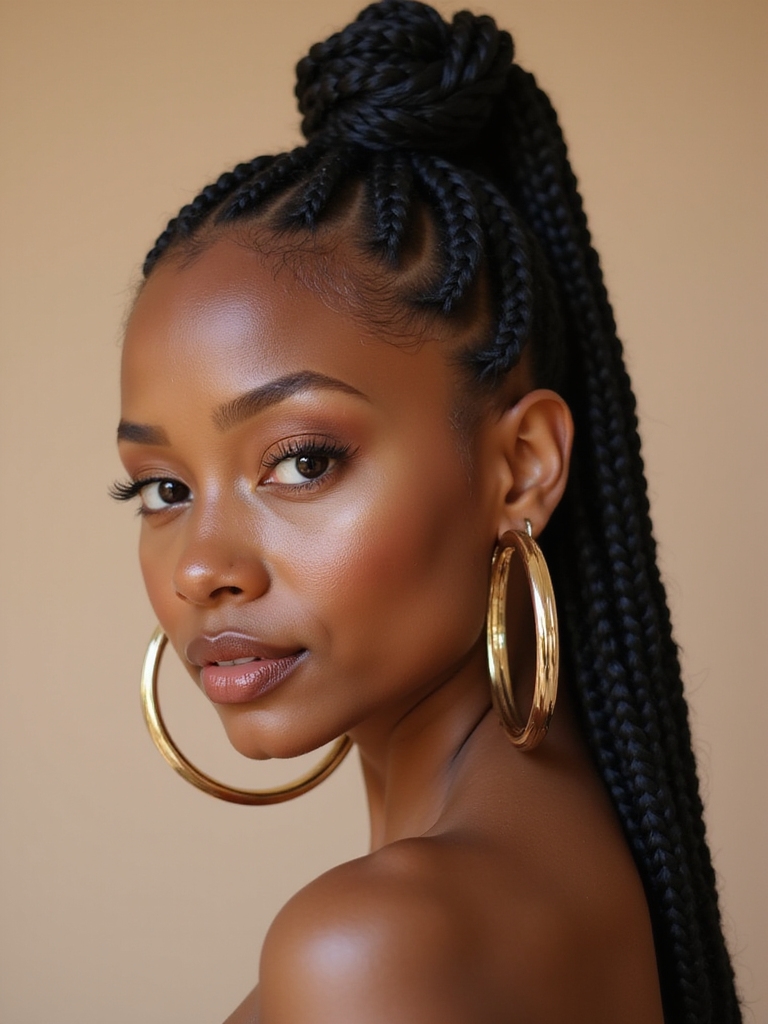
Not every refresh calls for a salon. Simple braids and smart styling are doable at home with patience, a good mirror, and the right tools.
Start small and build your skill over time:
- Practice two-strand twists and simple plaits before attempting full box braids.
- Section cleanly with a rat-tail comb for even, neat parts.
- Take your time; rushing a home set is how parts go crooked and tension creeps up.
- Add hoops and a finishing oil last, once the braids are fully set.
Salon vs. Home Braiding
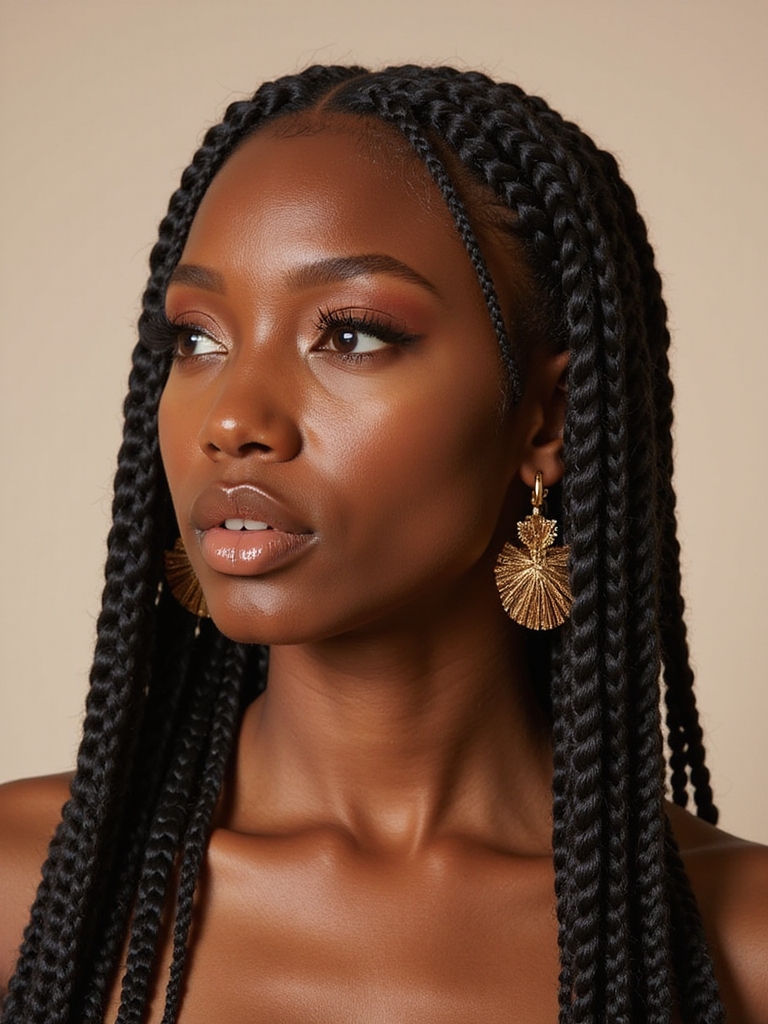
Where you get braided depends on the style, your skill, and your time. Both routes have a place.
A professional braider installs faster, parts more cleanly, and protects your edges with proper tension, which matters most for intricate sets. Expect to pay roughly $100 to $250 for a full set of box or knotless braids, plus a few hours in the chair.
Home braiding saves money and suits simpler styles, refreshes, and touch-ups. For your first complex set, though, I recommend a skilled braider; it is worth the cost.
Keeping Your Hair Healthy
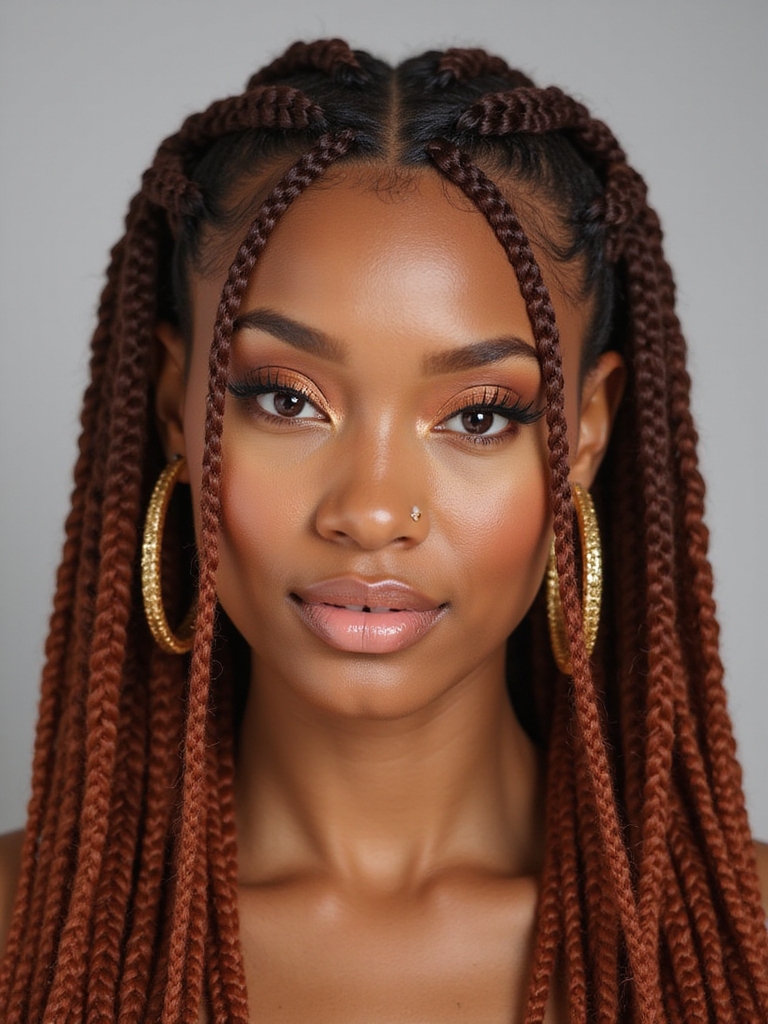
Braids are a protective style, but only when they are installed and worn with care. The goal is to shelter your hair, not stress it.
Protect Your Edges
Braids should never hurt. If a set feels tight enough to pull at your hairline or give you a headache, it is too tight, and over time that tension can cause traction damage along your edges. Speak up in the chair, because a good braider will loosen it.
Keep a style in no longer than six to eight weeks, cleanse your scalp gently, and give your hair a break between installs. None of this is medical advice, so if you notice thinning edges or soreness, check in with a trusted professional.
Seasonal Considerations
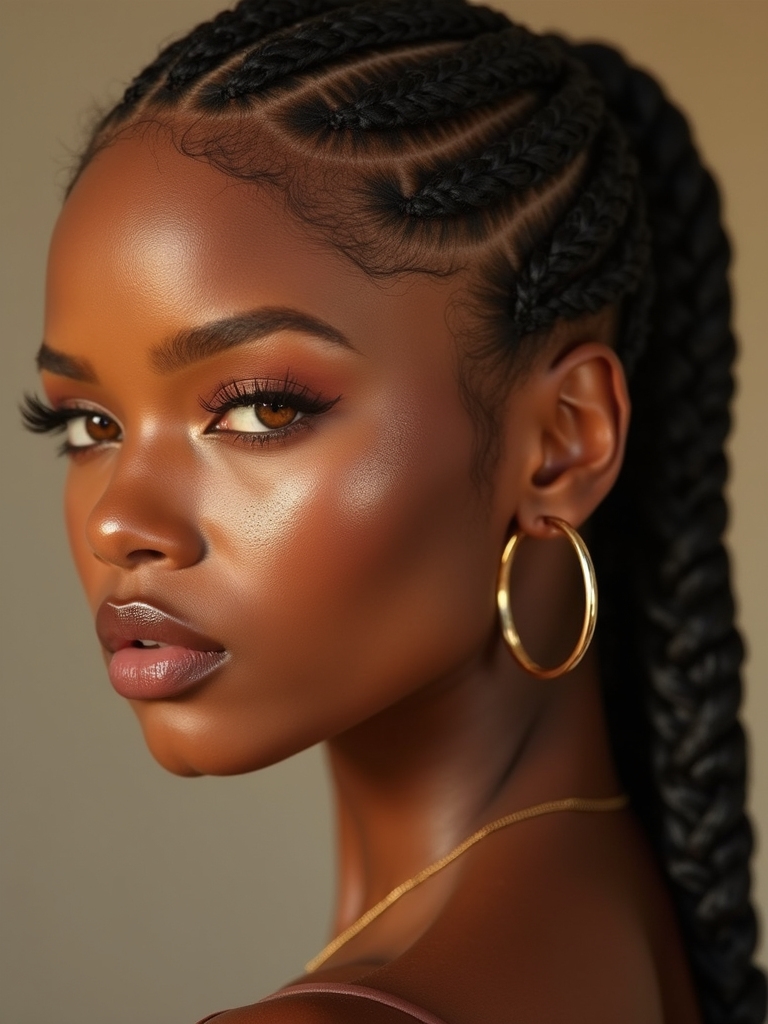
Braids behave differently as the seasons turn, and small shifts keep them healthy all year.
Winter dries hair out fast, so lean on richer moisture and tuck the braids under a satin-lined hat or scarf. Summer heat and sweat call for lighter oils, a clean scalp, and a refresh spray to fight frizz at the roots.
Spring and fall are the easy middle. That is a good window to experiment with color or a new parting before the weather swings to either extreme.
Styling Mistakes to Avoid
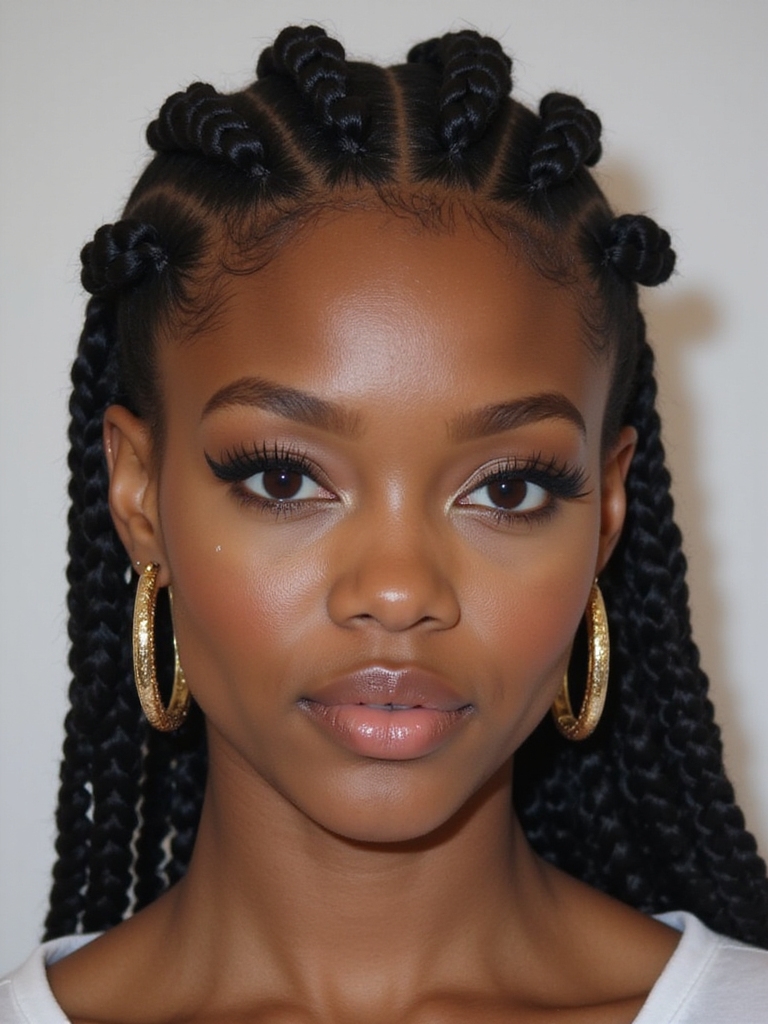
A few common missteps can undo an otherwise sharp look. Most are easy to sidestep once you know them.
The Usual Pitfalls
Overloading on accessories is the big one. Too many beads and cuffs bury the braids, so pick a focal point and stop there.
The rest of the list is short: hoops so large they swallow a short style, skipping scalp care until the braids itch, and ignoring your face shape when you choose a parting. Each is a quick fix once you catch it.
Embracing Your Unique Style
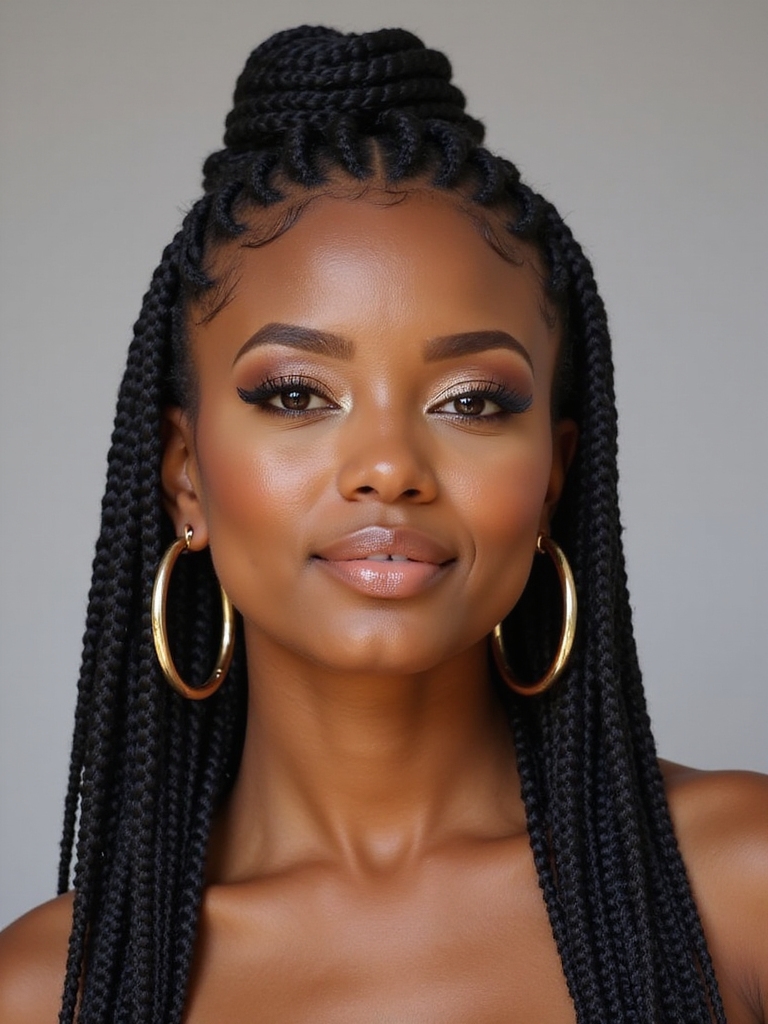
When it comes down to it, the best braid-and-hoop look is the one that feels like you, the one you forget you are even wearing. Take the guidance here as a starting point, then break from it wherever your own taste pulls you:
- Borrow ideas from braided buns and other styles, then make them your own.
- Pick the accessories that make you feel most like yourself.
- Mix braid sizes or thread in a single color you love to sign the look.
- Wear the whole thing with the confidence that finishes any style.
What to Expect at Your Appointment
If you are booking a braider for the first time, a little prep saves time and protects your hair. Come with clean, detangled hair unless your braider tells you otherwise, and bring two or three photos of the length and braid size you want.
Ask up front about the price, how long the install will take, and how to care for the style at home. Be honest if the tension ever feels painful during the session, because speaking up early protects your edges and keeps the set comfortable enough to enjoy for the weeks ahead.
Common Questions About Short Braids and Hoops
?How long do short braids last?
Most short sets hold up for four to six weeks. Past that, new growth at the roots loosens the braids and the style starts to look fuzzy. Nightly satin protection and a weekly moisture routine help you reach the longer end of that window.
?Do braids damage your hair?
Not when they are installed and worn correctly. Damage comes from braids that are too tight, left in too long, or worn without moisture. Keep the tension comfortable, the scalp clean, and give your hair a break between sets, and braids protect more than they harm.
?What size hoops work best with short braids?
Medium to large hoops tend to balance a short braid best, since they echo the length you are missing. Save the truly oversized hoops for evening, and lean smaller and slimmer for everyday wear so they do not overwhelm the cut.
?How do I keep my braids from looking dry?
Mist a water-based leave-in on your braids and scalp every couple of days, then seal with a light oil. Skip heavy butters, which build up and dull the shine. A weekly sheen spray keeps the gloss going between refreshes.
?Can I get short braids on fine or straight hair?
Yes, though they behave differently. Fine or straight hair grips braids less tightly and may slip, so smaller sections and added braiding hair help them hold. A skilled braider can adjust the technique to keep the style secure and gentle on your strands.
Make It Yours
Strip it all back and the formula is simple: braids for structure, hoops for the frame, gloss for the light. Everything else, the color, the size, the accessories, is yours to play with.
Start with one short, comfortable set and a pair of hoops you love. Build from there, and let the look grow into something that looks unmistakably like you.
Related Reads