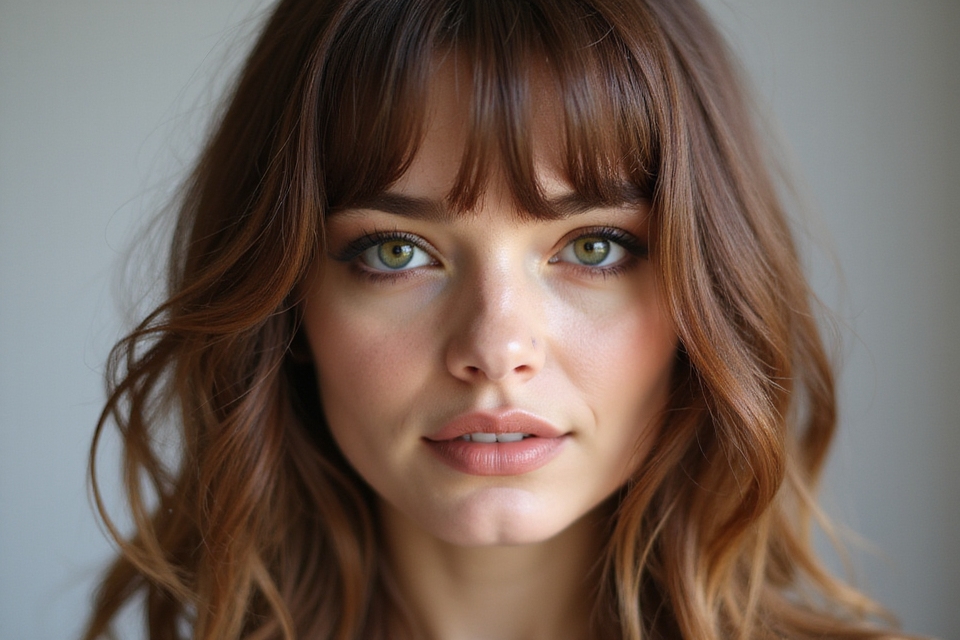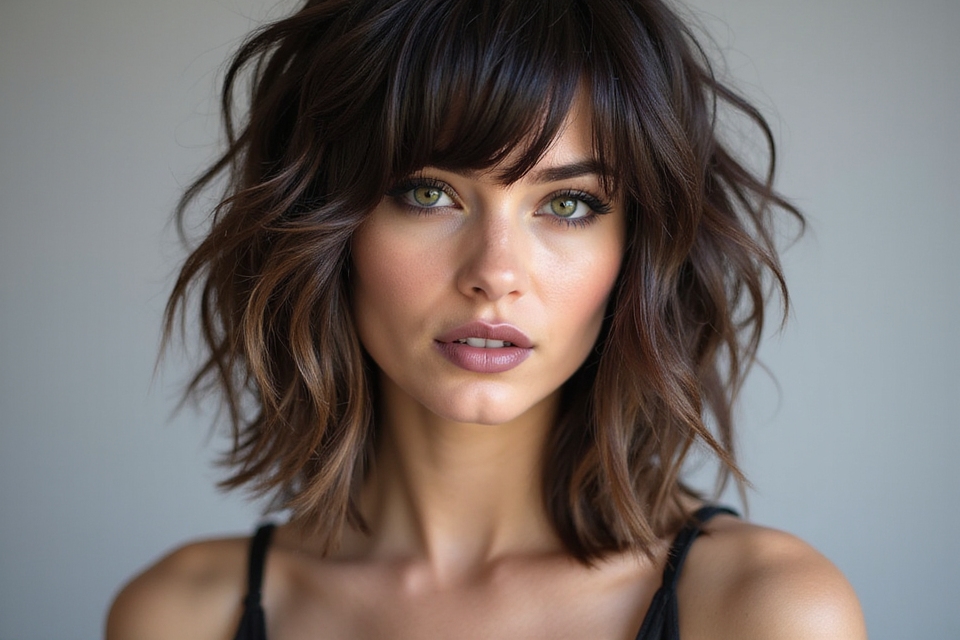
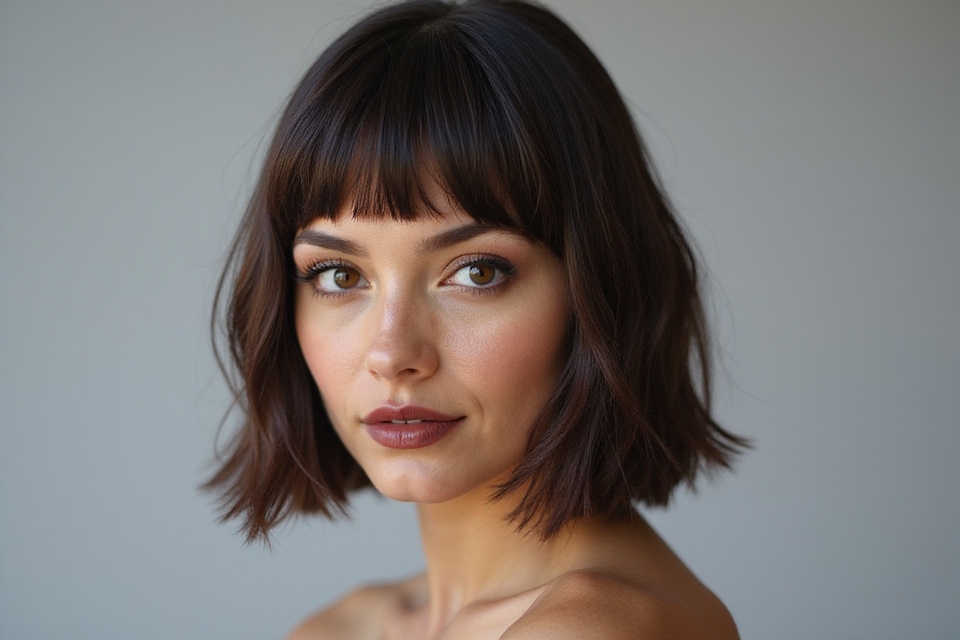
The ’90s lob haircut never tried very hard, and that was the whole point. It sat right at the collarbone, parted clean down the middle, with ends that curved under or flicked out depending on how you slept on it. Back then it read a little matte and mall-bought; today the same cut comes back glossy, worn-in, and somehow more grown-up. Same shape, softer finish.
Here is the ’90s lob from every angle, from the precise middle part and curved ends to styling, texture, color, face shape, and the honest upkeep. The cut is forgiving, but it rewards a few real decisions, so I will tell you which ones actually matter and which you can skip.
The ’90s Lob at a Glance
- It is a collarbone-length bob with a clean center part and ends that curve under or flick out, worn with body rather than poker-straight.
- It flatters most face shapes and textures because the length and part are so adjustable; a round brush blowout is the core skill.
- A cut runs roughly forty to eighty dollars and wants a trim every six to eight weeks; daily styling is ten to fifteen minutes once you know the move.
Where the ’90s Lob Came From

The lob, a long bob that lands near the collarbone, became the decade’s quiet uniform after years of big, blow-dried hair. It was a reaction: less volume, less fuss, a blunter line and a part straight down the center. Supermodels wore it off-duty and sitcom leads wore it to work.
- Length sits at or just above the collarbone, longer than a classic chin bob.
- The line is blunt or barely graduated, not heavily layered.
- The center part and a soft inward curve are the signatures.

What Defines the ’90s Lob
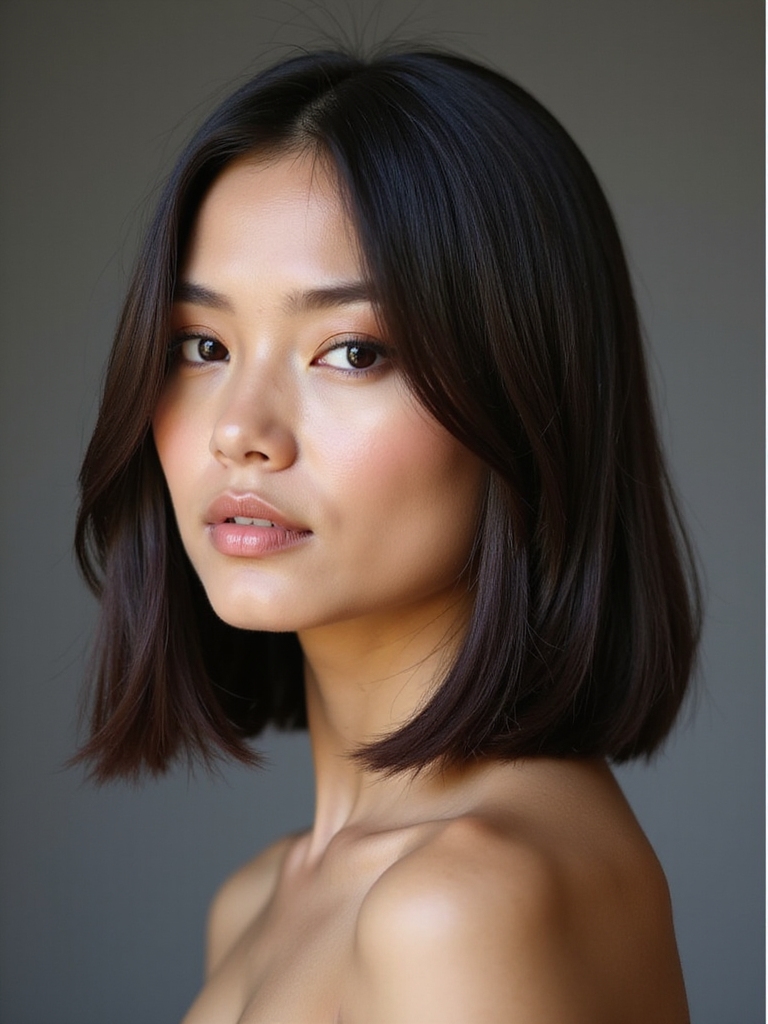
Strip it down and three things make a lob read distinctly ’90s. The length is first: collarbone, never shorter, so it can sit behind an ear or swing loose.
The second is the part, sharp and central, framing the face symmetrically and half the reason the cut feels clean. The third is the finish, gentle body with a curved or flicked end, never flat-ironed bone-straight.
Get those three right and almost any hair color or texture still reads as the era; miss the part or over-layer the ends and it drifts into generic-bob territory.
📋What to Tell Your Stylist
- ✓Collarbone length, measured on dry hair if you are curly.
- ✓A blunt or barely-graduated line, not heavy layers.
- ✓A clean center part and ends cut to curve under.
The Clean Middle Part
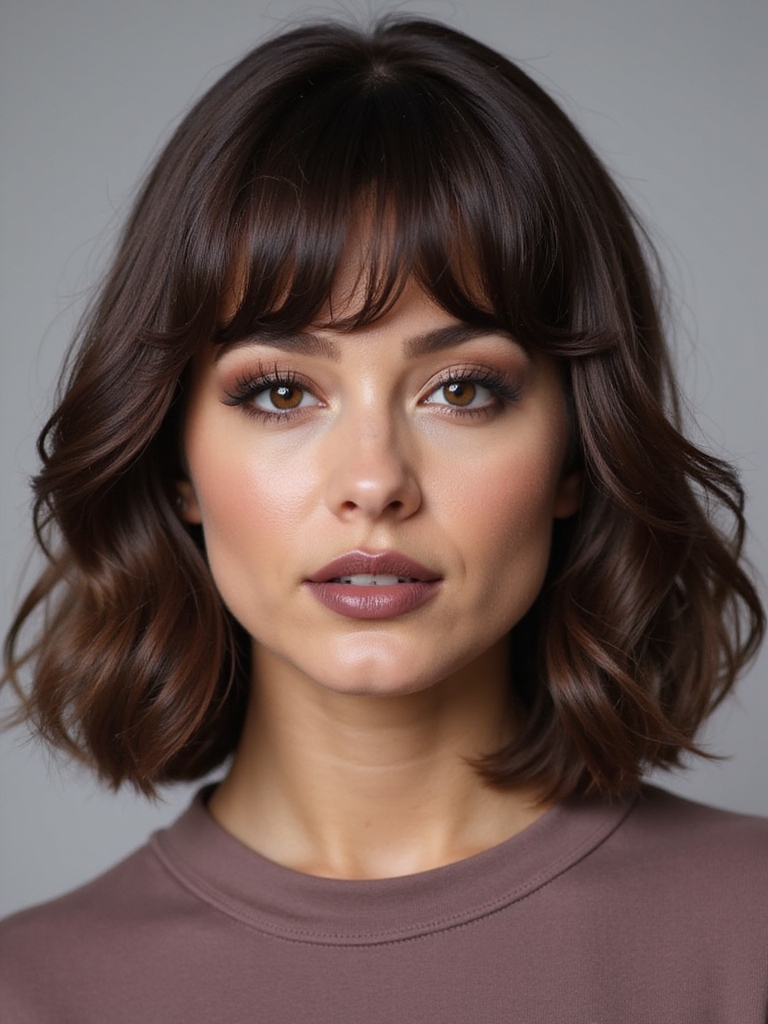
A center part lives or dies on precision, since it sits in the most symmetrical spot on your head and shows every wobble. The good news: thirty seconds does it, and once your hair learns the part it falls into place on its own.
- Find the center by lining your nose up with the middle of your hairline, then draw the part back with a fine-tooth comb.
- Part it while damp and let it dry that way so the roots set in the right direction.
- If your hair fights a stubborn old part, clip the new one for ten minutes after styling to train it.
Softly Curved Under-Ends

The inward curve at the ends is what keeps a lob from looking like a blunt slab. You want the last inch or two to bend under toward the neck, soft and rounded, not a hard nineties flip and not a stick-straight edge.
- Wrap the ends around a large round brush and roll under as you hit them with the dryer.
- For a quicker version, bend the ends with a flat iron, turning your wrist a quarter-turn at the tips.
- Set the curve with a blast of cold air so it holds through the day.
Good to Know
The word lob is simply shorthand for long bob, and the cut earned its name in the early 2010s revival even though the collarbone shape itself goes straight back to the ’90s. The center part is the single detail that separates the period version from a generic modern bob.
How to Style the ’90s Lob
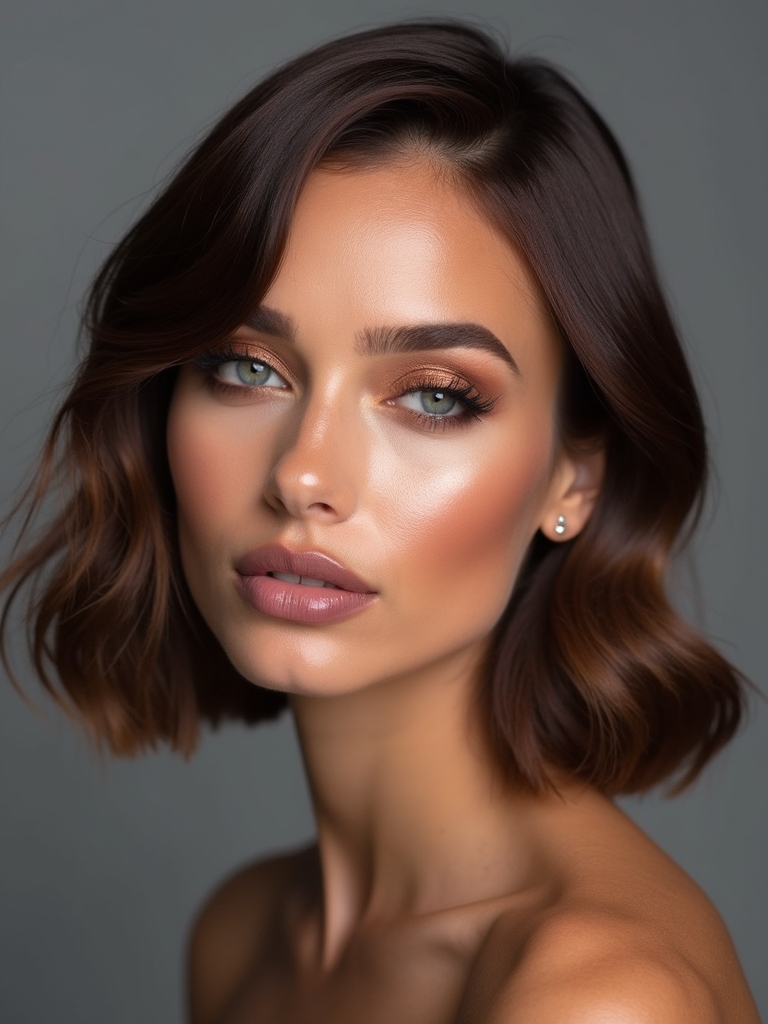
The blowout is the whole game, and it is the technique I demonstrate most for clients who expect a lob to be no effort and then panic at home. Start with damp, towel-roughened hair and a quarter-sized blob of mousse or a light cream worked through the mid-lengths.
Rough-dry until your hair is about eighty percent dry, then section it and go in with a round brush, rolling the ends under as you dry each piece smooth. It all comes down to tension. Keep the brush taut so the cuticle lies flat and the curve sets.
Finish with cool air and a pea of serum on the ends only. Ten minutes, maybe fifteen while you learn it, and it lasts two days.
The Tools That Make a Lob
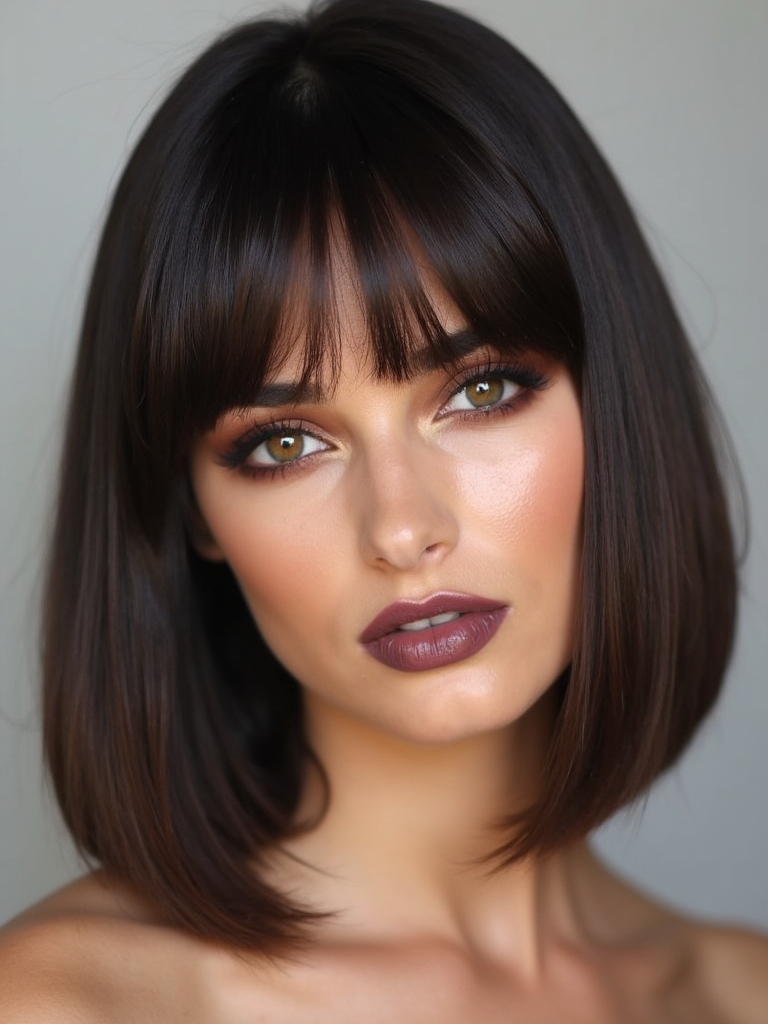
You do not need a drawer full of gadgets, but a few tools change the result. A medium-to-large round brush is non-negotiable, because the barrel builds the curve and the body at once.
The rest is control and protection. A concentrator nozzle directs the air so the cuticle smooths instead of frizzing, and a heat protectant keeps the shine honest.
- Round brush, roughly two inches, ideally ceramic so it holds heat.
- Blow dryer with a concentrator nozzle for directed airflow.
- A flat iron or large-barrel wand for touch-ups on the ends only.
“The request I push back on most at my chair is ‘keep it all one length.’ A lob with zero movement sits like a helmet and hardens the face. So I leave a few nearly invisible long layers in even the bluntest lob, just enough that the ends fall and bend on their own. You will not spot the layers in the mirror; you will only notice the hair finally moves.”
The Lob on Different Textures
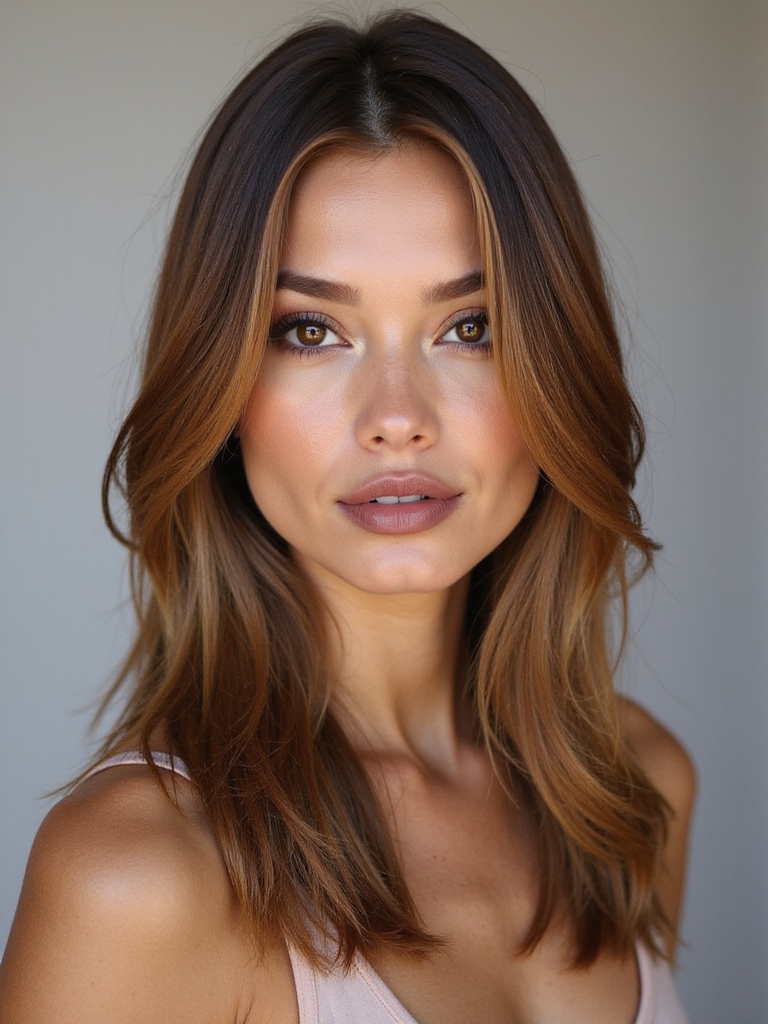
One reason the lob endures is that it bends to almost any texture, as long as the cut is matched to it. What changes by texture is mostly the blunt line and where you judge the length, since shrinkage can take a curly collarbone cut up to the chin.
- Fine or straight: keep the line blunt for the illusion of thickness.
- Wavy: scrunch in a cream and let it air-dry for an undone version.
- Curly or coily: have it cut dry so the true length lands where you want it. Our short wavy bob guide covers the textured take.
Products That Smooth a Lob

Product choice is where most home lobs go wrong, usually too much of the wrong thing. The order that works: a light mousse or volumizing cream on damp hair for grip and body, nothing heavy at the roots.
Save smoothing for the end: a drop of lightweight oil or serum on the mid-lengths and ends tames flyaways and brings gloss, while a flexible spray locks the shape without crunch. If your lob goes limp by noon, your conditioner is too rich, not your styling.
The Iconic ’90s Lob Silhouette

The looks that fixed the lob in our memory all shared a silhouette rather than a single celebrity. What they had in common was that low, neck-grazing length and a refusal to look overdone, whether the version was sleek and glassy, bouncy and flicked, or grungy and undone.
- The sleek edition: glassy finish, dead-center part, ends barely curved.
- The bouncy edition: round-brushed body and a gentle outward flick.
- The undone edition: air-dried texture, piecey ends, a little grit.
The Modern, Worn-in Lob
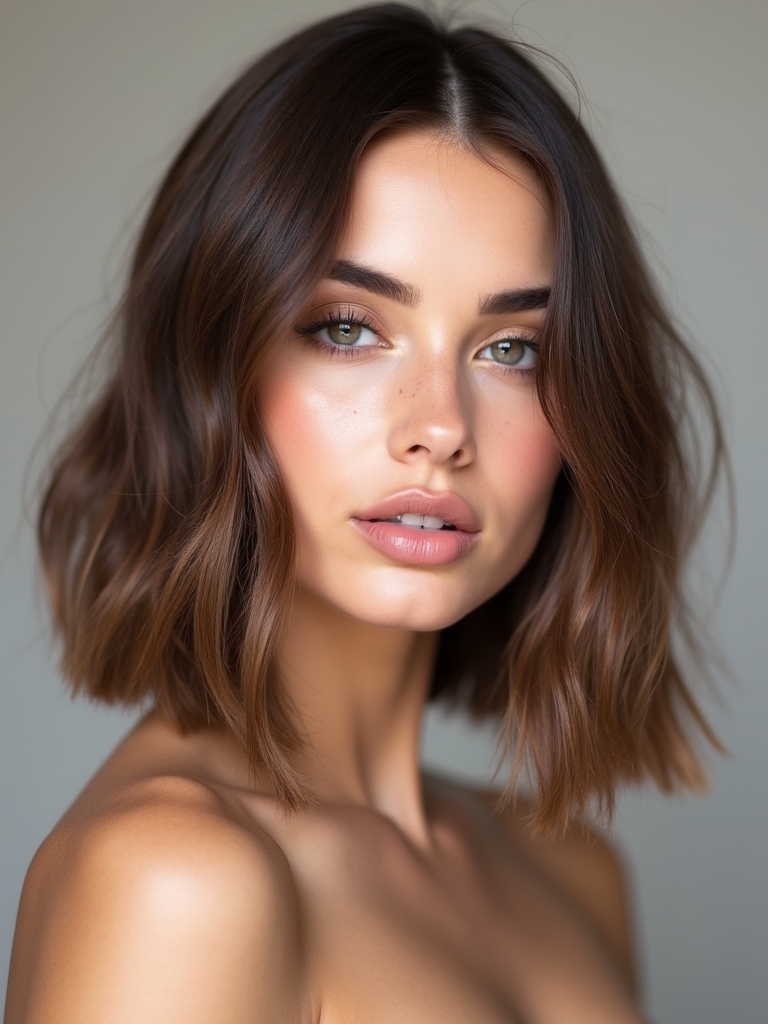
Today’s lob keeps the bones of the ’90s cut but loses the stiffness. Where the original was blown out to a uniform smoothness, the current version leaves in a bend, some root lift, and ends that look touched by hand.
The finish is glossier too, helped by better tools and lightweight oils we did not have then. The result reads expensive and easy at once, which is exactly why it keeps showing up: the same haircut with the volume turned down and the shine turned up.
Shaping the Lob to Your Face

The lob suits nearly everyone. But small tweaks make it personal, and this is the conversation I have most often before I pick up the scissors. A round face is lengthened by keeping the lob a touch longer and the part dead center.
Match the Length to Your Proportions
A long or oblong face does better with a little width: a few face-framing pieces and a slightly shorter length. Square jaws soften under curved, slightly textured ends that break the hard line.
Heart-shaped faces, wider at the top, balance when the lob hits at the jaw with a little movement at the bottom.
Soft Color for a ’90s Lob

Color is where a vintage shape feels current, and the lob is a perfect canvas because the blunt line shows off tone so clearly. The most period-right options are low-contrast and grown-out: a muted brunette, a cool bronde, a worn-in honey that looks faded on purpose.
Whatever you choose, keep the maintenance honest. A subtle root smudge or a balayage that blurs the regrowth will save you from a salon visit every month and let the cut do the talking.
- Worn-in brunette or bronde reads most authentically ’90s.
- A money-piece around the part nods to the era without a full color change.
- Ask for a root smudge so grow-out stays gentle. See our summer hair colors for warmer options.
Keeping a Lob Trimmed and Fresh
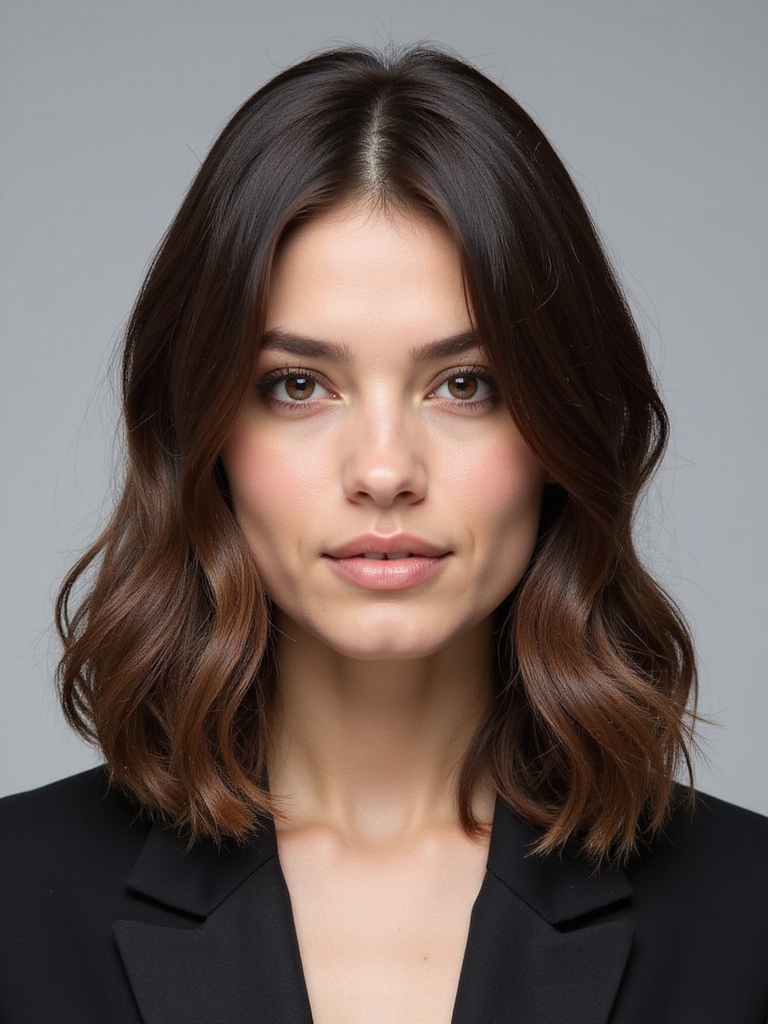
A lob is a precise shape, which is its gift and its catch: it looks sharp when fresh and shaggy the moment it grows past the collarbone. The blunt line goes first, so trims are non-negotiable for the crisp version.
Plan on a shape-up every six to eight weeks, less often if you are happily growing it longer. Between cuts, leave the line to your stylist so it stays even.
- Trim every six to eight weeks to hold the blunt line.
- A full cut runs roughly forty to eighty dollars depending on your salon.
- Use a weekly mask so the ends stay glossy enough to wear loose.
Growing a Lob Out Gracefully

The awkward grow-out is why people fear cutting a lob, but it is manageable with a plan. The goal is to keep a shape at every length, so the in-between months still look intentional.
- Add long layers as it grows so the bottom does not sit in a heavy, blunt block.
- Lean on the center part and soft waves to disguise the shelf where the old line falls.
- Get a light dusting every eight to ten weeks during grow-out to keep the ends from splitting.
Day-to-Night Lob Styling
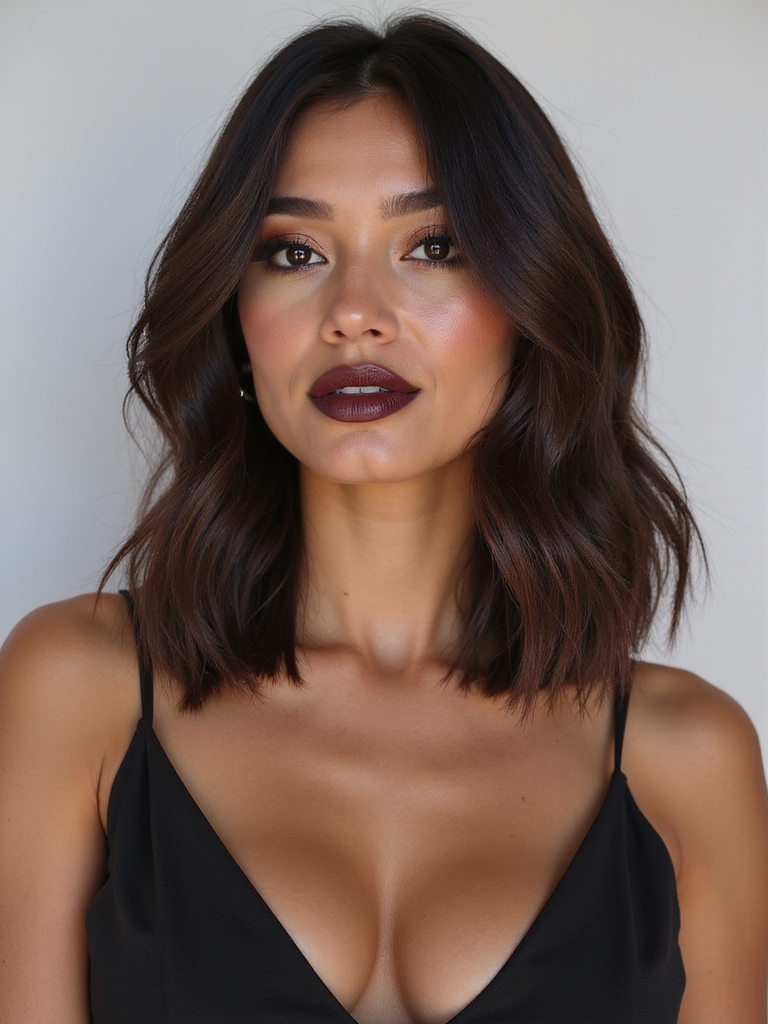
A lob shifts from desk to dinner faster than longer hair because there is simply less of it to rework. For day, the soft round-brushed version with body and a curved end is enough.
One Cut, Two Moods
To take it out, add shine and edge: run a wand over the ends for a looser bend, push the part for root lift, and break up the smoothness with your fingers and a touch of oil.
For drama, tuck one side behind your ear and pin it, leaving the other to swing. The asymmetry reads more dressed.
Wearing the Lob With Bangs

Bangs change a lob more than any other tweak, and the right pair depends on whether you keep or soften that center part. Curtain bangs are the natural partners, since they split around a middle part and blend into the face-framing length.
If you would rather break the symmetry, a wispy fringe warms up the whole look and flatters a longer forehead. Just know that any bang adds a daily styling step, so be honest about your patience first.
- Curtain bangs settle right into a center-parted lob. Our lob with bangs guide goes deeper.
- Wispy fringe warms a long forehead and adds a little youth.
- Skip a blunt, heavy bang unless your hair is thick enough to support it.
Styling a Lob Through the Seasons

Weather does real things to a lob. A few seasonal swaps keep it behaving. Summer humidity is the enemy of a smooth blowout, so lean into texture: a salt spray and an air-dried wave beat a blowout that falls by lunch.
Work With the Weather, Not Against It
Winter brings static and dryness, which flatten a lob and rough up the ends. A richer leave-in and an anti-static spritz on your brush fix most of it.
Spring and fall are the easy seasons, when the round-brush blowout holds all day.
Layering a Lob for Body
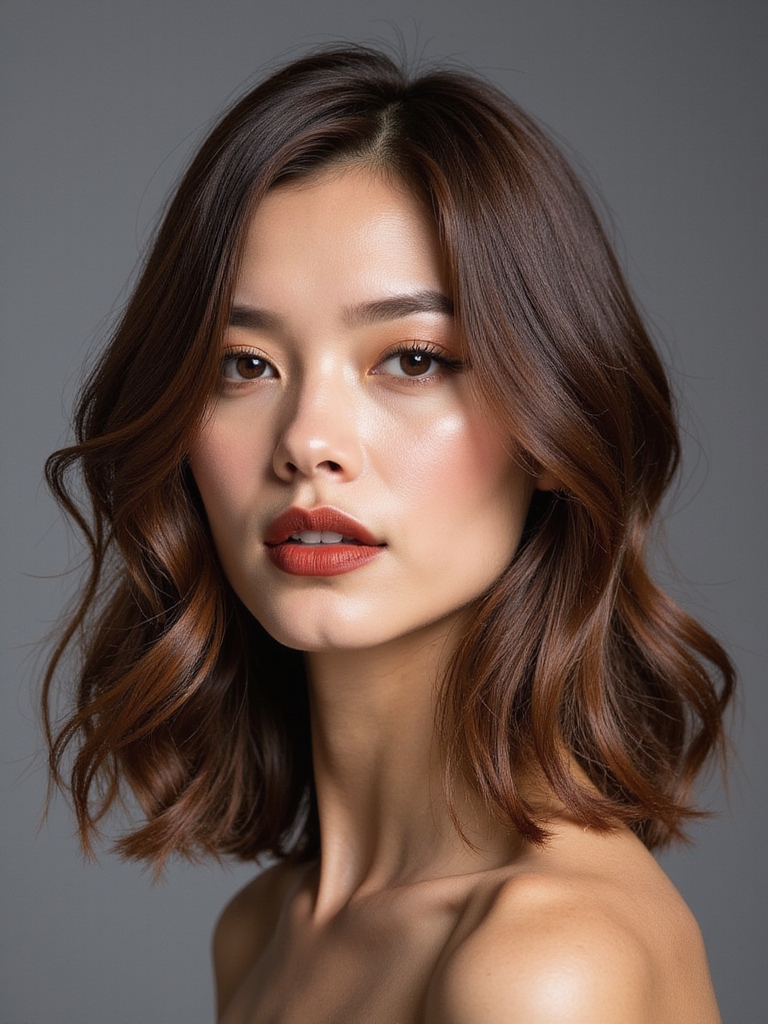
Layers are the dial that turns a lob from flat to bouncy, and the amount depends entirely on your texture. Fine hair wants very few, kept long, so the bottom stays dense and the line holds its weight.
Thick or wavy hair can take more, since internal layers remove bulk and let the shape move instead of sitting heavy. You want long, connected layers, not short choppy ones, which keep the ’90s line while adding lift. Our long A-line bobs guide shows the angled version.
Common ’90s Lob Mistakes

The mistake I see most is cutting the length too short, chasing a chin bob when the charm of the lob is that collarbone swing. Go too short and you lose the tuck-behind-the-ear versatility.
Keep the Length, Keep the Body
Right behind that is over-layering, which turns the clean line into a fussy shape that fights the era. The lob wants weight at the bottom.
The third is flat-ironing it bone-straight. The ’90s lob always had body and a curved end, so a poker-straight finish reads flat and dated, not sleek.
A Smooth, High-Shine Finish

Want the lob to look polished? Shine comes in stages, not one greasy coat at the end. It starts the moment the cut is sealed smooth in the blow-dry, because a flat cuticle is the only thing that truly reflects light.
Shine Is Built, Not Sprayed
Then a glossing pass. A drop of lightweight oil rubbed between your palms and pressed over the surface, never the roots, gives a clean mirror finish.
A final mist of shine spray sets it. It should catch the light, not look wet.
Clips, Pins, and Lob Accessories

The lob is short enough that accessories read as a deliberate styling choice rather than a way to hide a bad hair day. A single claw clip gathers the back into a low half-up that works for an office or a dinner.
Small Pieces, Big Shift
Small pins and barrettes hold one side back off the face or mark the part with a flash of metal or pearl.
A thin headband or a silk scarf leans straight into the vintage mood.
At-Home Styling vs. the Salon

The honest split is this: the cut belongs in a salon, the daily styling belongs to you. I tell clients who want this look to invest in a precise cut, because the blunt line and the part are hard to get right yourself, and a bad lob line shows immediately.
A professional blowout, around thirty-five to fifty dollars, is worth it for an event or just to learn the move by watching. After that, the round-brush blowout is really doable at home once you accept the first few will be clumsy.
Color is the other thing worth a pro, especially the soft, worn-in tones. Browse our short bob hairstyles if you are weighing a shorter version first.
Why the ’90s Lob Keeps Coming Back

Some cuts date the second the trend passes; the lob simply does not. Part of it is the proportions, which flatter a remarkable range of faces with minor tweaks. Part of it is the payoff, since few cuts look this polished for this little daily work.
Mostly, though, it endures because it sits in the sweet spot between short and long, edgy and classic, polished and easy. It is hard to look try-hard in a lob, and that ease keeps pulling people back decade after decade.
- Adaptable across face shapes, textures, and colors.
- Polished result for ten to fifteen minutes of styling.
- Reads classic and current at once. Compare the full range in our bob hairstyle ideas.
’90s Lob Questions, Answered
?What is the difference between a lob and a regular bob?
Length. A classic bob sits anywhere from the chin to the jaw, while a lob, short for long bob, falls at or just above the collarbone. The extra inches are what give the lob its swing and its tuck-behind-the-ear versatility, and they make the grow-out far less awkward than a shorter bob.
?Will a ’90s lob work on fine hair?
Yes, and it is often a great choice, because a blunt line makes fine hair look denser and more deliberate. Keep the layers minimal so the bottom stays full, ask for a blunt or barely-graduated cut, and use a light mousse for body rather than a heavy cream that drags it flat.
?How do I style a ’90s lob without heat?
Part it clean and central while soaking wet, work a curl cream or light mousse through the mid-lengths, then either air-dry with a few twists for soft waves or pin the ends under for a heat-free curve. It will read more undone than a blowout, which is very much within the era.
?How often will I need a trim?
Every six to eight weeks if you want to keep the crisp, blunt line that defines the cut. If you are growing it out, you can stretch to eight to ten weeks and ask for a light dusting rather than a full shape-up to keep the ends healthy without losing length.
The Lob, Then and Now
The ’90s lob came back because it solved the same problem it solved the first time: good hair without a production. Keep the length at the collarbone, the part central, and the ends softly curved, and you have the bones of it on almost any texture.
From there it is yours to push, sleek for the office, undone for the weekend, dressed up with a tuck and a pin for the evening. Save the versions that caught your eye, be honest with your stylist about your daily patience, and let the cut do the heavy lifting it was designed for.