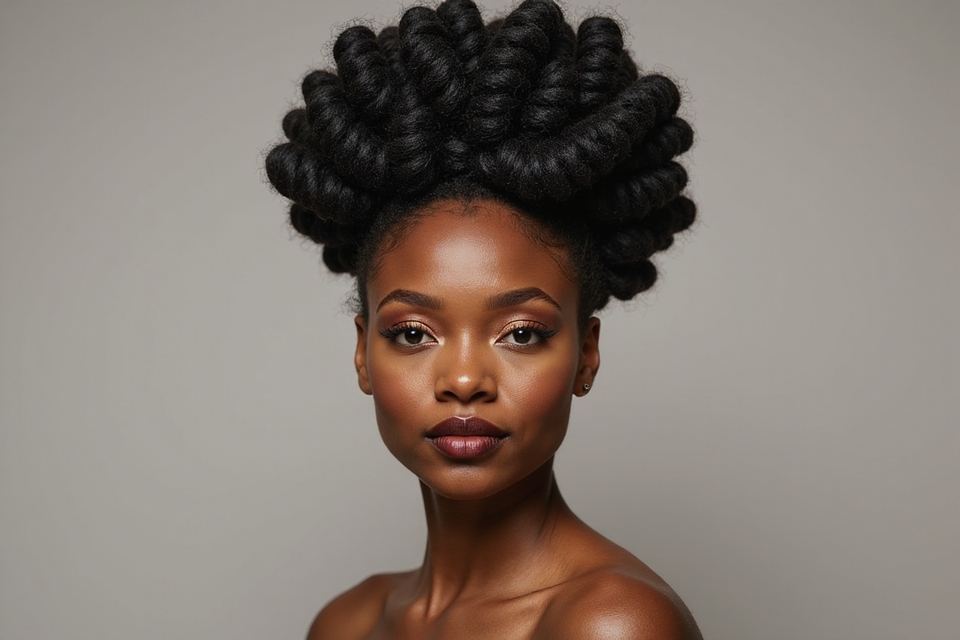

The angled bob has a reputation for being intimidating, all sharp lines and no going back. But the women who sit down asking for one usually walk out looking like they finally found the cut they’d been circling for years. There’s a reason it never really leaves the salon: it flatters, it moves, and it has an opinion.
A long A-line bob is simply a bob that’s longer in the front and shorter in the back, joined by a clean diagonal line. That single angle is what gives the cut its drama. Below I’ll walk through the length, the slope, the color, and the honest upkeep, so you can decide how much attitude you actually want before you sit in the chair.
The A-Line Bob at a Glance
- A long A-line bob is longer in front, shorter in back, joined by a clean diagonal line.
- The front length should suit your face, while the back angle sets how dramatic the cut reads.
- Budget a trim every 4 to 6 weeks ($30 to $55) to stop the dreaded triangle growth.
- It styles sleek or tousled, so one cut quietly covers a whole range of looks.
A-Line Bobs and the Confidence They Carry

The long A-line bob is the cut I recommend when someone wants impact without going truly short. It’s longer in the front, shorter in the back, with a clean diagonal connecting the two. That angle does the heavy lifting: it frames the face up front and gives the back a tucked, polished shape.
Most of my clients land here when they’re bored of one-length hair but not ready to give up their length. It photographs sharp, swings when you move, and still goes up in a clip on a rushed morning.
- Longer front pieces graze the collarbone and frame the jaw
- The angled back sits shorter, building lift and shape
- A good bridge cut for anyone testing the waters before going shorter, like a classic long bob

Razor-Cut Edges and Why They Work

There are two ways to build an A-line: with shears for a heavier, blunt edge, or with a razor for a softer, broken-up one. The razor is what gives you that piece-y, feathered finish that moves and catches light.
I reach for a razor on thick or coarse hair that needs weight pulled out, since it thins the ends as it shapes them. On fine hair I’m more careful, because an over-razored edge can go stringy and sparse. Ask your stylist which method suits your texture before they start; it changes the entire feel of the cut.
- Razor cut: softer, feathered ends; best on medium-to-thick hair
- Blunt shear cut: heavier, sharper line; best on fine hair that needs density
- A razor edge wants a trim every 5 to 6 weeks to stay clean
👍Why women love the A-line bob
- +The angle frames the face and adds instant structure
- +Goes from polished to tousled with one styling change
- +Keeps length up front while still feeling like a real change
👎What to weigh first
- –Needs a trim every 4 to 6 weeks to hold its shape
- –Grows into a triangle if you skip the touch-ups
- –A steep angle on fine hair means styling most mornings
The Angle That Frames Your Best Features
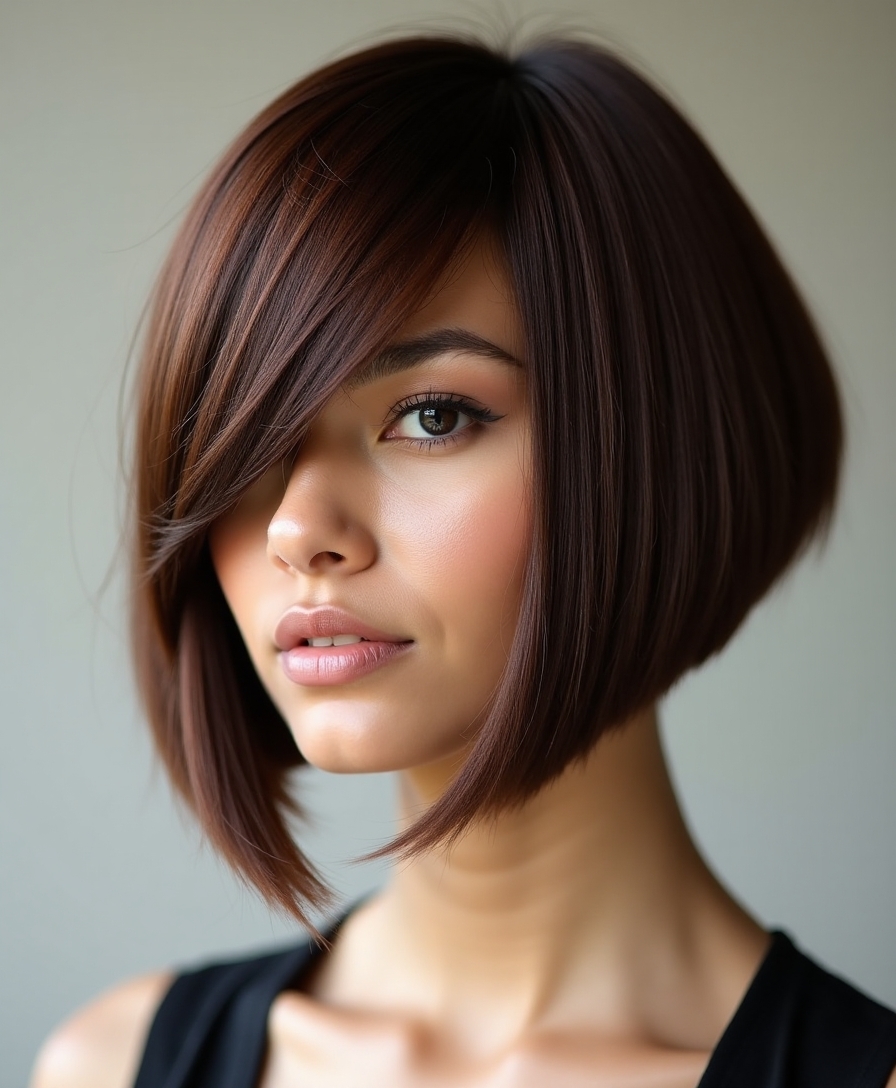
The whole point of an A-line is where those longer pieces land. Cut to graze the cheekbones, they pull the eye up and sharpen your bone structure. Cut to the jaw, they slim a rounder face.
Match the Front Length to Your Face
I always check a client’s face shape before setting that front length. A strong, square jaw softens under pieces that fall just past it. A round face gets length and angle to lengthen it, and there’s more in our guide to haircut ideas for round faces. A long face wants the front kept a little shorter so it doesn’t drag down further.
The back graduation matters too. A steeper angle looks dramatic and modern, while a softer one is more classic and forgiving. Bring a photo so your stylist can see which end of that spectrum you actually want.
The Perfect Length for Real Impact

Length is where most A-lines go right or wrong. Too short in front and you lose the dramatic slope; too long and the angle disappears into a regular lob.
The measure I use is simple: from the earlobe down to the collarbone, then back up an inch or two for the front guide. That puts the longest pieces around the collarbone and gives the angle room to actually show itself.
Your hair’s weight changes the math. Thick hair can carry a longer, more dramatic A-line, while fine hair usually looks better with a shorter, sharper version that holds its shape. Be honest about how much daily styling you’ll really do, because a steep A-line on fine hair needs a round brush most mornings.
“If you’re nervous about commitment, start with a softer angle. You can always go steeper at the next appointment, but you can’t un-cut a dramatic slope. I’d rather build you up to bold over two visits than watch you panic in week one.”
Graduated Layers That Add Movement

A flat A-line can look heavy and helmet-like, which is where graduation comes in. Stacking the back in subtle layers builds lift at the crown and stops the cut from hanging like a curtain.
On thick hair I layer more aggressively to remove bulk; on fine hair I keep it light so the ends don’t go wispy. The goal is movement that follows the angle and gives the shape some life.
- Stacked back layers create lift and a rounded shape at the crown
- Feathered ends catch the light and soften the perimeter
- Skip heavy internal layers on very fine hair, since they can thin out the ends
Styling Tips for Razor-Cut Edges

The crisp edge is the whole appeal, and it fades fast if you style it wrong. My non-negotiable is blow-drying downward with a paddle brush, chasing the brush with the nozzle so the cuticle lies flat and the line stays sharp.
The Downward Blow-Dry
End on a blast of cold air to lock the shape in, then a flat iron only if you want it truly glassy. A texturizing spray, used lightly on damp hair, gives the razored ends grip without going gritty.
Go easy on product. Heavy creams drag the angle down and kill the swing. A pea of smoothing serum on the ends is usually all an A-line needs to behave.
📋Your A-line upkeep checklist
- ✓Book trims every 4 to 6 weeks to hold the angle
- ✓Blow-dry downward with a paddle brush after every wash
- ✓Keep a smoothing serum on hand for the ends
- ✓Watch for widening around the ears and book early if you see it
Color Techniques That Play Up the Angle

Color and an A-line are a great pairing because the cut already has built-in dimension for color to follow. A darker root melting into brighter ends exaggerates the length difference between front and back and makes the angle pop. If you’re going lighter overall, a blonde lob shows the slope beautifully.
Balayage placed along the front pieces draws the eye to the slope, while a solid glossy tone keeps things sharp and graphic. For cooler-weather shade ideas, see winter hair colors.
- Root shadow: adds depth at the crown and emphasizes the stacked back
- Face-framing highlights: brighten the longest front pieces
- Single glossy tone: keeps a sharp A-line looking graphic and clean
A Transformable Bob for Every Occasion

One of the quiet advantages of this cut is how far it stretches. Sleek and flat-ironed, it looks sharp and put-together; tousled with a little texture spray, it turns soft and easy for an evening out.
That range is why I push the A-line for women who want one cut to cover a busy life. A two-minute change, smoothing it down or roughing it up, takes the same haircut from a meeting to dinner. Tuck the front behind one ear and you’ve got a third look entirely.
Stylist’s shortcut
Triangle growth is the A-line’s number-one complaint. The fix is preventive: book your next trim before you leave the salon, and the shape never gets the chance to widen at the ears.
Getting the A-Line Angle Right

The angle itself is where skill shows. Most faces suit a slope somewhere between subtle and steep, and the difference comes down to how much height sits between the back and the front. Consistent tension through every section is what keeps both sides matching, and a guide line off by a few millimeters throws the whole shape. This is exactly why I’d steer you away from cutting an A-line at home: the back is impossible to see and even harder to keep even.
- A gentle slope feels classic and grows out forgivingly
- A steep slope is dramatic but asks for more frequent trims
- The back is the hardest part to cut and to maintain yourself
Maintaining a Crisp A-Line Bob

Here’s the part nobody warns you about: an A-line is a standing date with the salon chair. Because the shape lives or dies on that precise angle, it loses definition faster than a one-length cut. Shaping it up every four to six weeks is what stops it from sliding into a shapeless lob.
Budget for it: a maintenance trim usually runs $30 to $55, on top of your full cut. If that cadence sounds like a lot, ask for a softer, less steep version that grows out more gracefully. That’s the realistic trade-off between drama and upkeep.
Texture That Softens the Geometry

A razor-sharp A-line can sometimes look too severe, especially on softer features. Adding texture is how you keep the structure but lose the hard edge.
When Sharp Feels Too Sharp
Beachy waves bent through the mid-lengths break up the clean line and relax the whole cut, the same move that softens a short wavy bob. Point-cutting the ends, those tiny vertical snips, takes the severity off a blunt perimeter without losing the angle. Even a light finger-tousle after drying changes the mood.
I lean on texture most for clients who love the shape but worry it looks stiff. A little deliberate undone-ness makes a precise cut wearable for an ordinary Tuesday.
Celebrity-Inspired A-Line Bobs

The A-line shows up on red carpets constantly because it photographs so cleanly, and those shots are where half my consultation photos start. What’s worth borrowing is the principle behind the look: how a steep angle comes across bold and editorial, or how a soft, wavy version stays approachable and everyday.
When a client brings me a screenshot, I ask which part they actually love, the length, the angle, or the finish. We lift that one detail and build it onto their hair and their face. A famous cut copied wholesale rarely survives the trip from photo to real life.
- Steep, sleek versions look editorial and bold
- Soft, wavy versions stay everyday and approachable
- Borrow the angle or the finish, then adapt it to your own face
The Tools Worth Owning for Home Styling
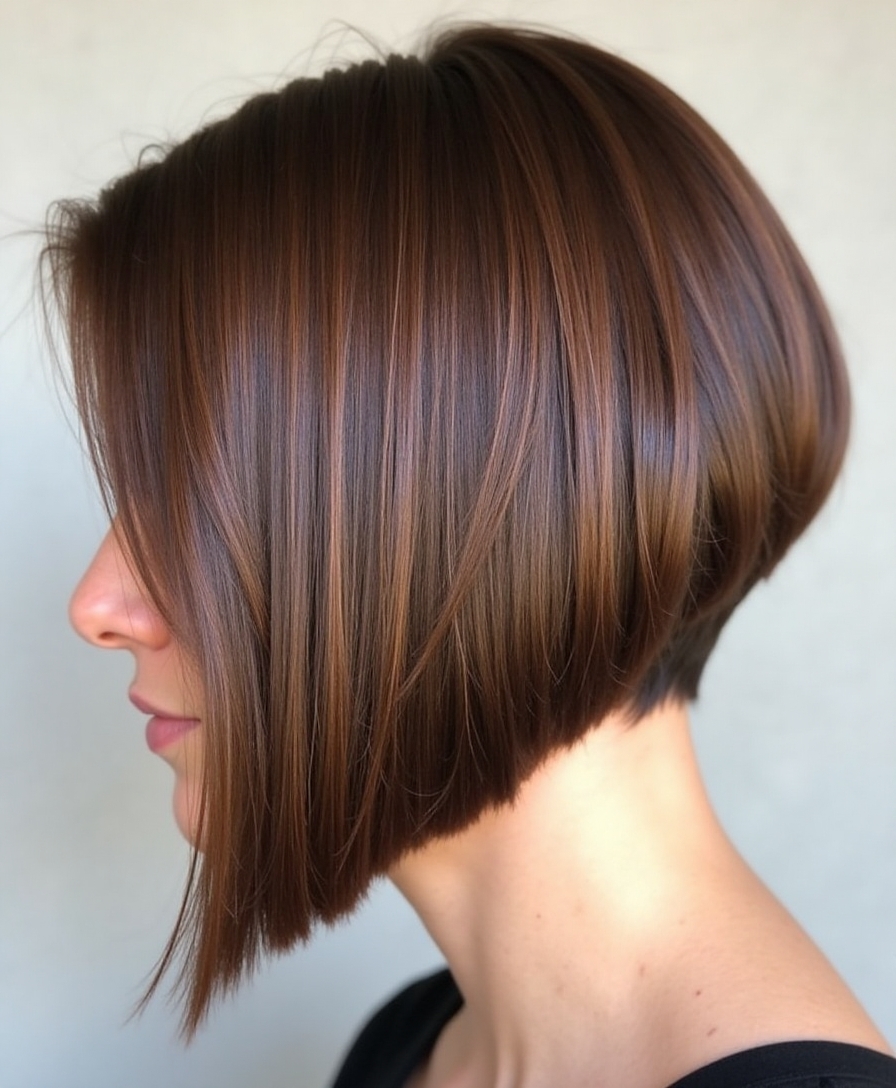
You don’t need a salon’s worth of equipment to keep an A-line looking good, but a few tools truly earn their place. The first is a good paddle brush, flat and wide, with enough tension to smooth the line as you dry.
Second is an ionic blow dryer, which cuts drying time and tames flyaways far better than a cheap one. A flat iron is optional, for the days you want glass, and sectioning clips make the whole process faster and neater.
What you don’t need is a drawer full of products. Heat protectant, a smoothing serum, and a light texture spray cover almost everything this cut asks for. Spend on the dryer, save on the rest.
Troubleshooting Common A-Line Bob Problems

Almost every A-line frustration has a name and a fix. The most common is the triangle shape, when the bottom widens out as it grows, especially around the ears. Touch-ups every four to six weeks head it off, and point-cutting the ends softens it between visits.
A flat crown is the next-most-common gripe. Subtle stacked layers at the back add the lift it’s missing, and a round brush with a cool-air finish props it up day to day.
If the angle itself looks lost or uneven, that’s a redefinition job for your stylist rather than a home fix. Bring photos of how it looked fresh so they can rebuild the line you loved.
Seasonal Styling Adjustments
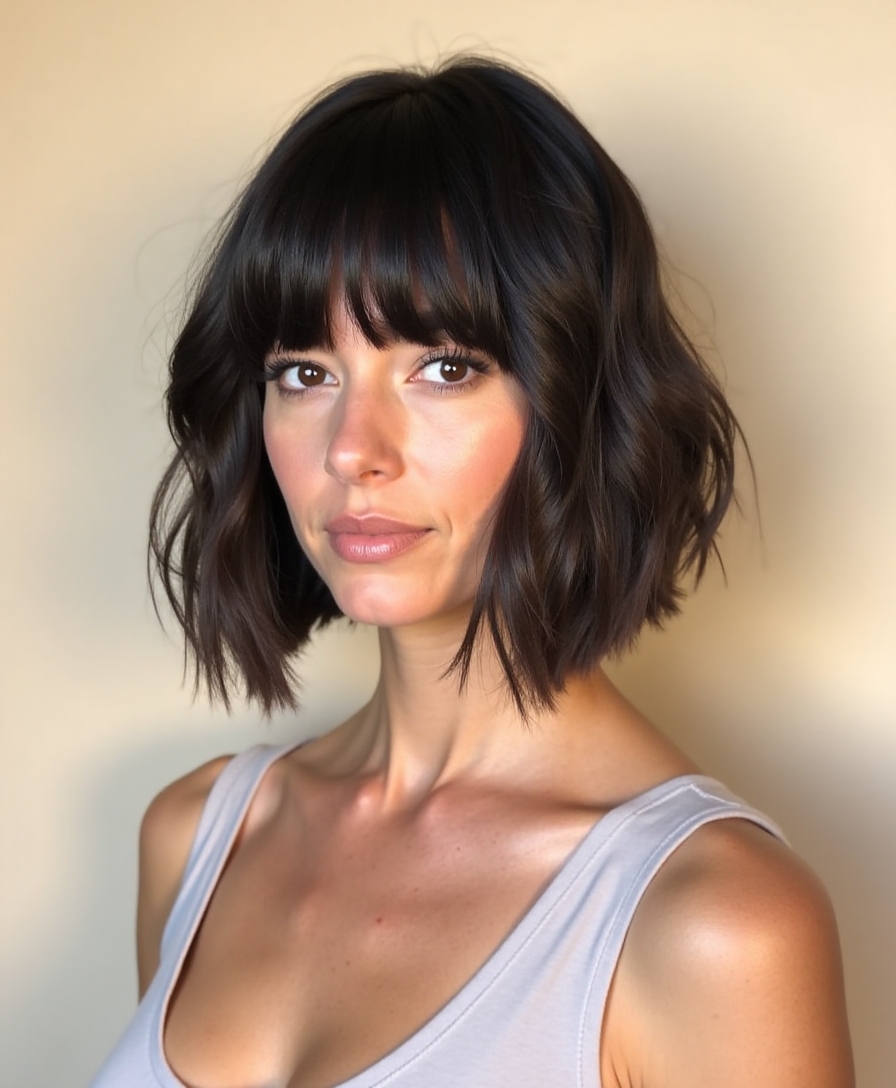
The same A-line shifts with the seasons, which keeps it from getting stale. Heading into warmer months right now, I’m doing more texture spray and beachy bends so the cut moves and forgives a little humidity.
When the weather turns cold it goes the other way: heavier smoothing creams and a sleeker, glassier finish that holds up under hats and dry air. You don’t need a new cut to feel current, you need to change how you finish the one you have.
Walking Into the Salon: What to Say

The consultation makes or breaks an A-line, because so much rides on getting the angle and length right. Here’s exactly what to cover before they start cutting:
- Show two photos, front and back, so your stylist sees the real shape you want
- Say how steep you want the angle, from subtle to dramatic
- Name your longest front length: collarbone, jaw, or cheekbone
- Be honest about how much daily styling you’ll actually do
- Ask what trim schedule the cut will need before you commit
The Cut That Grows With You
A long A-line bob rewards the women who lean into it. It’s a cut with a point of view, all angles and movement and a little edge, and it bends from boardroom-sleek to weekend-tousled without a second appointment.
If you’ve been circling this one, the next step is simple: save a couple of photos, find a stylist who cuts angles with confidence, and start with a slope you can live with. You can always go steeper later. The A-line is less a single haircut than a direction you can keep refining for years.
Don’t Miss These