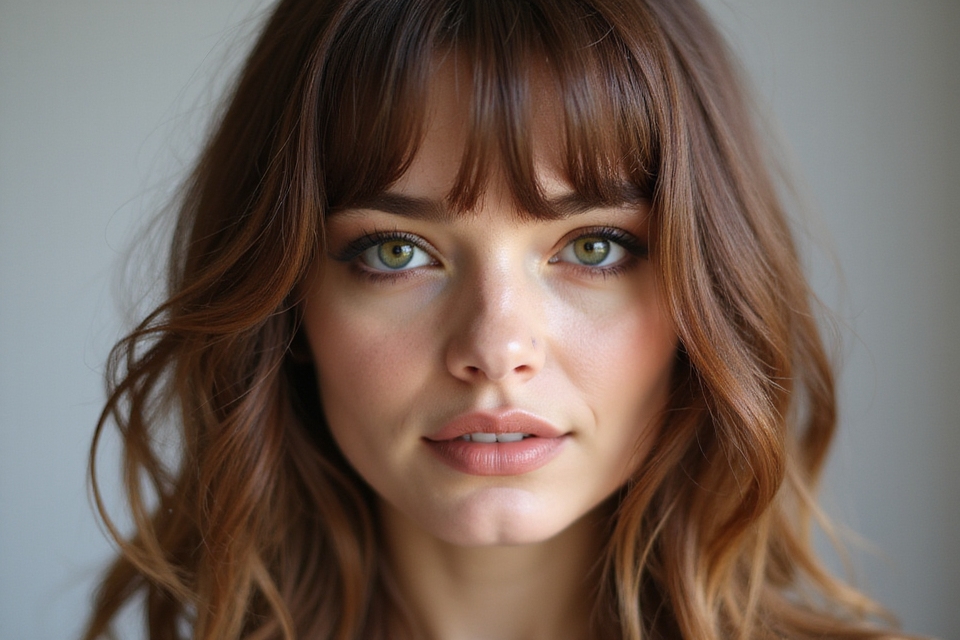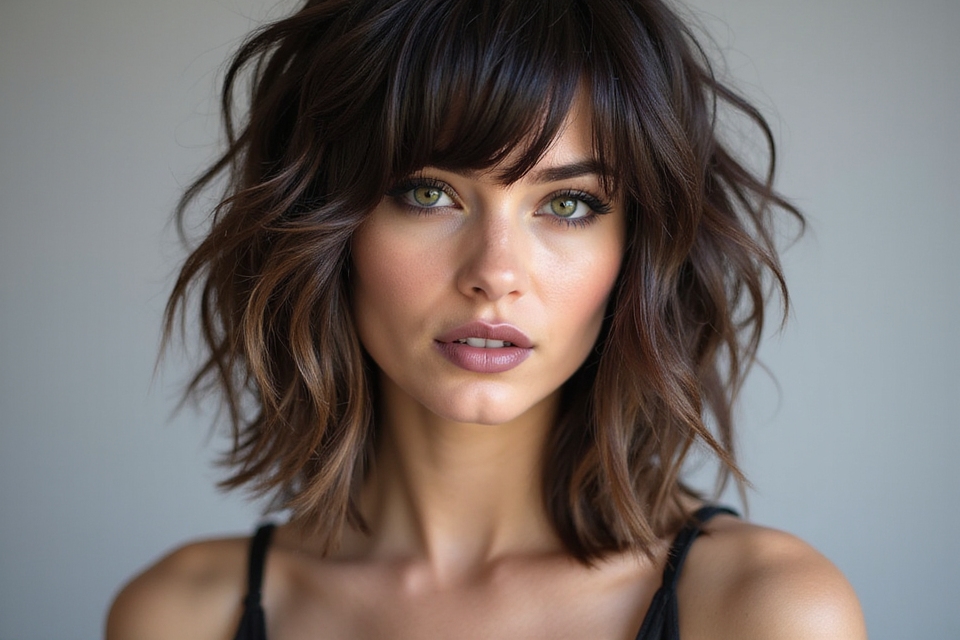
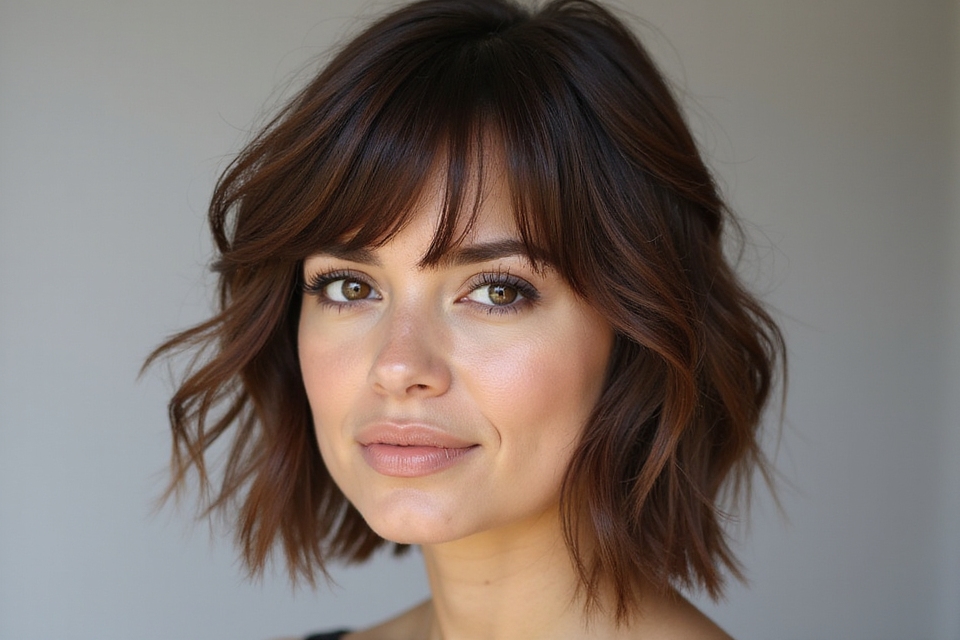
The photo gets pulled up before she’s even sat down. Nine times out of ten it’s a lob with bangs, screenshotted at midnight, and the question is always the same: can I actually pull this off? My answer is usually yes, because this cut adapts to whoever happens to be wearing it.
A lob with bangs is just a long bob with a fringe, but that small addition changes everything about how the cut frames your face. Below I’ll walk through the bang styles, the face shapes, the honest upkeep, and the styling that makes it work, so you can decide which version is yours before you ever pick up the phone.
What to Know Before You Cut
- A lob with bangs works on nearly every face shape and texture; the bangs just change to suit you.
- Curtain bangs are the low-commitment choice, while blunt bangs are high-impact but high-upkeep.
- Budget a trim every 2 to 6 weeks for the bangs and 6 to 8 weeks for the cut itself.
- The whole look changes with finish alone: sleek, waved, or air-dried texture.
What Makes the Long Bob So Versatile

The lob earns its keep because it sits at the most forgiving length in hair: long enough to knot back on a hot day, short enough that the cut actually feels new. It grazes the collarbone, holds a bend without much coaxing, and looks polished even on a rushed morning.
Add bangs and you get face-framing without committing to a full pixie-and-fringe overhaul. Most of my clients land here when they want movement but still want to throw it into a low pony on gym days.
- Length range: anywhere from chin to collarbone, so it flatters fine and thick hair alike
- Pairs with nearly every fringe, from curtain bangs to a blunt, long fringe
- Grows out cleanly, with no awkward mullet stage like a true short bob
How Bangs Boldly Transform a Lob

A lob on its own is clean and a little safe. Bangs are what make people ask if you did something dramatic when you really just changed four inches up front.
I’ve watched a quiet shoulder-length cut turn into someone’s whole signature the second we added a fringe: the eyes get a frame, the cheekbones catch a shadow line, and the cut suddenly has an opinion. The trade-off is honest, though. Bangs ask for a trim every three to four weeks, and that 11 p.m. urge to cut them yourself never fully goes away.
- Bangs draw attention up to the eyes, softening a long forehead
- They fake fullness at the hairline on thin hair
- Expect $15 to $25 for a salon bang trim, or free once you learn to point-cut at home
Not sure where to start? Pick the version that matches your actual morning.
🎯Low effort
Curtain bangs you can tuck or wear down. They blend into the lob as they grow and forgive a missed trim.
🎯Statement
A blunt drop that needs daily styling but turns the cut into the focal point of your whole look.
Matching Lob Styles to Your Face Shape

Face shape decides more than length here, and it’s the part people skip. A round face wants a lob that lands just below the chin with bangs parted off-center, so the eye travels downward and the face reads longer.
A Quick Mirror Test Before You Commit
A square jaw softens under a slightly longer, textured lob and wispy bangs that break up the straight lines. Heart shapes, broad through the forehead and tapering to a narrow chin, do beautifully with curtain bangs that add a little width down at the jaw. If your face reads long, a blunt collarbone lob with a fuller fringe shortens it in the best way.
When clients aren’t sure, I have them pull their hair back and look for where their face is widest. That single check tells me where the bangs should sit. There’s more on this in our guide to haircut ideas for round faces.
Choosing the Flattering Bangs Style for You
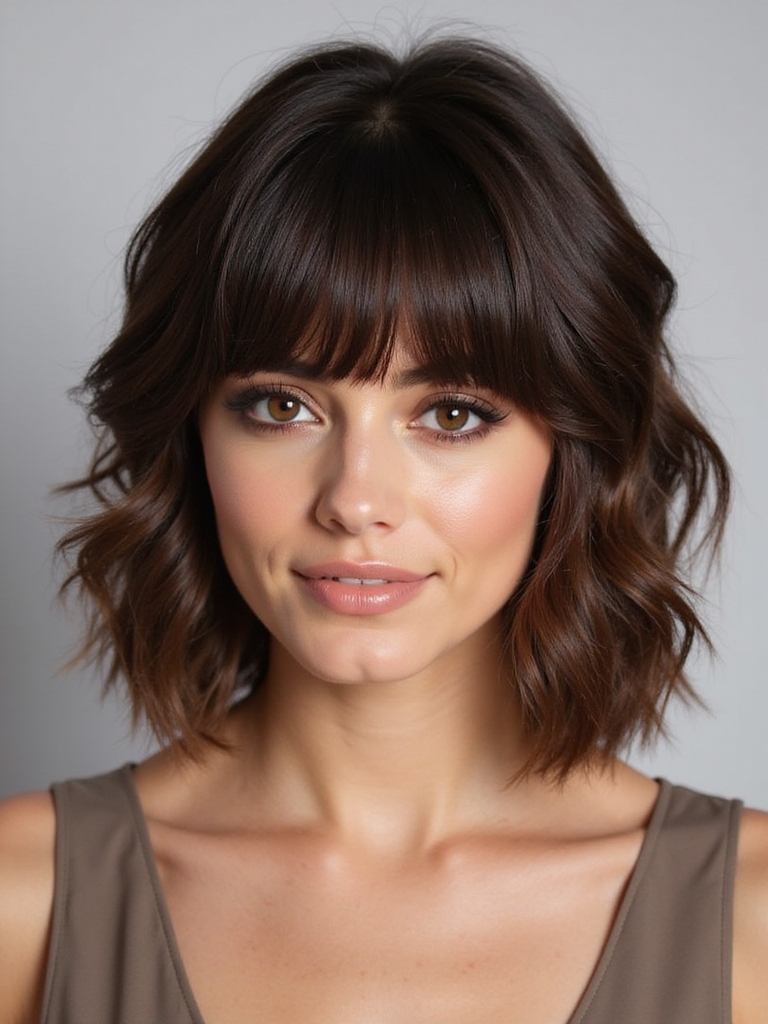
Bangs come down to three separate choices: length, density, and parting. Get those right and almost any face works.
I usually steer first-timers toward something they can grow out painlessly, which is why curtain bangs keep winning; they fail gracefully. Blunt bangs are striking on the right person but unforgiving. Miss a trim and they look shaggy fast.
- Fine hair: lighter, wispy bangs so you don’t pull density from the back
- Thick or coarse hair: a fuller fringe holds shape; ask for internal thinning deep in the section
- Curly or wavy: longer bangs cut dry, since they’ll spring up an inch once they dry
🅰️Curtain bangs
Forgiving and low-commitment; blends as it grows. Trim every 4 to 6 weeks. Best if you’re new to a fringe.
🅱️Blunt bangs
Sharp and high-impact; demands a trim every 2 to 3 weeks plus daily styling. Best if you’ll truly keep up.
Timeless Elegance: Soft Curtain Bangs
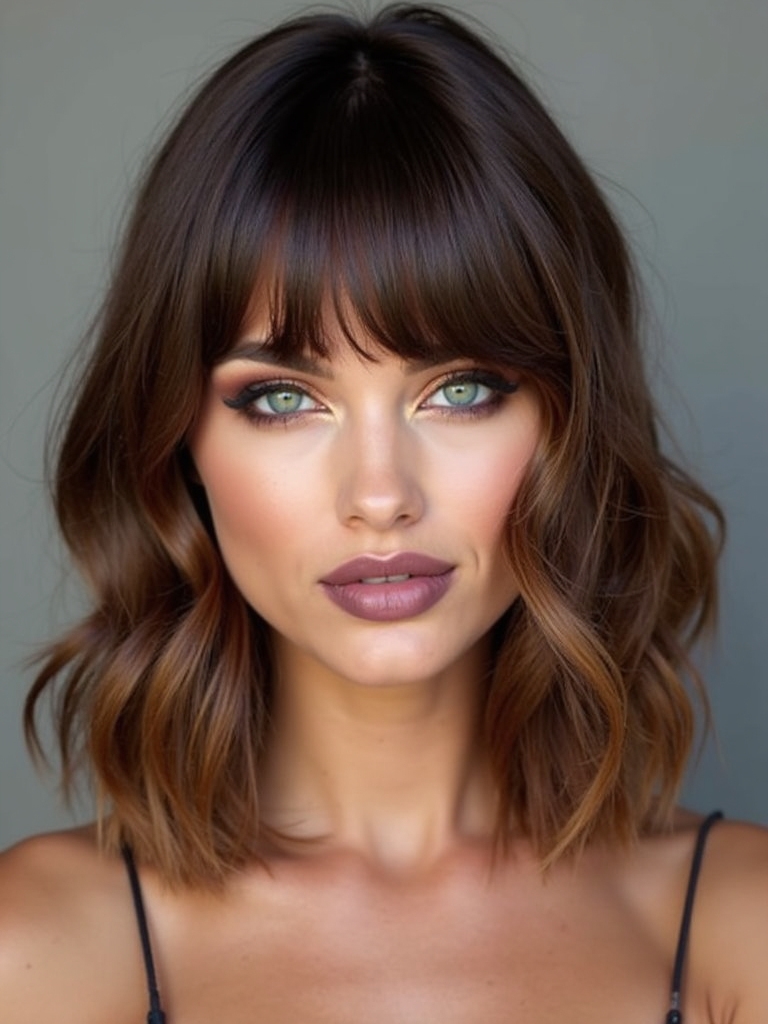
Soft curtain bangs are the ones I cut most, and it isn’t a trend thing; they just behave. They part down the middle or slightly off, sweep toward the cheekbones, and melt into the front layers of the lob so there’s no hard line.
The styling is quick: a round brush, thirty seconds of blow-drying while you push them apart with your fingers, done. No daily flat iron required. They suit nearly every age and texture, which is why so many women over fifty ask for them when they want a refresh without a shock.
The honest catch is the in-between stage around week six, when they hit the cheekbone and tickle. That’s your cue to book a quick shape-up before the frustration wins.
Blunt Bangs for a Bold Statement
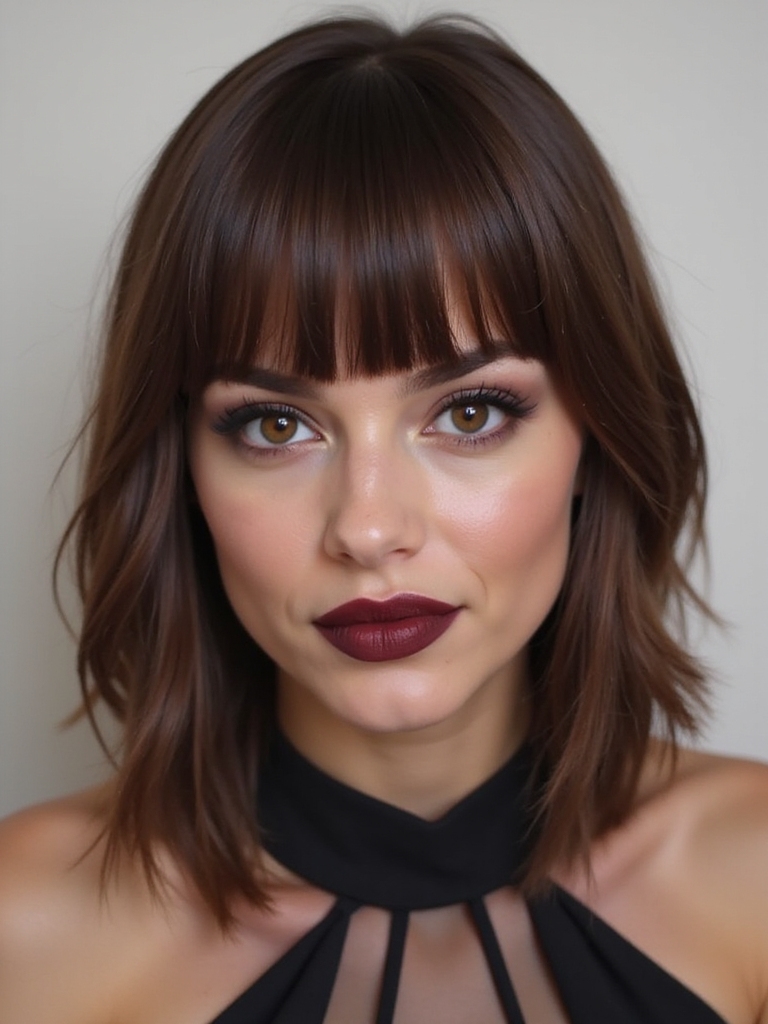
Blunt bangs are the opposite personality: a clean, dense line straight across the brow. The first time I cut a true blunt fringe on a longtime client, she actually gasped, because it changes the face that fast. They flatter strong cheekbones and straight-to-wavy hair, and they pair with a sleek lob for a look that’s all edges and intention.
Be clear-eyed about upkeep. Blunt bangs show every wave and cowlick, so fine or curly hair fights them. Budget a shape-up roughly every couple of weeks and a morning pass with a flat brush. If that sounds like too much, the wispy version gives you most of the drama with half the maintenance.
Two things people get wrong before they ever sit down:
❌ Myth: Bangs are high-maintenance for everyone
✅ Reality: Curtain and wispy styles only need a quick shape-up every month or so. Only a true blunt fringe is truly demanding.
❌ Myth: You can’t have bangs with curly hair
✅ Reality: You can. They’re just cut dry and a touch longer to allow for spring, and texture actually hides an imperfect line.
Layered Lobs Built for Movement

Layers are what keep a lob from looking like a helmet. A few face-framing layers around the front plus some internal texturing give the cut its swing and keep it from going helmet-flat, and they help the bangs settle into the shape.
I keep layers subtle on fine hair so the ends don’t go stringy, and go bolder on thick hair that needs weight pulled out. Pair layered movement with face-framing layers with bangs for the softest version of this cut.
- Ask for long layers if you want movement without losing thickness at the ends
- Skip heavy layering on very fine hair, since it can read sparse
- A round brush gives the layers bounce; a flat-iron flip gives them polish
Textured Lob Waves Without the Fuss

The undone, slightly tousled lob is the one people screenshot most, and it’s also the most beginner-friendly to recreate. Here’s the order I use on clients who want beachy texture that lasts past lunch:
- Mist damp hair with a salt or texture spray, concentrating from mid-length to ends
- Rough-dry with your fingers until about 80% dry to build natural bend
- Wrap one-inch sections around a curling wand, alternating directions and leaving the ends out
- Once cool, rake your fingers through and shake; never brush, or the texture drops
| Method | Tool | Finish and hold |
|---|---|---|
| Air-dry twist | Texture spray + fingers | Soft, loose bend; lasts a day, very low heat |
| Wand waves | One-inch curling wand | Defined S-wave; holds 2 to 3 days with spray |
| Flat-iron bend | Flat iron, wrist flick | Polished, modern wave; fast but needs protectant |
Sleek and Polished Lob Styles

When a client wants the lob to look sharp, we go glassy. A sleek lob is about blunt or barely-layered ends, a center or deep side part, and a finish that catches light. With bangs, this usually means a straight, polished fringe that mirrors the clean line of the cut.
The work here is all in the finishing. A smoothing serum on damp hair, a blow-dry with tension on a round brush, one slow flat-iron pass, then a single drop of shine oil worked through the very ends. Heat protectant first, always, because glassy hair shows damage instantly. This look photographs beautifully but needs touch-ups the second humidity hits.
Lob With Bangs for Every Hair Type

The reason this cut travels so well is that there’s a version for every texture; the bangs just change to suit it. Straight hair takes a blunt or curtain fringe cleanly. Wavy hair loves a piece-y, soft fringe that moves with its bend.
Coily and curly hair absolutely can wear this. The key is cutting the bangs dry, in their natural state, and leaving them longer so shrinkage doesn’t surprise you. For wavy textures specifically, see our take on short wavy bob haircuts.
- Straight: blunt or curtain bangs with minimal product
- Wavy: a soft, separated fringe; a little cream to define it
- Curly or coily: longer bangs cut dry, with a curl gel to set the shape
Styling Products: Heat Protection and Hold

You don’t need a shelf of products for a lob, you need the right three. The first is non-negotiable: a heat protectant before any hot tool, full stop. It’s the difference between hair that holds a wave and hair that frizzes by noon.
The Three-Product Rule
Second is a lightweight styling base, like a mousse or texture spray on damp hair for grip. Third is a finisher: shine oil for sleek looks, or a flexible hairspray for waves you want to last the day.
Skip the heavy creams and waxes. On a lob they drag down the ends and kill the movement you paid for. A little of anything goes a long way at this length.
Crafting the Lob: A Stylist’s Cutting Notes

I’m not going to talk you through cutting your own lob, because the angle at the back is exactly where home jobs go sideways. But knowing how it’s built helps you ask for the right thing.
A good lob is cut in sections, usually with a slight graduation at the back so it doesn’t sit flat, and a guide length set at the front so both sides match your jaw. The bangs come last, cut to match the shape that’s already there.
- Bring two photos, front and side, so your stylist sees the real shape you want
- Say whether you want blunt ends (heavier) or point-cut ends (softer and piece-y)
- Ask where the bangs will fall once they air-dry, since that’s how you’ll wear them most days
DIY Lob Versus a Professional Cut

I get the pull of the bathroom-scissors moment; I’ve stood there myself with kitchen shears at midnight and regretted it by morning. The truth about DIY is that you can usually manage a bang trim between appointments, but the cut itself is worth paying for.
A salon lob runs roughly $45 to $90 depending on where you live, and that buys you symmetry, the right graduation, and bangs cut to your actual face. If money is tight, stretch the full cut to every ten to twelve weeks and just maintain the fringe yourself. That’s the realistic middle ground most of my clients settle into.
Keeping Your Lob Healthy: A Care Routine
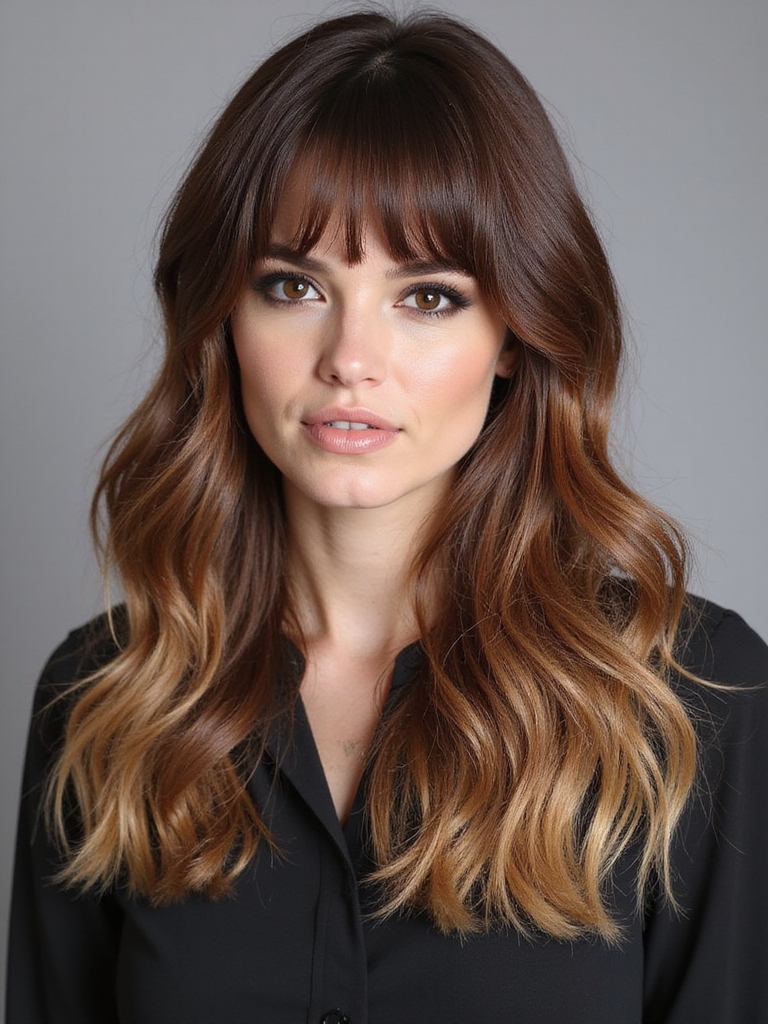
A lob lives or dies by its ends, since they’re the part everyone actually sees. Here’s the simple routine I send clients home with:
- Trim every 6 to 8 weeks to hold the shape and stop split ends from traveling up
- Use a weekly mask or deep conditioner, working it from the mid-lengths down through the ends
- Smooth a leave-in or light serum through damp hair before you style
- Air-dry when you can, and keep the flat iron under 350°F to protect the ends
Transform Your Lob With a New Color
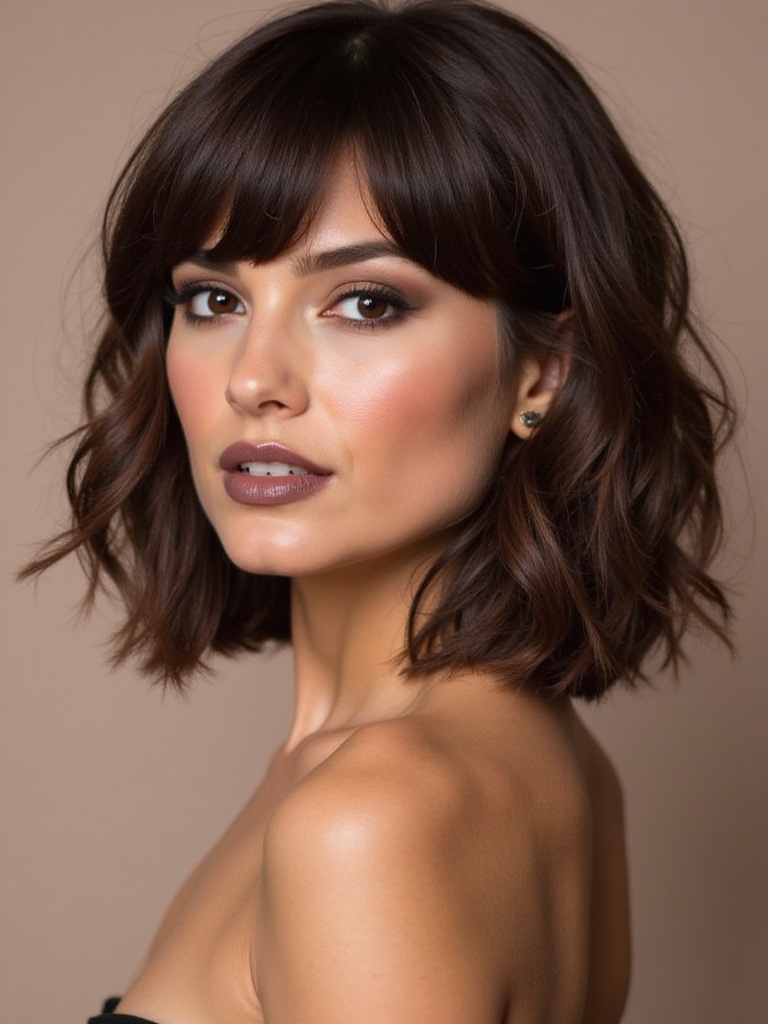
Color and a lob are a natural pairing because the cut shows off dimension so well; every layer catches a different tone. A face-framing money piece or soft highlights around the bangs brightens the whole front without a full head of foil, and it’s a lower-commitment way to test going lighter.
If you want depth instead, a glossy single tone, think a rich brunette or a soft balayage melt, makes the lob look thick and expensive without much effort. Just remember color is upkeep on top of cut. A refresher gloss every couple of months keeps the tone from going brassy between salon visits. For cool-season ideas, see winter hair colors.
Seasonal Adjustments That Keep a Lob Fresh

One cut, four moods; that’s the quiet advantage of a lob. Right now, heading into the warmer months, I’m doing more air-dried texture and lighter face-framing pieces so the cut moves in the heat instead of sticking to your neck.
Same Cut, Four Finishes
In colder months the same lob goes sleeker and glossier, partly because dry air begs for oil and partly because a polished finish just lands right with sweaters. The bangs follow the season too: softer and piece-y in summer, smooth and blunt in winter.
You don’t need a new cut to feel current, you need to change how you finish it. That’s a five-dollar bottle of texture spray, not another salon bill.
Hair Accessories for Your Lob: Clips and Scarves

The awkward stretch when bangs are growing out is exactly when accessories earn their place. A couple of claw clips or a thin headband pushes a too-long fringe back without that pinned-down look, and it buys you weeks before the next trim.
Beyond the practical, they’re the cheapest way to change a look. A silk scarf knotted at the nape, a pearl clip holding one side back; small moves that make a real difference on a second-day lob.
- Claw clips for half-up texture or to tame a grow-out fringe
- A silk scrunchie to protect the ends in a low pony
- Thin metal headbands to slick bangs back on day-two hair
Celebrity Lob With Bangs Worth Bookmarking

Half the photos that land in my chair come from the same place: a red-carpet or magazine shot someone screenshotted at 1 a.m. The lob with bangs shows up there constantly because it photographs so cleanly, framing the face right for the camera.
What’s worth copying is the underlying principle. The way a chin-length lob with a soft fringe balances a strong jaw. How a tousled version looks young and easy. Bring the quality you like: the texture, the length, the way the fringe parts.
I’ll always ask which part of the photo you actually love, because it’s usually one detail we can lift and adapt to your hair. Lifting that one element is how a saved photo becomes a cut that actually works on you.
The Lob Transformation: Going From Long to Short

Cutting off real length is emotional. I’ve had clients tear up in the chair, and not always happy tears at first. The move from long hair to a lob feels bigger than the inches suggest, so my advice is to go in stages if you’re nervous.
Take it to the collarbone first, live with it for a cut or two, then go shorter if you still want to. The bangs can wait for the second appointment so you’re not changing everything about your face on the same day.
- Cut to collarbone length first if you’ve had long hair for years
- Add bangs at a follow-up visit, not the same day, to ease the adjustment
- Save photos of the texture you want, since long-to-lob hair often waves differently once the weight is gone
Bangs Upkeep, Made Manageable
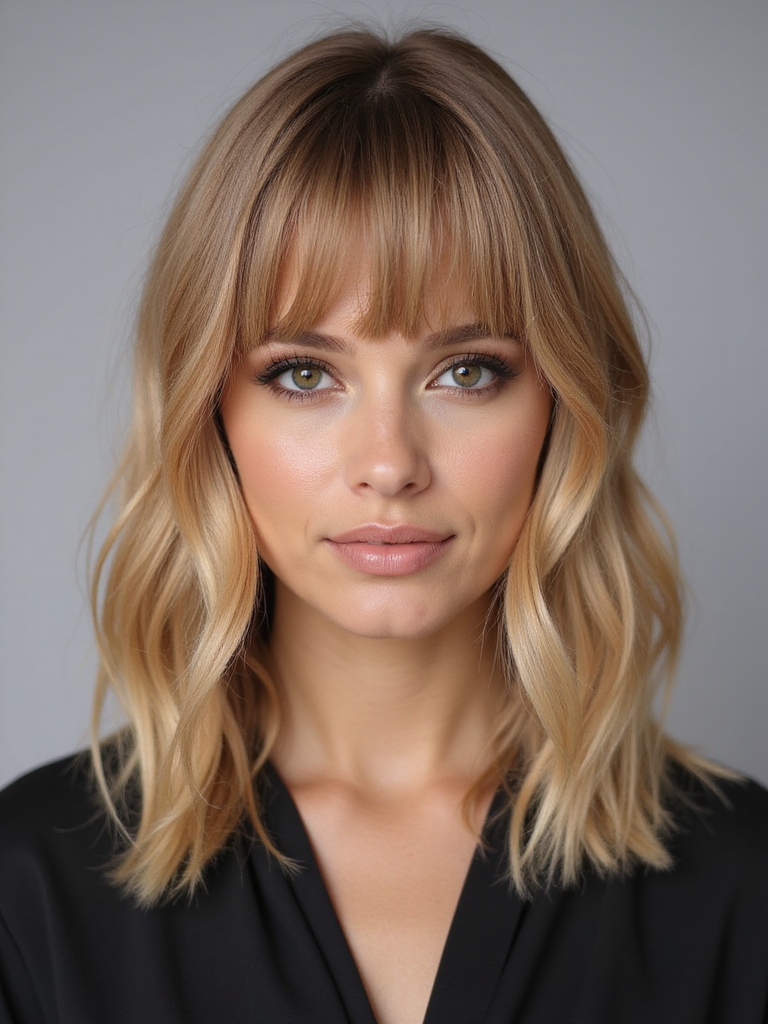
The number-one reason people swear off bangs is upkeep, and it’s fair, but it’s also fixable with a small routine. Clean bangs are happy bangs. Because they sit against forehead oil all day, they get greasy faster than your lengths and want washing on their own schedule.
The Two-Week Touch-Up
A quick dry-shampoo dust at the roots on day two keeps them from going stringy. For shape, a round brush and ten seconds of heat resets a cowlick better than anything in a bottle.
And learn the dry point-cut: tiny vertical snips into the bottom edge between salon visits. It’s how you stretch a fringe an extra two weeks without risking a blunt mistake.
Growing Out a Lob With Patience and Layers

Growing out a lob is less painful than growing out bangs, but it still hits an awkward patch around the jaw. The fix is layers; keeping some movement in while the length catches up stops the cut from looking like a grown-out blob.
The Cheekbone Bridge
The bangs are the trickier part. As they pass the cheekbone, start wearing them parted in the middle so they read as face-framing pieces while the awkward length grows through. That parted stage is the bridge to a smooth grow-out.
Trims don’t stop during a grow-out, they just get strategic. Taking the very ends down a few millimeters every eight weeks or so keeps things healthy without sacrificing the length you’re chasing.
Common Lob Styling Challenges and Their Fixes

Most lob frustrations come down to four things, and each one has a quick fix you can do at the mirror:
- Flat roots: dry the crown section up and over a brush with the nozzle aimed at the root, then finish on a cold shot, or dust in root powder
- Flyaway bangs: press a pea of cream over just the top surface of the fringe
- Ends that won’t bend: you over-dried and skipped protectant; mist lightly, then re-style
- One side flips out: your part is fighting your cowlick, so try parting an inch over
Heat Styling: Three Finishes for One Lob

The same lob can look three completely different ways depending on the tool, which is the whole appeal. A flat iron with a slight turn at the ends gives you the sleek, modern version that pairs with blunt bangs.
Pick Your Tool, Pick Your Mood
A curling wand, one-inch sections, alternating directions, builds the tousled wave everyone screenshots. And a round-brush blow-dry alone, no second tool, gives a bouncy, soft finish that’s the most forgiving for fine hair.
Whatever you reach for, protectant first and the lowest heat that does the job. At this length the ends are the show, and they scorch faster than you’d think.
Lob With Bangs: Your Questions, Answered
?How often do I need to trim a lob with bangs?
The lob shape holds for about 6 to 8 weeks, but the bangs are the real clock. Curtain or wispy fringe needs a shape-up every 4 to 6 weeks, while blunt bangs want one every 2 to 3. Plenty of people trim their own bangs between cuts and leave the rest to a stylist.
?Will a lob with bangs suit a round face?
Yes, with the right setup. Aim for a lob that falls just below the chin and bangs parted off-center or swept, which draws the face longer and slimmer. A blunt, brow-skimming fringe is the one style to skip on a very round face.
?Can I get this cut on curly or coily hair?
Absolutely. The key is cutting the bangs dry and leaving them longer than feels right, since curls shrink as they dry. A longer fringe also hides any uneven line, and a light gel keeps the shape set through the day.
?How much does a lob with bangs cost?
A full salon cut runs roughly $45 to $90 depending on your area and stylist, plus $15 to $25 for bang trims if you don’t do them yourself. Color, if you add it, is a separate and ongoing cost on top.
?How do I style bangs so they don’t separate or stick out?
Dry them first, straight out of the shower, with a round brush moving side to side to kill the cowlick. A tiny bit of cream smooths flyaways, and a dust of dry shampoo on day two keeps them from going limp and parting in the middle.
So, Which Lob Is Yours?
The lob with bangs lasts because it bends to fit you: softer or sharper, waved or sleek, a fringe that whispers or one that announces. None of it is permanent, which is the quiet freedom of this cut.
So before you book, ask yourself the honest question: do you want a look you can wash and go, or one you’ll happily style every single morning? Your answer points straight at your bangs. Bring a photo of the part you love, and let your stylist build the rest around your face.
You Might Also Like