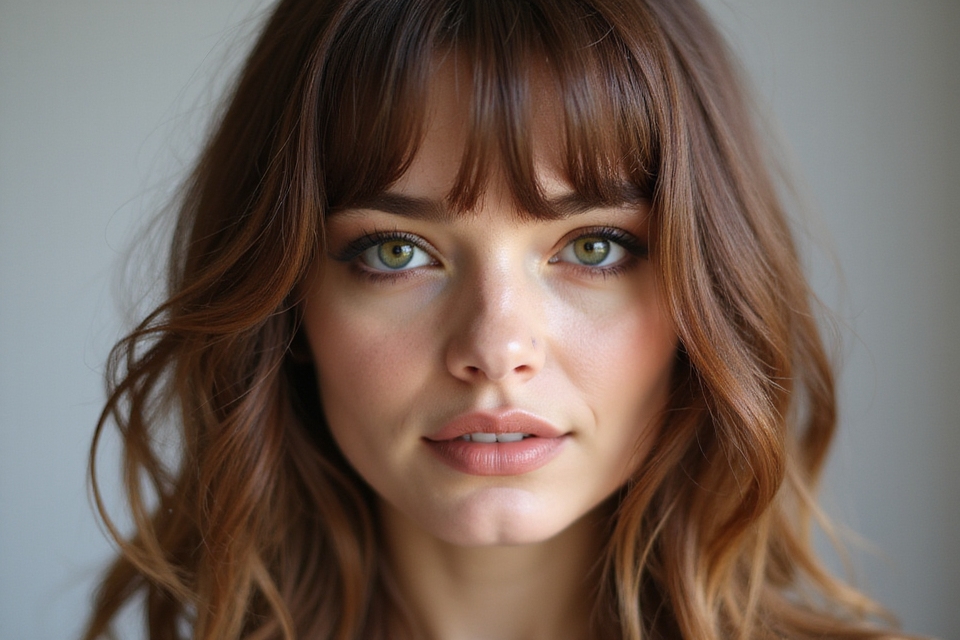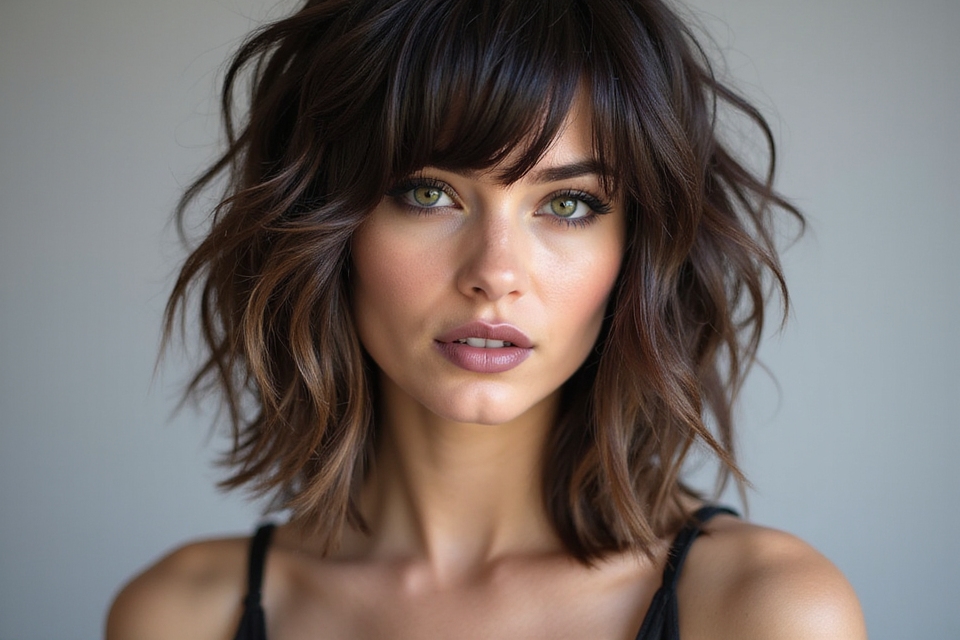

The wolf cut gets written off as a passing trend that only works on one kind of cool-girl hair. That sells it short. At its core it is just a smart marriage of two classics, the shag and the mullet, with short, choppy layers up top for volume and longer, jagged lengths below for movement.
That shape, lifted at the crown and feathered at the ends, is what makes it so flattering and so easy to live with. This guide breaks down what the wolf cut actually is, who it suits, how it behaves on curly, straight, and coily hair, and how to style, trim, and customize it, so you can decide if the howl is for you, no trend-chasing required.
The Wolf Cut, Quickly
What exactly is a wolf cut? A blend of a shag and a mullet: short, choppy layers at the crown for volume, blending into longer, jagged, face-framing lengths. The result is messy, voluminous, and full of movement.
Who does the wolf cut suit? Almost everyone, since it adapts to your texture. It is especially good for fine hair wanting volume and thick or curly hair wanting shape, and it flatters most face shapes with the right length and fringe.
Is it high maintenance? Less than it looks. It is built to grow out messy, so you can stretch cuts to every eight to ten weeks, though it needs daily texture styling and a trim to keep the layers sharp.
The Messy, Layered Wolf Cut

The defining feature of a wolf cut is controlled mess. Short, disconnected layers crowd the crown and top, while the lengths below stay long and choppy, so the whole shape looks tousled and a little undone on purpose. That deliberate roughness is the entire point.
It reads rebellious and easy at once, which is why it caught on so fast. The cut does the work, so even air-dried and finger-combed, it looks intentional rather than messy in a bad way. If you like polished and sleek, this is not your cut; if you like undone and full of attitude, it is.

A Nostalgic, Edgy Blend

The wolf cut did not appear from nowhere. It pulls straight from the 70s shag and the 80s mullet, two of the most rebellious cuts in hair history, and blends them into something modern.
From the shag it takes soft, feathered layers and a heavy, textured fringe; from the mullet it takes the short-on-top, long-in-back contrast. The wolf cut softens that contrast so it is wearable rather than costume, keeping the edge without the full party-in-the-back commitment.
That heritage is why it feels both new and familiar. It scratches the same itch as a modern shag but with more volume up top and more drama in the lengths.
Good to Know
The wolf cut is officially a hybrid of the shag and the mullet, which is exactly why it suits so many people. From the shag it borrows soft, feathered, all-over layers and a textured fringe; from the mullet it borrows the short-on-top, longer-in-back contrast.
A skilled stylist dials that mullet-to-shag ratio to your face and hair, more shag for soft and wearable, more mullet for bold and edgy, which is how one named cut produces such different-looking results.
Crown Lift and Flow

The magic of the wolf cut lives in the contrast between a lifted crown and flowing ends. The short layers at the top are cut to stand up and out, creating height and body right where most cuts go flat. That contrast is the whole trick.
Below that, the longer lengths fall loose and feathered, so the hair flows and moves as you walk. That combination, volume up high and movement down low, is what gives the wolf cut its dynamic, alive quality and stops it from ever looking heavy or helmet-like.
Crown Lift for Volume

Fine, flat hair is where the wolf cut truly earns its reputation, because it manufactures the body fine hair cannot grow on its own. The short crown layers prop each other up, so even limp hair stands away from the scalp. Here is how to make the most of it on fine hair:
- Ask for the crown layers cut a touch shorter, since fine hair needs more lift
- Blow-dry the roots first while damp, directing them up and back
- A little texture or volume powder worked into the roots keeps the lift up all day
- Skip heavy serums up top, which drag fine hair flat again
Two wolf-cut myths worth busting:
❌ Myth: The wolf cut only works on thick, cool-girl hair.
✅ Reality: Not true. It is one of the best cuts for fine hair, since the crown layers build volume fine hair cannot grow on its own. It adapts to curly, straight, thick, and thin hair with the right cutting and styling.
❌ Myth: It is impossible to grow out.
✅ Reality: The opposite. Because it is layered and messy by design, it grows out softly into longer shaggy layers with no awkward stage, which is part of why it is such a low-risk cut to try.
Jagged Ends and Edge

The ends of a wolf cut are never blunt; they are cut jagged and feathered, with the scissors pointed up into the hair so the tips taper to fine, wispy points. That jaggedness is what gives the cut its raw, edgy attitude.
It also keeps the lengths from looking heavy or too neat, which would lose the whole vibe. The feathered ends move and separate on their own, so the cut looks worn-in from day one and only gets better as it grows out a little shaggy.
Why Everyone Is Wearing Wolf Cuts

The wolf cut exploded from a social-media trend into a mainstream salon request, and you now see it everywhere from runways to the coffee shop. The reason it stuck is not hype but versatility: it truly flatters a huge range of people.
More Than a Trend
It also fits the wider mood in hair right now, the move away from sleek, polished, high-maintenance styles toward soft, undone, full-of-texture ones. The wolf cut is the boldest version of that shift.
Plenty of well-known faces have worn it, which fueled the trend, but its staying power comes from how easy it is to live with and adapt to your own hair.
A few wolf-cut terms decoded:
📖Crown layers
The short, disconnected layers at the top of the head that stand up to create the wolf cut’s signature volume and lift.
📖Point-cutting
Cutting into the ends with the scissors pointed upward to create the soft, jagged, feathered tips the cut is known for.
📖Disconnection
A deliberate gap in length between the short top layers and the long lengths; more disconnection means a bolder, edgier wolf.
The Rebellious Wolf Cut

Part of the appeal is pure attitude. The wolf cut has a rebellious, slightly punk spirit baked into its DNA, inherited from the mullet and the shag, that makes it feel like a statement rather than just a haircut.
It suits someone who wants their hair to say something, whether that is creative, edgy, or just done with looking polished all the time. You can dial the edge up or down with how you style and color it.
- Wear it rough and undone for maximum edge
- Smooth the lengths slightly for a softer, more romantic take
- Add a bold color to push the rebellious feel further
How Versatile the Wolf Cut Is

One reason the wolf cut earns its keep is range. The same cut can read soft and feminine or sharp and edgy depending entirely on how you style it, which makes it far more flexible than its bold shape suggests.
You can wear it sleek-ish for work, tousled for the weekend, pinned half-up, or curled for a night out. Few cuts shapeshift this easily, which is a big part of why people keep it rather than growing it out.
- Air-dry and scrunch for the classic undone look
- Round-brush the top for polished volume
- Half-up or clipped back to show off the layers
Styling a wolf cut in four quick moves:
1Rough-dry for texture
Flip your head and rough-dry the hair with your fingers, lifting at the roots, to build natural volume and separation before any product goes in.
2Scrunch in texture spray
Mist a sea-salt or texture spray through the mid-lengths and ends, scrunching as you go, for the piecey, undone finish the cut is built around.
3Lift the crown
Add a little volume powder or a quick round-brush at the crown to maximize the lift, the heart of the wolf cut’s shape.
4Separate and set
Break the ends apart with a fingertip of cream, then leave it alone; the more you fuss, the less undone it looks.
Volume, Texture, and Layers

For thick, heavy hair, the wolf cut works the opposite magic: it takes weight out. All those layers thin the dense interior so the hair stops behaving like one heavy mass and starts to move, which is a relief if your hair has always felt like too much.
The reward is a head of hair that feels lighter to wear and far quicker to dry, without losing any length. You feel it the first day. The texture between the layers catches the light and keeps thick hair looking shaped rather than bulky, much like a well-cut layered medium cut.
The Tousled Finish

The tousled, just-rolled-out-of-bed finish is the goal, and it takes a little know-how to get it looking intentional rather than truly messy. The trick is texture without crunch.
Most of the work is in the drying and a light product, not heavy styling. You want piecey separation and soft volume, the look of hair that fell this way naturally even though it took two minutes.
- Rough-dry the hair with your fingers to build natural texture
- Scrunch in a texture or sea-salt spray to break the pieces apart
- Break up the pieces with a fingertip of cream, never a heavy gel
Wolf Cut Styling Essentials

You do not need a cabinet of products for a wolf cut; you need a few that build texture and hold volume without weighing the hair down. These are the essentials worth owning:
- A texture or sea-salt spray for the signature piecey, undone finish
- A lightweight mousse or root-lift spray for crown volume
- A dry shampoo to refresh texture and lift between washes
- A light cream or balm to define ends and smooth frizz, used sparingly
Trimming and Hydrating

A wolf cut is forgiving on grow-out, but the layers and feathered ends do need upkeep to stay sharp. Plan a trim every eight to ten weeks to refresh the shape, and a quick fringe trim more often if you have one.
Because the ends are cut so fine and jagged, they can dry out and split faster than blunt ends, so hydration matters. A weekly mask and a little leave-in or oil on the lengths keep the feathered ends soft and stop them looking frazzled.
Styling for Everyday

On a normal day, a wolf cut should take only a few minutes, since the cut itself does most of the shaping. The aim is to revive the volume and texture, not restyle from scratch.
I tell clients to focus their effort on the crown and the ends, the two places the cut lives, and leave the middle alone. A quick root-lift and a scrunch of the ends is usually the whole routine.
- Refresh crown volume with a dryer or a little dry shampoo
- Re-scrunch the ends with a touch of texture spray
- Skip brushing it smooth, which kills the piecey separation
Colorful Wolf Cut Styles

Color and the wolf cut are a perfect match, because all those layers give the color somewhere to play. Dimensional color reads as even more texture and movement, which is exactly what the cut wants.
Whether you go bold or subtle, the layered shape makes the color look intentional and three-dimensional. A money piece or a contrasting underneath layer shows up beautifully as the hair moves.
- Soft balayage melts through the layers for soft dimension
- A bold all-over color pushes the rebellious, edgy feel
- A hidden underneath color flashes as the lengths move
The Curly Wolf Cut

I love a wolf cut on curly and coily hair, and in many ways it is a natural fit, since the layers give curls room to spring up and out into shape rather than piling into a triangle. The volume the cut creates works with the curl, not against it.
Cut to Your Curl Pattern
The key is a stylist who cuts curly hair on dry or barely-damp hair, so they can watch how each curl springs and set the layers to your pattern. Cut wet, curly layers can shrink up far shorter than expected.
Work a curl cream through, then diffuse it or leave it to dry on its own for a full, textured wolf that celebrates the curl, much like a layered curly style. Keep tension gentle at the hairline to protect your edges.
The Wolf Cut on Straight Hair

Straight hair wears the wolf cut differently, leaning sleeker and more graphic, since there is no curl to add built-in volume. It looks fantastic, but it asks a bit more of your styling to get the lift. Here is how to make it work:
- Lean on the cut’s crown layers plus a root-lift to build volume
- Add bends or waves with a flat iron for movement straight hair lacks
- Use a texture spray heavily, since straight hair separates less on its own
- Embrace a sleeker, more graphic version rather than fighting for big curl
Layered and Voluminous

If big drama is the goal, how you dry the cut matters as much as the cut itself. The single best trick for maximum volume is to flip your head fully upside down and dry the roots that way, so gravity works for you instead of against you.
Finish by flipping back up without brushing, then mist a little hairspray underneath the crown for staying power. Done this way, the same wolf cut goes from everyday tousle to bold, full presence, with no extra salon visit.
DIY Wolf Cut: Pros and Cons

Clients ask me about cutting a wolf at home constantly, partly because its messy, forgiving nature hides small mistakes. The upside of DIY is obvious: it is free, where a salon wolf cut runs about $60-120. A slightly uneven layer barely shows on such a textured cut.
The downside is real, though. Getting the crown-to-length balance right is truly tricky, and a botched DIY can read more mullet than wolf, or take months to fix. If you try it, work on dry hair, take tiny sections, and cut conservatively.
Honestly, for the first one, a salon visit is worth it so you learn where the layers should sit. After that, light at-home trims between cuts are much safer.
Textured Layers for Volume

The texturizing is what separates a wolf cut from a plain layered cut. Beyond the basic layers, a stylist points the scissors into the ends and removes weight throughout, which is what creates all that airy, separated volume.
Point-Cutting Builds the Body
That internal texture means the hair holds shape and body without product doing all the work. It is why a good wolf cut looks full even air-dried, and why the texturizing technique matters as much as the layering itself.
Ask your stylist for plenty of point-cutting and internal texture if volume is your goal. It is the difference between flat layers and a wolf cut with real lift.
Versatile Ways to Style It

Beyond the everyday tousle, the wolf cut takes a surprising number of styles, which keeps it from ever feeling boring. The layers that make it dramatic also make it fun to play with.
Try it pinned half-up to show the crown volume, slicked back at the sides with the top left full, curled into 70s-style flicks, or smoothed for a softer day. Each one feels like a different haircut, which is a lot of mileage from a single trip to the salon.
Edgy Accessories

The rebellious shape of a wolf cut takes accessories well, and the right ones lean into its edgy spirit rather than fighting it. A few easy ways to dress it up:
- Small claw clips to pin back the front while showing the layers
- A silk scarf tied bandana-style for a 70s, rocker feel
- Bold earrings, since the shorter crown and face-framing pieces show them off
- Thin headbands worn under the volume for an undone, lifted look
Seasonal Styling

Like any textured cut, the wolf shifts a little with the seasons. Summer humidity actually helps it, adding natural texture and wave, though it can also frizz the fine ends, so an anti-humidity spray keeps it piecey rather than puffy.
In winter, static and dryness are the enemies of those feathered ends, so a little more cream and a silk hat lining keep it smooth. The cut’s built-in messiness means it forgives weather better than a sleek style ever could.
- Summer: anti-humidity spray to fight frizz on the ends
- Winter: more leave-in and cream to beat static and dryness
- Year-round: a silk pillowcase keeps the feathered ends soft
Runway-Inspired and Trending

The wolf cut has graduated from street trend to runway regular, where stylists push it into bolder, more sculptural territory. On the catwalk you see exaggerated crown volume, sharper disconnection, and dramatic color.
You do not have to go that far, but the runway versions are a useful well of ideas for customizing your own. They show how far the basic shape can stretch, from soft and wearable to fully editorial.
Borrow one element, a bolder fringe, a brighter color, more crown lift, and bring it to your stylist to make the cut feel current and personal rather than copy-paste.
Customize Your Wolf Cut

The best thing about the wolf cut is how customizable it is; no two have to look alike. The basic crown-lift-and-jagged-ends formula bends to your hair, your face, and your personality. Tailor it like this:
- Choose your length, from a short, bold wolf to a long, soft one
- Pick your fringe, from wispy curtain bangs to a heavy, blunt one
- Dial the edge up or down with how disconnected the layers are
- Add color and your own styling to make it unmistakably yours
Styling Tips
If you take only a few habits away, make them these. First, style the crown and the ends, not the middle, since those are the two places the wolf cut lives; a quick root-lift and a scrunch of texture spray on the ends revives the whole shape in two minutes.
Second, build texture by rough-drying with your fingers and scrunching in a sea-salt or texture spray, then break the pieces apart by hand, and resist the urge to brush it smooth, which flattens the separation the cut depends on.
Third, protect those fine, feathered ends, since they dry out faster than blunt ones: a weekly mask, a little leave-in on the lengths, and a silk pillowcase keep them soft and stop the frazzle.
And remember the cut is meant to look undone, so do not chase perfection; the wolf cut rewards a light hand and a bit of mess far more than it rewards fussing. On curly and coily hair, swap the salt spray for a curl cream and let your natural pattern do the texturizing for you.
Wolf Cut, Answered
?What is a wolf cut, exactly?
It is a hybrid haircut that blends a 70s shag with a mullet: short, choppy, voluminous layers at the crown that blend into longer, jagged, face-framing lengths. The result is a messy, textured, full-of-movement cut that is bold but surprisingly easy to wear and grow out.
?Does a wolf cut suit every hair type?
Nearly. It adapts to your texture: it builds volume on fine hair, adds shape to thick hair, and works beautifully on curly and coily hair cut to the natural pattern. Straight hair leans sleeker and graphic and needs a little more styling for lift. The cut and styling adjust to the hair, not the other way around.
?How often does a wolf cut need a trim?
Every eight to ten weeks to keep the layers and feathered ends sharp, with a quick fringe trim more often if you have bangs. Because it is designed to look messy and grows out into soft shaggy layers, you can stretch it longer than most layered cuts without it looking unkempt.
?Can I do a wolf cut at home?
You can, and many people do, since its messy nature hides small errors. But the crown-to-length balance is tricky, and a bad DIY can read mullet or take months to fix. For your first one, a salon cut is worth it; after that, careful at-home trims on dry hair between visits are much safer.
?Is the wolf cut high maintenance?
Less than it looks. It needs a couple of minutes of texture styling most days, focused on crown volume and the ends, plus regular conditioning to keep the fine ends healthy. But it grows out gracefully and stretches between cuts, so the overall upkeep is moderate, not demanding.
Decide If the Howl Is for You
Strip away the trend talk and the wolf cut is simply a clever, adaptable shape: short layers for crown volume, long jagged ends for movement, and a texturized finish that flatters fine, thick, straight, and curly hair alike. It is bold without being high-maintenance, and it shapeshifts from soft to edgy depending entirely on how you wear it. That is why it outlasted the trend that made it famous.
If you want volume, movement, and a little attitude, and you do not mind a daily minute of texture styling, the wolf cut is one of the most rewarding cuts you can ask for. Bring a photo, talk through your texture and how much edge you want, and let your stylist tailor the howl to you. The worst case is a soft, shaggy grow-out, which is hardly a worst case at all.
Keep Reading