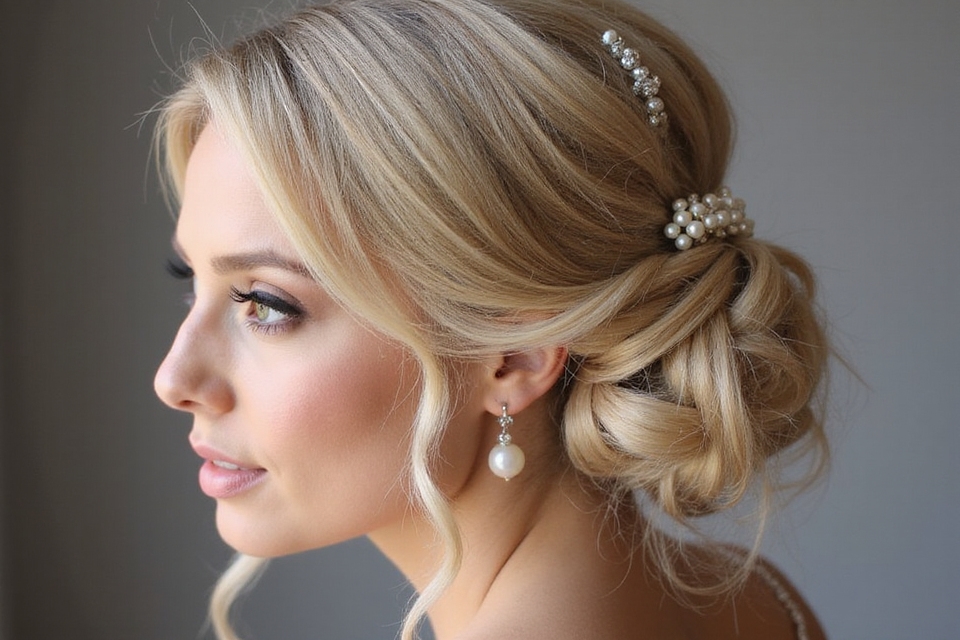
People assume a wedding updo means one stiff, sprayed-solid shape. The best ones are the opposite: soft at the crown, clean at the nape, with a few tendrils left to move. A good bridal updo frames the face, shows off your gown’s neckline, and holds through hours of dancing without feeling rigid.
Below are twenty specific types of updo, from chignons and crowns to braids and high and low buns. Each one comes with its technique, an honest word on what it suits, and the upkeep that keeps it standing. You will know exactly what to ask for. Choosing the right one starts with your dress and your texture.
Choosing a Bridal Updo
How do I choose the right wedding updo? Match the type of updo to three things: your gown (a high neckline loves a high bun, an open back suits a low one), your hair texture, and your comfort. A chignon, crown, braided, or bun type each reads differently, so book a trial ($50-100) to confirm your pick holds.
Updo or half-up for a wedding? An updo if your dress has a detailed back or neckline to show, or the venue runs hot; a half-up to keep your length and a softer feel. Updos read more formal.
Do I need extensions for a bridal updo? Usually not. Most updos use your own length, and fine hair builds body with a hidden backcomb. Extensions only earn their place if you want dramatic fullness or your hair is very short, so raise it at the trial.
Updo for a hot-weather or destination wedding? Strongly yes. A fully-up style keeps hair off your neck in heat and humidity and outlasts anything loose. Pick a secure low or high bun, and skip heavy tendrils that wilt by the reception.
The Timeless Appeal of Updos
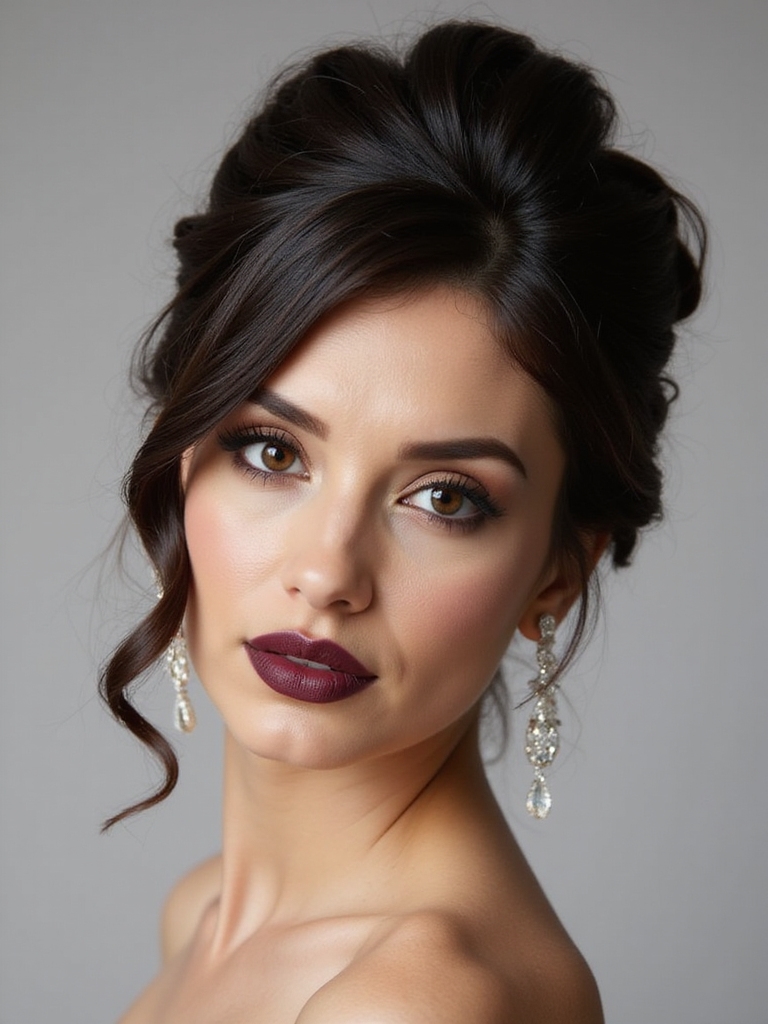
Updos have anchored bridal hair for generations, and the reason is practical as much as pretty. Pulling the hair up does real work. A wedding day is long. A few reasons brides keep choosing them:
- They keep hair off the face and neck through a long, warm day
- They show off a gown’s neckline, back detail, and your jewelry
- They hold far better than loose hair through dancing and hugs
- They photograph clean from every angle, which matters for the formal shots
Wedding Updo Considerations
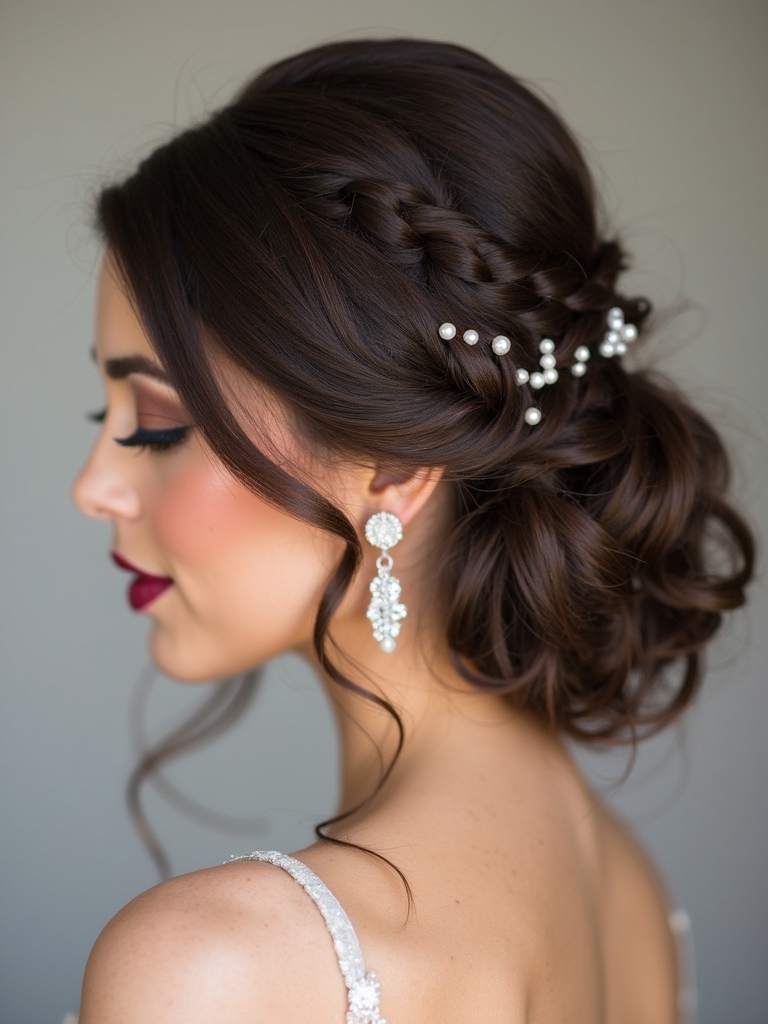
Before you fall for a photo, think about how an updo fits the whole day. The dress comes first: a high or beaded neckline wants the hair fully up, while an open back is a reason to keep it low and clean.
Comfort matters more than brides expect, since you wear it for twelve hours. The smartest choice balances the look you love with a shape that holds and feels secure through the ceremony and the dance floor.
- Match the updo height to your neckline and back detail
- Factor in the season and venue heat, which loosen styles
- Choose a shape secure enough to forget once the day starts
🅰️Full Updo
All the hair pinned up. Shows the gown’s neckline and back, keeps hair off the neck in heat, and holds best for dancing. Reads the most formal.
🅱️Soft / Undone Updo
A looser, romantic version with tendrils and texture left out. Feels relaxed and modern, suits an outdoor or boho wedding, but the loose pieces need setting to last.
Timeless Elegance With Romance
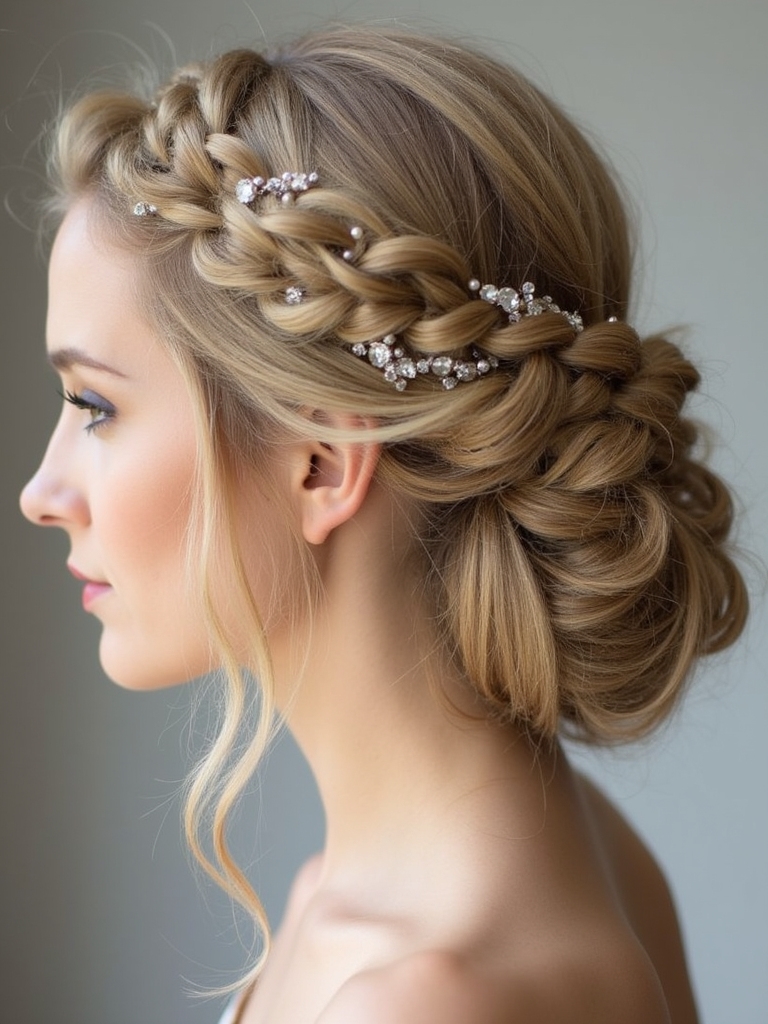
Bridal updo trends right now sit between clean modern lines and soft romance, and the best looks borrow from both. The stiff, lacquered updo is out; the soft, slightly undone one is in.
Soft Beats Stiff Now
Delicate tendrils left loose to frame the face are everywhere, as are braids woven with fresh blooms for an organic, undone feel. Texture and movement look modern, where uniform curls feel dated.
The thread is restraint: one soft shape, a few face-framing pieces, and a single understated accessory. A busy, over-worked style fights the gown instead of finishing it. That balance is what makes a current updo feel like now.
An Elegant Modern Bridal Updo
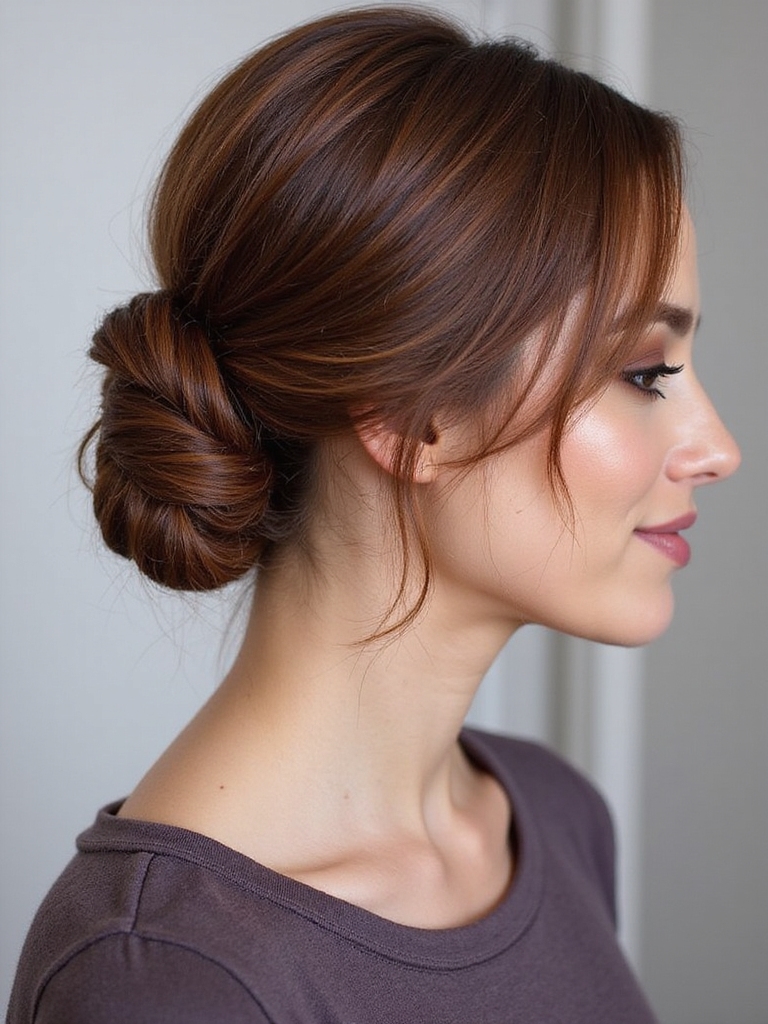
I tell brides the chignon is the bridal classic, and a small twist updates it. You gather the hair into a low ponytail, twist it, and coil it into a smooth knot at the nape, then loosen a few pieces around the face.
A jeweled pin catches the light and tips it from traditional to current. It suits nearly every gown and holds beautifully, the most foolproof updo here, much like a polished wedding updo.
- Coil a low twisted knot at the nape for the base
- Leave soft tendrils loose around the face to modernize it
- Add one jeweled pin so the look feels current, not stiff
The updo that photographs best is rarely the most elaborate one. It is the soft, secure shape you stop thinking about the moment you walk down the aisle.
Volume With a Crown Updo
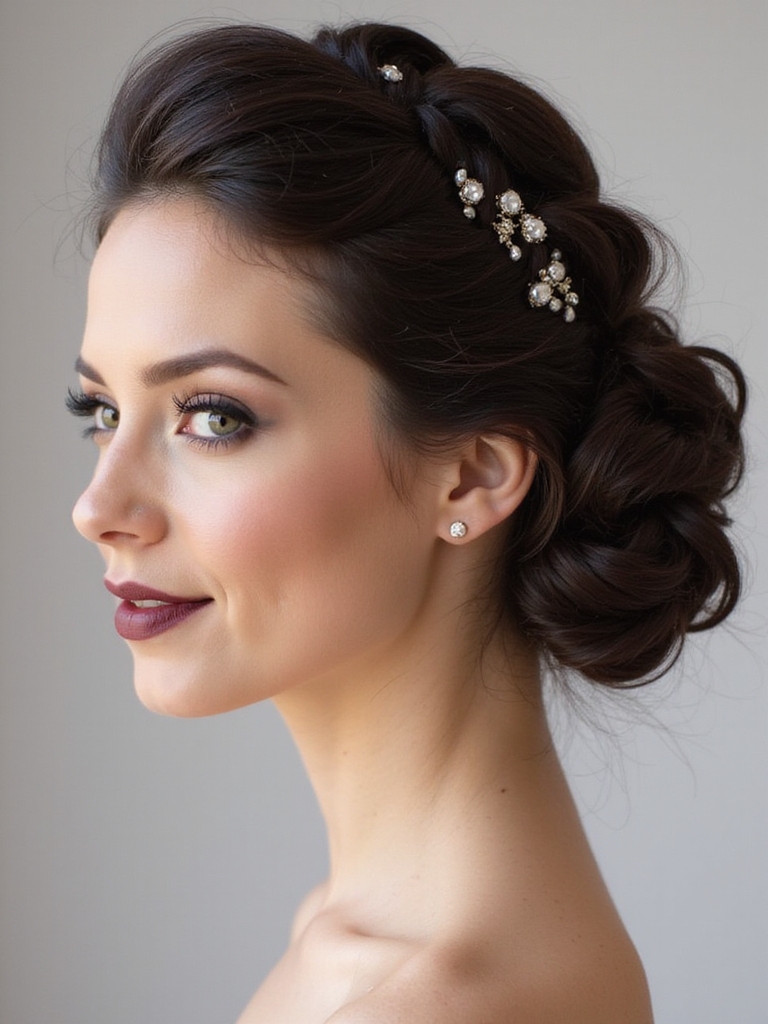
A crown updo builds soft height at the top of the head, which lengthens the neck and balances a fuller face. You gently tease the roots at the crown to create a lush base, then smooth the surface and pin the updo over it.
The volume gives it that romantic, regal feel. It also makes a veil sit beautifully on top. The trick is teasing enough for lift without it looking bouffant, so keep the surface smooth over the hidden tease.
Braided Updos for Texture
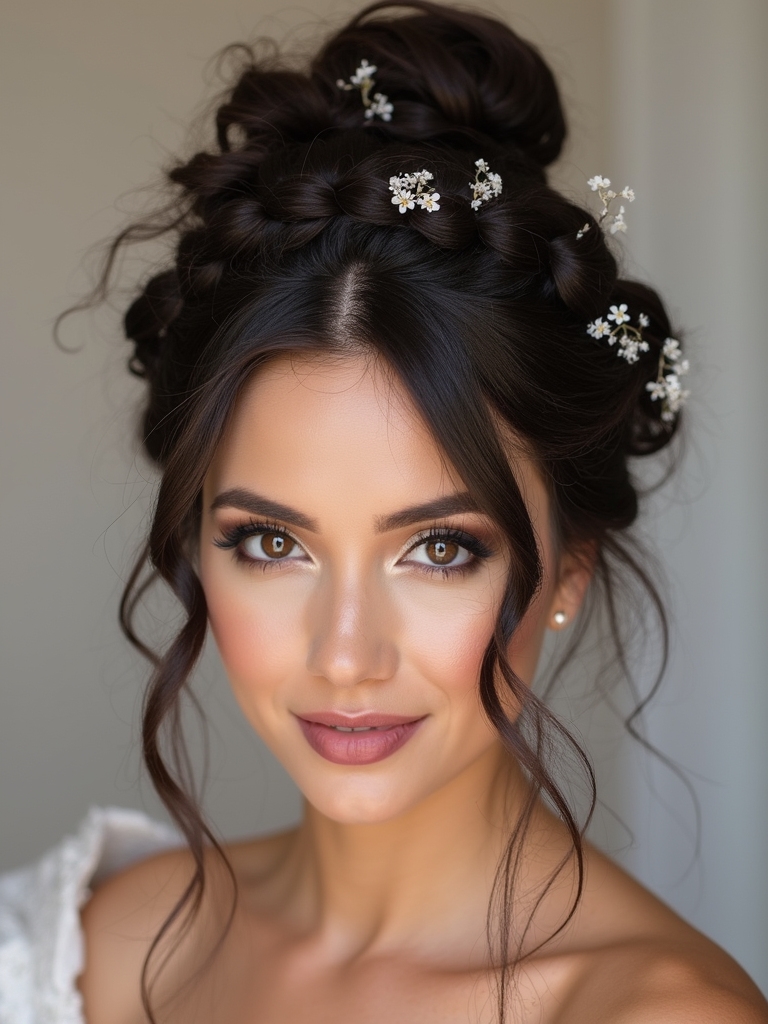
Braiding an updo adds intricate texture that a smooth twist cannot, turning the hair into a woven, dimensional shape. It is the pick for a bride craving detail and a bit of boho softness.
The Braid Adds Grip
You braid one or more sections, then coil and pin them into the updo so the plait becomes part of the structure. Pancaking the braids first makes them fuller and more visible.
Braided updos hold especially well, since the braid itself adds grip, and they shine on textured hair. Weave in a few small flowers for a garden-wedding finish, the way a good braided bun reads romantic.
Volume Tip
Crown volume on a wedding updo should be felt, not seen. Tease the roots gently at the crown to build a hidden base, then smooth the top layer cleanly over the tease so the surface stays sleek. Done right, you get romantic height with no visible backcomb, and a veil sits beautifully on top. Lock it with a firm-hold spray before pinning the rest.
An Elegant Messy Bun
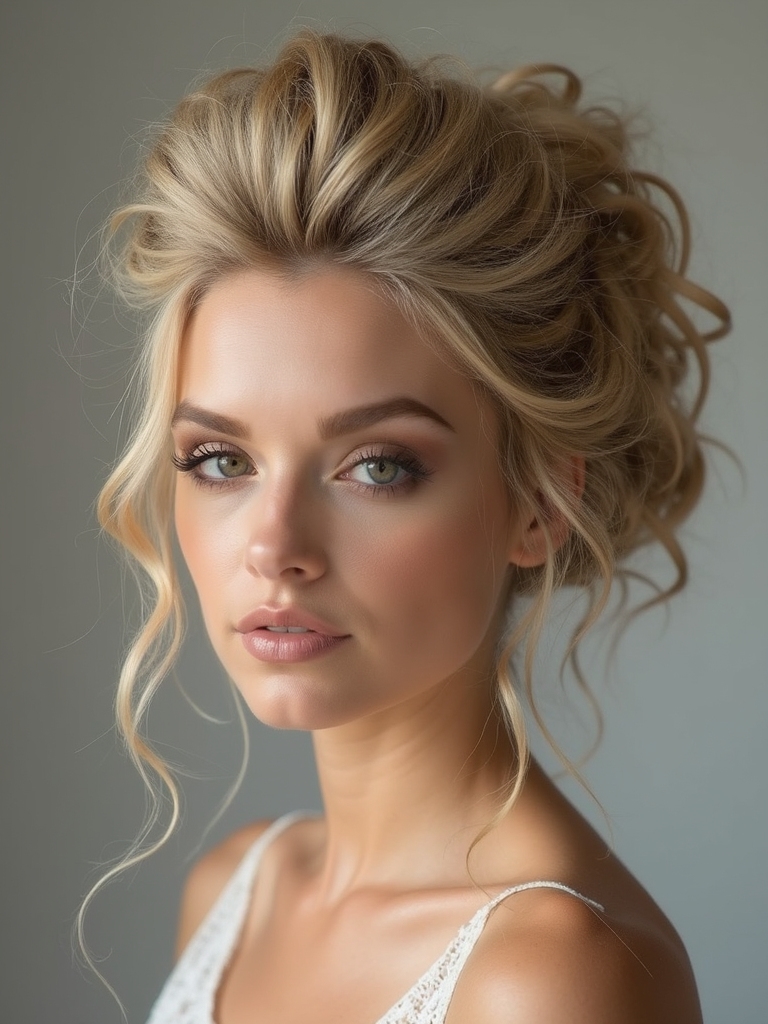
Clients ask me for relaxed, and the messy bun answers: polished yet purposely undone. You twist and pin the hair into a loose bun, then pull a few pieces free so it looks relaxed and undone.
The secret is securing it firmly first and loosening it second, since a messy bun holds on the hidden structure you build before you touch the texture. Pin generously, then tease out the texture you want.
It suits a relaxed or outdoor wedding and forgives second-day hair, which is half its charm. A pearl pin or a lace ribbon tips it from casual to bridal.
Elegance and Romance, Gathered Up
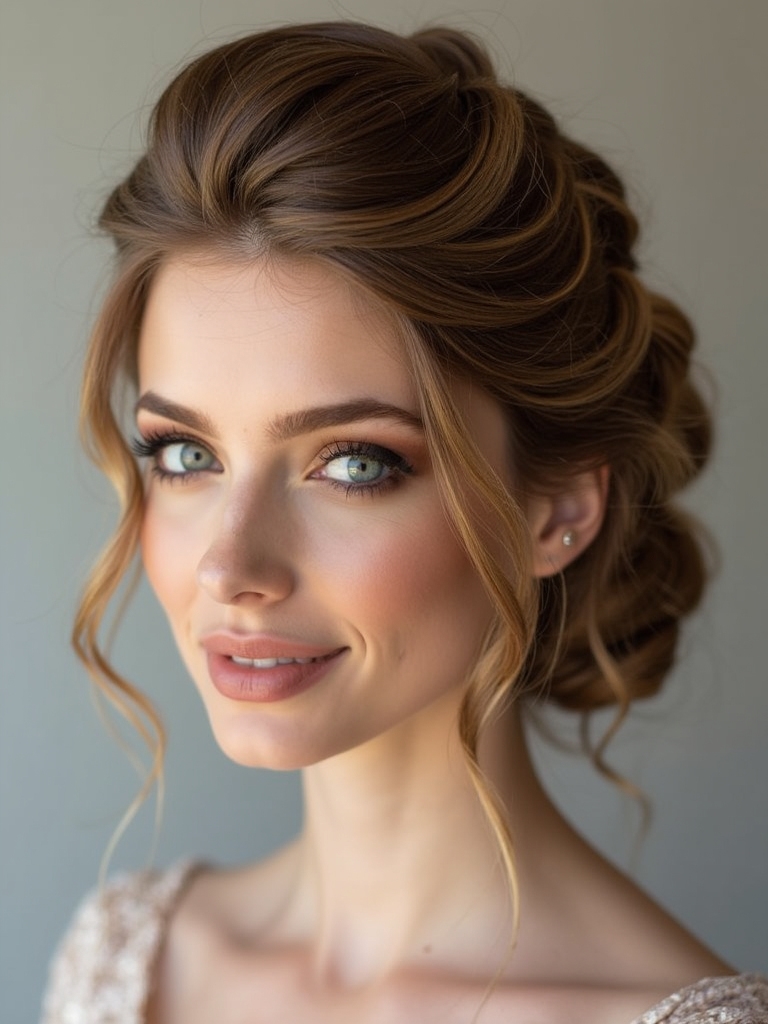
Gathering soft waves into a loose updo keeps all the romance of curls while pinning them up off the face. The waves give the updo body and movement that a sleek version lacks. Build it like this:
- Curl the whole head into soft, loose waves first
- Gather the waves loosely and pin them into a low, undone shape
- Pin around the curls, not through them, to keep the bounce
- Leave a few waved pieces loose at the face for softness
Two bridal-updo myths worth busting:
❌ Myth: A veil and an updo compete for attention.
✅ Reality: They work together. The pinned crown gives the veil’s comb a stable anchor, and once the veil comes off after the ceremony the updo still looks complete. Set it both ways at your trial so neither feels like an afterthought.
❌ Myth: You have to lock your exact updo months in advance.
✅ Reality: A trial four to six weeks out is plenty. Pull two or three looks you love, try them on your real texture with your veil, and let your stylist steer the final call. Deciding before the dress is even fitted just boxes you in.
An Elegant High Bun
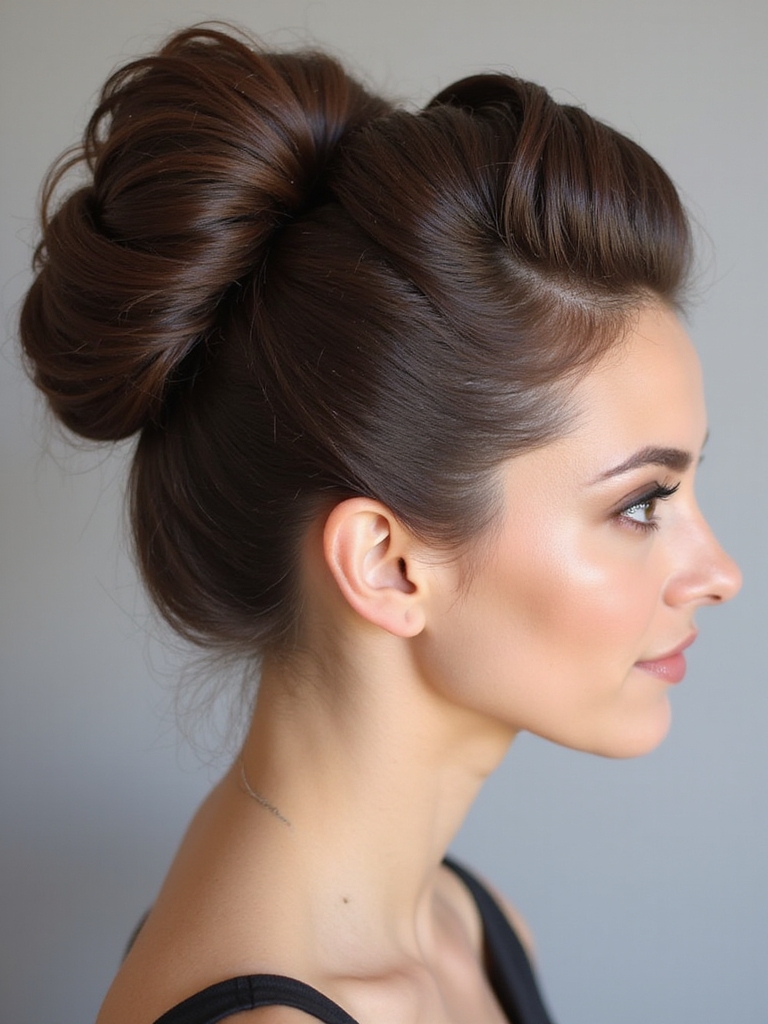
I love a high bun for the dramatic, fashion-forward bride, sitting tall and sleek for real presence. It elongates the neck and looks modern and confident. It is ideal for a structured or minimalist gown.
You gather the hair high, smooth it glassy, then twist and coil it into a clean knot and pin. A little volume at the crown keeps it from looking severe, and subtle accessories add shimmer.
- Brush the hair high and smooth before coiling for a clean line
- Add a touch of crown volume so it does not read too tight
- Weave in subtle pins or a comb for understated sparkle
An Elegant Low Nape Bun
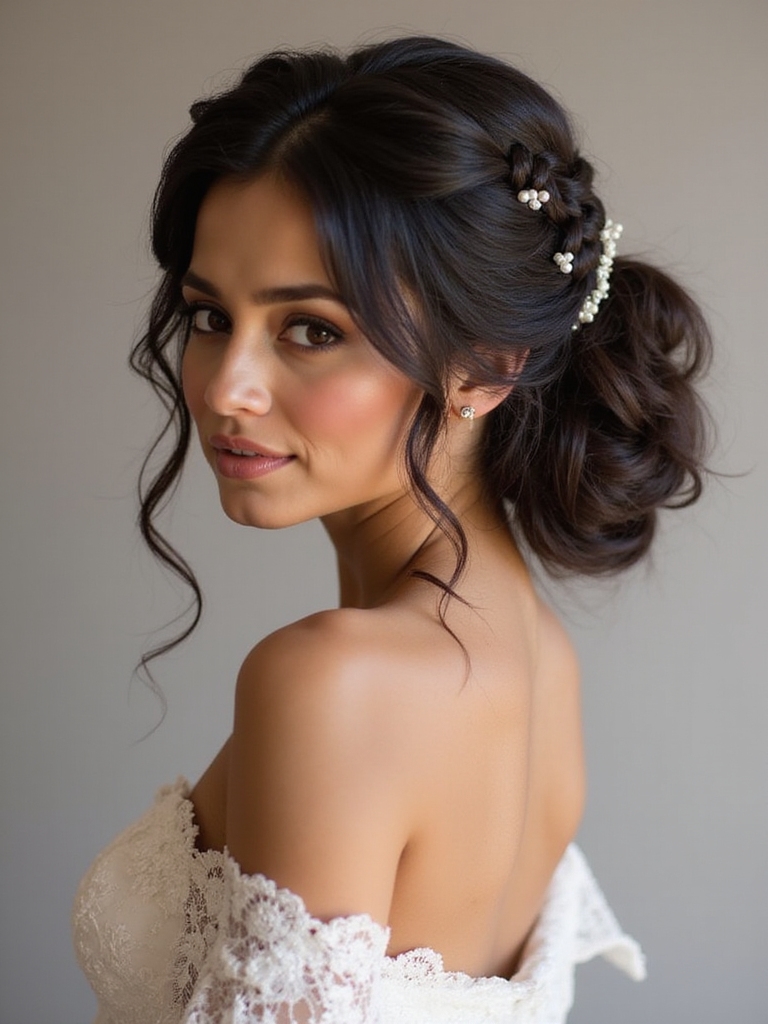
Where the high bun makes a statement, the low bun whispers. It sits low at the nape, with tendrils framing the neck. It suits a classic, romantic gown and almost every face shape.
You gather the hair low, twist it into a loose knot, and pin it gently so it rests easy and low. A few face-framing pieces left out keep it tender.
It is the most universally flattering updo here and one of the easiest to wear all day, the way any good sleek bun sits comfortably at the nape.
Side-Swept Asymmetrical Updo
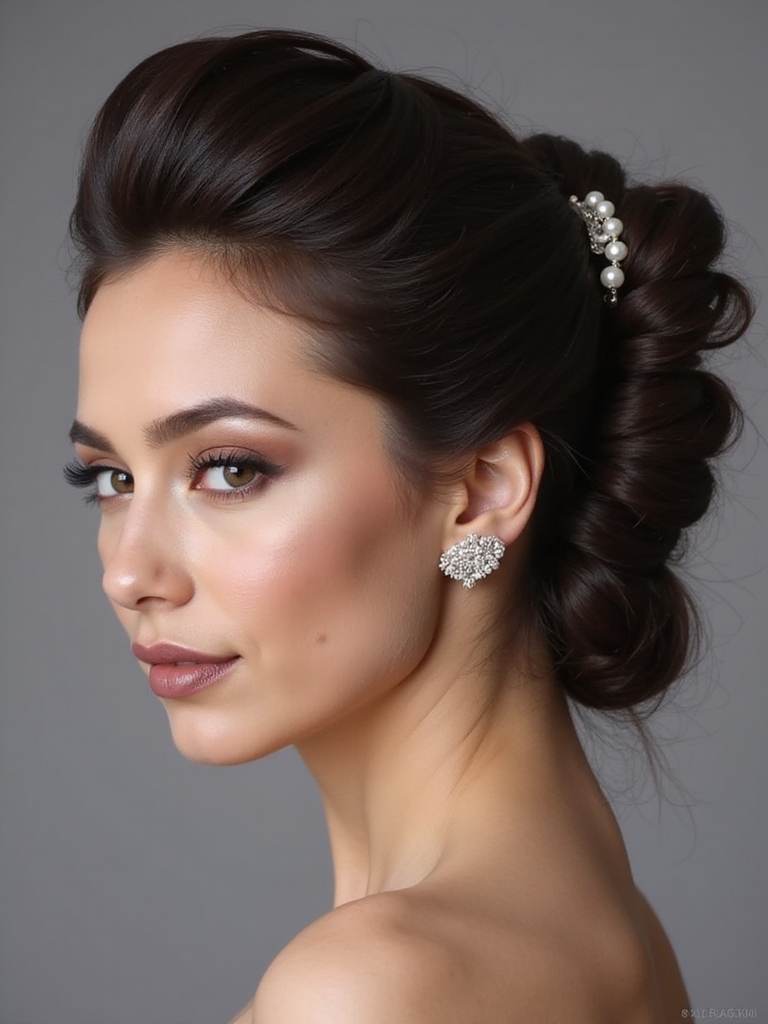
A side-swept updo gathers everything to one side for a soft, asymmetrical line that frames the face and flatters most shapes. It pairs romantic curls with a few braided details for movement. How to wear it:
- Part the hair deeply to one side for the swept start
- Curl the length, then gather and pin it low to one shoulder
- Add a small braid or twist for detail along the sweep
- Finish with one soft curl left loose by the cheek
Sleek, Polished, Timeless Updos
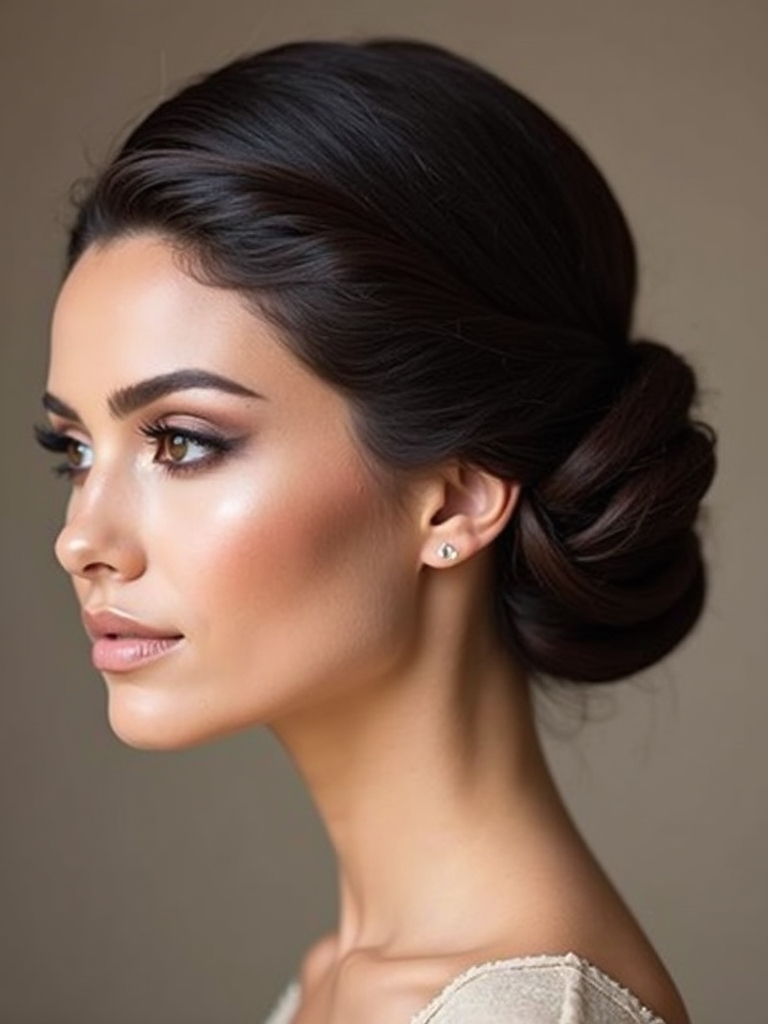
A sleek, polished updo is the minimalist’s bridal choice, all lustrous shine and clean structure with not a strand out of place. It photographs sharp and suits a modern, fashion-forward gown. The three things that make it work:
- Lustrous shine: smooth a serum through for a glossy finish
- Glassy smoothness: brush every strand into place before pinning
- Refined structure: build a clean, deliberate silhouette and set it firmly
Floral Accents for a Natural Touch
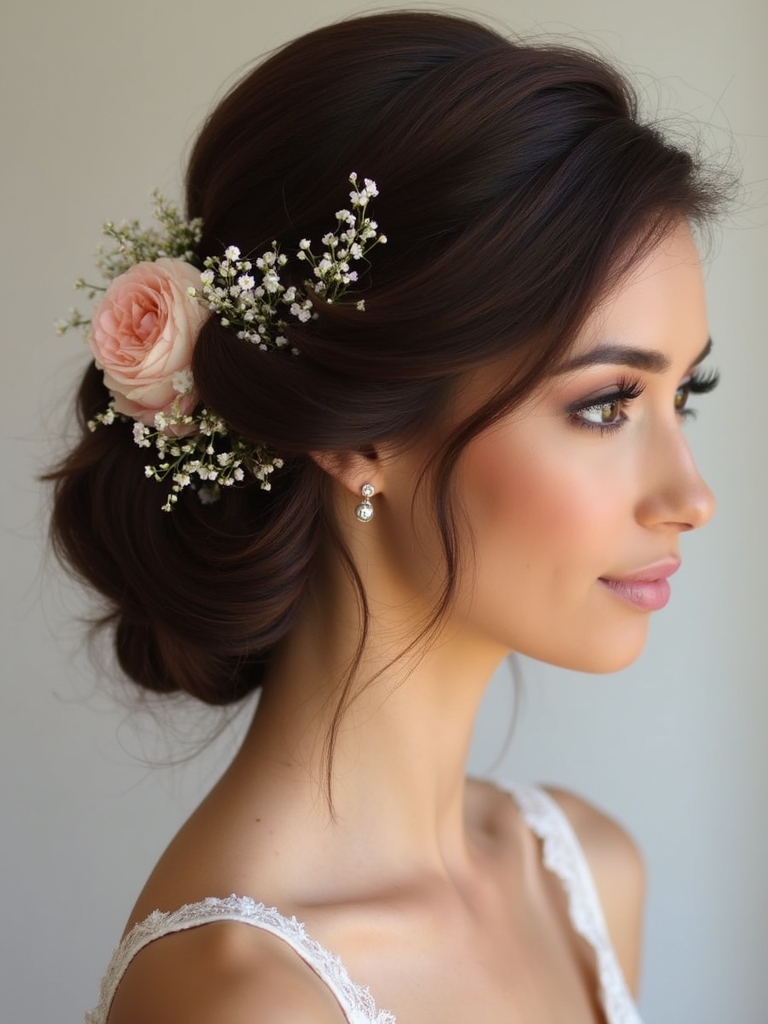
Fresh flowers tucked into an updo bring an organic, natural touch and let you echo your bouquet. From tiny baby’s breath to bold roses, the right blooms turn a simple updo into a garden moment. How to place them:
- Build the updo first, leaving small gaps where flowers will sit
- Choose sturdy blooms that hold up out of water all day
- Secure each stem with a crossed pin so nothing slips
- Cluster a few together so the placement looks intentional
Personalizing With Accessories
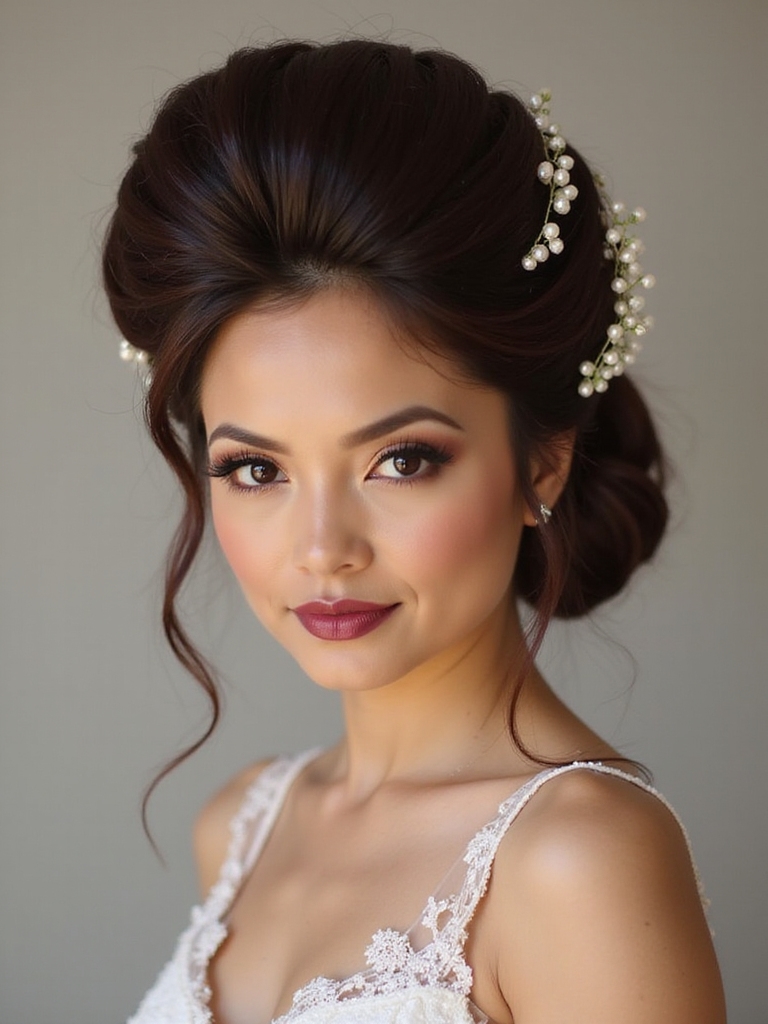
The right accessory turns a pretty updo into your updo, and it is the detail photos remember. Delicate pearl pins, a silk ribbon, or a crystalline comb each add a different mood.
One Piece, Placed Well
The key is restraint: one statement piece, placed where the eye lands, beats a scattered handful that competes with the hairstyle. Match the metal or stone to your jewelry for a pulled-together look.
A meaningful piece, a family comb, a sentimental ribbon, carries extra weight on a wedding day. Choose something that means something, and the updo tells a small story of its own.
A Vintage-Inspired Updo
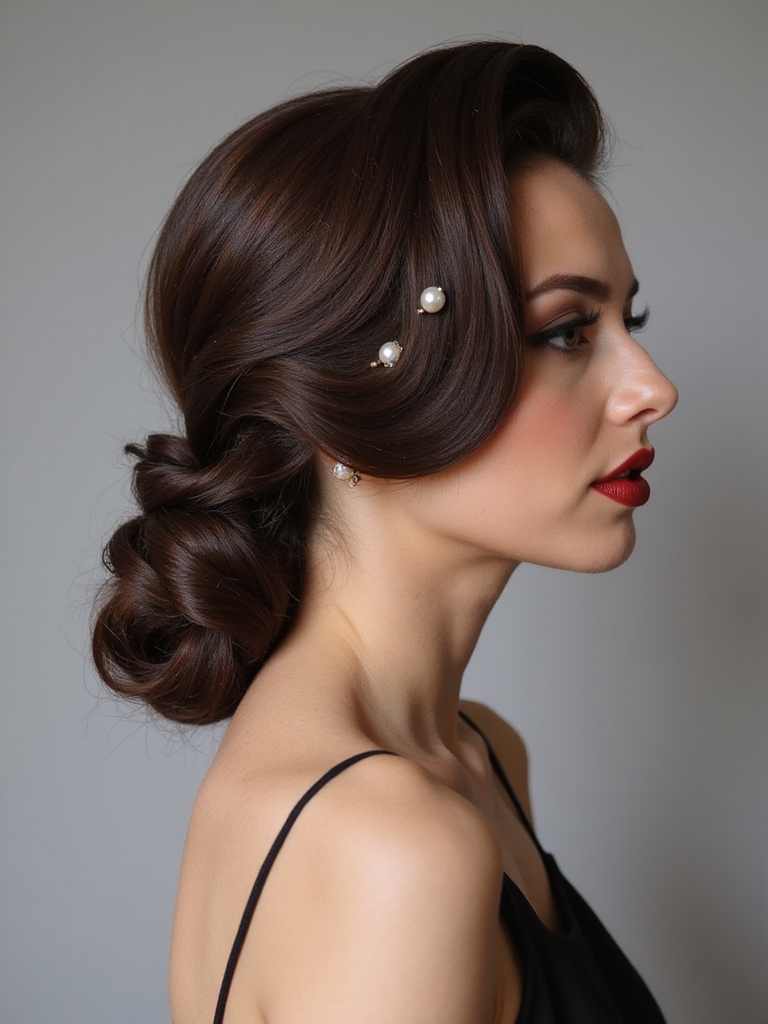
A vintage-inspired updo borrows from old-Hollywood glamour, with soft rolls, finger waves, or a Gibson tuck for retro romance. It suits a vintage-themed or art-deco wedding beautifully.
You set the waves or rolls with a comb and clips, let them cool fully, then pin them into the structured shape. Day-old hair holds the sculpted shape better than freshly washed.
It is a commitment to style, but it photographs as pure glamour and feels deliberately different from a modern updo. A jeweled comb or a birdcage veil completes the era.
Twists and Romance
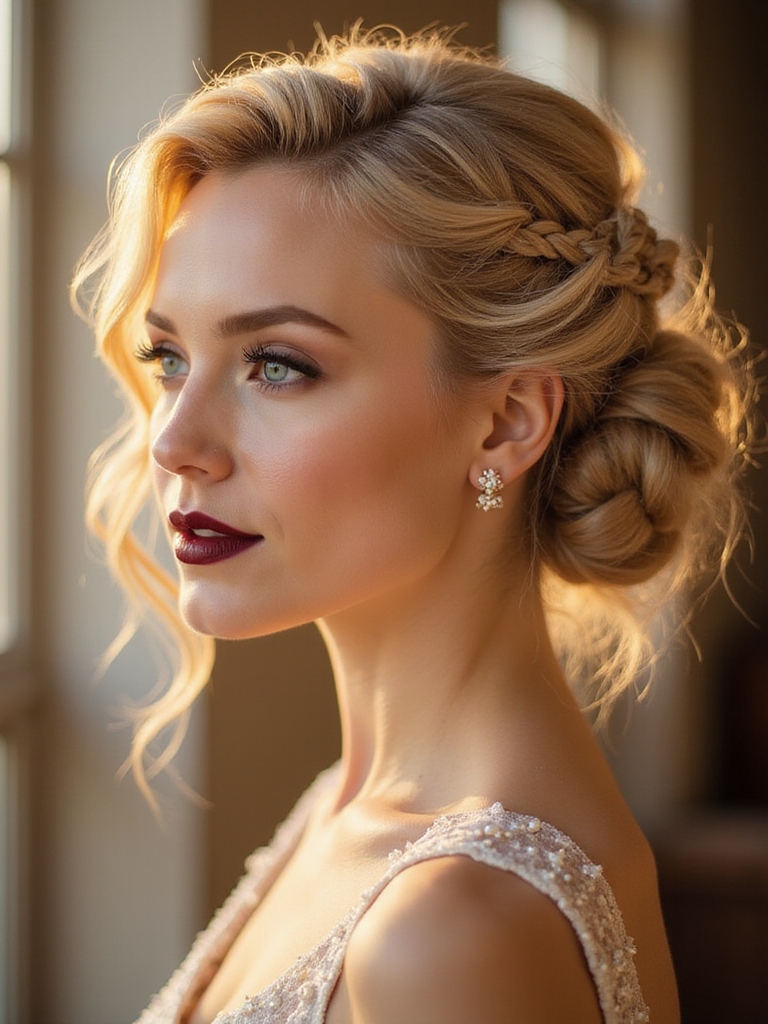
Twists are the workhorse detail of a romantic updo, adding texture and grip without the time a braid takes. A few twists woven into the back create dimension. They also help the whole style hold.
You twist sections from the sides and pin them into the updo, letting them form soft loops and waves. The twists lock against each other for staying power, which makes this a practical romance, pretty and secure together.
Embracing Your Hair Texture
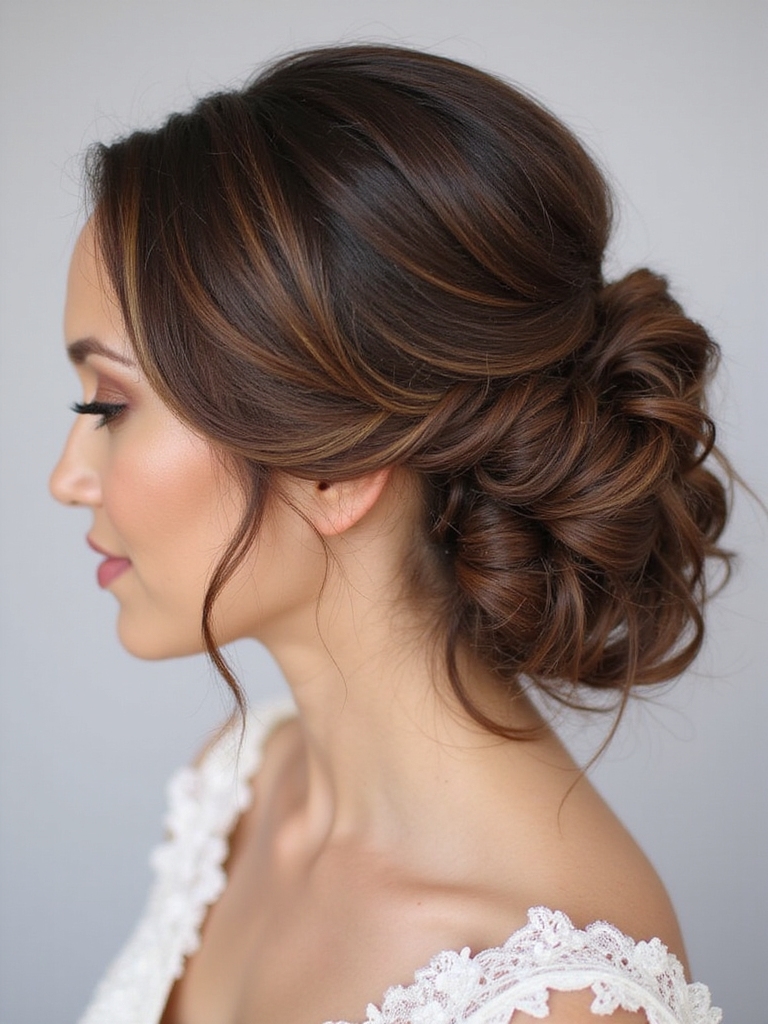
The best updo works with your natural texture rather than fighting it, and every texture makes a beautiful one. Straight hair takes sleek, structured shapes; wavy hair softens into romantic, undone updos.
Work With Your Pattern
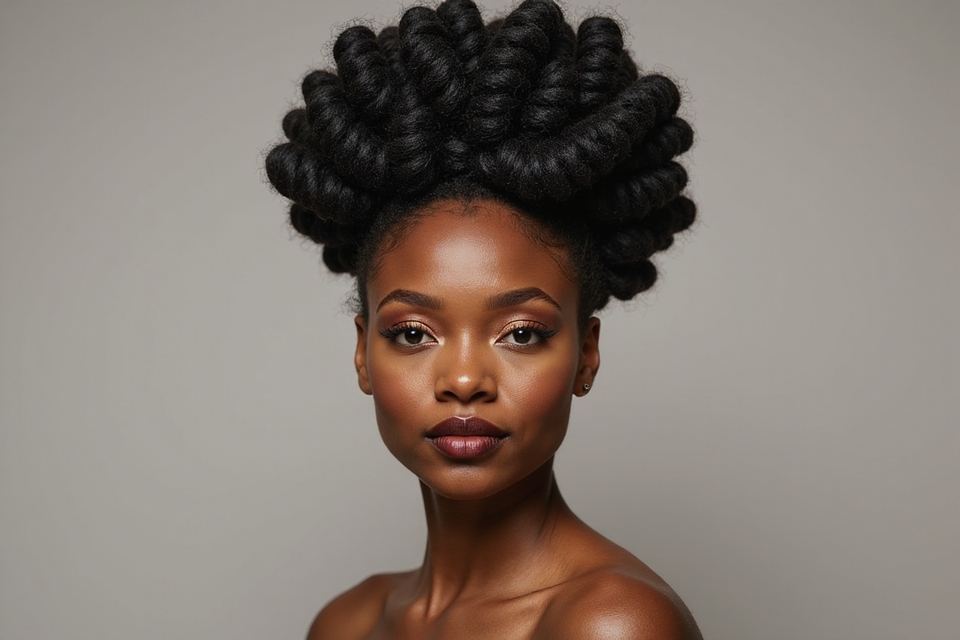
Curly and coily hair makes some of the fullest, most striking bridal updos of all, where the texture builds natural volume and dimension no straight hair can match. The key is to keep tension gentle at the hairline to protect your edges and to style along your natural pattern.
Whatever your texture, bring reference photos on hair like yours to the trial. A stylist who knows your real texture gives you a look that holds and feels like you, the way a good curly updo celebrates the curl.
Updos for Short Hair
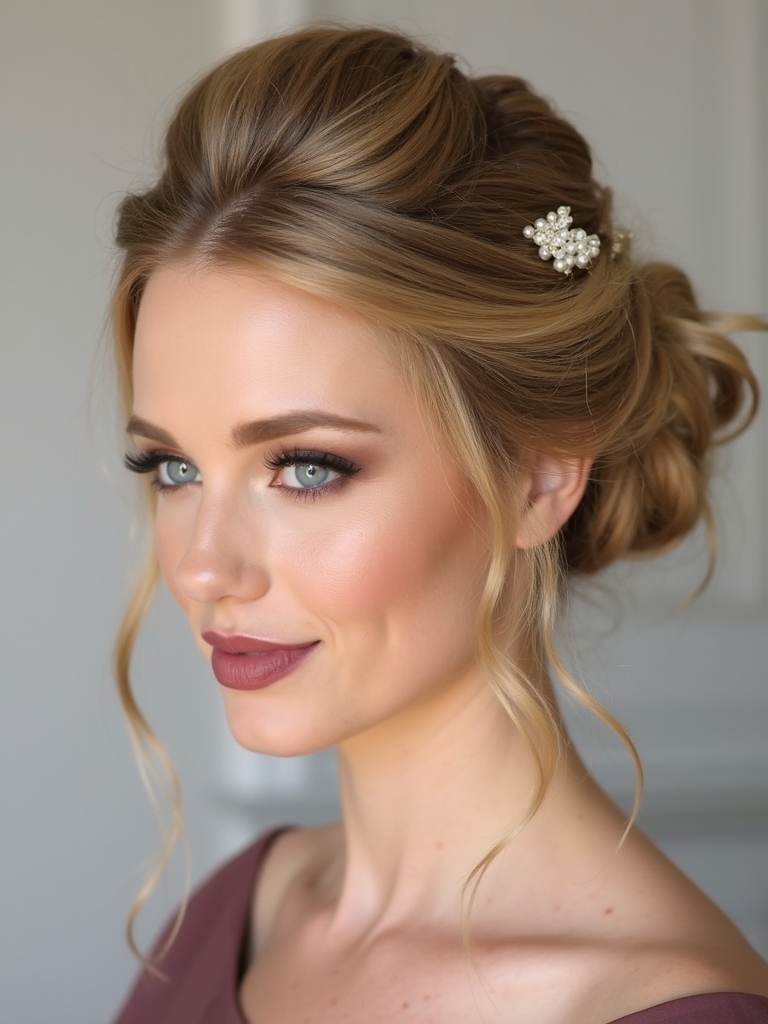
Short hair can absolutely wear a bridal updo; it just leans on texture and clever pinning to make up for length. A bob or lob pins into a soft, low textured updo with the right prep.
You tease for grip, pin small sections into a faux updo, and tuck the ends so nothing falls. Accessories do a lot of work here, a comb or a band hiding the join and adding polish.
The result looks intentional and modern, like a real choice. Short-haired brides often get the most natural-looking updos of all, since there is no heavy length pulling the shape down.
Techniques for Long-Lasting Updos
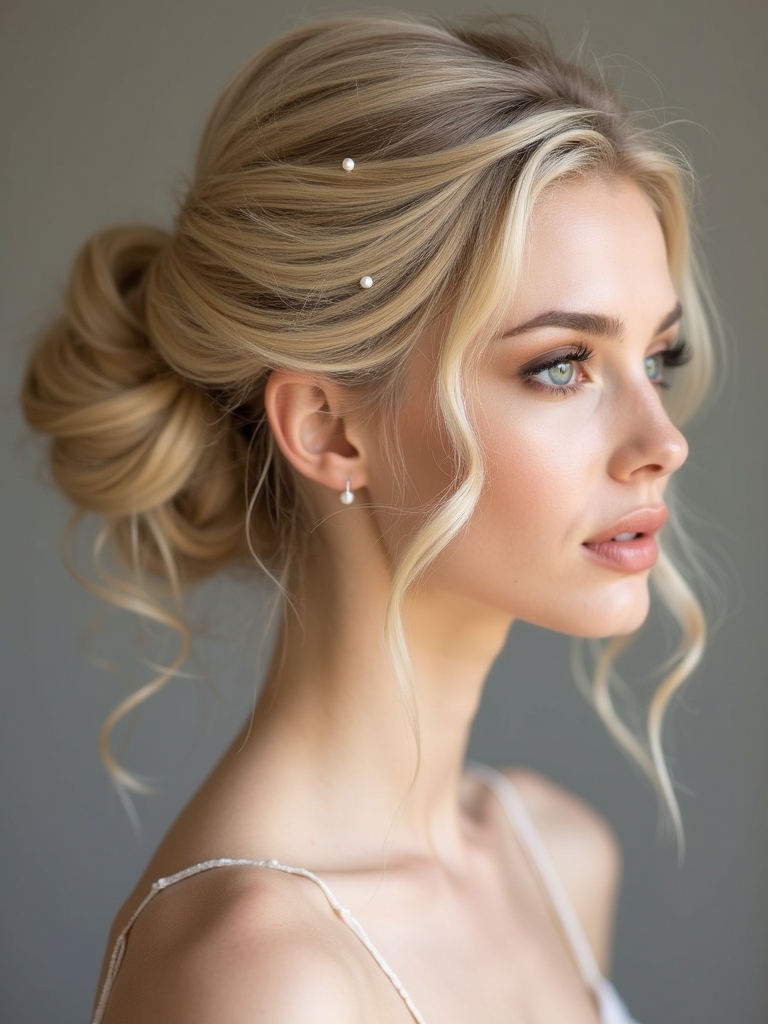
A wedding updo has to survive a ceremony, photos, and hours of dancing, so a few habits keep it standing. The biggest is starting on second-day or texturized hair, which grips far better than freshly washed strands.
Second-Day Hair Holds Best
From there it is pinning in the direction the hair twists, building hidden support pins under the visible style, and finishing with a medium to firm-hold spray. The loose tendrils drop first, so set those well.
Send a small fix-it kit with a bridesmaid: spare pins, a travel spray, a mini wand. A planned mid-reception touch-up beats one frantic fix when something falls.
A Full, Voluminous Updo
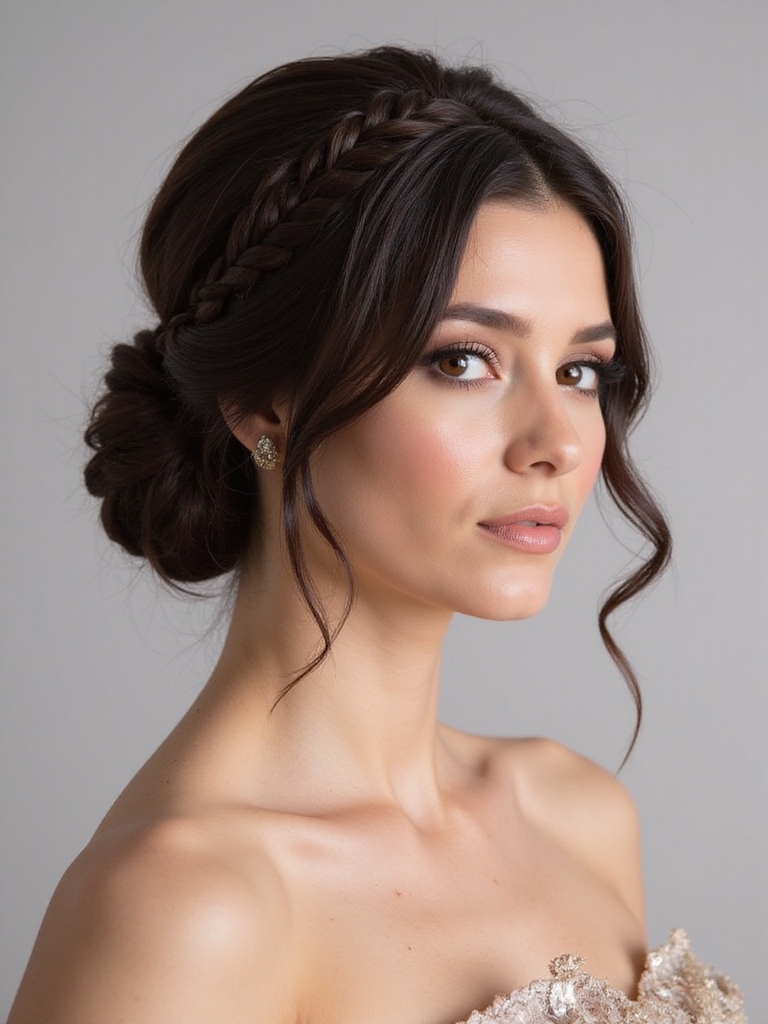
A soft, voluminous updo is the dreamy middle ground, full and romantic without the rigid structure of a high bun. The volume comes from a gentle backcomb and loosely pinned curls held in an easy shape.
You curl the hair, tease the crown lightly, then gather and pin it into a loose, full shape, leaving the surface soft and the edges undone. Pin around the volume to protect it.
It flatters nearly every face and gown and feels comfortable to wear, since nothing is pulled tight. It is for the bride who craves fullness and softness together.
Hairstyle Transformation Techniques
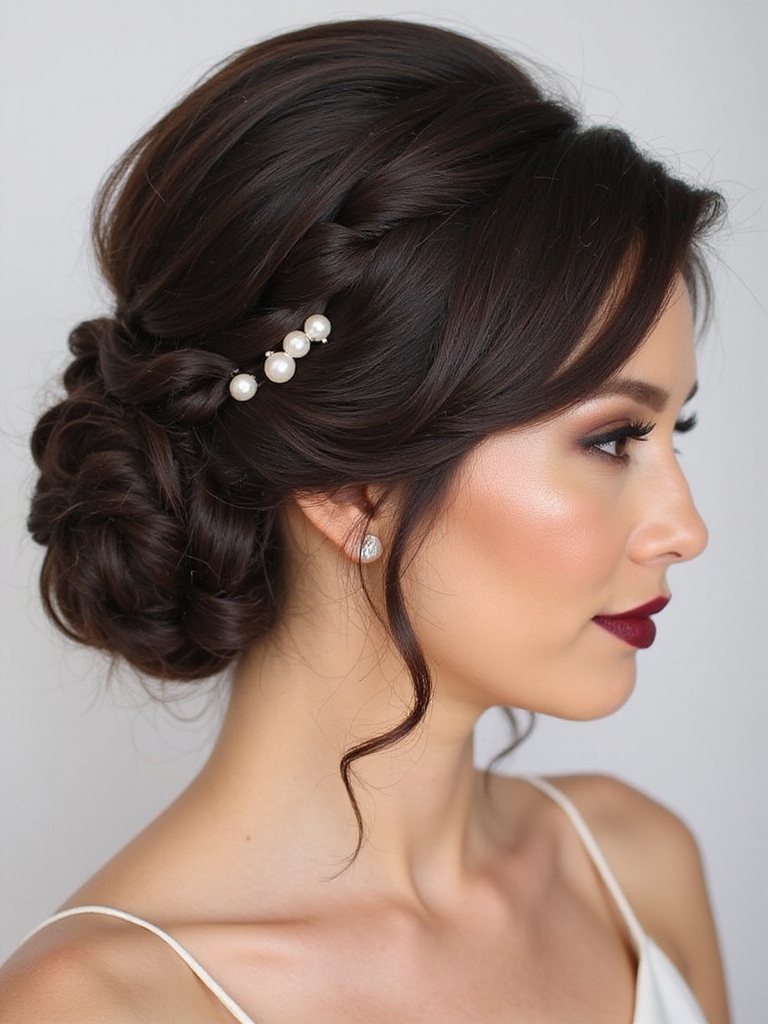
Some brides want two looks in one day, a polished updo for the ceremony and something looser for the party. With a little planning, the shift is easy. How to plan it:
- Choose a base style that loosens gracefully, like a soft low updo
- Have your stylist set it so a few pins release into soft waves
- Keep a wand and spray on hand to refresh the down version
- Test the transformation at your trial so it is smooth on the day
Collaborating for Bridal Perfection
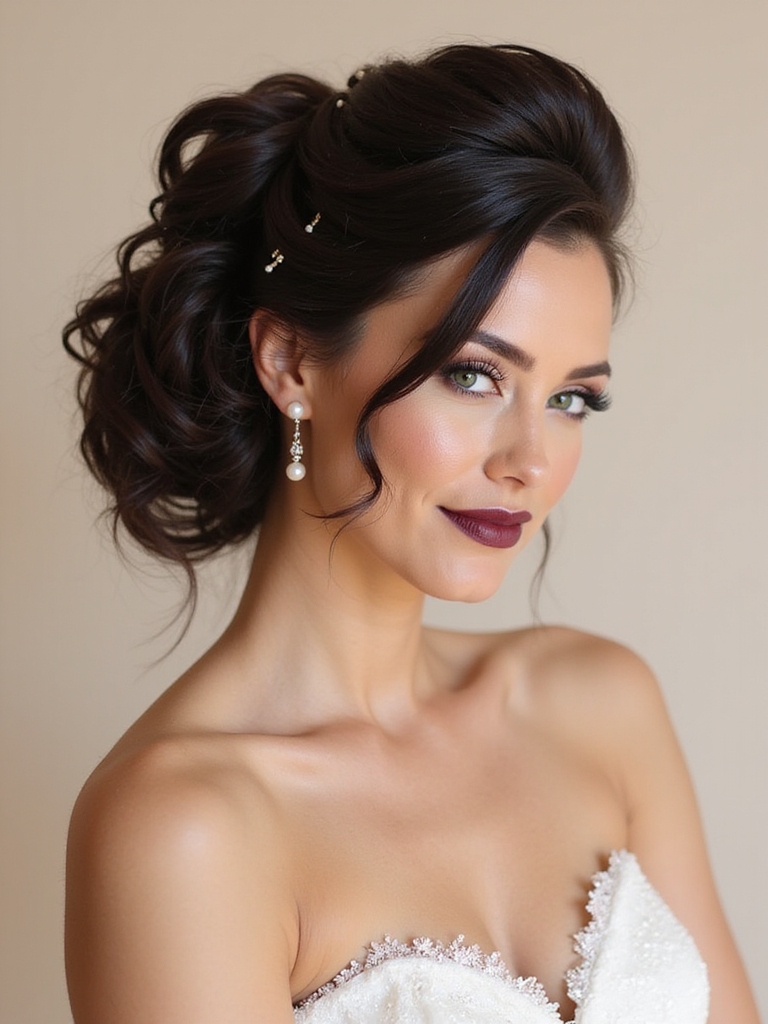
The best wedding hair comes from a real conversation with your stylist, not a single screenshot handed over on the morning. Bring two or three reference photos, ideally on hair like yours, and describe the feeling you want.
Bring Photos, Then Talk
Be honest about your routine, your comfort, and your gown. Tell your stylist the neckline, the venue, and whether you want it to last through happy tears, so they reach for the right formulas and structure.
Book the trial four to six weeks out, on second-day hair and with your veil, and treat it as a working session. The collaboration is what turns a pretty idea into a look that actually holds and suits you on the day.
Who It Suits Best
Every bride can wear an updo; the trick is matching the style to your hair and your gown. Fine hair leans into soft low buns and chignons with a hidden backcomb for volume, and needs no extensions.
Thick hair carries dramatic high buns and braided updos that finer hair cannot hold. Short hair pins into textured low updos with the right grip, and curly or coily hair makes the fullest, most striking updos of all, where the natural texture does the volume work for you.
On the gown side, match height to neckline: a high or beaded neck loves a high bun or a fully-up style that shows the detail, while an open or low back is a reason to keep the hair up and clean so nothing hides it.
A romantic, flowing dress suits soft, undone updos; a structured, minimalist one suits a sleek, polished shape. Whatever you choose, book a trial four to six weeks out, on second-day hair and with your veil, and let your stylist tailor the updo to the hair and dress you actually have.
Wedding Updos, Answered
?How do I choose a wedding updo for my dress?
Match the height to your neckline and back. A high or beaded neckline looks best with a high bun or fully-up style that shows the detail; an open or low back pairs with a clean low updo so nothing hides it. A romantic gown suits a soft, undone updo, a minimalist one a sleek, structured shape. Bring a photo of your dress to the trial.
?Will my wedding updo last all day and night?
Yes, with the right prep. Style on second-day or texturized hair for grip, pin in the direction the hair twists, build hidden support pins, and finish with a firm-hold spray. The loose tendrils drop first, so set them well and carry a few spare pins and a mini wand for a quick mid-reception refresh.
?Can I wear a veil with an updo?
Absolutely, and an updo is one of the easiest bases for one. A crown of volume or a secure twist gives the veil’s comb a stable anchor, and you can remove the veil after the ceremony without disturbing the style. Set it both ways at your trial so the transition is smooth.
?Do bridal updos work on curly, coily, fine, or short hair?
All of them. Curly and coily hair makes the fullest, richest updos; fine hair uses a hidden backcomb and needs no extensions; short hair pins into textured low updos with the right grip. Work gently around the hairline so the edges stay protected, and bring reference photos on hair like yours.
?How much does a bridal updo and trial cost?
A trial typically runs $50-100, and wedding-day styling often runs higher depending on your area and the complexity. The trial is worth it: it confirms the style holds, suits your gown, and looks right in photos four to six weeks before the day, when there is still time to adjust.
The Updo That Feels Like You
The single thing worth remembering from all of this is that a wedding updo should hold so well and feel so right that you forget about it the moment the day begins. Match the shape to your gown and your texture, keep it soft and secure, let one accessory make it yours, and lean on a trial to confirm it lasts. From a clean chignon to a full crown updo, there is a version here for every bride, every dress, and every kind of hair.
So which one feels like you, the sleek high bun, the soft low one, the braided crown? Save the two or three that fit your dress, take them to a stylist four to six weeks out on second-day hair, and treat the trial as a conversation. Then you can walk down the aisle thinking about the person waiting there, not about your hair.
More Looks Worth Saving