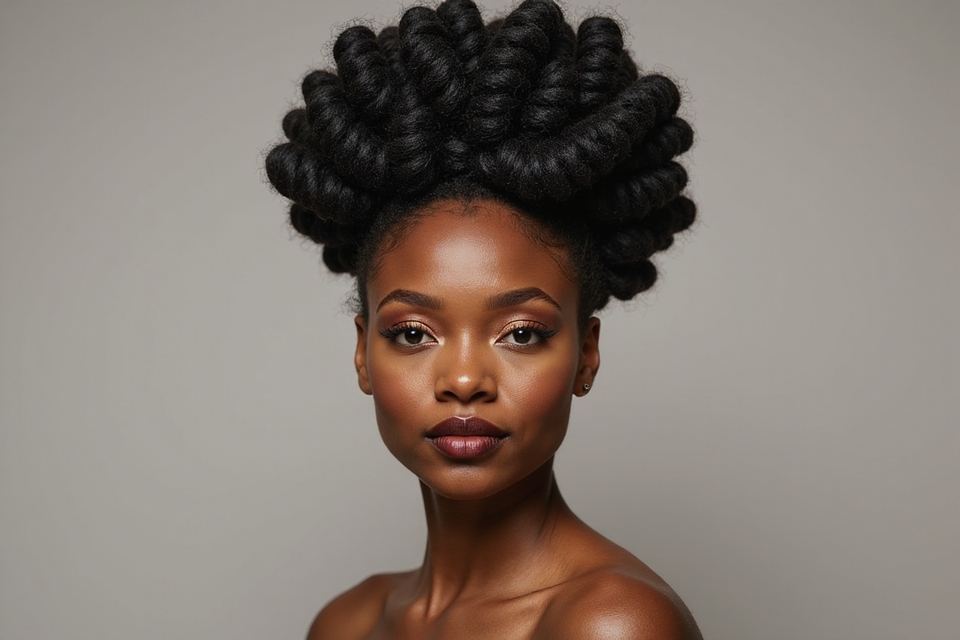

A jaw-length curly bob promises something curls do not always deliver: shape without the triangle. Cut wrong, a short curly bob piles weight at the sides and goes wide and pyramid-shaped by the cheekbones. Cut right, it sits in a bouncy, rounded frame that hugs the jaw and makes curls look fuller on top, not heavier at the bottom.
The difference is almost never the curls themselves. It is the cut, the products, and the drying, and once you understand those three, a jaw-length curly bob becomes among the most flattering, low-fuss styles a curly head can wear. What follows covers curl type, the right cut, how to wash and dry, and how to keep the shape bouncing between salon visits.
The Essentials Up Front
- Know your curl pattern first. A 2C wave, a 3B coil, and a 4C curl each want a slightly different cut and product weight, so the shape is built around your texture, not a photo.
- Cut dry or curl-by-curl. A jaw-length curly bob should be shaped with the curls in their natural state, since wet hair springs up shorter and a blunt wet cut turns into a triangle.
- Apply product on soaking-wet hair. Curls drink up definition best when the strands are dripping; on damp hair the product grabs unevenly and the curl clumps break.
- Diffuse or air-dry without touching. The fastest way to kill a curly bob’s shape is handling it while it dries. A salon shape costs roughly $60 to 120 depending on your area and the cutting method.
Know Your Natural Curl Type

Before any cut, the most useful thing you can do is honestly identify your curl pattern, because a jaw-length bob behaves completely differently across textures. The pattern decides how much the hair will spring up, how the layers should sit, and how much product the curls can carry. Here is a quick way to place yourself:
- Type 2 (wavy): loose S-shapes that fall fairly flat; a bob here can go quite blunt and still hold shape.
- Type 3 (curly): defined ringlets, from loose 3A spirals to springy 3C coils, that shrink noticeably when dry.
- Type 4 (coily): tight coils and zigzags, from 4A to 4C, that shrink the most, so a jaw-length goal needs length left for shrinkage. See the hairstyles for curly hair guide for more on each.

Curly Bob Maintenance Essentials

A curly bob is only as good as the small kit you keep it with, and curls reward the right products far more than the most expensive ones. The essentials are simple, and skipping any of them is usually why curls go limp or frizzy. Build your shelf around these:
- A sulfate-free, hydrating cleanser and a slip-rich conditioner, since curls run dry and crave moisture.
- A leave-in conditioner and a curl cream or gel for definition and hold.
- A microfiber towel or a soft cotton tee for scrunching, and a wide-tooth comb for detangling in the shower.
Good to Know
Curly hair can shrink up to half its stretched length once dry, and tighter coily textures shrink the most. This is exactly why a jaw-length curly bob is cut longer than the jaw on stretched hair; the curls spring up to the right place only after they dry.
Layering for Curly Volume

The biggest fear with a short curly bob is losing volume, but the right layering does the opposite. Strategic layers remove the bulk that drags curls down at the bottom and redistribute it into lift and bounce up top. Done well, layering is what turns a heavy curly triangle into a rounded, full shape.
Remove Weight From the Inside
The key is removing weight from the interior, not the surface, so the curls can spring up. Internal layering thins the dense middle of the hair while keeping the outer curls intact, which lets the whole shape breathe and lift at the crown. Too few layers and a curly bob sits flat and wide; too many and it loses definition, so balance is everything.
I tell clients that volume in a curly bob is engineered, not sprayed in. Get the internal layers right and you need far less product and effort to make it look full.
Face-Framing Techniques

Face-framing is where a jaw-length curly bob really earns its keep, since the curls right around the face draw the eye and shape the whole look. Cut thoughtfully, the front pieces soften the jaw and cheekbones; cut carelessly, they spring up too short and stick out. Placement is everything here.
Leave Length for Shrinkage
The front curls should be shaped to fall just at or below the jaw when dry, which means leaving a little extra length to account for shrinkage. A soft, curved frame around the face flatters nearly every face shape, while a few longer pieces at the front keep round faces from looking wider. The goal is curls that cradle the face rather than puff out from it.
I love a slightly longer front on a curly bob, since it gives you the option to tuck, pin, or let it fall, and it keeps the shape from feeling too round. A little length at the front is the easiest insurance against a curly bob looking like a helmet.
The simplest way to shape flattering face-framing curls:
1Leave length at the front
Have the front pieces cut a touch longer than the jaw, since they will spring up shorter once they dry into their curl pattern.
2Shape a soft curve
Ask for a gently curved frame rather than a straight-across line, so the curls cradle the cheeks and jaw instead of jutting out.
Cutting Techniques for Curls

How a curly bob is cut matters more than almost anything else, and the single most important rule is that curls should not be cut wet and blunt like straight hair. Wet curls stretch out long, then spring up shorter and uneven once dry, which is why so many curly bobs collapse into a wide triangle. The fix is cutting the hair in its natural, curly state.
Look for a stylist who uses one of these approaches:
- Dry cutting: shaping in the natural curl state so the stylist places each length exactly where the curl actually sits.
- Curl-by-curl cutting: methods like the Rezo or DevaCut that cut individual curls to balance shape and volume.
- Tension-free shaping: cutting with minimal pulling so the curl’s true length is respected, not stretched.
Layering Techniques That Build Shape

Beyond adding volume, layering is the tool that actually sculpts the silhouette of a curly bob, deciding whether it reads round, A-line, or soft and graduated. Where the layers sit changes the entire personality of the cut, so it is worth understanding the options before your appointment.
A few layering choices and what they do:
- Rounded layers create a soft, full bubble shape that flatters and maximizes bounce.
- Graduated layers, shorter underneath, give a stacked, lifted back and a tucked-under feel.
- Longer, blended layers keep the curl pattern intact for a looser, more relaxed bob with less structure.
Not sure which cutting method to ask for? Match it to your texture.
🎯Looser waves and curls (2C to 3B)
A dry cut works beautifully, letting the stylist place the length exactly where each curl falls.
🎯Tighter coils (3C to 4C)
A curl-by-curl method respects each coil’s true length and balances shape against heavy shrinkage.
A Quick Curly Bob Refresh

Curls rarely need a full wash every day, and a good refresh keeps a curly bob looking just-styled on day two and three without starting over. The goal is to re-hydrate and re-clump the curls that have flattened or frizzed overnight, using water and a little product rather than a whole new wash.
Lightly mist the hair with water or a curl-refresh spray, focusing on the flattened areas, then smooth a small amount of leave-in or curl cream over the surface and scrunch the curls back into shape. A few seconds with a diffuser on low can re-energize the bounce. This quick reset takes two minutes and stretches a wash for days, which is part of why a curly bob is so low-maintenance once you know the rhythm.
Product on Soaking-Wet Hair

When you apply your styling products matters as much as which ones you use, and curls define best when the hair is soaking wet, not towel-dried. Dripping hair lets the product distribute evenly and lock the curl clumps together before they have a chance to separate and frizz. Here is the order that works:
- Apply leave-in to soaking-wet hair straight out of the shower, raking it through with your fingers or a wide-tooth comb.
- Layer your curl cream or gel on top while the hair is still dripping, smoothing it over the curl clumps.
- Scrunch upward toward the scalp to encourage curl formation, then let the hair sit before you dry it.
Two terms worth knowing for a curly bob:
📖Shrinkage
How much shorter curls become when they dry versus stretched out wet; the reason curly bobs are cut longer than the target length.
📖Curl cast
The light, crunchy film a gel forms as it dries, which locks the curl shape; you scrunch it out at the end for soft, defined curls.
Humidity Protection for Curls

Humidity is a curly bob’s natural enemy, since damp air swells the hair shaft and pulls curls into frizz. The defense is a combination of the right products and a protective film over the curls that keeps outside moisture from getting in. A little planning saves a frizzy afternoon.
Build a humidity defense like this:
- Finish styling with a gel that forms a light cast, which seals the curl and blocks humidity.
- Use an anti-humidity or curl-sealing product as your last layer on damp days.
- Once dry, scrunch out the gel cast gently for soft curls that still hold their shape against the weather.
The Silk Pillowcase Habit

What happens to your curls overnight decides how much work the morning takes, and a silk or satin pillowcase is the cheapest, easiest upgrade a curly bob can have. Cotton pillowcases rough up the cuticle and soak up moisture, leaving curls frizzy and flat by morning, while silk lets the hair glide. Protect the curls at night like this:
- Swap to a silk or satin pillowcase, which reduces friction and keeps moisture in the hair.
- For more protection, loosely pineapple the hair by gathering it into a high, loose pile on top of the head.
- A silk bonnet or scarf works too, especially for tighter coily textures that need extra friction protection.
Root-Lifting Techniques

Clients ask me constantly how to stop flat roots, since they are the quickest way a curly bob loses its shape, since the volume is supposed to sit high and round. The good news is that root lift is mostly a drying-stage trick, not a product one, and a few simple moves keep the crown from collapsing as the hair dries.
While the hair is still wet, clip the roots at the crown with small metal root clips to hold them up and away from the scalp as they dry. You can also diffuse with your head flipped upside down to encourage the roots to dry with lift instead of flattening under their own weight. Once dry, gently shake the roots out with your fingertips rather than a brush.
These small moves make a dramatic difference, since a curly bob with lifted roots reads full and intentional, while flat roots make even great curls look weighed down. Root lift is the finishing detail most people skip.
Color Options for a Curly Bob

Color can make a curly bob look even fuller, since the way light catches dimensional color exaggerates the depth and movement of the curls. The trick is choosing placement that enhances the curl pattern rather than fighting it, and protecting the hair’s moisture, since color can be drying on already-thirsty curls.
A few color approaches that flatter a curly bob:
- Face-framing highlights or money pieces brighten the front and emphasize the shape around the jaw.
- Subtle balayage or dimensional color adds depth that makes curls look thicker and more defined.
- If you color, double down on moisture with deep conditioning, since processed curls dry out and lose bounce faster.
Seasonal Adjustments for Curls

Curls behave differently as the seasons change, and a curly bob that looks perfect in summer can fall flat or frizz in winter without small adjustments. Damp, humid months call for more hold and frizz control, while dry, cold months call for more moisture and less crunch, since indoor heating strips curls of their needed water.
In winter, lean on richer leave-ins and creams, and add a hydrating mask to your week to fight the dryness that flattens curls. In summer and humid weather, switch to lighter, gel-based products that seal the curl against frizz. Listening to what the weather is doing to your curls, and adjusting product weight up or down, keeps the bob looking its best year-round rather than fighting the same routine through every season.
Curly Bob Mistakes to Avoid

Most curly bob problems come down to a handful of avoidable habits, and fixing them often transforms a frustrating cut into a beloved one. The most common is brushing curls dry, which shatters the curl clumps and turns defined curls into a frizzy cloud. Curls should only be detangled wet, with conditioner and a wide-tooth comb or fingers.
The other frequent mistakes are touching the hair too much while it dries, which causes frizz, and skipping regular trims, which lets the shape grow out heavy and lose its bounce. Using the wrong product weight, too heavy for fine curls or too light for thick ones, also flattens or under-defines the hair.
I tell every new curly client the same short list: do not brush it dry, do not touch it while it dries, and do not skip your trims. Avoid those three and most curly bob frustrations simply disappear.
Air-Drying Versus Diffusing

How you dry a curly bob shapes the final result as much as how you style it, and the choice between air-drying and diffusing comes down to your texture, your time, and the volume you want. Both work; they simply give different finishes. Here is how to choose:
- Air-drying gives the most natural, defined curls with the least frizz, but takes time and can leave flatter roots.
- Diffusing on low heat and low speed adds volume and speeds drying, ideal for tighter textures and root lift.
- Whichever you choose, do not touch the hair until it is fully dry, since handling wet curls is the number-one cause of frizz.
Day-to-Day Maintenance Tips
Beyond wash day, a few small daily habits keep a curly bob looking fresh and healthy between salon visits. None of them take more than a minute, and together they are the difference between curls that thrive and curls that slowly lose their shape. Build these into your routine:
- Refresh second-day curls using a spritz of water and a little leave-in instead of rewashing, which can over-dry curls.
- Sleep on silk and pineapple the hair to protect the curl pattern overnight.
- Book a trim every eight to twelve weeks to keep the shape crisp and prevent the bob from growing out heavy.
Transitioning to a Curly Bob Gradually

If you are nervous about chopping straight to a jaw-length curly bob, you do not have to do it all at once. Transitioning gradually lets you get comfortable with shorter curly hair while building trust with your stylist about how your curls behave at each length. It is the low-risk route to a big change.
Ease into the bob like this:
- Start with a longer curly lob and take it shorter over two or three appointments as you adjust.
- Add internal layers first to lighten the weight before committing to the full jaw-length shape.
- Talk through shrinkage with your stylist at each step, since a jaw-length goal often means cutting a little longer than the target. The bob haircut guide covers more shapes worth exploring.
How to Ask Your Stylist for the Cut
The single most important thing you can do is find a stylist who specializes in curly hair and asks to see your curls dry before they cut, rather than one who only ever works on stretched, wet hair.
Bring photos, but be clear about your own curl pattern, since a jaw-length bob on a 3A spiral and a 4C coil are built very differently, and a good curl specialist will adjust the cut and the length left for shrinkage to your actual texture rather than the photo.
Use the right words at the consultation. Ask whether they cut curls dry or curl-by-curl, request that they leave length to account for shrinkage so the bob lands at the jaw when dry, and tell them how much time you realistically spend styling so the layers suit your routine.
Mention any color so the cut and color plan work together, and ask exactly how to maintain the shape at home, since a curly bob lives or dies on the wash-and-dry routine far more than on the cut alone. The right curl stylist will happily talk you through all of it.
Curly Bob Questions, Answered
?Will a jaw-length bob make my curly hair look like a triangle?
Only if it is cut wrong. The triangle happens when curls are cut wet and blunt with no internal layering. Cut dry or curl-by-curl with weight removed from the inside, a jaw-length curly bob sits round and full instead of wide at the bottom.
?How much length should I add for shrinkage?
It depends on your curl pattern, but tighter curls can shrink up to half their length, so a jaw-length goal often means cutting several inches longer on stretched hair. A curl specialist will judge the exact amount based on how your curls behave.
?How often should I wash a curly bob?
Most curls do best washed every three to five days, refreshing with water and leave-in in between. Over-washing strips the natural oils curls need, so a refresh routine keeps the bob defined without daily shampooing.
?Can fine or thin curly hair pull off a jaw-length bob?
Yes, and a bob often makes fine curls look fuller by removing length-weight and concentrating volume up top. The key is lighter products and careful layering so the curls are defined without being dragged down.
?Is a jaw-length curly bob high maintenance?
Less than you would think once the routine clicks. The cut does most of the work, and a quick refresh stretches each wash for days. The learning curve is the wash-and-dry method; after that, it is one of the lower-effort curly styles.
Bounce, Built to Last
A jaw-length curly bob is among the most rewarding cuts a curly head can wear, but only when the cut, the products, and the drying all work together. Know your curl pattern, find a stylist who cuts curls dry or curl-by-curl, apply product on soaking-wet hair, and dry without touching, and the bob will reward you with bounce, shape, and far less daily effort than you would expect.
Start by getting the cut right with a true curl specialist, then dial in your wash-and-dry rhythm over a few weeks. Once it clicks, a curly bob becomes the kind of style that looks better the more you trust your curls, growing into a low-fuss signature you will not want to give up.
More Hair Inspiration