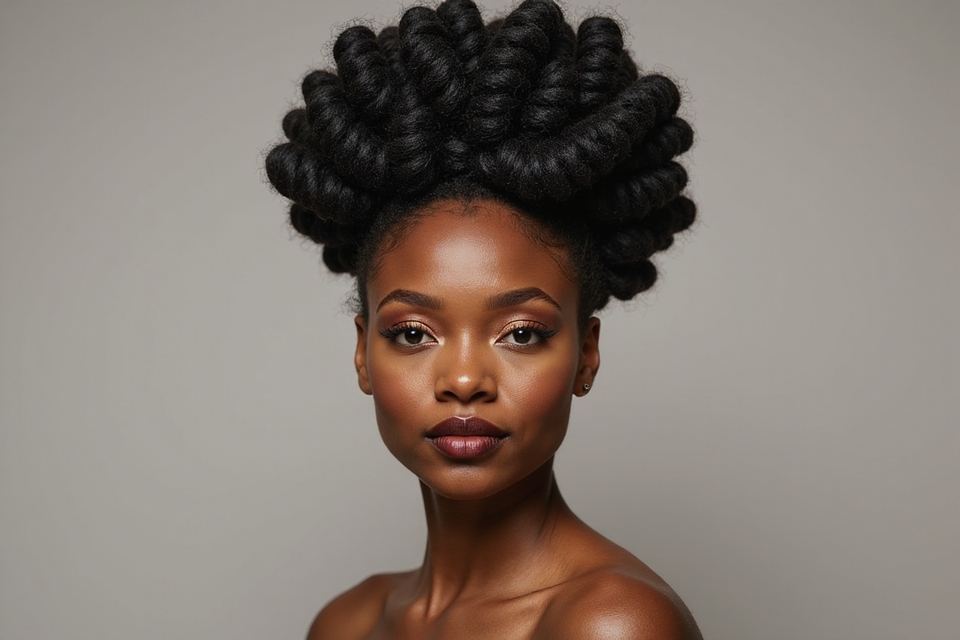

There is a myth that braids are a set-it-and-forget-it style, that once they are in, the wind and a restless night cannot touch them. Half of that is true. A good protective braid will hold through a gusty walk and a night of tossing, but only if it is installed right and then cared for through the week.
Natural braided styles, from box braids and cornrows to Fulani braids and Senegalese twists, do more than look striking. Done well, they shield the hair, cut daily breakage, and buy you weeks of low-fuss mornings. This is everything I have learned about wearing them well: the install, the upkeep, the overnight routine, and how to keep your edges safe while you do it.
Braided Hairstyles At A Glance
Do braids actually protect your hair? Yes, when they are not too tight. Braiding reduces daily manipulation and friction, which helps you keep length. The catch is tension; a braid that hurts is damaging your edges, not protecting them.
How long do natural braids last? Most protective styles wear two to eight weeks depending on the style, box braids and twists on the longer end, cornrows a little less. Take them down before they loosen and matt at the root.
Can I braid short or fine hair? Yes. Shorter hair takes smaller sections and sometimes added length; fine hair needs gentler tension and lighter extensions so the weight does not pull. Both braid beautifully with the right hand.
The Cultural Identity Woven Into Braids

Braids are older than fashion. Across West and East Africa, braided patterns have carried meaning for centuries, marking family, age, status, and region, and that heritage still lives in the styles we wear today.
Why The Origin Matters
It matters to know that when you sit down for cornrows or Fulani braids. These are not trends someone invented last year; they are techniques passed hand to hand through generations. Wearing them with that respect, and crediting where they come from, is part of wearing them well.
For Black women especially, braids are also a personal language, a way to express identity and creativity that is entirely your own. The same style can look regal, playful, or quietly classic depending on how you make it yours.

How Braids Promote Hair Health

The practical case for braids is simple: less daily manipulation means less breakage. When your hair is braided, you are not combing, heat-styling, or tugging it every morning, and that drop in handling is what helps you keep length.
Braids also shield the strands from wind, sun, and the friction of collars and pillows. For coily and curly textures that are naturally drier at the ends, that protection matters most where the hair is oldest and most fragile.
One honest caveat: braids support healthy hair only when they are done gently. Too-tight braids do the opposite, stressing the follicle and thinning the edges. Protective is a thing you have to earn.
Essential Braiding Tools and Products

A handful of tools makes braiding smoother. You do not need a salon’s worth of gear, just the right basics that keep the parting clean and the hair flexible.
- A rat-tail comb for precise, even parting.
- A moisturizing leave-in conditioner to keep strands pliable.
- A lightweight, non-greasy oil for sheen and scalp comfort.
- Small, snag-free elastics and an edge brush for a clean finish.
The two braid myths I clear up most.
❌ Myth: Braids make your hair grow.
✅ Reality: Not directly. Braids reduce breakage and manipulation, so you keep more of the length you grow. The growth itself comes from a healthy scalp, not the braid.
❌ Myth: Tighter braids last longer.
✅ Reality: Tighter braids just hurt and thin your edges. Secure, gentle tension lasts plenty long without the damage.
How to Prepare Hair for Braiding

Prep decides how long braids last and how the scalp feels. I always start on clean, conditioned hair, fully detangled, because braiding over knots traps them and causes breakage at takedown.
Moisturize before you part, since braided hair is harder to hydrate once it is locked in. Then section into even, workable parts so the tension stays even across the whole head.
- Wash and deep-condition a day ahead.
- Detangle gently with a wide-tooth comb, ends first.
- Seal in moisture with a leave-in and a light oil before parting.
Natural Braided Hairstyles Overview

Once the hair is prepped, the style options open up. Each braid family has its own look, install time, and wear, so it helps to know the headliners before you book.
- Box braids for versatility, from a bun to a ponytail; see braided styles for Black women.
- Goddess and halo braids for an elegant, statement crown.
- Cornrows for sleek, scalp-close lines that work alone or as a base.
- Knotless braids for less tension at the root than classic box braids.
Mastering Cornrow Braiding Techniques

Cornrows are the foundation of so many styles, and the technique rewards patience. Start on clean, moisturized hair, part neat rows, and braid close to the scalp, feeding hair in as you go for that smooth, raised line.
Keep the tension firm but never painful. This is the part people get wrong: a cornrow should feel secure, not sharp. I have re-done too many sets that came in too tight, and the fix is always the same: looser rows, a calmer scalp. If your eyes water or your edges sting, the braid is too tight, and it is time to ask your braider to ease up. More at cornrow hairstyles.
- Feed in small sections for an even, gradual thickness.
- Keep your rows consistent in size for a clean pattern.
- Moisturize the scalp lightly before you start, not after.
| Style | Best for | Typical wear |
|---|---|---|
| Box braids | Versatility and length | 6 to 8 weeks |
| Cornrows | Sleek lines, a base for other styles | 2 to 4 weeks |
| Senegalese twists | A softer, polished look | 6 to 8 weeks |
| Fulani braids | Face-framing detail | 2 to 4 weeks |
Intricate Fulani Braid Artistry

Fulani braids come from the Fula people of West Africa, and the signature is unmistakable: a center cornrow paired with braids that frame the face, often dressed with beads or cuffs.
Wearing Beads Without Weight
The beauty is in the precision and the detail. I love how a few shells or gold cuffs woven in turn a clean install into something personal, and how the face-framing braids flatter almost everyone.
They wear well for weeks with care, and they take added length nicely if your hair is shorter. See Fulani braids for pattern ideas.
Protect Your Edges
A protective style stops protecting the moment it hurts. Constant tension on the hairline causes traction alopecia, a gradual thinning of the edges that can become permanent. If a braid stings, your eyes water, or you see little bumps along the hairline, it is too tight. Ask your braider to loosen it, and never sit through pain for the sake of a style.
Secure and Stylish Box Braids

Box braids are the workhorse of protective styling: square-parted sections braided down, with or without added hair, into a style that lasts and adapts to anything.
- Part clean, even squares for a uniform look.
- Use just enough tension to secure the root without strain.
- Choose a size for your goal: smaller for longevity, larger for a quicker install and less weight.
- Pull them into a bun, half-up, or ponytail without redoing the braids.
Timeless Versatile Protective Hairstyle

Senegalese twists are the twisted cousin of box braids, two strands wrapped into a smooth, rope-like length that looks polished and a little softer than a braid.
They install relatively quickly, last for weeks, and dress up or down with ease, all on a gentle install. For more, see twist hairstyles.
Not sure which protective style fits? Start with your goal.
1I want the longest wear
Box braids or Senegalese twists, six to eight weeks with care.
2I want the least tension
Knotless braids or larger sections, which sit lighter at the root.
Hydrate Cleanse Nurture Glow

Braids do not mean you stop caring for your scalp; they change how you do it. A light oil on the scalp keeps it balanced, and a gentle, diluted shampoo or a cleansing spray clears build-up without frizzing the braids.
Stay consistent and the scalp stays comfortable, which is half of whether braids feel good past week two. Itchy, flaking, or sore is your cue to cleanse and lighten up.
Choosing Quality Hair Extensions

If you are adding length or fullness, the extension you choose matters as much as the braid. Clients ask me which hair to buy more than almost anything, and my answer starts here: I match color and texture to the natural hair so the blend disappears, and I prioritize a quality hair that will not tangle or shed early.
Pre-stretched synthetic is the everyday standard; human hair costs more but lasts and behaves more naturally. Lighter is kinder to your edges, so do not over-pack a braid for the sake of thickness.
Braids Need Careful Maintenance

Braids stay beautiful with a little nightly effort. The goal is to cut friction and keep the ends sealed so the style holds its shape for weeks.
- Wrap in silk or satin at night, or sleep on a satin pillowcase.
- Mist lightly with a hydrating spray every few days.
- Seal the ends and refresh the scalp with a light oil.
- Take them down by week six to eight, before they loosen and tangle at the root.
Wind Resistant Braided Hairstyles

Some braids simply hold better on a gusty day, because the pattern grips close to the head. When I know the forecast is rough, I steer toward styles that stay put without a fight.
Dutch braids, crown braids, and a wrapped updo all keep stray hair contained, so you arrive looking the way you left.
- Dutch braids sit secure from root to tip.
- A crown or halo braid wraps the head and tucks the ends.
- A low braided bun keeps length from whipping loose.
Braids Comfort Silk Protection

Sleeping in braids is comfortable once you protect them. A silk or satin pillowcase or scarf cuts the friction that frizzes braids overnight, and loosening any tight spots before bed saves your edges and your sleep.
- Wrap braids in a satin scarf or bonnet.
- Switch to a satin pillowcase as a backup.
- Loosen a too-snug install before bed, the moment you feel it.
Revive Braids With Care

Even good braids look tired after a few nights. Reviving them is quick once you know the order: hydrate, smooth, then seal.
The Two-Minute Morning Refresh
I mist lightly with a water-based spray to redefine the texture, smooth stray hairs back into the braid with my fingers, and finish with a dab of light oil to smooth away frizz.
Done weekly, this keeps a three-week-old set looking close to fresh. Overdoing the product is the only real risk, since heavy build-up dulls the braids.
Braiding for All Lengths

Braids adapt to almost any length. Short hair takes smaller sections and sometimes a little added hair to hold the braid, and the result can be full of texture and movement.
Longer hair gives you room for intricate, statement braids that hold beautifully. Either way, the install should follow your length, since a braid that strains to grip short hair pulls at the root.
Colorful Braid Design Techniques

Color personalizes a braided style faster than almost anything else. Woven into the extension hair, it adds dimension without touching your natural color or reaching for bleach.
I like a shade that plays off the natural base. Right now the warm caramel and soft burgundy melts are the colors I weave in most, with a bolder contrast for anyone who wants it loud.
- Subtle highlights blended through a few braids.
- Bold stripes or a money-piece around the face.
- Pastel ends for a soft, modern finish.
Tradition Meets Contemporary Braiding

The best modern braiding respects where the styles come from while making them yours. You can honor a traditional cornrow pattern and still add a contemporary part, a color, or a sculptural shape; the heritage and the personal touch sit together just fine.
- Keep the traditional technique and its name intact.
- Add modern details: color, parting, or accessories.
- Let the finished style say something that is yours.
DIY Braids Essential Tools Needed

Braiding at home is doable with patience and the right tools. A reliable sectioning comb and snag-free elastics turn a frustrating afternoon into a satisfying one.
Start with a simple style, two cornrows or a single feed-in braid, before you attempt a full head. Work in good light, keep the tension even, and do not rush the parting, since crooked parts show.
Most people improve fast once their hands learn the rhythm. For beginner-friendly options, see easy braided hairstyles.
Expert Braiding Lasting Results

There is a reason a good braider books out weeks ahead. A skilled stylist sections cleanly, controls tension so it is secure without strain, and finishes a full head far faster than you can at home.
If you are doing a long-wear protective style, or you want intricate Fulani or knotless work, a professional install is worth the cost. Bring a clear photo, and speak up the moment anything feels too tight in the chair.
Cultural Elegance in Braids

Braiding traditions span the globe, and it is worth admiring them on their own terms. African crown braids carry deep cultural artistry; Dutch and fishtail techniques bring their own precision.
Appreciation Over Appropriation
What they share is craft, the patience and skill it takes to turn loose strands into structure. I find endless inspiration in how differently cultures solve the same problem of holding and shaping hair.
Admiring a tradition is different from borrowing it carelessly. Learn the name, learn the roots, and wear it with that knowledge.
Climate Influences Braid Care

Weather changes how braids behave. In humid air, braids frizz and swell, so an anti-frizz product and a satin wrap keep them neat.
Dry or cold climates pull moisture out, so the hair and scalp need extra hydration to stay supple. I adjust the routine with the season instead of fighting the weather.
- Humid: an anti-frizz cream and a satin wrap.
- Dry: heavier moisture and regular sealing.
- Cold: protect the ends from wool collars and friction.
Braids Heritage Meets Individuality

At their core, braids hold both history and the person wearing them. Each pattern can carry centuries of tradition and still be shaped entirely by your own taste.
That is the quiet power of a braided style: it connects you to something larger while looking like no one but you. Wear it knowingly, and it does both at once. For more textured-hair inspiration, see afro hairstyles.
Styling Tips
A few habits separate braids that look fresh for weeks from braids that look tired by day three. Sleep in satin every night, no exceptions; it is the single highest-return thing you can do. Refresh the hairline each morning with a light edge brush, mist for moisture every few days, and keep a small bottle of lightweight oil for the scalp.
Watch the calendar, too. Most protective braids are best taken down by week six to eight, before they loosen and matt at the new growth, which is where breakage happens at takedown. And listen to your scalp: tenderness, flaking, or thinning edges are not the price of a good style, they are your cue to loosen up or take a break. Worn gently, braids give you weeks of easy, beautiful mornings, and your hair often comes out healthier than it went in.
Braided Hairstyle Questions, Answered
?How much do natural braids cost?
It varies widely by style and length, but a professional protective style commonly runs from around $80 for simple cornrows to $200 or more for long, small box braids or knotless work. Intricate Fulani patterns and added length raise the price.
?Do braids damage your hair?
Not when they are installed gently and taken down on time. Damage comes from too-tight tension, leaving braids in too long, or a rough takedown, all of which are avoidable.
?How do I keep my edges safe in braids?
Ask for gentle tension at the hairline, avoid heavy beads on the face-framing braids, and never ignore soreness. If your edges feel pulled, the style is working against you, not for you.
Braids That Last, Hair That Thrives
Natural braids are having a long, deserved moment, and the direction is gentler: knotless installs, lighter extensions, and more attention to the edges than the old too-tight school ever paid. That is the right way for the craft to grow.
Whatever style you choose, the rules are the same. Install it gently, sleep in satin, refresh it lightly, and take it down on time. Do that, and braids give you weeks of beautiful, low-fuss mornings while your hair rests and recovers underneath.
More Styles to Try