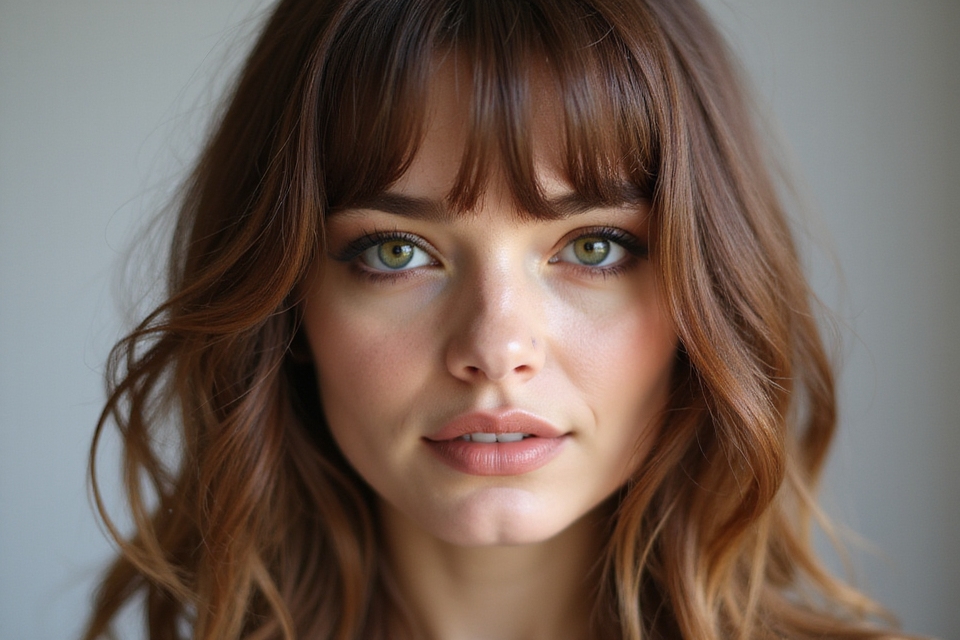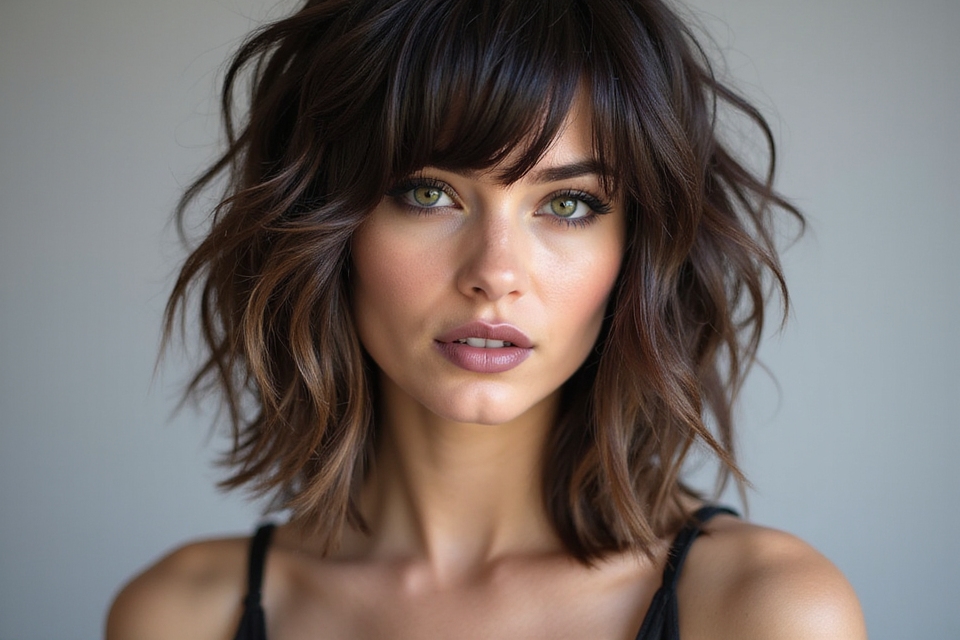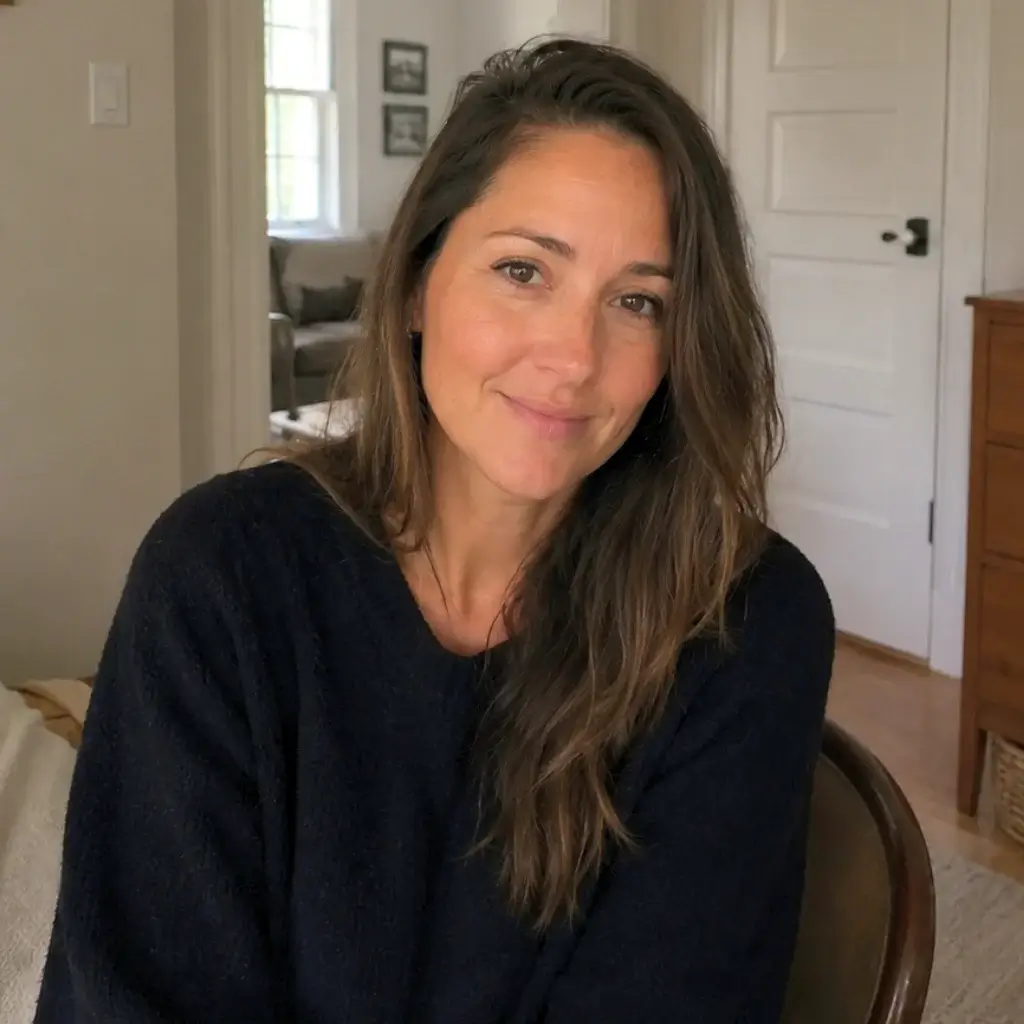

A client sat down with me last month convinced that short hair would age her. She had worn the same shoulder-length style since her fifties, hiding behind it more than wearing it. Twenty minutes later she was turning her head side to side, watching a chin-length bob swing back into place. It was proof that short bob haircuts for ladies over 60 can do the opposite of what she feared.
That swing is the whole argument. A good short bob puts weight back where strands have thinned, frames a softening jawline, and cuts morning styling down to a few minutes. Below are eighteen versions worth bringing to your stylist, from blunt and polished to piecey and undone.
The Short Version
- A bob hits its best length for hair over 60 between the chin and the collarbone, where it holds shape without dragging fine strands flat.
- Layers and texture add the volume thinning hair loses, while a blunt edge gives finer hair the density it cannot grow on its own.
- Plan on a trim every five to seven weeks so the shape never grows into a shapeless wedge.
- Gray and silver hair looks more polished with a gloss, roughly $40 to $70 every couple of months.
Sleek Straight Bob
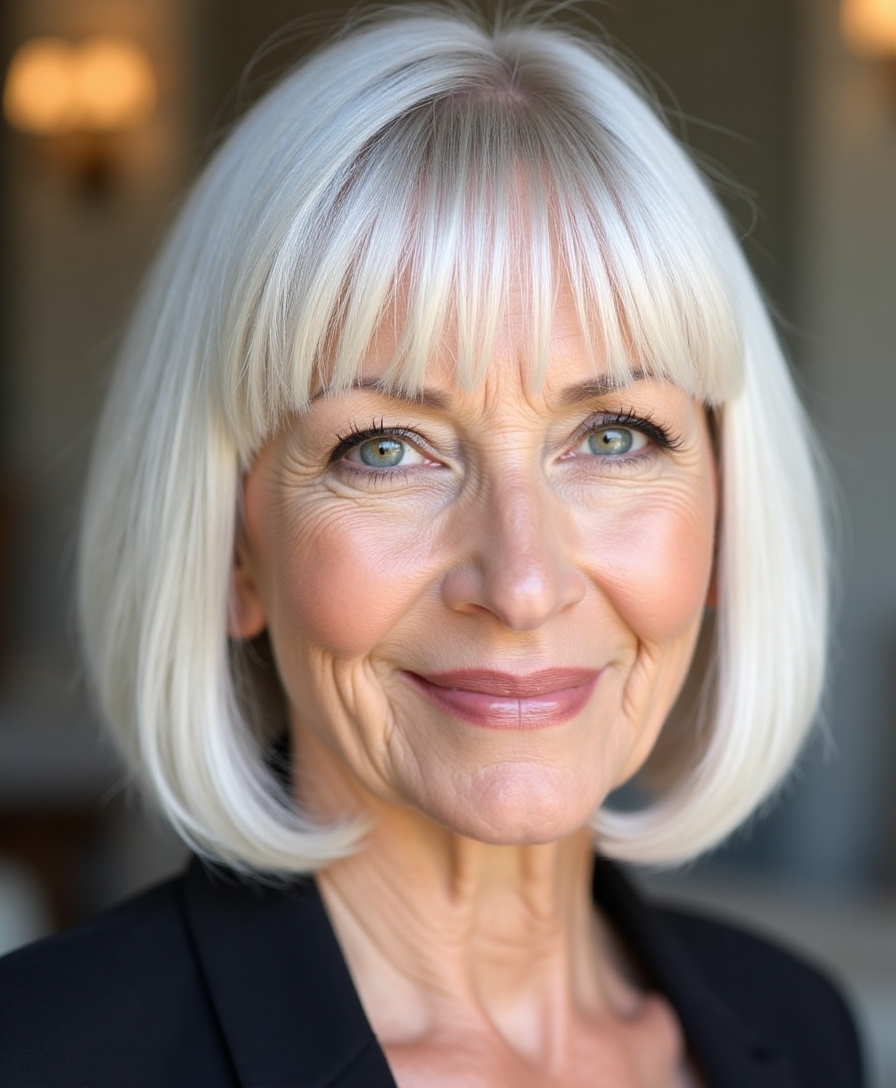
The straight bob earns its keep because it asks so little and gives back a clean line every single day. Cut to one length around the jaw, it drops into place after a quick pass with a flat brush and a dryer, maybe ten minutes start to finish.
Here is the part worth knowing about thinning hair: a solid, blunt edge looks denser than the same amount of hair feathered into wispy ends, which is why this shape flatters fine hair so reliably. It is the first cut I recommend to ladies who want low fuss. Keep a smoothing serum on hand if your gray has turned wiry, and book a trim every five to six weeks so the line stays sharp.
- Best for fine to medium hair that has lost some thickness on top.
- Works on straight and lightly wavy textures; very curly hair needs more length to balance shrinkage.
- Sits well with a center or deep side part, wherever your hair naturally falls.
Textured Layered Bob
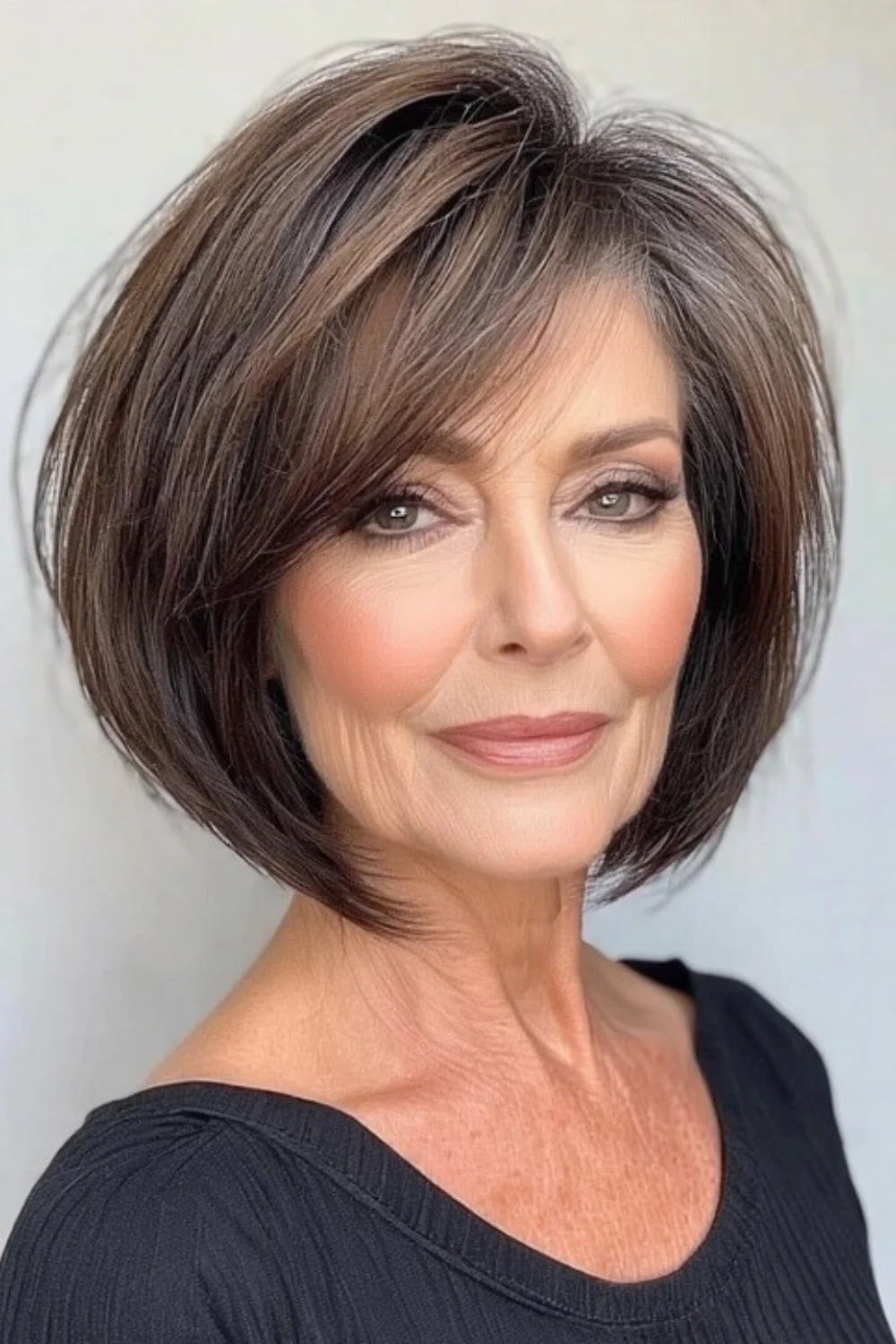
Layering is how you put bounce back into hair that has gone flat with age. A stylist point-cuts into the ends and through the mid-lengths so the bob swings when you move and lifts away from your head. The difference shows the moment you tip your chin. Pieces separate and catch the light. The whole shape looks fuller than the hair underneath actually is.
This is my go-to suggestion for finer hair that struggles to hold a style. Work a little texturizing spray into the roots while you rough-dry, and the layers carry the rest of the day. The honest trade-off is upkeep, since layers loosen faster than a blunt cut and want attention every six weeks or so. If you like the idea but want more polish, the layered take on short bob hairstyles reads softer with a round-brush finish.
Short hair after 60 is not about hiding your age. It is about getting your hair out of the way so people see your face first.
Curly Bob With Bangs
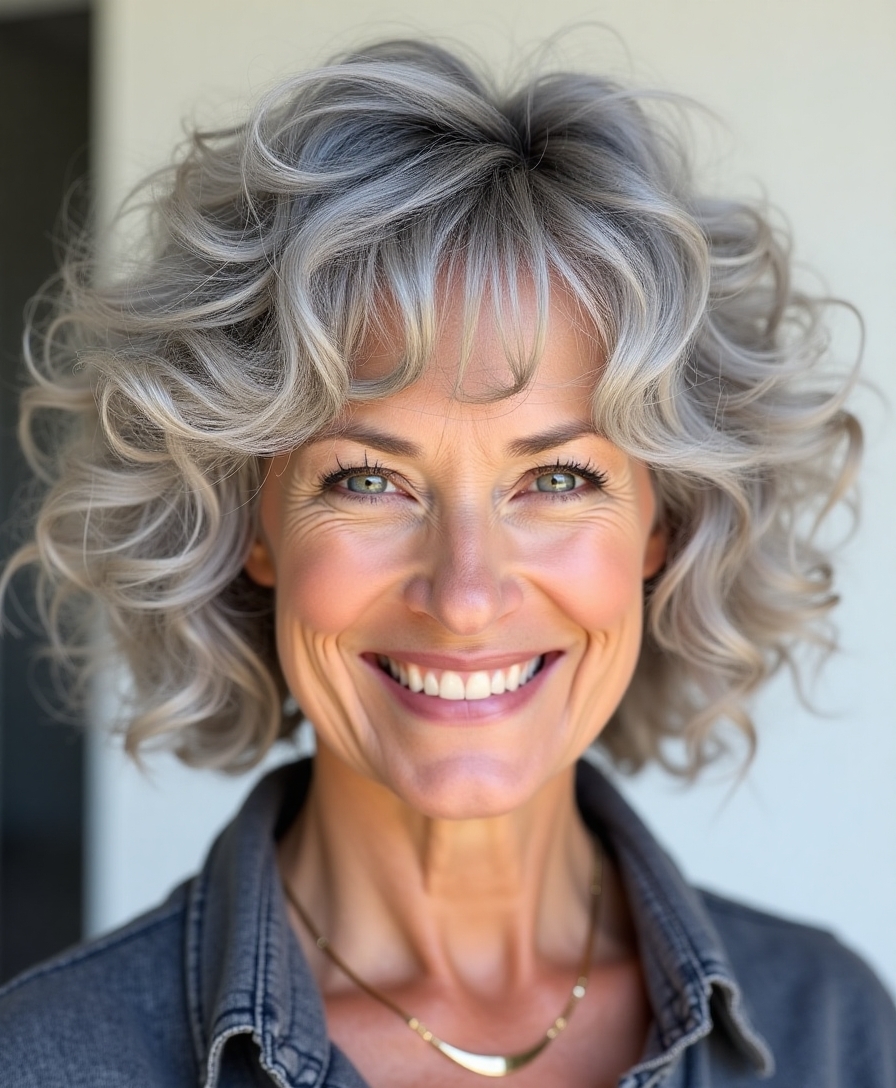
Curly hair takes to a bob far better than its reputation suggests, provided the cut leaves room for shrinkage. A curl specialist shapes it on dry hair, one coil at a time, so nothing springs up shorter than you planned. The bangs are the piece to think through. A soft, curly fringe breaks up a round face and covers a high forehead, though it needs its own product or it puffs out by noon.
I tell first-timers to commit to a curl cream and a microfiber towel before they commit to the fringe. For a jaw-grazing version with real bounce, a jaw-length curly bob is the shape to study.
- Have it shaped on dry hair so the stylist reads where each coil settles.
- Diffuse on low heat to keep the bounce and calm the frizz.
- Revive curls on off days with a mist of water and leave-in.
Blunt-Cut Bob
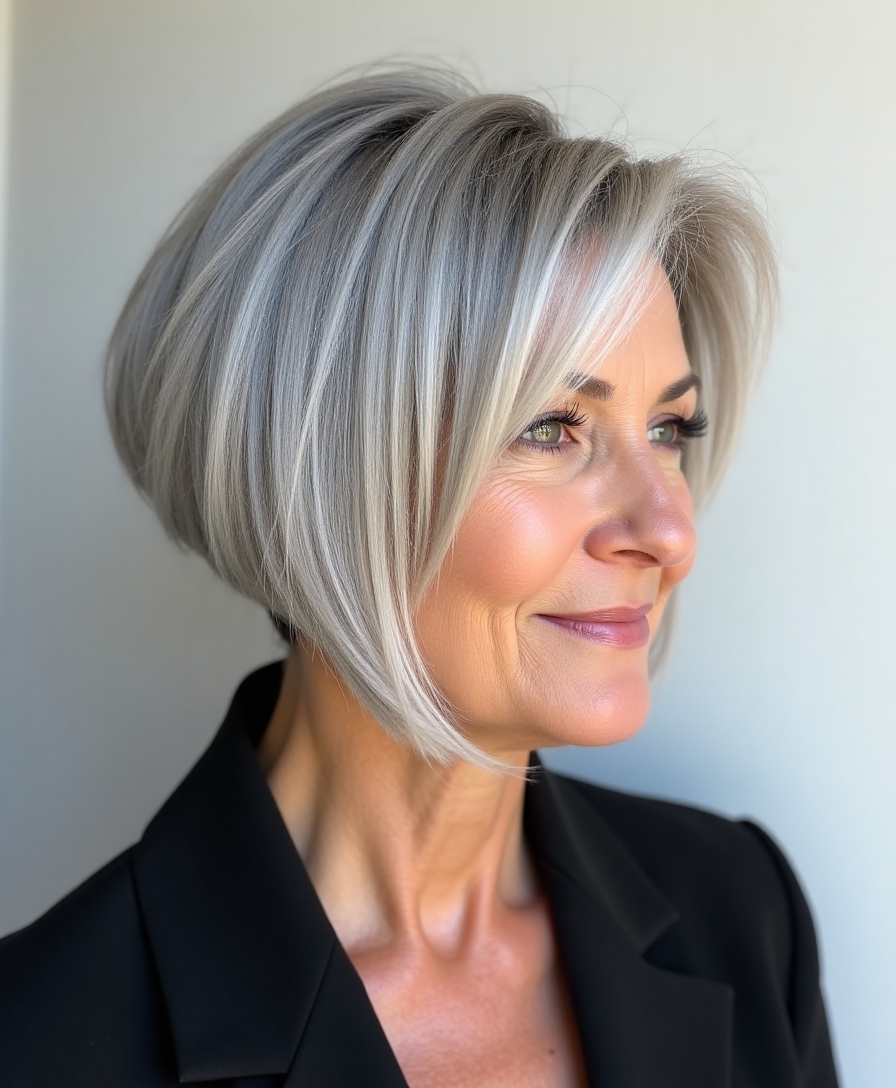
If one cut makes thin hair look thick, it is the blunt bob. Every strand ends at the same point, so the perimeter sits solid and heavy in the best way, and nothing at the ends gives away how fine the hair really is.
Why It Flatters Fine Hair
It suits a strong jaw and a confident streak. The line is graphic, so it photographs beautifully and holds its shape at events, where softer cuts tend to droop by the second hour. The honest downside: a hard edge shows every missed trim, so the calendar matters here.
Styling stays simple. Dry it with the nozzle pointing down the shaft to seal the cuticle, then press a single drop of oil through the ends. On silver hair, that smoothing step is what keeps the gray reading deliberate and expensive.
🅰️Curly Fringe
A soft curly fringe covers a high forehead and frames the eyes, but it needs daily curl cream and can puff up in humidity.
🅱️Curls Swept Back
Pushing the curls off the face with a clip or headband takes less effort and shows more of your features, with less coverage up top.
Angled Bob
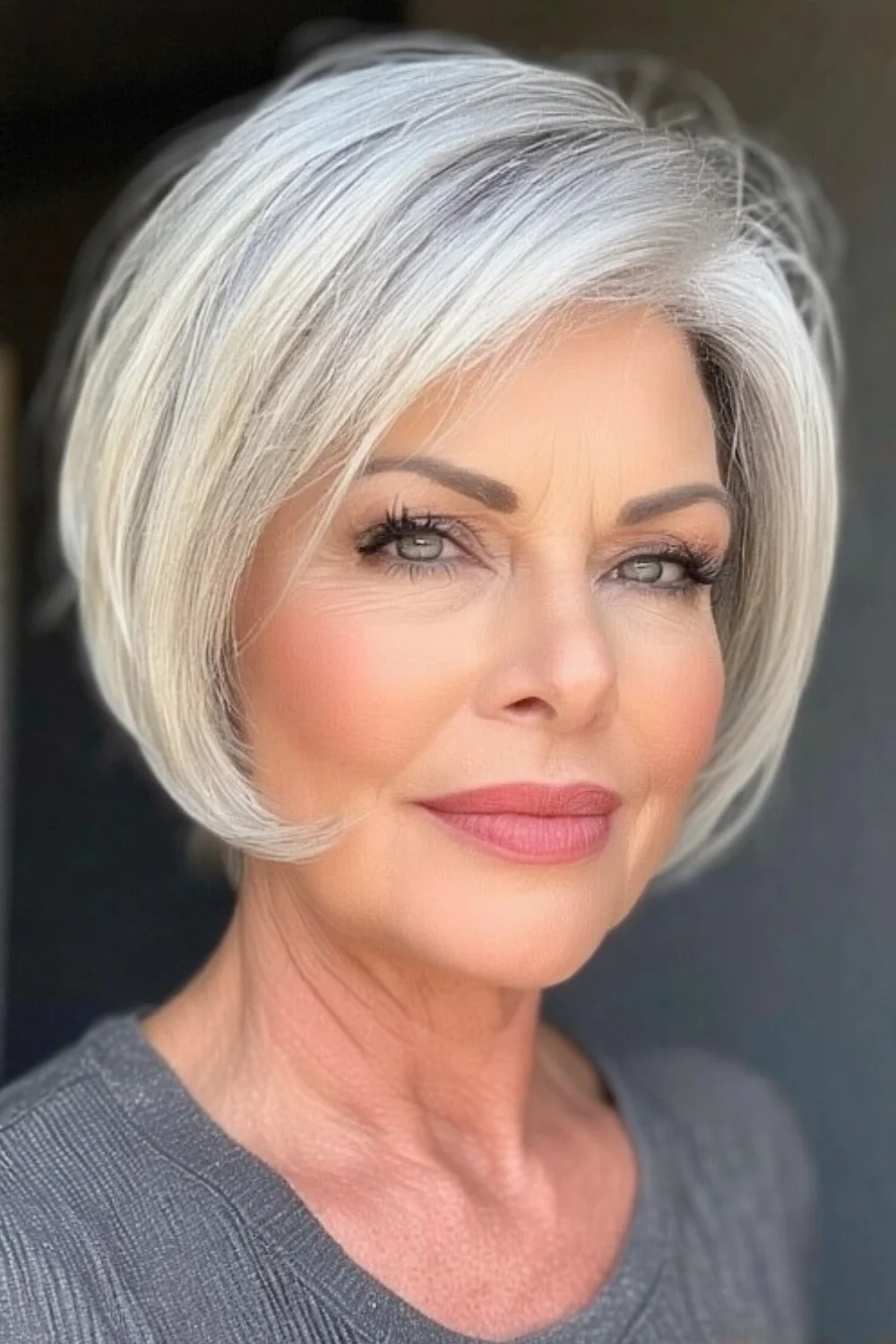
An angled bob runs a little longer in the front than the back, so it pulls the eye toward your face and lends the impression of a lifted jawline. That forward lean flatters the lower face as it softens with age, doing quiet, flattering work without ever shouting for attention.
Ask for a soft angle if your hair is fine, because a steep one can leave the back looking sparse. Clients ask me whether an angled bob is too edgy for their age, and it is not, as long as the angle stays gentle. The style holds up on straight and wavy textures. A flat iron run lightly through the front pieces keeps the line crisp. A trim every five to six weeks keeps the angle from blurring into a plain bob.
- Longer front pieces frame and soften the jaw.
- Keep the back blunt for fullness, not over-thinned.
- Straight and wavy hair hold the angle best; tight curls shrink right past it.
Bob With Soft Waves
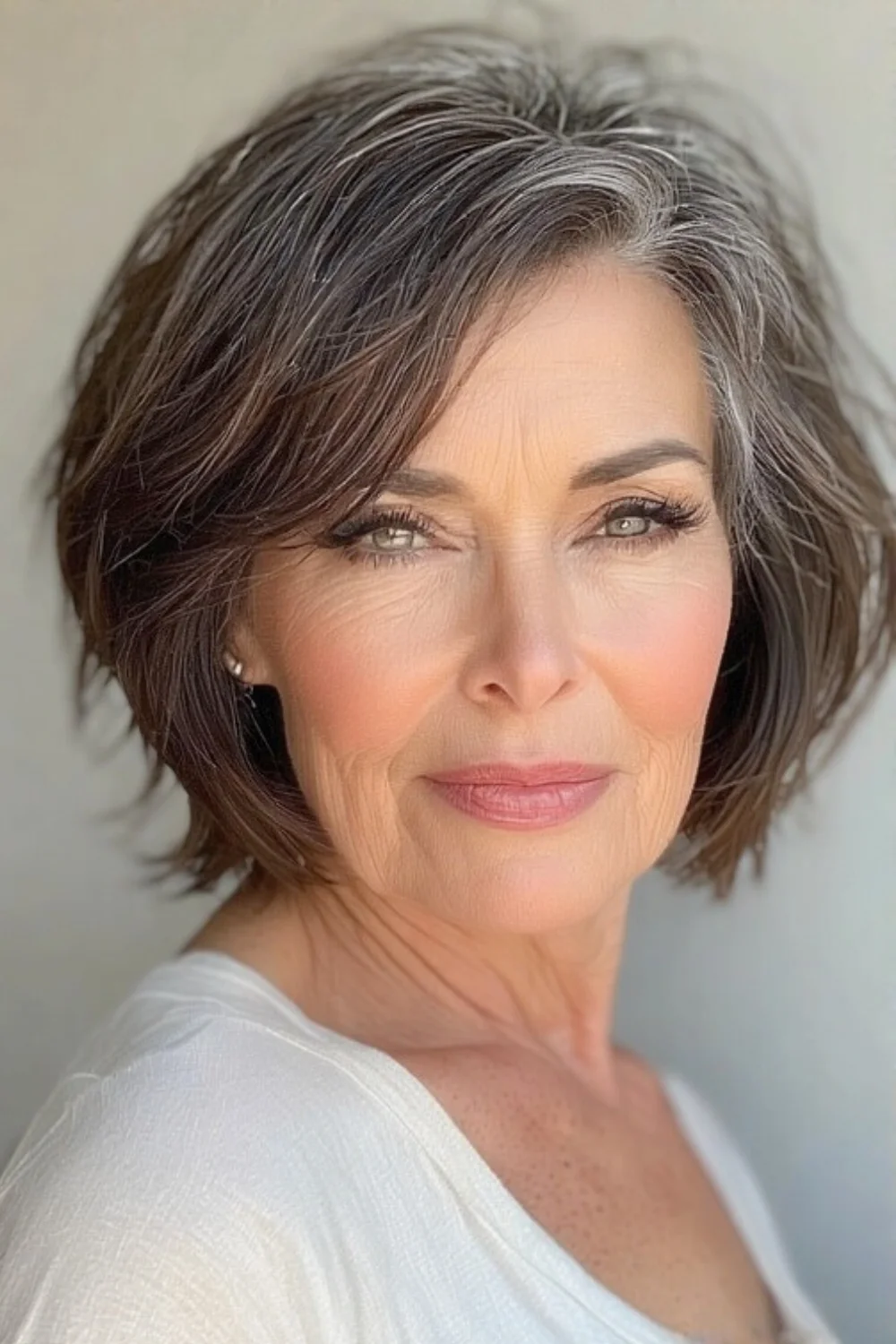
Soft waves take the formality out of a bob and make it feel like you woke up that way, in the good sense. For hair over 60, waves earn their place: they hide flatness at the roots and add the body finer hair tends to lose. A 1-inch wand, wrapped loosely and brushed out, gives you the bend with none of the tight curl.
I like this for women who find a poker-straight bob a touch severe against softer features. Mist a flexible-hold spray once the waves cool so they last the day. If you want to lean further into texture, the undone look of a short wavy bob is worth a look. Plan about ten minutes of styling up front and a quick wand pass on day two to bring the bend back.
- Use a 1-inch wand and alternate curl direction for a natural result.
- Break the waves up with your fingers to keep them soft.
- A dry-shampoo refresh stretches the style to a second and third day.
Heads-Up
A steep, dramatic angle can read severe against a softer 60-plus jawline, and on fine hair it can look sparse at the back. Ask your stylist for a gentle angle and keep the back blunt for fullness.
Asymmetrical Bob

An asymmetrical bob leans into imbalance on purpose, with one side cut noticeably longer than the other. It is the boldest pick on this list and a fun way to prove that 60 is not the age you start playing it safe. The uneven length pulls the eye and adds an edge most people never expect from a bob. A few choices keep the imbalance looking intentional:
- Decide which side to lengthen based on your part and your stronger profile.
- Keep the shorter side tucked behind the ear for clean contrast.
- Use a smoothing cream so the longer side stays sleek and deliberate.
Tousled Bob
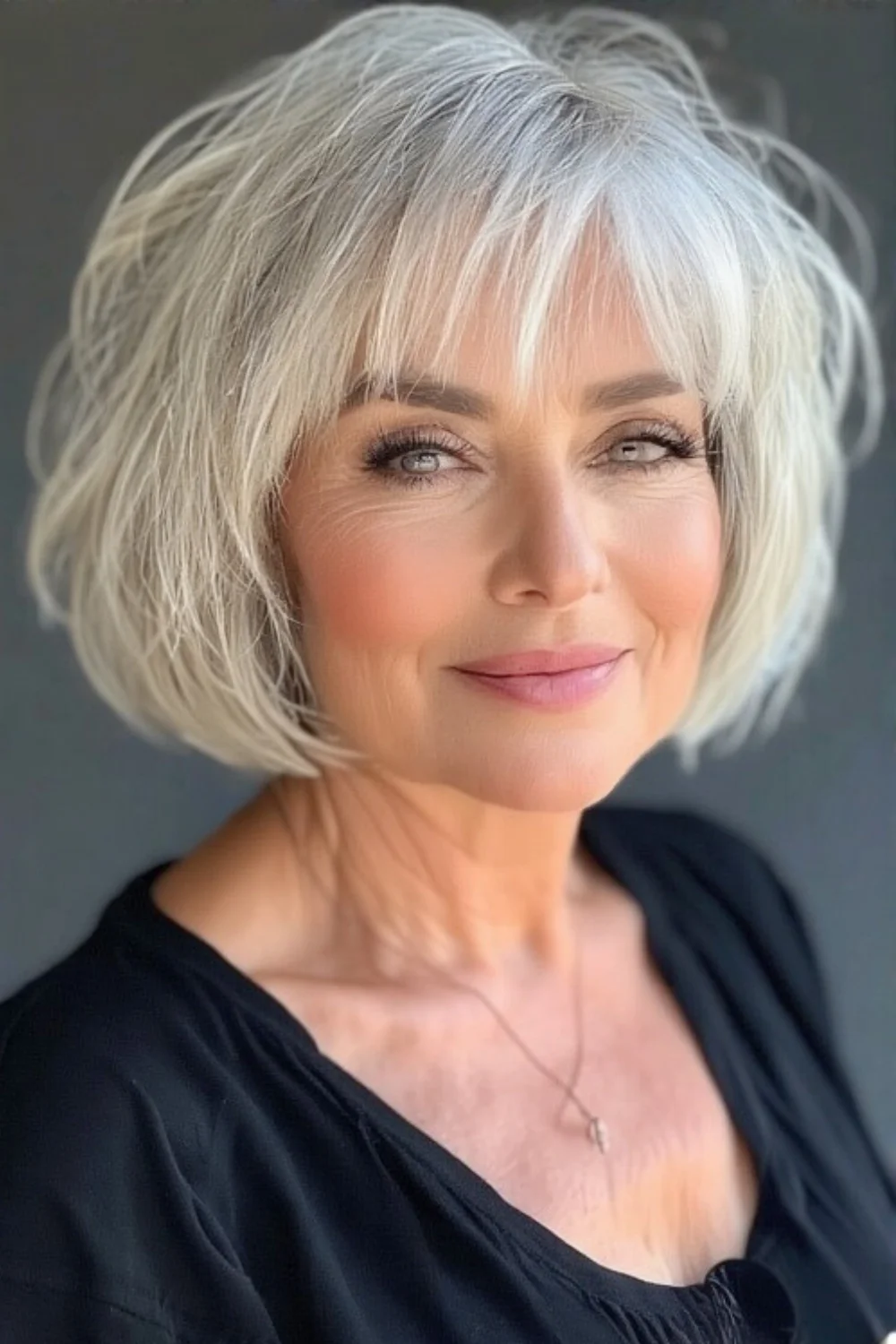
The tousled bob is for the woman who wants to spend less time on her hair. It is built on a layered cut and finished rough, with texture spray pressed through using your fingers. The messiness is the point, and a good cut underneath keeps the whole thing looking modern.
This shape forgives a lot. Cowlicks, uneven density, the morning you skip the dryer entirely. After years behind the chair, this is the cut I watch busy women fall for fastest. It works around a real life. Spritz a sea-salt or texture spray onto damp hair, scrunch, and let it air-dry. The only real upkeep is a trim every six weeks to keep the layers from going shaggy.
A few cutting terms worth knowing before you ask for a bolder bob:
📖Point-cutting
Cutting into the ends at an angle to soften them and add texture in place of a hard, blunt line.
📖Stacking
Layering shorter pieces at the back to build height and volume at the crown.
📖Undercut
Shorter hair removed beneath the top layers to cut bulk or add a hidden edge.
Playful Bob With Fringe
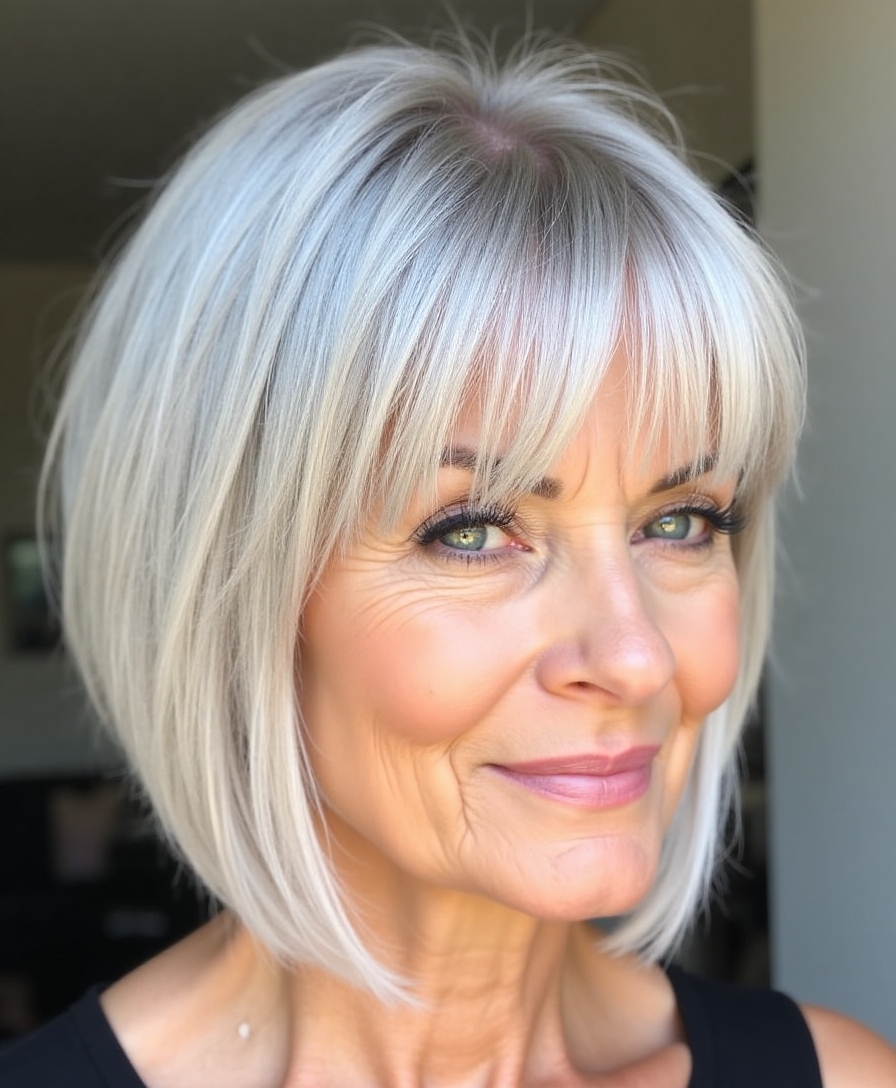
Adding a fringe to a bob is the fastest way to update the whole shape and shave a few years off in the process. A soft, brow-grazing fringe covers forehead lines. It pulls the eye upward. If a full fringe feels like too much, soft curtain bangs part down the middle and melt into the length, which makes them far kinder to grow out. For a shorter, sharper version of the look, the French bob and its blunt fringe is the reference point.
- Brow-grazing fringe flatters most face shapes and softens a high forehead.
- Curtain bangs grow out gracefully with no awkward stage.
- Trim the fringe every two to three weeks; it grows faster than you think.
Inverted Bob
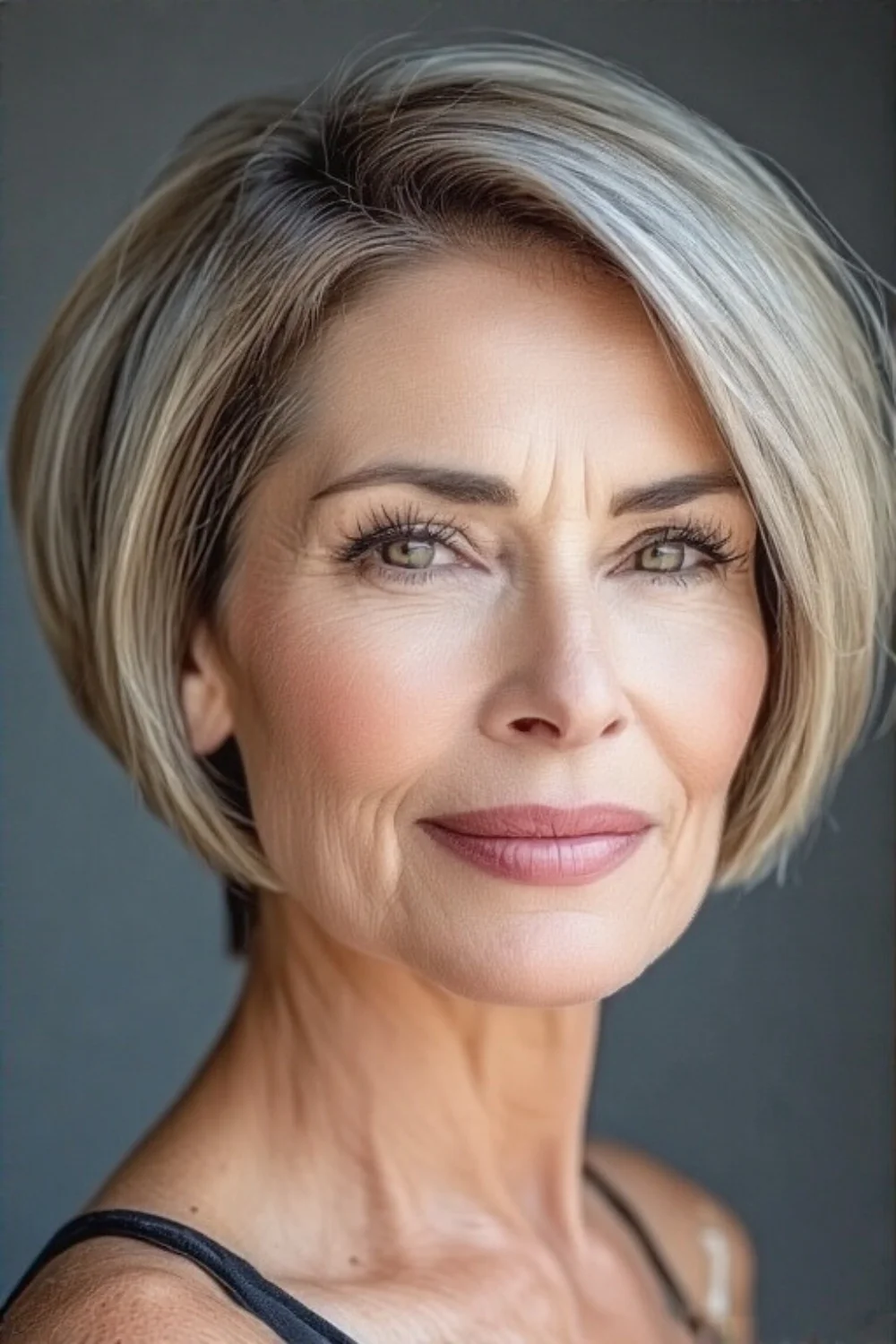
The inverted bob stacks shorter layers at the back and leaves the front longer, building volume exactly where over-60 hair tends to fall flat: the crown. That built-in lift is why stylists lean on this shape for thinning hair. It looks structured with very little product. To get it right:
- Ask for stacking at the crown to lift limp roots.
- Keep the front long enough to frame and soften the jaw.
- Brush the back upward while drying to set the height.
Pixie Bob
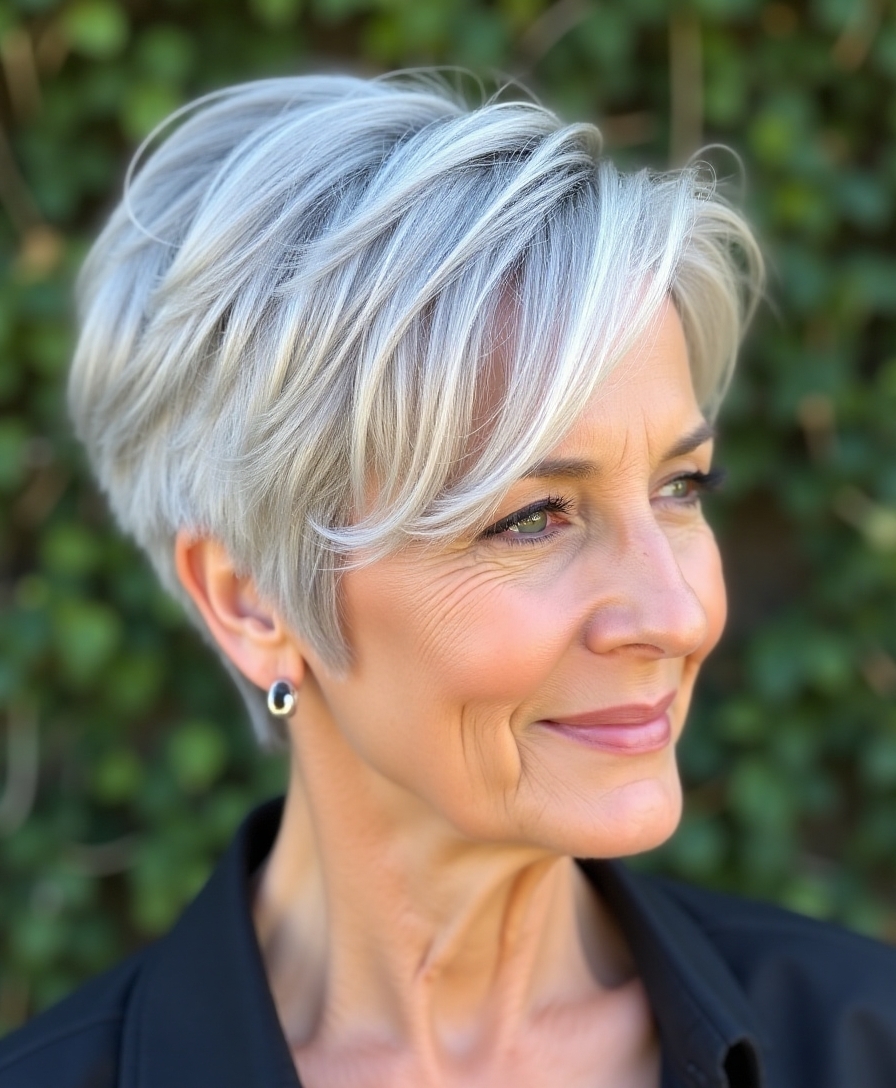
A pixie bob splits the difference between a crop and a bob: short enough to move freely, yet long enough to tuck and shape. It is a smart first step for women curious about going shorter but uneasy about a full pixie. The length around the ears and nape stays manageable while the top keeps enough to play with.
This suits fine hair beautifully, since there is less weight pulling it down, and a little texture paste on the top pieces gives the separation and lift that keep the crown from sinking flat by lunchtime. Be honest with yourself about upkeep, though. The shorter the cut, the more often you visit, usually every four to five weeks, and a salon trim runs roughly $40 to $80 depending on where you live.
- Great for fine hair that goes flat at longer lengths.
- Keeps daily styling to a minute or two with a dab of paste.
- Higher maintenance: trims every four to five weeks.
Wispy Bob
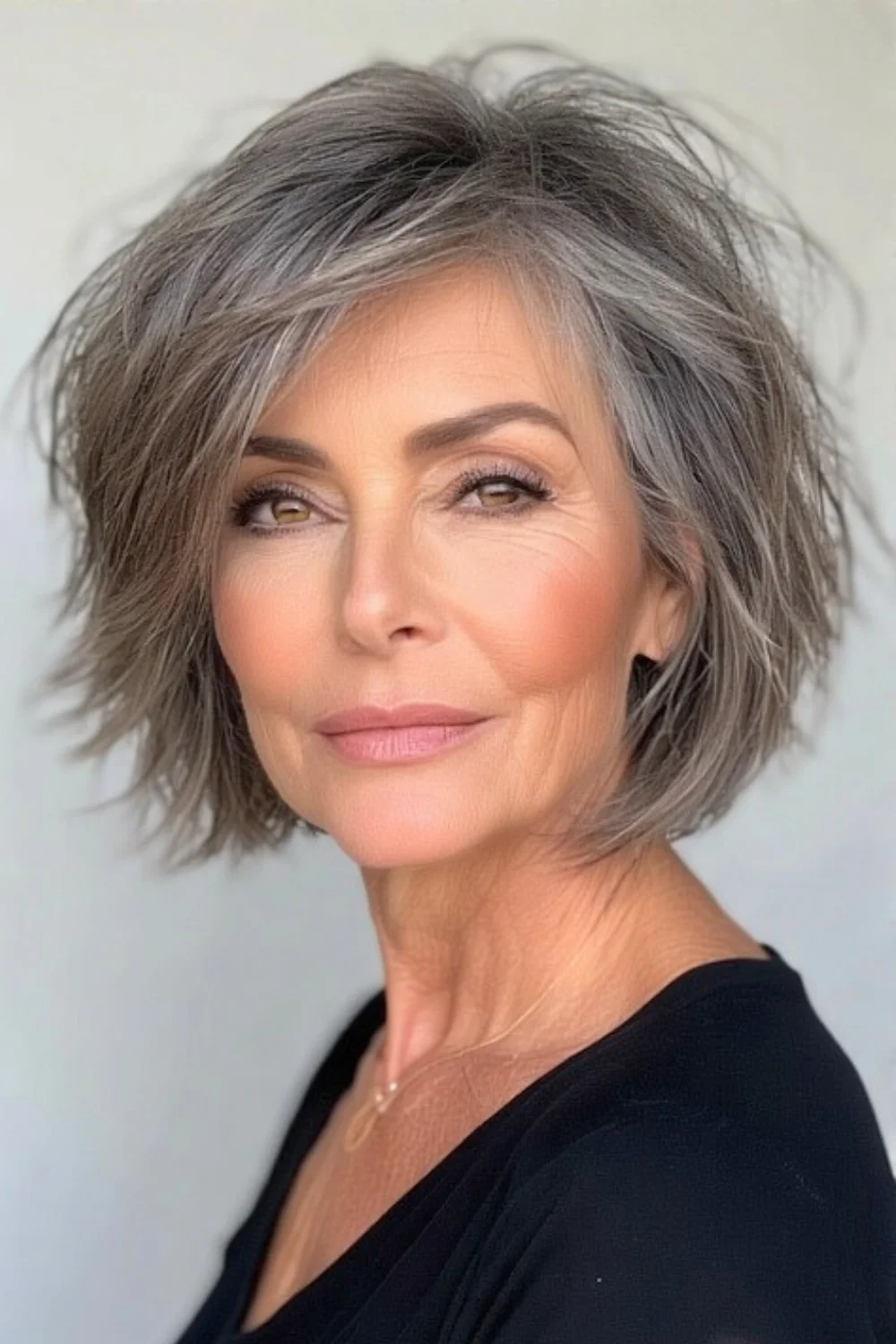
A wispy bob keeps the ends soft and feathered, so the whole shape feels light and a little romantic. The wispiness around the face does the flattering work, breaking up the jawline and easing the overall look.
It is a gentle option for hair that has thinned, because feathered ends quietly soften the look of sparse spots. A blunt bob builds the illusion of density with a hard edge. A wispy bob builds it with movement. Both approaches work, so it comes down to whether you want a sharp finish or a soft one.
Work a light mousse through damp strands, then rough-dry fast. Heavy oils drag the feathered ends down and undo the airiness, so save those for the mid-lengths if you use them at all. A dusting of dry texture spray at the ends keeps them separated through the day.
Bob With Highlights
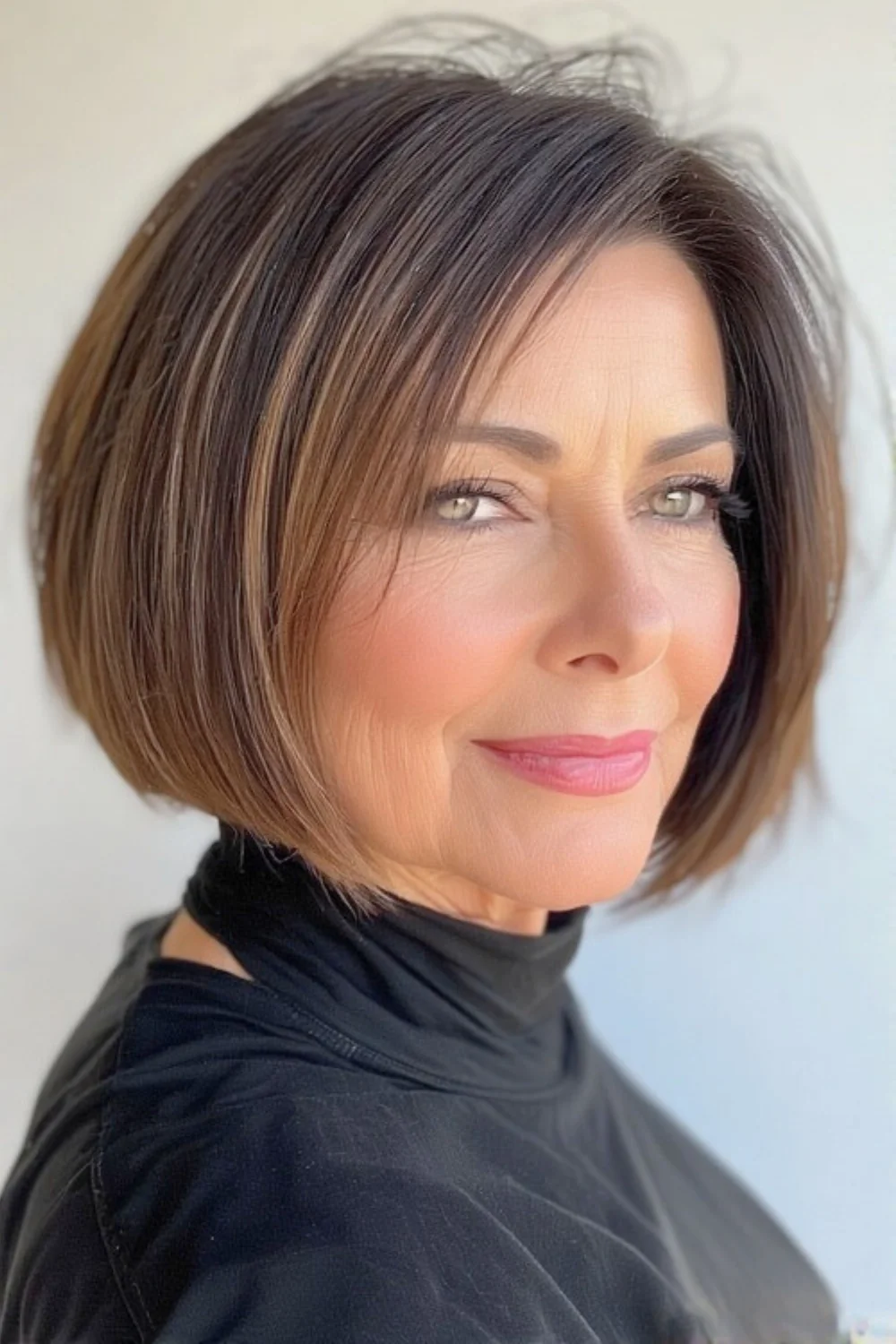
Highlights do for a bob what good lighting does for a room: they add depth and draw the eye. I see gray hair come alive the moment a few soft highlights go in, blending the silver so grow-out stays gentle and brightening the face in a way one flat color never manages. Color is one of the easier ways to make a simple cut look expensive. To keep it flattering:
- Ask for face-framing pieces to brighten your complexion.
- Choose a shade close to your natural level for soft, low-upkeep grow-out.
- Book a gloss every six to eight weeks, about $40 to $70, to keep tones from going brassy.
Sleek Shiny Bob
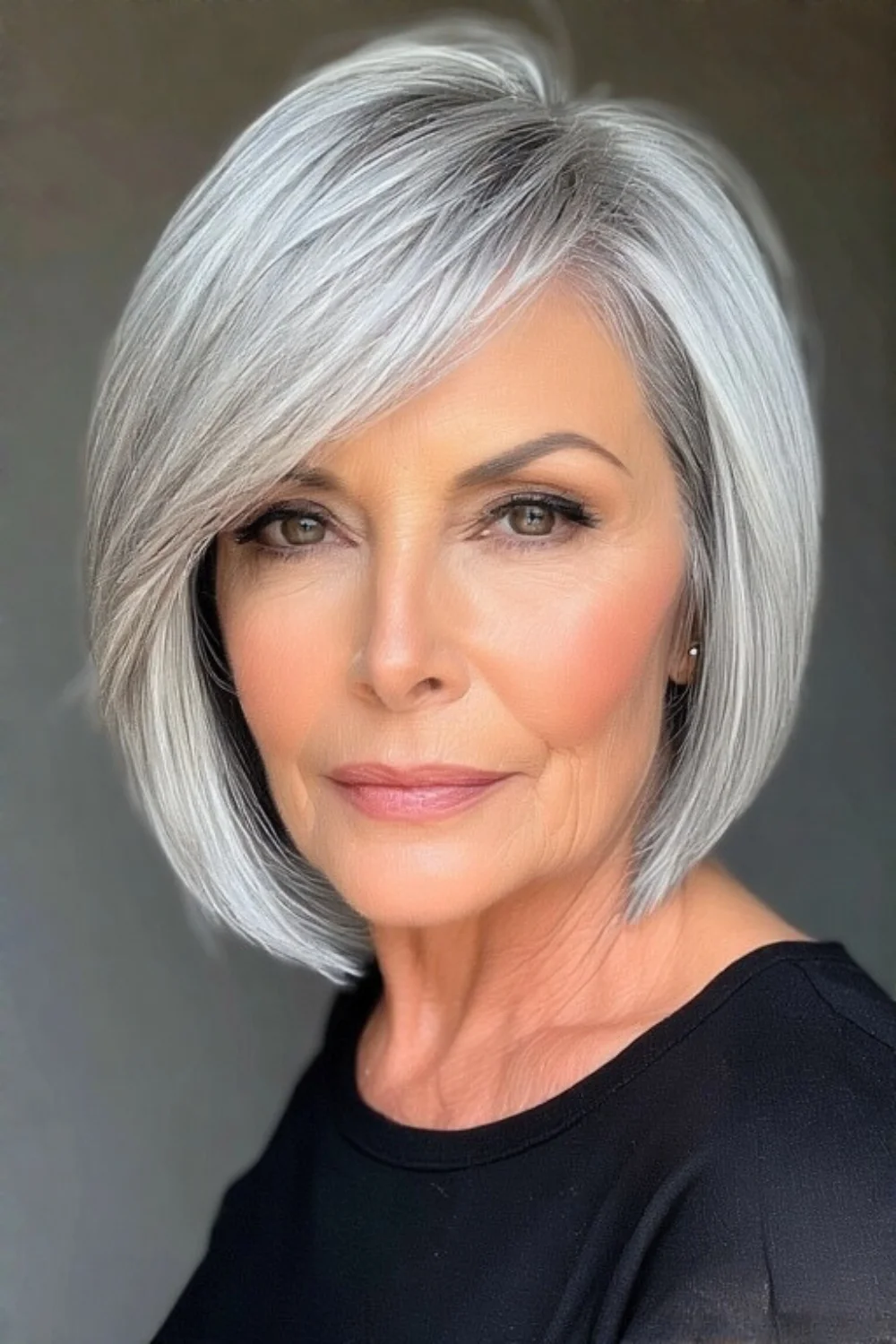
A high-shine bob looks polished and intentional, and shine matters more as hair grays, because gray strands can turn dull and wiry without a little help. The smoothness signals effort even when the cut is simple. A classic sleek bob haircut is the easiest version of this to keep up at home. Here is the routine that keeps it glassy:
- Dry it with a flat brush, nozzle aimed straight down the hair shaft.
- Finish with a pea-sized drop of lightweight oil, mid-length to ends only.
- A weekly shine mask keeps gray hair from looking flat.
Bob With Undercut
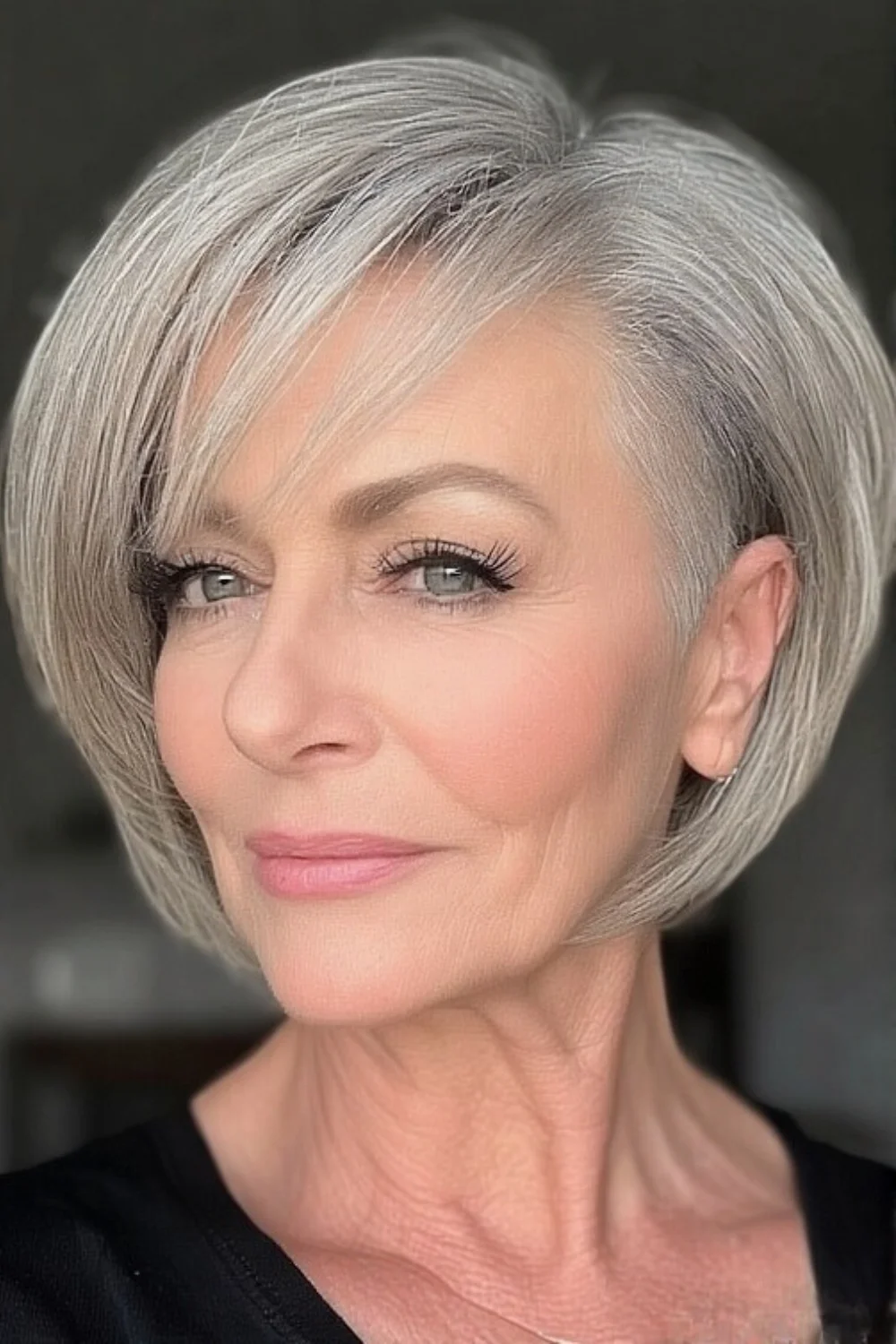
An undercut hides shorter or shaved hair beneath the top layers, and plenty of women over 60 wear it beautifully. For thick or coarse hair, an undercut removes bulk and weight, so a bob lies flatter and feels cooler in summer. The detail stays hidden until you tuck a side back and reveal it. If it appeals:
- Best for thick, heavy hair that needs weight removed.
- Keep the undercut small and tucked if you want it subtle.
- Upkeep is frequent: the undercut wants a buzz every three to four weeks.
A-Line Bob
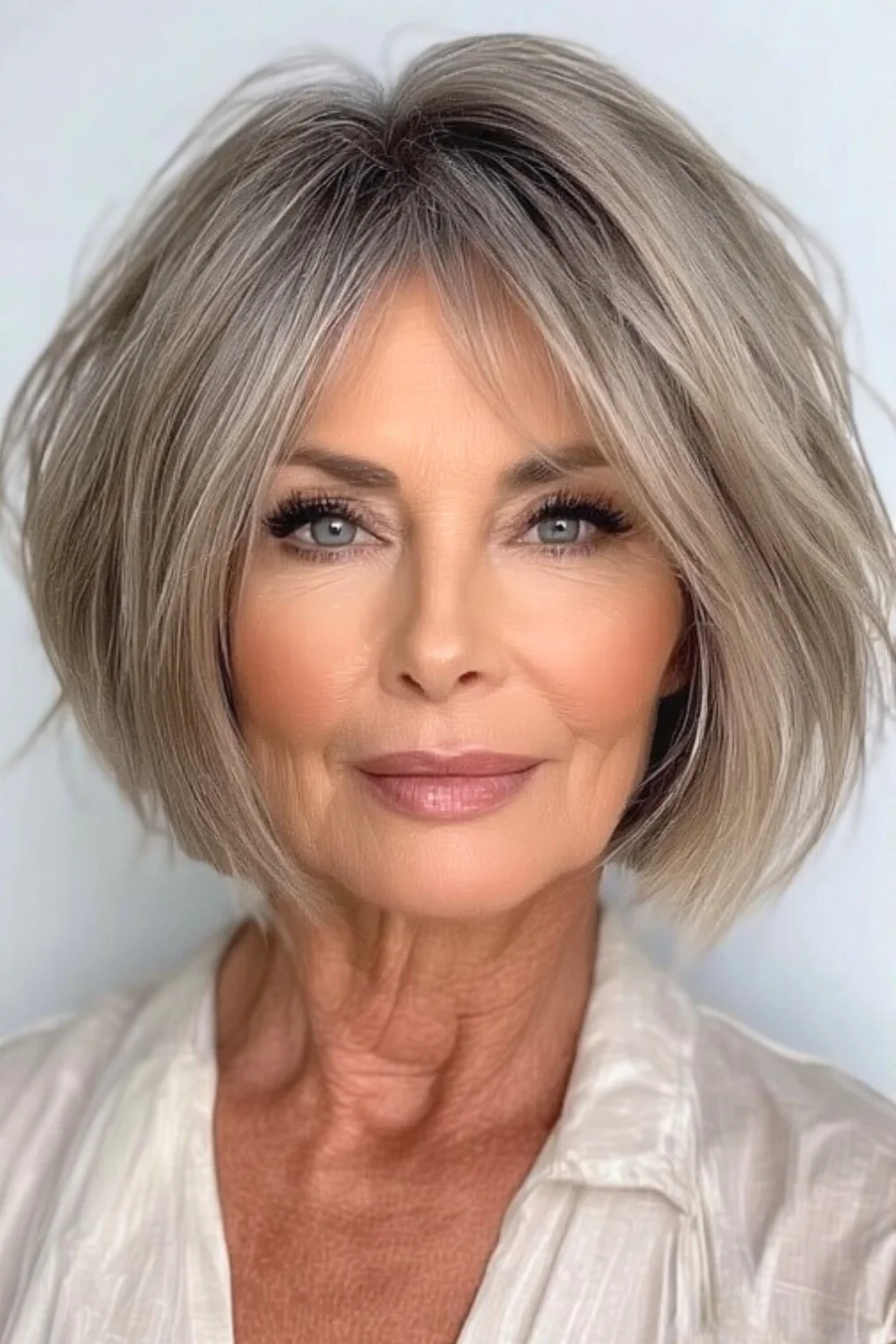
The A-line bob angles from a shorter back to longer front pieces, drawing a clean, slightly dramatic line that lengthens the neck. It is a close cousin to the angled and inverted bobs but smoother and more gradual, which makes it an easy shape to live with day to day.
It flatters round and square faces by pulling length downward, and on finer hair you will want the back kept blunt so it never looks thin, with the heavy layering skipped there entirely. This is a low-drama, high-payoff cut: a quick round-brush dry, a trim every six weeks, and it behaves. For a longer take on the same idea, a grown-out ’90s lob sits at the collarbone.
Bold, Bouncy Volume

If your hair has gone limp with age, a bob built for volume changes the whole feel of getting ready in the morning, turning a flat, tired shape into something that moves with you and looks freshly done even on a rushed day. The cut combines blunt-ish ends with subtle internal layers, and a round-brush dry pushes body into the roots. Bounce is the youthful quality most people are really chasing when they say they want to look less tired. Build it like this:
- Dry upside down for instant root lift.
- Set the bend with a round brush, then lock it with a shot of cool air.
- A volumizing mousse at the roots beats heavy product that drags fine hair flat.
Chin-Length Bob
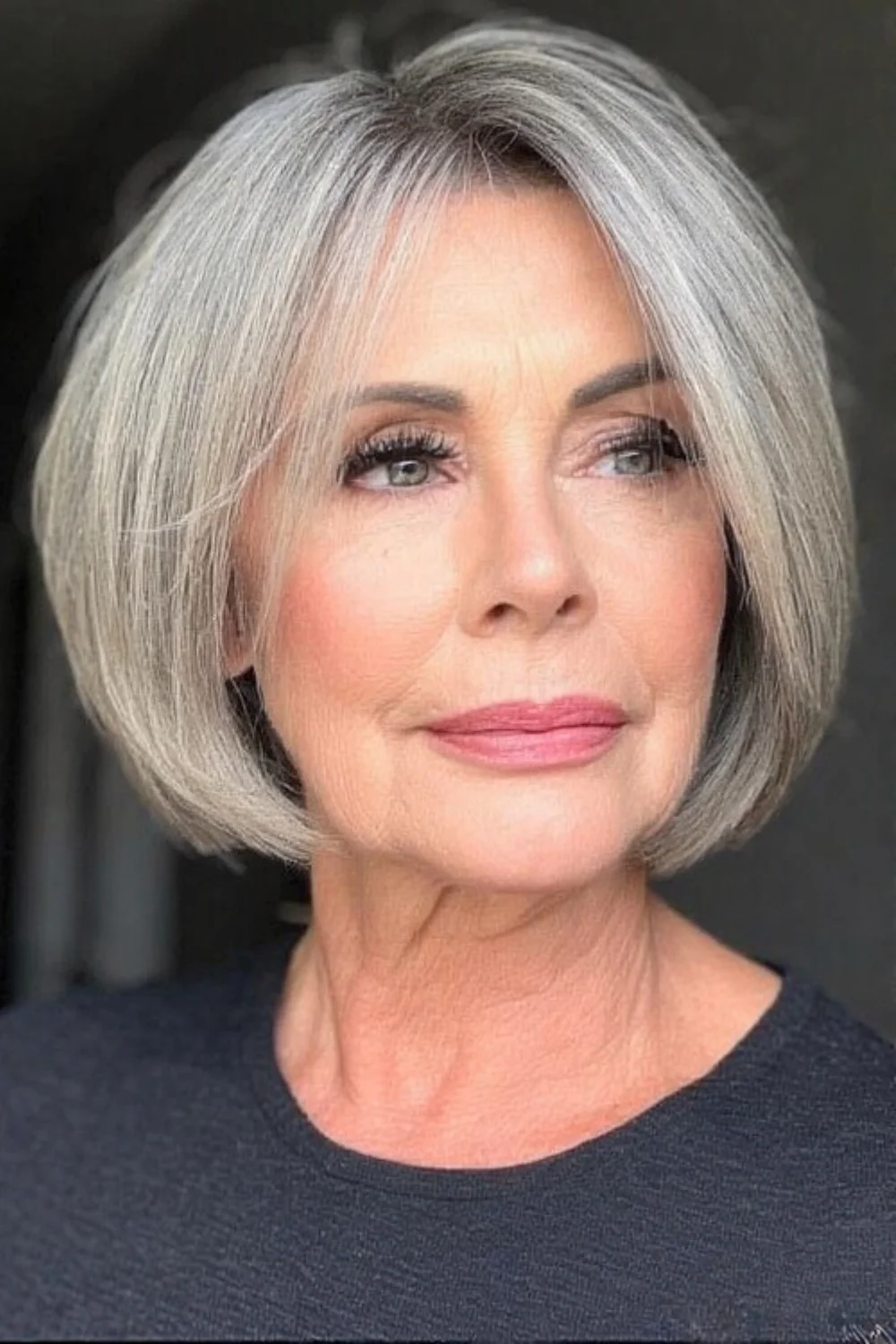
The chin-length bob is the sweet spot many women over 60 land on, and for good reason. It is long enough to feel feminine and tuck behind an ear, short enough to keep the weight up where thinning hair needs it most. The length grazes the jaw and draws a flattering line across the face. If you are still weighing the shapes here, browse more short haircuts for women over 60 and short bob hairstyles before your appointment. To wear it well:
- Land the length right at or just below the jaw for the most lift.
- A center part suits oval faces; a side part softens a longer one.
- Tuck one side back for instant polish on busy mornings.
Bob Questions Women Over 60 Ask Me Most
?Do short bobs really make older women look younger?
Often, yes, though short hair is no magic trick. A bob lifts weight off a softening jawline, adds fullness where hair has thinned, and looks intentional rather than overgrown. The youthful effect comes from movement and a clean shape, so length alone is never the whole story.
?What is the best bob length for thinning hair over 60?
Somewhere between the chin and just below the jaw. That length keeps the weight high so roots do not look flat, and a blunt or lightly layered perimeter at that length reads fuller than longer, finer ends ever will.
?How do I keep a bob from looking dated?
Steer clear of the set-and-stiff look. Ask for a little texture or soft layering, keep the color soft, and add some movement at the ends. A trim every five to seven weeks does more for a modern finish than any product.
Finding Your Bob After 60
The thread running through all eighteen is the same. A good bob puts weight and movement where hair over 60 tends to lose it, frames the face as it softens, and buys back real time in the morning, which is no small thing once styling has quietly become a chore. Blunt or wispy, sleek or piecey, the right pick comes down to your hair’s texture and how much daily upkeep you truly want.
Take a photo of the version that stopped you here and bring it to your stylist, along with an honest account of how much time you spend on your hair each morning. The right bob meets you where your routine already is, and it grows out kindly when life gets busy.
Don’t Miss These