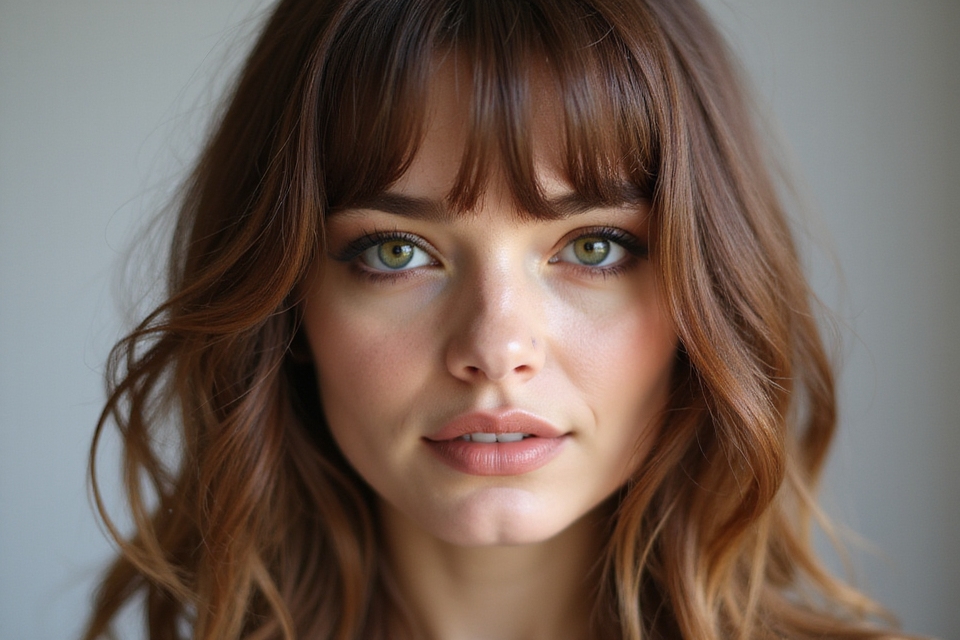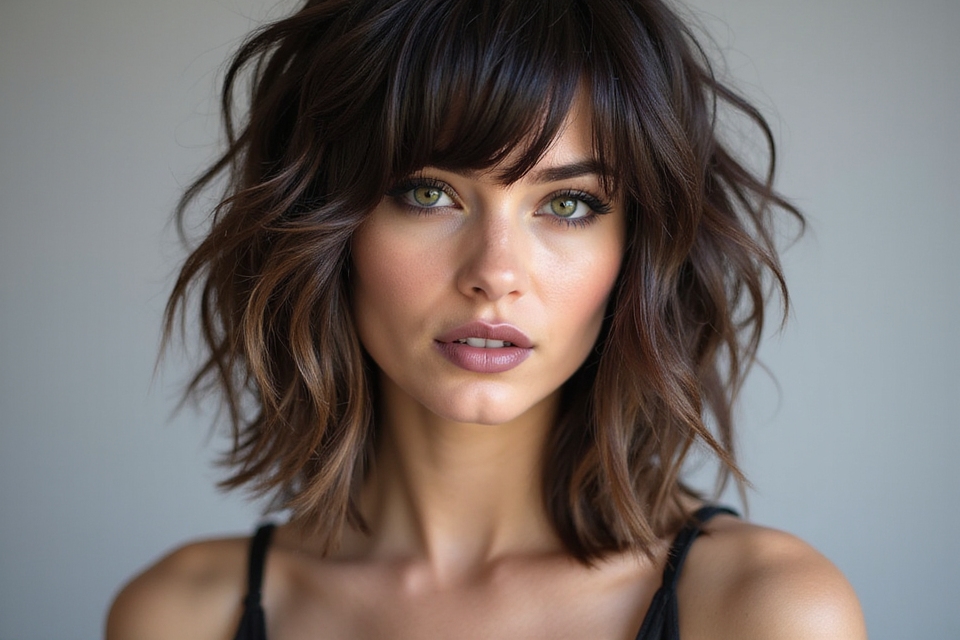
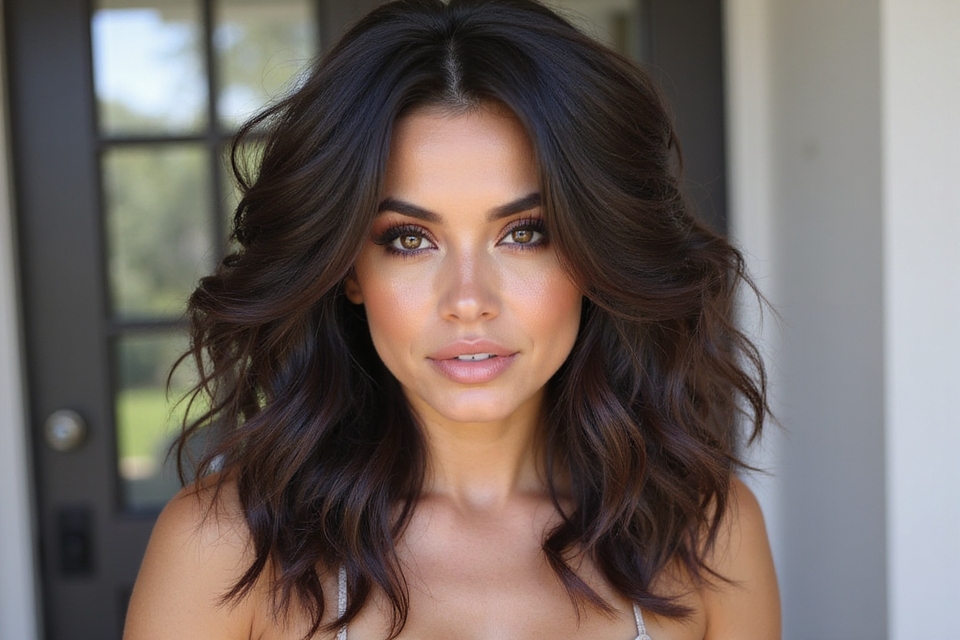
You can keep almost all of your length and still get a wolf cut. That surprises people who think the style means lopping everything off into a shaggy crop. On long hair, the wolf cut is mostly an illusion of layers: heavy lift up at the crown, then long, wispy ends that barely lose an inch.
Plenty of my clients have spent years growing their hair out and will not part with an inch of it. They still want movement and a little edge. That is the whole pitch of a wolf cut on long hair, and here is how it actually works, from the crown drama down to the layered length.
The Long Wolf Cut in Short
A long wolf cut keeps your overall length while stacking short, choppy layers at the crown and slicing the ends into separate, piecey pieces. You get the volume and attitude of a shag with almost none of the length sacrifice, which is why it is the easiest wolf cut to commit to.
Expect to pay roughly $70 to $130 for a proper layered cut, and book shaping trims every ten to twelve weeks. Styling is quick once you learn it: a texture spray, your fingers, and maybe sixty seconds with a round brush at the crown.
An Edgy, Versatile Take on Long Hair

The long wolf cut is the gateway version of this haircut, the one I point nervous clients toward, because it hands you the volume, the crown lift, and the face-framing movement of a full wolf cut while asking you to part with almost none of the length you walked in with. That is exactly why it has outlasted flashier trends. A few reasons long hair carries it so well:
- Your length stays, so the layers add drama while your hair still looks long.
- The weight of long hair holds the layers down, keeping the shape wearable for work or weekends.
- You can dial it from soft and romantic to spiky and bold just by changing how you style the crown.

The 1970s Punk Roots of the Layered Look

This cut did not appear out of nowhere. It pulls from two older, scrappier styles and updates them for hair that still wants to look long and lush. Knowing the lineage helps you describe what you actually want:
- The 1970s shag brought the feathered, layered crown and the soft fringe.
- The punk and glam-rock mullet added the disconnected, choppy attitude.
- The modern wolf cut blends the two and keeps the back long, leaving your length intact.
Three words get thrown around together. Here is what each one actually means so you can describe the cut you want.
📖Shag
A layered, feathered cut from the 1970s built around volume and a soft fringe. The wolf cut’s gentler parent.
📖Mullet
Short on top, long in back, with a hard disconnection. The wolf cut borrows its choppy attitude, not its harsh line.
📖Wolf cut
A blend of the two with a heavy, layered crown and longer, piecey ends. On long hair, the length stays put.
The Textured, Layered Anatomy on Long Hair

On long hair, the magic is all in where the layers begin. The shortest pieces sit high around the crown, building lift exactly where long hair tends to go flat and heavy. From there each layer falls a little longer until the shortest crown sections and the longest ends finally meet your existing length in one continuous, blended sweep.
The ends are then point-cut or sliced so they look separated and piecey, with daylight showing between them. That detail is what stops a long wolf cut from reading as plain old long layers. Full crown, feathered ends. That single contrast is the signature, and it is why the classic wolf cut photographs with so much movement.
Stylish Layers That Keep Your Length

The biggest fear I hear is losing length. It is a fair one. The good news is that a skilled stylist takes almost nothing off the bottom, because the drama comes from the internal layering and the crown lift while your length stays put.
When you book, be clear that you want to keep your length and add wolf-cut layers on top. The cut should still graze your mid-back or wherever you started; only the framing and crown pieces get shorter. If a stylist reaches straight for the length, stop and talk it through before the scissors do.
📋Keeping Your Length at the Chair
- ✓State your minimum length out loud before the cape goes on.
- ✓Ask for layers and a fringe, not a shorter overall length.
- ✓Have the stylist show you in the mirror where the bottom will sit before they start.
Who a Long Wolf Cut Suits

Long wolf cuts flatter most people, but they shine on certain hair. If your hair is thick or coarse, the layers remove bulk and finally let your length move after years of hanging like a curtain. Wavy hair is almost too easy here, since the bend separates the layers on its own.
Fine or thin hair can still wear it, with a lighter hand on the layering so the ends do not thin out to nothing. The crown lift is actually a gift for flat, fine hair, as long as your stylist keeps the bottom fuller.
Face shape matters less than it does with a short version, because all that length naturally balances your proportions, which means even round and square faces that usually fight their haircut tend to look softer and longer once the face-framing layers start drawing a gentle vertical line down toward the jaw. The length does the balancing for you.
Preparation Tips Before Your Appointment
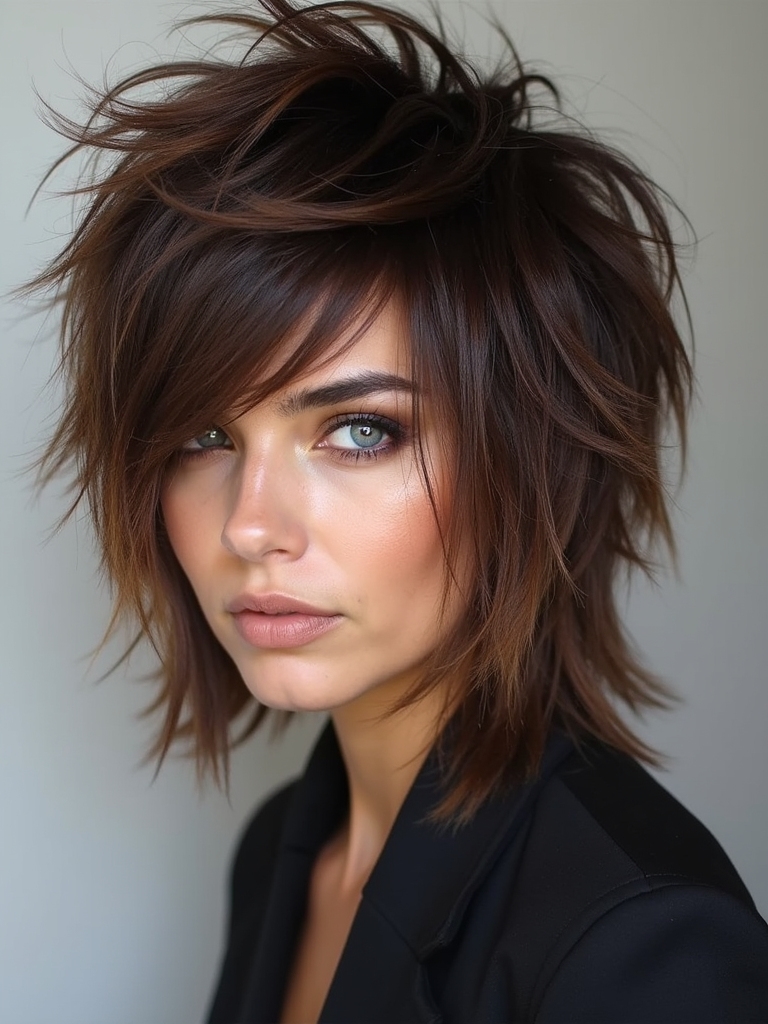
A little prep turns a nerve-wracking appointment into a smooth one. The clients who walk out happiest are the ones who showed up ready, so do this before you sit down:
- Gather three or four photos of long wolf cuts, ideally on hair like yours, showing the front and the back.
- Wash a day ahead, not the morning of, so your stylist can see how your hair naturally falls and waves.
- Know your non-negotiable: the exact length you refuse to go shorter than. Say it out loud at the start.
Heads-Up
First-timers often ask for too much choppiness at once. Go softer on the first cut. You can deepen the layers and shorten the fringe next visit, but you cannot glue length back on the same day.
How to Communicate With Your Stylist
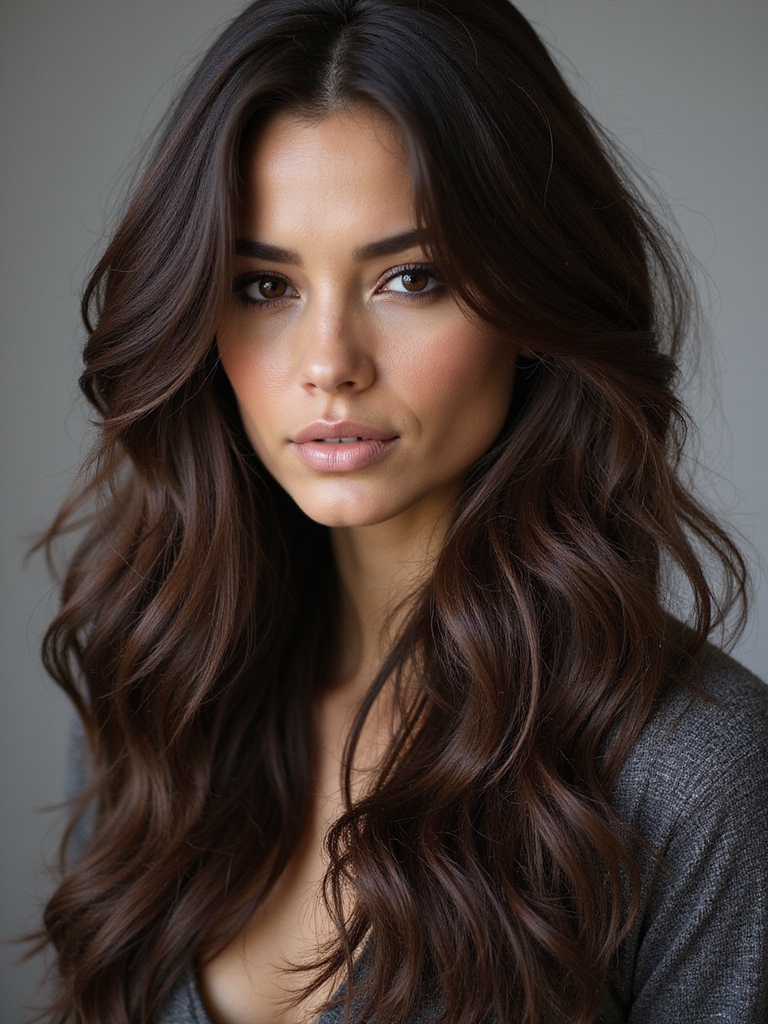
Half of a good wolf cut is the conversation before the cut. Wolf cut means a dozen different things, so the word alone will not get you what you pictured.
Words That Actually Work
Use plain, structural language. Ask for short layers at the crown for lift, longer layers blended through the lengths, and your overall length kept. Mention how much daily styling you are willing to do, because that changes how choppy they go.
If you are unsure, ask the stylist to start conservative. They can always cut more at the same visit, and a softer first pass is far easier to live with than a regret.
Personal Style and Realistic Upkeep

A long wolf cut sits at a friendly point on the maintenance scale. Because you kept your length, grow-out is gentle and the layers simply soften over time.
What It Really Costs You
Plan on a shaping trim every ten to twelve weeks to keep the layers defined, which usually runs $45 to $65. Skip it for too long and the choppy ends blunt out into ordinary long layers, which is fine if that is the look you drift toward.
Daily upkeep is light. Most mornings you scrunch in product and go, with the occasional round-brush moment at the crown when you want extra polish.
The biggest reason people skip the long wolf cut is a misunderstanding about upkeep.
❌ Myth: A wolf cut is high maintenance.
✅ Reality: On long hair it is one of the easiest cuts to grow out, with trims only every ten to twelve weeks and a two-minute styling routine.
❌ Myth: You have to cut off most of your length.
✅ Reality: The drama is in the layers and crown. A good stylist keeps your length and adds movement on top of it.
Adding Bangs to a Long Wolf Cut

Bangs and the long wolf cut belong together, since a fringe is what ties the crown layers into your face. They are optional, but they push the look from nice long layers into proper wolf-cut territory.
Match the fringe to your patience:
- Curtain bangs are the long-hair favorite, low-maintenance and soft. If you are leaning that way, the curtain bangs guide pairs perfectly with this cut.
- Wispy, piecey bangs echo the choppy layers and grow out without a hard line.
- Heavier fringe makes a bolder statement but needs a tidy-up every two to three weeks.
Everyday Styling Techniques for Long Layers
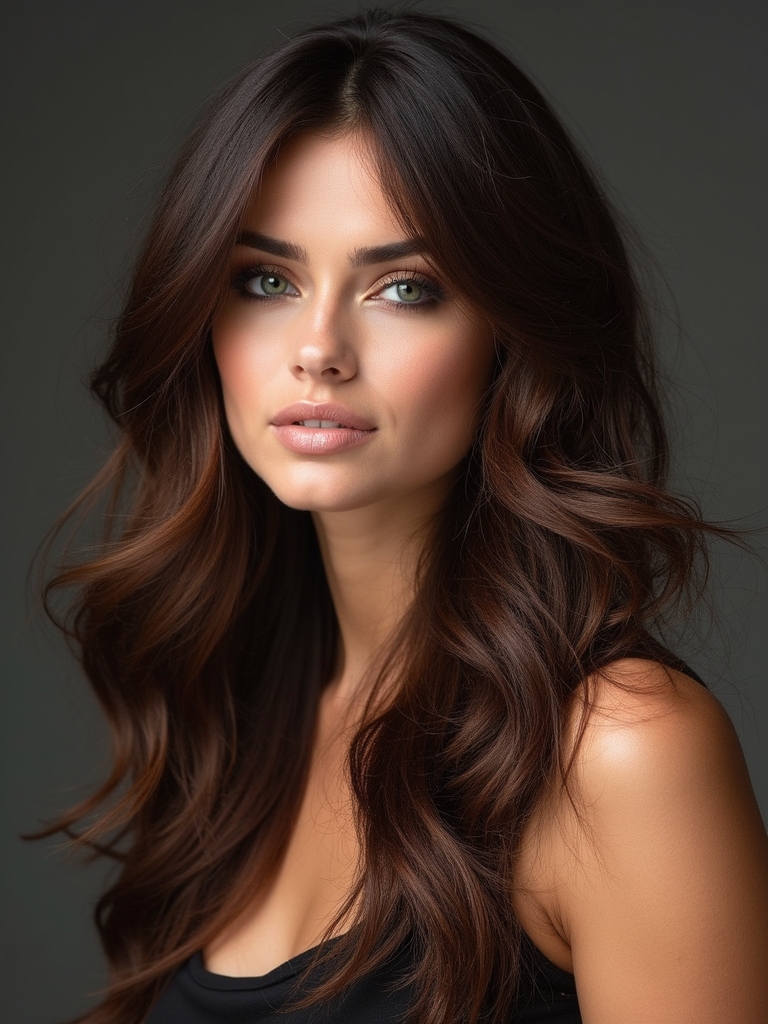
Long hair gives you more to work with, which is good and bad. The crown can go flat under all that length, so your routine should put the effort up top:
- Flip your head upside down to rough-dry the roots, then mist a texture spray through the mid-lengths.
- Scrunch the ends with your hands to wake up the separation, and leave the lengths mostly alone.
- For lift that lasts, spend sixty seconds round-brushing just the top section and let the rest air-dry.
Essential Tools for Styling

You do not need a salon’s worth of gear for this. A short, focused kit covers nearly every long-wolf morning, and most of it you probably own already.
The shortlist worth keeping on the shelf:
- A medium round brush for crown volume, the one tool that earns its keep.
- A diffuser if your hair waves or curls, to set the layers without frizzing them.
- A wide-tooth comb for detangling long lengths gently, since aggressive brushing snaps the fragile ends.
Blow-Drying for Textured Volume

If you want the full crown drama the name promises, the blow-dry is where it happens. Long hair is heavy, so volume has to be built in deliberately or gravity wins by lunchtime.
Start with a light mousse or root spray on damp hair near the scalp. Then dry the crown layers in sections, lifting each one up and back with a round brush, aiming heat at the roots before the ends.
Hit the lifted roots with a quick blast of cool air to lock the volume. To finish, mist a little texture spray over the lengths and break them apart by hand, which turns a smooth blow-dry into something with grit.
Products for Volume, Texture, and Shine
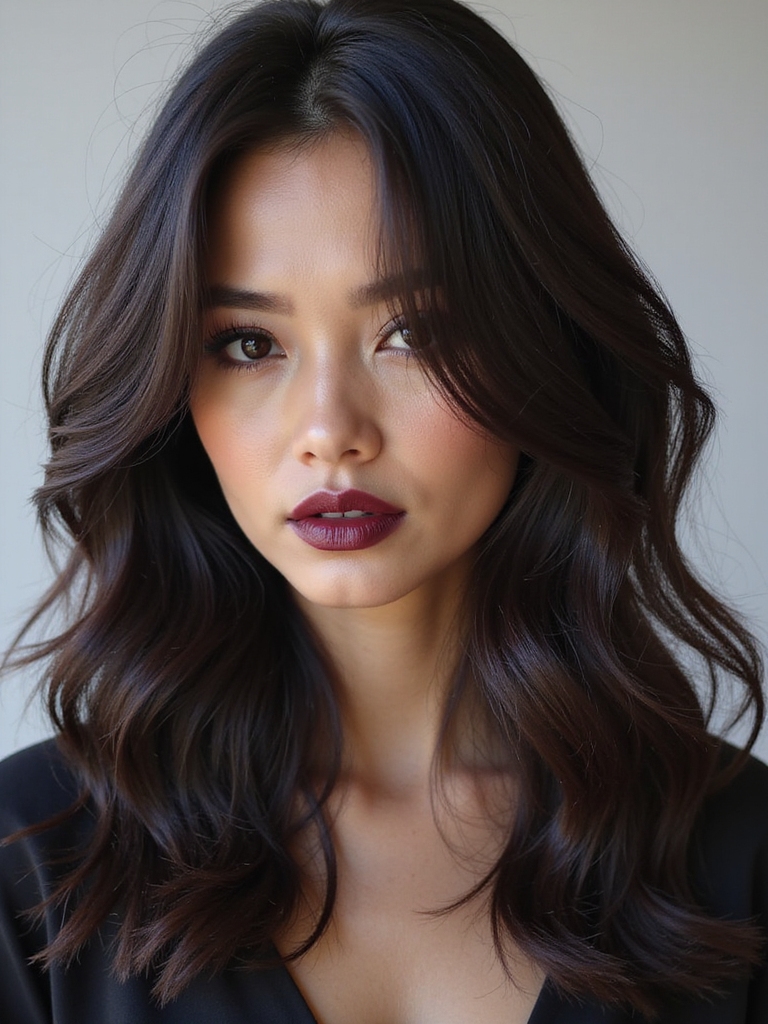
Three products handle a long wolf cut through almost any week, and none of them cost much. Reach for the right one rather than layering on all three at once:
- A root-lifting mousse or spray for crown volume, used only on damp roots.
- A texturizing or sea-salt spray for separation through the mid-lengths and ends.
- A pea-sized drop of smoothing oil on the very ends to bring back shine and tame dryness on long hair.
The Tousled, Undone Finish

The tousled, lazy-Sunday version is what most people picture, and it is the most forgiving way to wear long wolf-cut layers. Build it in three quick moves:
- Air-dry or rough-dry until the hair is about ninety percent dry, leaving some natural bend.
- Spray salt or texture mist through the lengths and scrunch upward toward the crown.
- Tuck one front piece behind an ear and leave the rest wild. That deliberate imbalance is the whole charm.
Going Sleek and Polished

A long wolf cut can also clean up beautifully for an event, which surprises people who only picture it messy. The layers add interest even when the hair is smooth:
- Blow the lengths straight with a paddle brush, keeping the crown lifted so it does not go flat.
- Run a flat iron lightly through the mid-lengths, then bend the very ends out for a soft flick.
- Finish with a shine spray and a smoothing serum on the ends to polish the feathered pieces.
A Nourishing Hair Care Routine

Long hair has older, more fragile ends, and all that slicing exposes them. A simple care routine keeps the layers looking deliberate rather than dry and stringy:
- Deep-condition or mask once a week, working it through the mid-lengths and ends where dryness collects.
- Use a leave-in or light oil daily on the bottom few inches to fight the dryness long hair is prone to.
- Sleep on silk and use a heat protectant every time you reach for a hot tool, since reheating tired ends is what frays them.
Graceful Grow-Out for a Long Wolf Cut

Here is the part long-hair lovers will like: this cut grows out kinder than nearly any layered style. Because you kept your length, there is no awkward short phase to suffer through.
No Awkward Phase
As the layers grow, they blend down into your length and quietly become soft long layers. Many clients let it ride for months between visits, then come back for a refresh once the crown lift relaxes.
If you decide to grow the layers out entirely, light dusting trims on the ends keep things healthy while the shorter pieces catch up. It is one of the lowest-stress grow-outs in the book.
Bold Layered Variations to Try

Once you have the base cut, there is real range in how bold you take it. The long canvas lets you experiment without committing to anything drastic.
A few directions worth trying:
- Soft long wolf: gently blended layers and curtain bangs, closer to a long shag than a mullet.
- High-contrast wolf: a shorter, heavier crown for dramatic lift against your long ends.
- Wavy long wolf: lean into your natural texture with a salt spray, the lowest-effort version of all.
Color Ideas for a Long Wolf Cut

Long hair is a generous canvas for color, and the wolf cut’s separation makes any dimension show up louder. The layers catch light at different depths, so even subtle work looks intentional.
Color directions that suit the cut:
- Face-framing money-piece brightens the front layers for a low-commitment lift, usually $60 to $90.
- Soft balayage grows out gracefully and plays into the messy spirit; budget $150 to $250.
- A smoky root into brighter mid-lengths uses your length to create real depth and drama.
The Transition to a Wolf Cut From Long One-Length Hair

Going from blunt, one-length long hair to a wolf cut is a bigger visual jump than the actual inches lost. The before-and-after I remember best was a client with waist-length, all-one-length hair who was sure she would look shorter; she walked out the same length with ten times the movement.
The shift is mostly about adding internal layers and a fringe, so your length barely changes on paper. What changes is how the hair moves and how much shape it has around your face.
If you are nervous, ask for a soft, low-layered version first. You can deepen the layers and shorten the fringe at your next visit once you trust how it wears.
Seasonal Adjustments Through the Year

Long hair reacts to the weather more than short hair does, so your routine should flex with the seasons. The relaxed, grown-out long wolf has clearly pulled ahead of the cropped version this year:
- Summer: lean on salt spray and air-drying; humidity gives the layers free texture.
- Winter: dry shampoo and a quick crown scrunch revive flat, hat-pressed roots.
- Fall and spring: swap heavy oils for a lighter leave-in so long ends stay soft without going greasy.
Frizz Control for Long Hair

Long, layered hair shows frizz fast, especially on those exposed, sliced ends. A few habits keep the layers looking crisp through a humid afternoon.
What actually helps:
- Blot with a microfiber cloth, or even a soft cotton tee, so the towel stops roughing up the cuticle.
- Apply a smoothing serum or oil to damp ends, where frizz starts on long hair.
- On humid days, a light anti-humidity mist over the lengths buys you hours of calmer ends.
Accessorize Your Long Wolf Cut
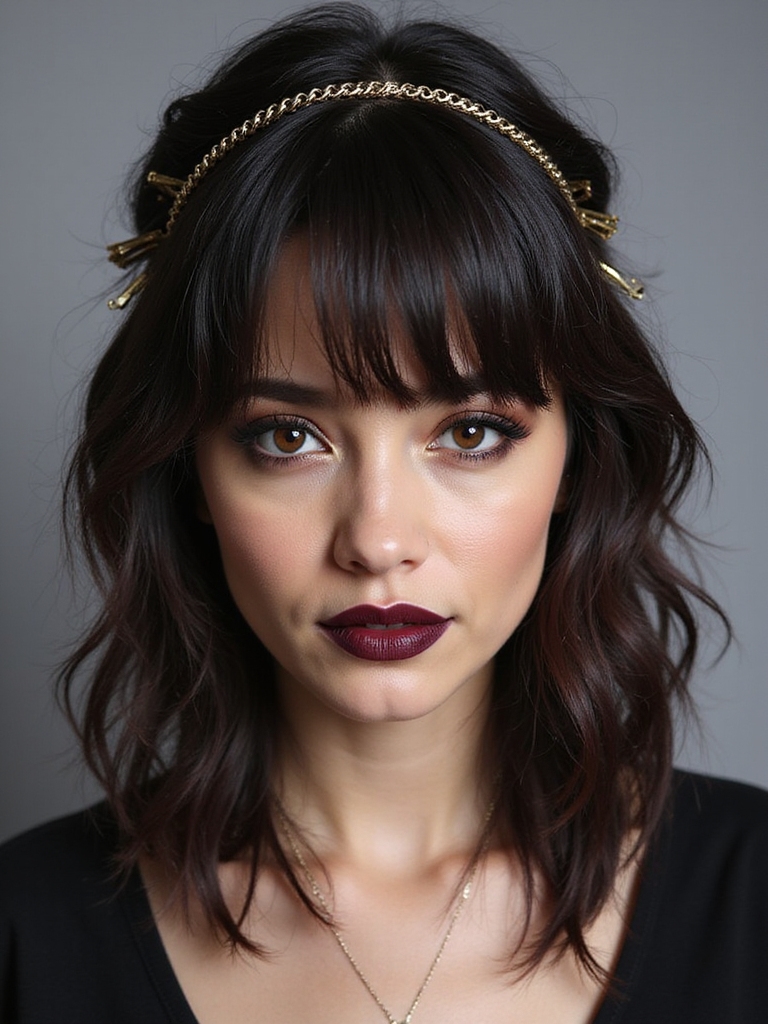
Long hair plus wolf-cut texture is an accessory playground, and the right piece buys you a stylish second or third day between washes. The point is to let the cut still lead, with the accessory as the accent.
Claw clips are the easiest win, twisting the length up while leaving the lift and fringe out to frame your face. A thin silk scarf knotted at the nape gives a vintage feel and hides flat roots on a lazy day.
For something quieter, a couple of pretty pins push the front layers back when your fringe is in a grow-out stage. Keep it simple so the texture still does the talking.
Maintenance Tips to Keep It Sharp

A long wolf cut is low fuss, but low fuss is not no fuss. The shape stays sharp with a handful of small habits. Nothing more.
Book your shaping trims on schedule even when the cut still looks fine, because the layers blur slowly and you may not notice until the shape is gone. Keep your ends conditioned, since on long hair healthy ends are the difference between a cut that looks intentional and one that just looks fried.
Between visits, light at-home fringe trims are fair game, but leave the crown layers to a pro. That internal layering is the part that is honestly hard to judge on your own head.
What to Expect
Walk in expecting to keep your length and walk out with movement you did not have before. A long wolf cut should feel like your hair, only lighter, bouncier, and a little more interesting around the face. The first day might feel like a lot of texture; by the second wash everything settles into place.
If you are still deciding how far to go, try the softer end first and work wilder over a few visits. For more layered-long inspiration, the long layered hair and short wolf cut guides sit on either side of where this cut lands, and the wavy wolf cut is worth a look if your hair has any bend.
Long Wolf Cut Questions
?Will a wolf cut make my long hair look shorter?
Not if it is cut well. The layers and fringe add movement while your overall length stays, though the extra volume can make hair look a touch shorter until you get used to it.
?How much length do I actually lose?
Usually very little, often an inch or less off the bottom. The shape comes from internal layers and a fringe, not from shortening the lengths.
?Can fine or thin long hair handle a wolf cut?
Yes, with a lighter hand on the layering. The crown lift actually helps flat fine hair; just ask your stylist to keep the ends fuller so they do not thin out.
?How often will I need a trim?
Every ten to twelve weeks keeps the layers defined. Long hair hides grow-out well, so you can stretch it longer if you do not mind the choppiness softening.
Keep the Length, Add the Edge
The long wolf cut settles the old tug-of-war between keeping your length and wanting some edge. You hold on to the hair you worked to grow and gain crown lift, face-framing layers, and movement that makes the whole thing feel new.
If you have been circling this cut, start soft and go bolder over a couple of visits. Try the gentler, low-layered version first. Give it a few weeks to settle, then let your own hair decide how far you push it next.
Browse More Looks