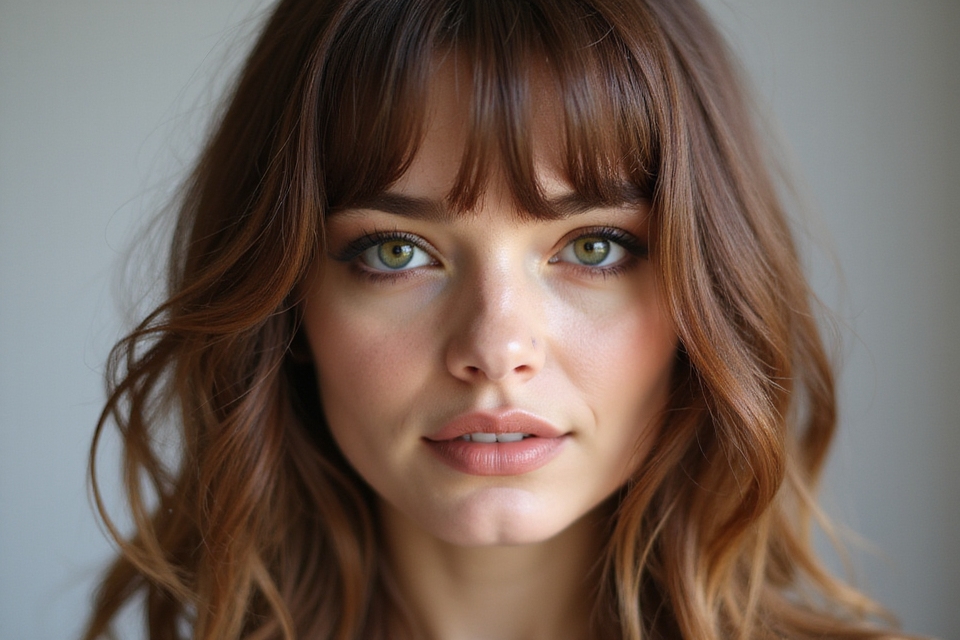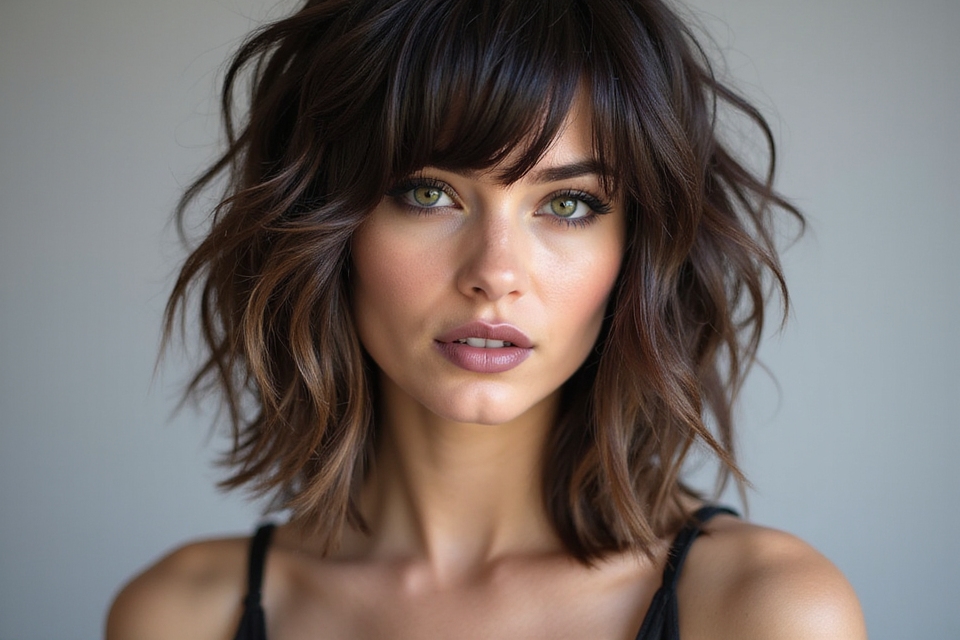

Most haircuts make you pick a lane: polished or undone, soft or sharp. The wolf cut refuses to choose. It borrows the feathered crown of a ’70s shag and the swagger of a grown-out mullet, then lets the two argue across your head until something cool falls out. The best wolf cut ideas for women lean into that tension and let it work.
I have cut this shape on stick-straight hair and on tight waves, and the draw is the same every time. You get movement that shows up on its own and a styling routine measured in minutes. If that sounds like your kind of bargain, these are the wolf cut ideas worth saving.
Wolf Cut Questions, Answered Fast
Is a wolf cut actually low maintenance? Mostly. The choppy layers hide grow-out, so trims stretch to eight to ten weeks, but the texture only behaves with a quick product step on most mornings.
Who does it flatter? Nearly everyone, because the layers get tailored to your face and density. Fine hair gets root lift, thick hair loses weight, and curls get shape while losing the bulk.
Should I get it at a salon or do it myself? Have the first one cut professionally, usually $60 to $120. The layering is hard to judge on your own head, and a rushed freehand chop is what earns the wolf cut its worst reviews.
Why This Bold, Free-Spirited Cut Took Over

The wolf cut earned its name honestly. It looks a little untamed on purpose, with a heavier, shorter crown that spills into longer, wispy ends. The silhouette looks relaxed and still pulled together, which is the exact line every shag-adjacent cut is trying to walk.
It spread because it solves a real problem. People wanted shape and personality but had given up on the daily blow-out, and a free-spirited cut that survives air-drying and a chaotic morning is rare. Once it started showing up on phones, it moved fast, jumping from K-pop stages to suburban salons in about a year.

The Layered Anatomy Behind Its Charm

Strip away the attitude and a wolf cut is really a layering recipe. Short, stacked layers sit high on the crown for lift, then the lengths are sliced into separate, piecey ends so the whole thing looks broken-up and full of movement.
What Makes a Layer Look Wolfish
That contrast is the charm. Heavy up top, airy at the bottom, with face-framing layers that start around the cheekbone and pull the eye toward your features.
It is also why the cut flatters movement. Tuck a piece behind your ear or shove it out of your face and it still falls back into shape, because the cut is doing the work for you.
🅰️Wolf Cut
Heavier, lifted crown with disconnected, choppy layers and real mullet attitude. More volume up top, more drama overall.
🅱️Classic Shag
Softer, more blended layering all the way down with a feathered fringe. Same spirit, gentler silhouette, slightly easier grow-out.
Start With Your Face Shape and Texture

Before you save twelve screenshots, look in the mirror honestly. Your face shape and your natural texture decide which version of the wolf cut will look deliberate, like you actually chose it. When clients sit down, I start here, and you can too:
- Round or full faces want longer, lower layers that draw a vertical line and avoid width at the cheeks.
- Long or oval faces can carry a heavier fringe and shorter crown layers without looking stretched.
- Fine or straight hair needs blunter ends so the layers do not thin out to wisps; coarse or wavy hair can take aggressive choppiness and still hold body.
Chic Wolf Cut Styling Without the Fuss

Here is where the cut keeps its promise. The whole point is a look that comes together in the time it takes coffee to brew, and the routine is short on purpose:
- Rough-dry damp hair upside down for thirty seconds to wake up the crown, then let it finish air-drying.
- Mist a texturizing spray through the mid-lengths and scrunch with your fingers, skipping the brush, to keep the pieces separate.
- Twist one or two front sections loosely so the curtain fringe falls where you want it. That is the entire morning.
Styling Tip
Apply product to damp hair, not dry. A texture spray on wet mid-lengths sets the separation as it dries; the same spray on dry hair just sits on top and goes crunchy.
Find Your Perfect Length

Length changes the personality of a wolf cut more than color ever will. The same layering looks punky cropped and romantic when it is long, so match the length to how loud you actually want to be:
- A short wolf cut sits between the ears and chin, with the most attitude and the most upkeep.
- A medium wolf cut grazes the collarbone and is the easiest first version, forgiving and quick to style.
- A long wolf cut keeps your length but adds crown drama, ideal if you are nervous about cutting much off.
Tailoring Wolf Cut Styles to Your Hair Type

I never cut a wolf the same way twice. The layering gets dialed up or softened depending on how your hair behaves naturally, which is why the wolf cut for wavy hair looks so different from a straight version.
Quick translation by texture:
- Straight hair needs point-cutting at the ends so the layers do not look like stairs; a little texture spray fakes the grit.
- Wavy hair is the natural home for this cut, since the bend in the hair separates the layers for you.
- Curly and coily hair does best cut dry, one coil at a time, so the shape lands where your shrinkage really falls. Skip the razor; it roughs up the cuticle and frizzes the ends.
Good to Know
The modern wolf cut went mainstream through K-pop and East Asian street style before social media carried it worldwide, which is why it feels gender-neutral and works across hair types.
Variations That Match Your Mood

I tell clients the underrated part of this cut is its range. You can wear the same haircut soft on a Tuesday and feral on a Friday, and the dial is entirely in how you style and how deep you let the choppiness go:
- Soft wolf: gentle, blended layers and a wispy fringe, closer to a modern shag than a mullet.
- Classic wolf: the balanced original, choppy but wearable, the version most people picture.
- Bold wolf: shorter, disconnected crown and heavy fringe for full rock-band energy. Be sure before you sit down for this one.
Keeping It Healthy: Trim, Hydrate, Style

All those sliced ends mean the wolf cut shows damage faster than a blunt cut would. Healthy hair is what separates a deliberate look from a frazzled one, so keep the basics in this order:
- Trim every eight to ten weeks (around $40 to $60) to keep the ends piecey and clean.
- Hydrate with a lightweight leave-in or a weekly mask; dry choppy ends are the first thing to look ragged.
- Protect from heat. If you use an iron, drop the temperature and add a heat spray, because reheating the same fragile ends is what fries them.
“Ask your stylist to cut the crown layers a touch longer than the photo. They are easy to take shorter at your next visit and impossible to add back if you go too far.”
Celebrity Wolf Cuts Worth Screenshotting

If you want a reference photo for your stylist, the red carpet has done the homework for you. Bring an image; the words wolf cut mean ten different things to ten different people:
- Look for the cropped, spiky versions when you want a short and daring take.
- Search the softer, grown-out styles for a romantic, long-layered look.
- Save two or three photos at different angles so your stylist can see how the crown and fringe behave from the back, not just the front.
Accessorize Your Wolf Cut

The texture practically begs for accessories, and they buy you a few extra days between washes when the crown goes flat. The point is to let the cut still come first.
A few that earn their place:
- A thin silk scarf knotted at the nape, with the layers left out to frame your face.
- Small claw clips to pin back the fringe on a grow-out day.
- A couple of mismatched pins pushed into the crown for lift when the volume drops.
Making the Bold Transformation From Another Cut

Going from a one-length cut to a wolf cut is a real shift, and the first time you see all that layering happen it can feel like a lot. The fix I make most often for nervous clients is to ease in gradually:
- Start with a soft version and a longer fringe, then go shorter at your next visit once you trust the shape.
- Bring photos of the grow-out, not just the fresh cut, so you know what month three looks like.
- Give it two weeks. A wolf cut almost always looks better after the first wash, when the layers settle and stop looking surgical.
Bold Color Trends Worth Trying

Color and this cut get along beautifully, because all that separation gives the dye somewhere to show off. Dimension shows up louder on choppy ends than it ever does on a flat blunt cut.
Money-piece framing around the fringe is the low-commitment favorite, brightening the pieces that touch your face without a full overhaul. Soft, grown-out balayage is the next step up, with an easy regrowth line that suits the messy spirit of the cut.
If you want a statement, a smoky root melting into a brighter mid-length plays beautifully with the lifted crown. Budget for it though; a dimensional color usually runs $150 to $250 and adds a gloss appointment every couple of months.
DIY or Salon for Your Wolf Cut

The internet is full of bathroom-sink wolf cut tutorials, and some of them turn out fine. Most of the sad grow-outs I get asked to rescue started as a confident solo attempt, so be honest about your odds:
- Get the first one cut by a pro who can read your texture and set the shape correctly.
- Once you know the layering, light fringe and face-framing touch-ups at home between visits are fair game.
- Never freehand the crown layers yourself. That lift is the hardest part to judge in a mirror, and it is what makes or breaks the whole cut.
How to Grow Out a Wolf Cut Gracefully

Good news for the commitment-shy: the wolf cut grows out kinder than almost any layered style. Because it was choppy to begin with, awkward lengths still come across as deliberate texture.
Surviving the Middle Months
Keep booking small shaping trims even as you grow, just lighter ones, so the ends stay clean while the overall length creeps down.
When the fringe gets long enough to tuck behind your ears, you are basically left with soft long layers, which is a perfectly nice place to land or restart.
Wolf Cut Styling Advice I Give Most

After cutting and re-cutting dozens of these, the same two fixes solve most of the at-home complaints. The first is product placement. People spray texture all over and wonder why the crown falls flat, when the lift actually comes from working a little mousse into damp roots and diffusing for sixty seconds.
The second is restraint. The mistake that comes up most often is fussing too hard with a cut that is designed to look undone. Touch it less, scrunch with your hands, and let day-two hair do its thing, since this shape really looks its best when you have stopped fussing with it.
Products That Enhance Your Wolf Cut Style

This cut does not demand a bathroom full of styling products, which is part of why people love it. Three things cover almost every situation, and they last for months:
- A texturizing spray or sea-salt mist for separation and grip; this is the one you will reach for daily.
- A light mousse or root foam for lift at the crown, used only on damp hair near the scalp.
- A pea-sized smoothing cream or oil for the ends on humid days, to keep wispy from sliding into frizzy.
Seasonal Styling Tips for the Wolf Cut

The cut shifts with the weather, and leaning into that keeps it interesting all year. In winter, hat hair is the real enemy, so dry shampoo at the crown and a quick scrunch revive the layers after you peel off a beanie.
Spring and summer are the wolf cut’s easy season. Humidity adds the natural bend the layers love, and a salt spray plus air-drying gets you most of the way to beachy without a single hot tool.
Come fall, when everything dries out, swap heavy oils for a lightweight leave-in so the ends stay soft without going greasy. Lately the grown-out, softer shape gets requested far more often than the sharp little crop.
Adding Bangs to a Wolf Cut
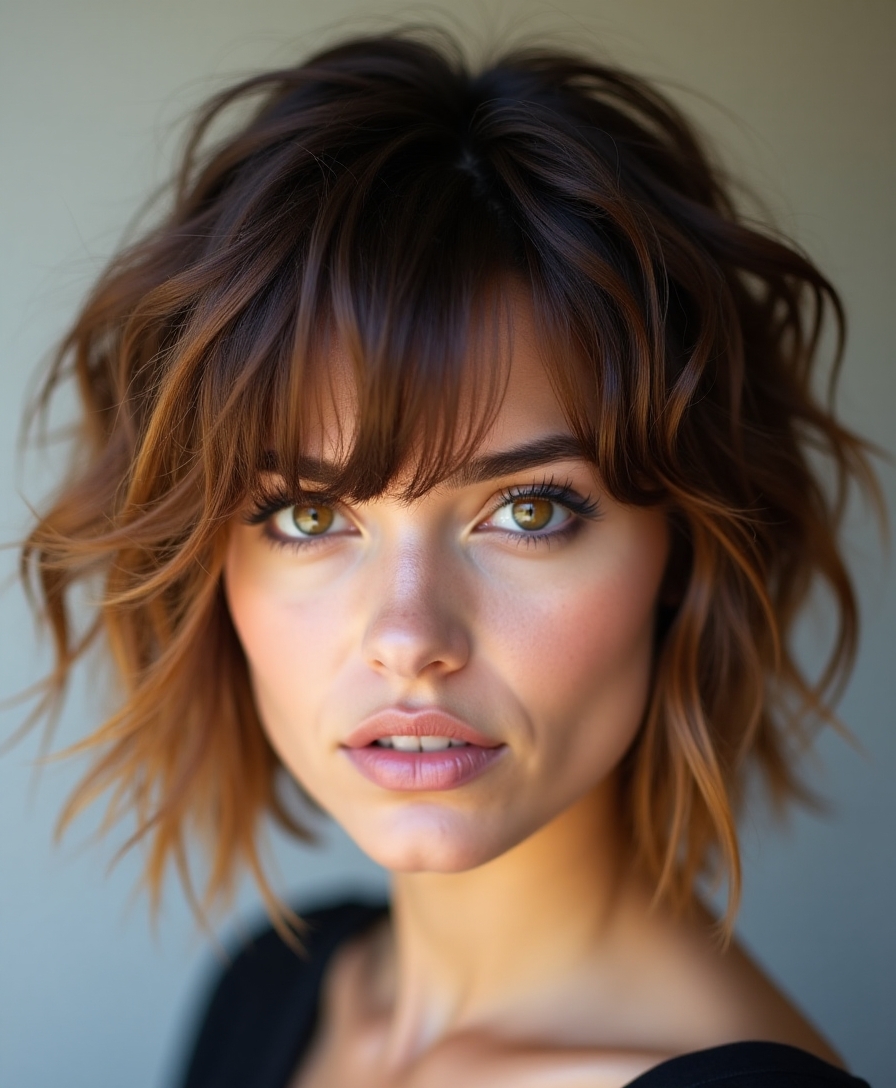
Bangs and the wolf cut are close cousins, since the fringe is half of what gives the style its shape. If you are already considering curtain bangs, the wolf cut is the natural home for them. Pick the fringe to suit your face and patience:
- Curtain bangs part down the middle and sweep out, the lowest-maintenance and most universally flattering choice.
- Wispy, piecey bangs echo the choppy layers and need almost no styling.
- Blunt, heavier bangs make the boldest statement but demand trims every two to three weeks to stay tidy.
The Low-Maintenance Versatility Payoff

Let me set the record straight on the biggest wolf cut myth, because the low-maintenance label is half true. The cut is forgiving day to day; it is not zero effort.
Forgiving, Within Reason
What you save is morning time and the dread of grow-out. What you spend is steady trim money and the comfort of wearing your hair a little messy on purpose. For most people that is a great trade, especially anyone tired of fighting their hair into submission every day.
The versatility is the real prize. One cut covers band-practice edgy, brunch-soft, and everything between, which is a lot of mileage from a single appointment.
Who It Suits Best
The wolf cut rewards people who like a bit of texture and do not want to babysit their hair. If your ideal morning involves scrunching some product in and walking out the door, you are the target audience, and the choppy ends will hide a multitude of grow-out sins along the way.
It asks more of you if you crave sleek, controlled, every-strand-in-place hair, or if your texture is very fine and sparse, where heavy layering can leave the ends looking thin. When in doubt, start with a softer, longer version like a modern shag and work your way wilder once you see how it wears.
Picking Your Version
The reason there is no single wolf cut is the same reason it works: it adapts to the length you keep, the texture you already have, and how loud you want to be. Soft and long, cropped and spiky, or somewhere reasonable in the middle, the layering carries the look either way.
Save the two or three ideas here that made you look twice, then take them to a stylist who can read your hair in person. Bookmark this page so the upkeep and product notes are handy when you are standing in the salon deciding how brave to be.
Next Up