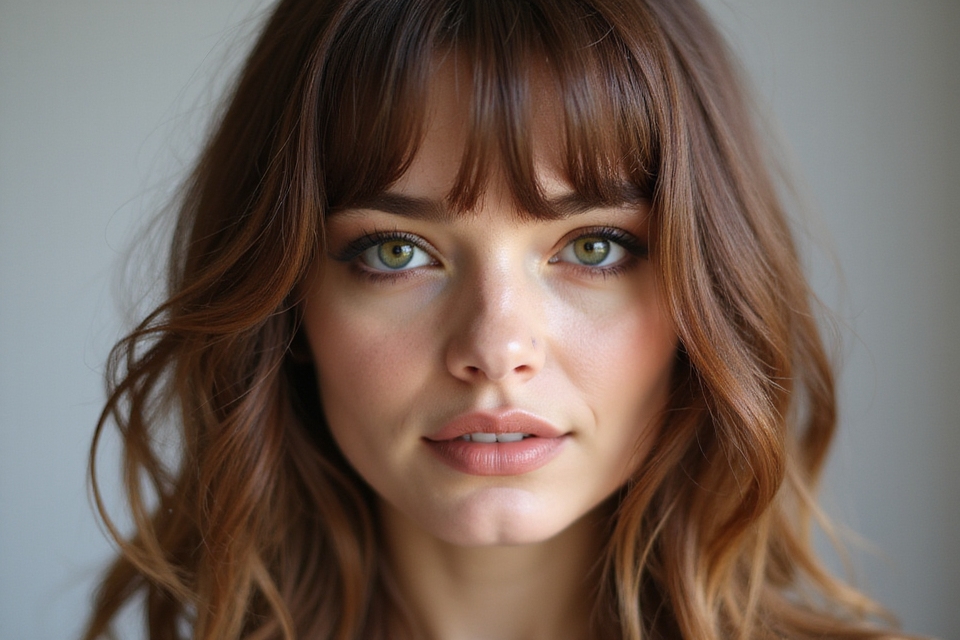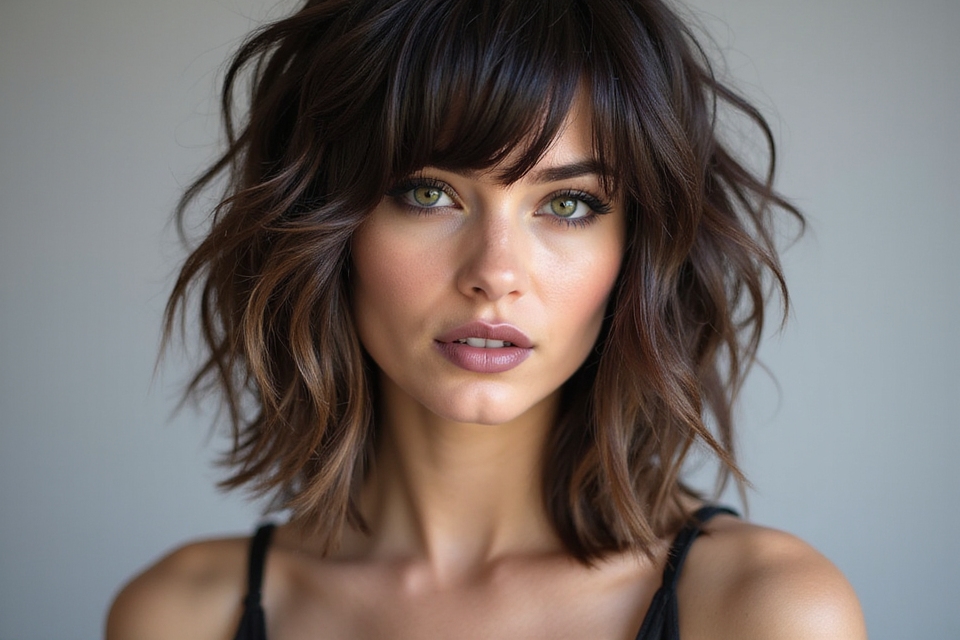

If you think a shag is only for cool rock-and-roll types with thick, wavy hair, the medium shag is here to change your mind. Cut at a flattering collarbone length, it’s the most wearable version of the cut, and it works on fine, thick, straight, and curly hair when it’s tailored to you.
Medium length is the sweet spot for a shag: long enough to feel soft and pretty, short enough to show off all that layered movement. This guide covers face shapes, texture, styling, color, budget, and exactly how to ask for a medium shag that suits your own hair.
The Quick Version
- A medium shag is the most wearable shag length, around the collarbone, layered for movement.
- The 70s-revival texture flatters thick, fine, wavy, and curly hair when it’s tailored.
- It’s low-maintenance, built to air-dry, but it needs a trim every 6 to 8 weeks.
- The cut lives or dies on the layering, so the stylist matters more than the photo.
The Versatility of a Medium Shag
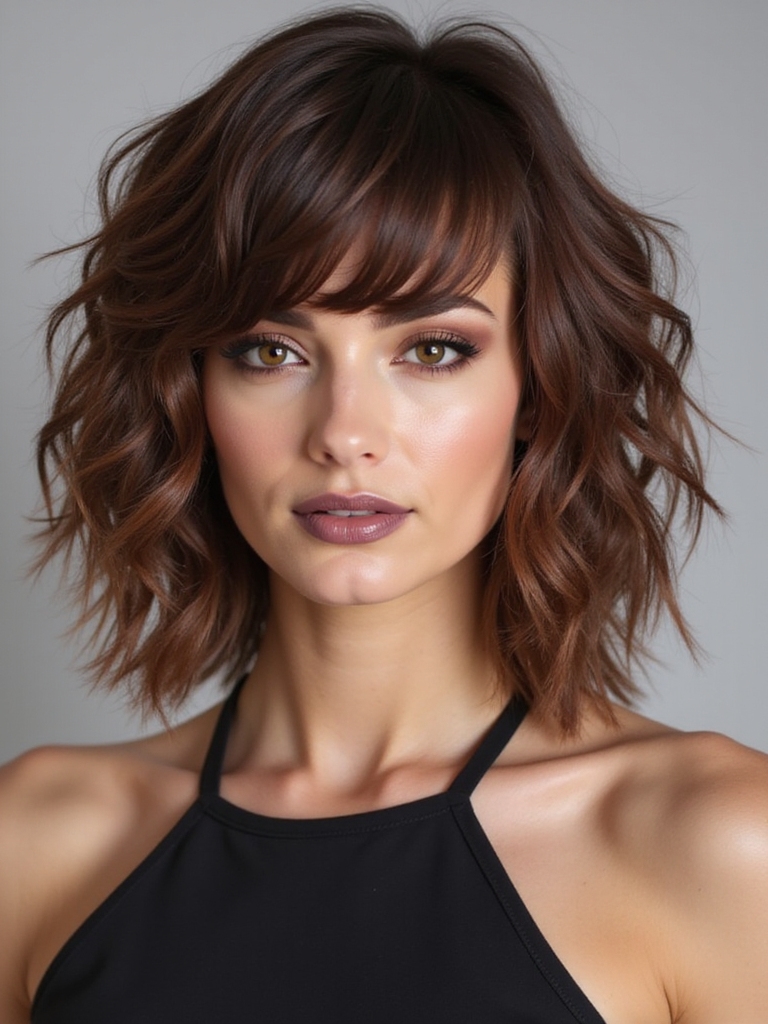
What makes the medium shag so popular is range. At collarbone length, it’s long enough to tuck behind your ears or throw into a half-up, and short enough to keep all the bounce a longer cut loses.
One Cut, Many Moods
It plays both ways, too. Worn smooth, it’s soft and pretty; roughed up with texture spray, it leans cool and a little undone. Few cuts give you that much from one trip to the chair.
That flexibility is why I suggest it to clients who want a change but aren’t sure how bold to go. The medium shag meets you wherever your nerve is.
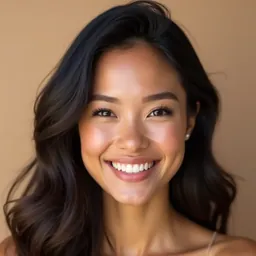
The 1970s Shag Revolution

The shag was born in the 1970s as a carefree, anti-establishment cut that broke from the stiff, set styles before it. It was made to look loose and free, and that spirit stuck around.
Today’s medium shag is a softer, more polished descendant of that original, but it keeps the same easy attitude. Knowing the roots helps you understand the cut: it’s supposed to look a little undone and easy.
Pick your shag energy:
🎯Soft and pretty
A gently layered medium shag with curtain bangs reads romantic, not rock.
🎯Cool and edgy
Choppy, piece-y layers and a blunt fringe lean into the shag’s rebellious roots.
A Rebellious Medium Shag

For anyone who wants the shag’s edgier side, the rebellious version dials up the texture and the fringe. Here’s what gives it that attitude:
- Choppy, piece-y layers cut close to the crown for height
- A blunt or shaggy fringe that frames the eyes
- Razored, broken-up ends for a deliberately undone finish
- Texture spray and finger-styling for an undone finish
The Right Medium Shag for Your Face

A medium shag flatters every face shape, but where the layers and fringe sit should follow your features. The face-framing pieces do most of the work.
A round face wants longer, more vertical layers and a curtain fringe to lengthen it; a square jaw softens under wispy face-framing; a long face suits a fuller fringe to break up the length. There’s more in our round face guide.
- Round: longer vertical layers, curtain fringe to lengthen
- Square: soft, wispy face-framing to soften the jaw
- Long: a fuller fringe to balance the length
👍Why a medium shag wins
- +The most versatile, wearable shag length
- +Air-dries with built-in volume and movement
- +Suits every texture when it’s cut right
👎What to weigh
- –Needs a trim every 6 to 8 weeks to hold shape
- –Bad layering is hard to grow out
- –Fine hair needs careful, not aggressive, layering
Tailoring a Shag to Your Texture

Your texture decides how a medium shag is cut, which is why two people can ask for the same shag and walk out with very different results. Fine hair gets soft, careful layers; thick hair gets more aggressive layering to pull out weight.
Wavy hair takes the shag most naturally, since the layers fall into its bend. Curly hair can absolutely wear one too, cut dry to the curl pattern, like the looks in our curly shag guide.
Layered Texture for Volume

The medium shag’s volume is built into the cut itself, which is what makes it a gift for fine or flat hair. The shorter crown layers do the lifting:
- Short crown layers create height where hair falls flat
- Graduated lengths underneath push the top up and out
- Soft layering on fine hair fakes real fullness; see our shag for thin hair guide
- A diffuser or a quick root-flip dry maximizes the lift
📋Medium shag checklist
- ✓Bring photos and find a stylist who cuts shags often
- ✓Be honest about your texture and styling time
- ✓Trim every 6 to 8 weeks to keep the shape
- ✓Style with texture spray, not heavy product
Essential Tools for a Shag

One of the joys of a medium shag is how little you need to style it. Since it’s built to air-dry, the round-brush ritual goes out the window.
Less Is More
Your core kit is a diffuser or just your fingers, a texture or sea-salt spray, and a light cream to define pieces. A curling wand is optional for extra bend on a special day.
That’s truly the whole list for most shags. If you find yourself reaching for a dozen tools, the cut probably wasn’t layered to air-dry the way it should.
The Shag’s Cultural Icons

The shag has been a shorthand for cool ever since the 1970s, worn by rock stars, models, and screen icons across every decade since. Its meaning shifts with the era but the attitude stays.
What’s worth taking from that history is the relaxed spirit of it: the easy texture, the broken-in fringe, the sense that the wearer didn’t try too hard. Bring that energy to your stylist, not a single name.
- A symbol of cool since the 70s and through every revival
- The lesson is the attitude itself
- Relaxed texture and an undone fringe are the constants
| Texture | What to ask for | Styling |
|---|---|---|
| Fine | Soft layers, not over-thinned | Mousse + diffuse for volume |
| Thick | More aggressive layers to remove weight | Texture spray, air-dry |
| Wavy | Layers cut to the wave | Scrunch with cream |
| Curly | Dry cut to the curl pattern | Curl cream + diffuser |
A Layered Fringe and Textured Ends

Two details define a medium shag: the fringe and the ends. The fringe, usually curtain or shaggy, frames the face and sets the whole mood of the cut.
The ends are point-cut or razored so they stay soft and broken-up. That feathered, textured finish is what gives the shag its movement and keeps it from looking heavy.
Together, the fringe and the textured ends are what separate a real shag from a plain layered cut. If you want the look, those are the two things to insist on. Our curtain bangs guide covers the fringe options.
Layering Techniques for Shags

A great medium shag comes down to how the layers are cut, and it’s more involved than it looks. Here’s what a skilled stylist does:
- Cuts short layers at the crown that graduate into the length
- Point-cuts or razors the ends for soft, broken-up texture
- Shapes the face-framing and fringe to suit your features
- Blends it all so there’s no harsh step between layers
How to Lift Your Shag

If your medium shag is falling flat, the fix is almost always in how you dry it. The volume starts at the crown, so a little mousse worked into damp roots, followed by a flipped-head rough-dry, lifts the short layers and gives the whole cut its bounce back.
Finish with a blast of cool air at the roots to set the lift before it drops, and break up the lengths with a texture spray. That five-minute routine is the difference between a shag that stands up and one that sits limp.
- Mousse at the roots plus a flipped rough-dry for crown lift
- Cool-shot the roots to set the volume
- Texture spray on the lengths to finish
Bold Color Transforms a Shag
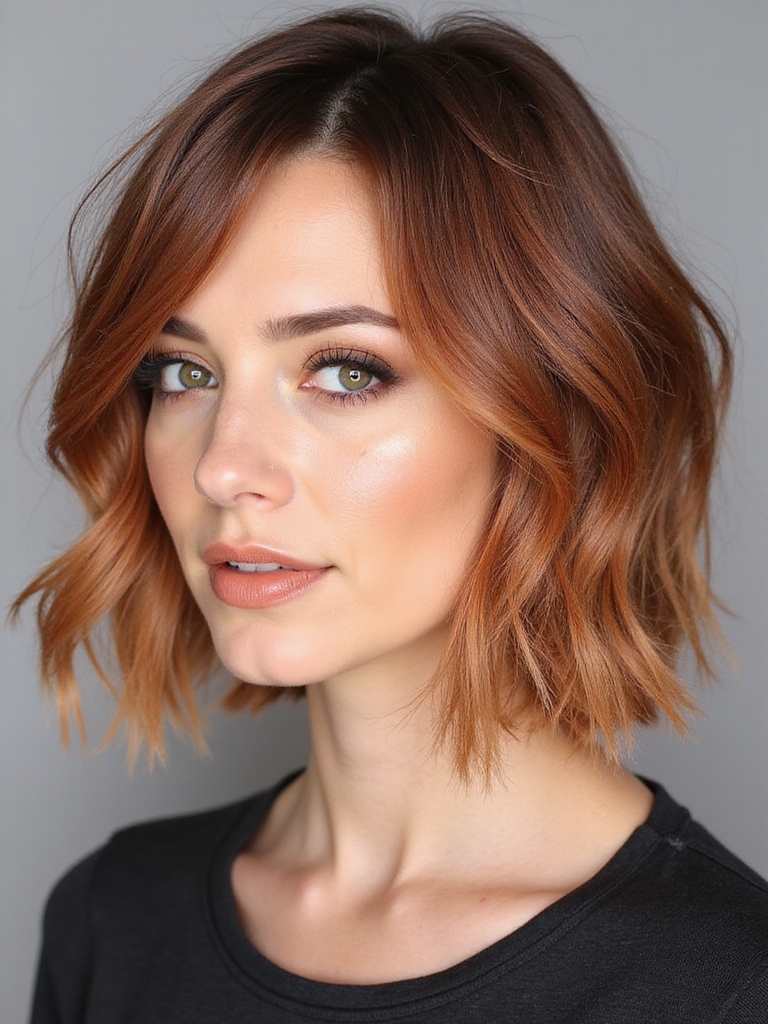
Color and a medium shag amplify each other, because all those layers give dimension somewhere to live. A hand-painted balayage especially shows off the cut, catching the light as the layers move.
Bolder shades work too. A copper, a deep red, or even a money piece around the fringe leans into the shag’s daring spirit and makes the texture pop.
Whatever you choose, dimensional color and a shag are a great pair. For cool-season shade ideas, see our winter hair colors guide.
Texturizing Spray for the Layers

If you buy one product for a medium shag, make it a texturizing or sea-salt spray. It’s the hero that brings the layers to life, adding grip and separation so the pieces fall apart and show. Mist it on damp hair before you scrunch and air-dry, or on dry hair to revive a flat second-day shag. A little goes a long way, so build it up gradually rather than soaking the hair. It’s the closest thing to a magic button this cut has.
- A texturizing or sea-salt spray is the shag’s hero product
- Adds grip and separation so the layers show
- Use it on damp hair, or to revive a flat second day
Seasonal Shag Transformations

A medium shag shifts with the seasons just by changing how you finish it. In the warmer months, lean into its beachy side with sea-salt spray and air-dried, piece-y texture.
Same Cut, New Season
When it turns cold, a smoothing cream and a round brush give the same cut a sleeker, glossier finish that holds up against dry air and hats.
You can shift the color seasonally too, brighter in summer, deeper and richer in winter. The cut stays the same; only the finish and shade change.
An Easy, Textured Medium Shag

For most people, the appeal of a medium shag is the easy, textured everyday version: wash, add product, air-dry, go. It’s built for a busy life.
Run a little texture spray or mousse through damp hair, then scrunch and either air-dry or diffuse it. The layers fall into place with barely any help from you.
That low-effort routine is the whole point. A medium shag rewards a light hand, so the less you fuss with it, the better it usually looks.
Where to Find Shag Inspiration

Walking into your appointment with the right references makes all the difference. Where to look for medium-shag inspiration:
- Search medium shag plus your hair type and length for realistic results
- Save a handful of photos so your stylist sees a range
- Look for the texture and fringe you like, not the model’s face
- Note hair similar to yours, since a shag falls differently by texture
A Home Maintenance Routine
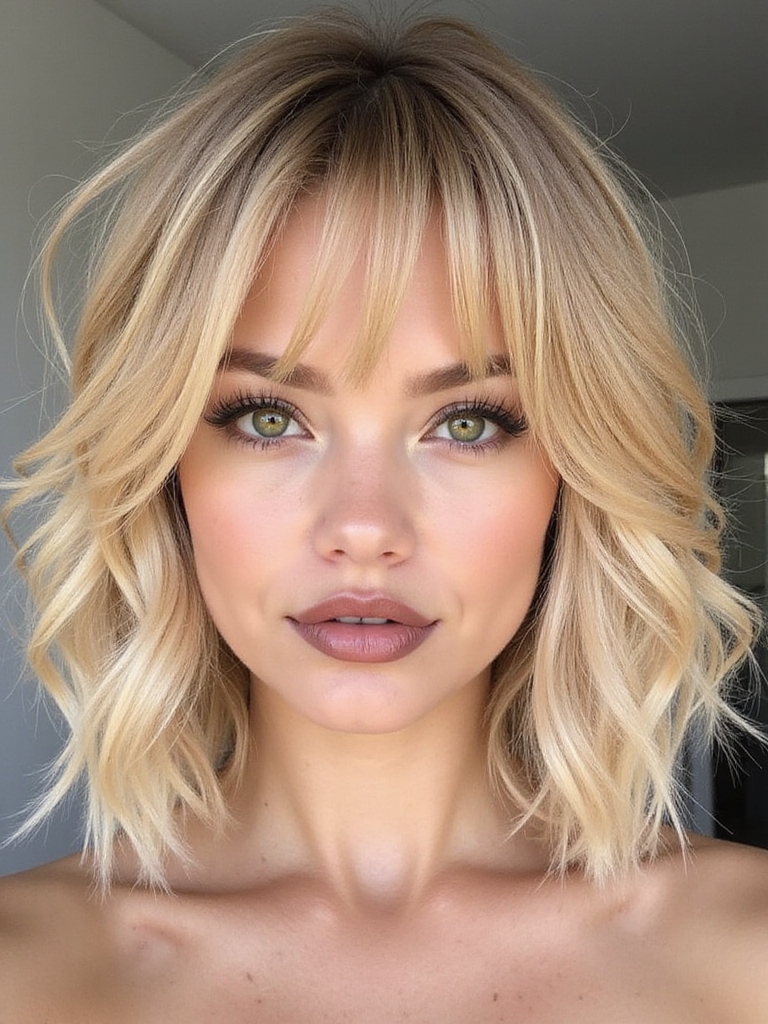
A medium shag is low-maintenance, but a little home upkeep keeps it looking sharp between salon visits. The crown layers soften first, so that’s where attention goes.
A Little Upkeep Goes Far
Refresh flat roots with dry shampoo and a texture-spray mist, and re-energize the layers with a quick diffuse or a few wand-bends. A leave-in keeps the ends from going dry and stringy.
When the shape really starts to soften, a quick dusting trim restores the crown texture without a full cut. That’s the whole routine; the shag doesn’t ask for much.
What to Weigh Before Your Shag

Before you commit to a medium shag, a few honest questions save regret. First, how much do you really want to style? The shag is low-effort, but it does want a little texture spray and a scrunch.
Ask Yourself First
Second, how is your texture? Fine hair needs gentle layering over aggressive thinning, or the ends go stringy. And third, are you patient about grow-out, since layered cuts go through an in-between stage.
If you can answer those comfortably, a medium shag is one of the most rewarding cuts there is. If not, a softer layered cut might suit you better.
Celebrity Shag Inspiration

Medium shags turn up constantly on red carpets and in magazines, and those looks are great inspiration when you focus on the cut rather than the famous face. Notice the length, the amount of texture, and where the fringe sits, since those are the details that translate to your own hair.
The styling matters too: a sleek shag and a tousled one are the same cut finished two different ways. Bring the qualities you like to your stylist as qualities, and let them adapt the idea to your texture and face.
- Borrow the length, texture, and fringe, not the celebrity
- Notice how the shag is styled, sleek or tousled
- Let your stylist adapt the idea to your hair
Budget-Friendly Styling Tips

A medium shag is kind to your wallet as well as your morning. Because it’s built to air-dry, you skip the cost of fancy hot tools and the time they take. One good texture spray and a leave-in cover most of what it needs, and a drugstore version of each works fine.
You can also stretch the time between full cuts by learning a tiny dusting trim of the fringe at home, and by refreshing the layers with product rather than booking a blow-dry. The shag’s whole ethos is doing more with less.
- Air-drying skips the cost and time of hot tools
- One texture spray and a leave-in cover most needs
- Stretch full cuts by dusting the fringe at home
Embracing the Transformation

Cutting a medium shag is a real change, and leaning into it is half the fun. There’s something freeing about a cut that’s meant to look a little undone, since it takes the pressure off making it perfect.
Many of my clients tell me the shag changed how they feel about their hair, not just how it looks, because it asks them to relax and let the texture do its thing. Give it a couple of weeks to learn how it falls, play with the styling, and let the cut become yours rather than a copy of the photo.
- A shag rewards a relaxed, light hand
- Give it two weeks to learn how it falls
- Make it yours instead of copying the photo
Textured Headbands and Clips
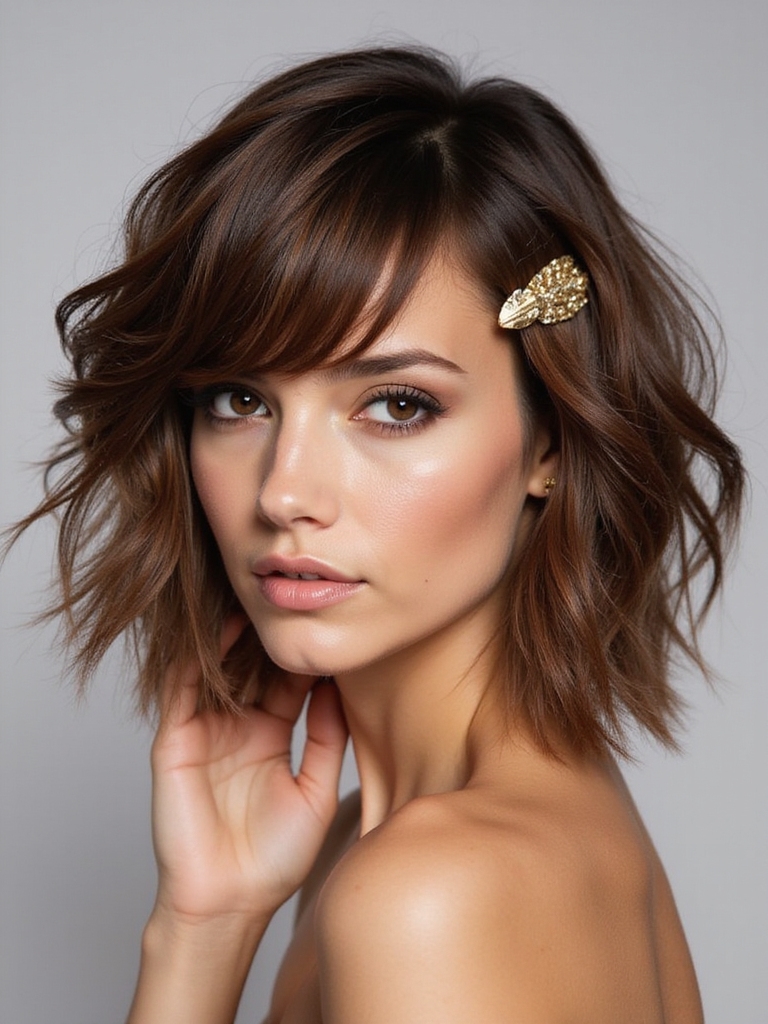
Accessories earn their keep with a medium shag, especially during the grow-out stage when the fringe gets long and the layers soften. A textured headband or a couple of clips pull the fringe back while keeping the volume.
Style and Rescue in One
Claw clips are perfect for a quick half-up that shows off the layers, and a scarf tied at the crown dresses up an undone shag in seconds.
Beyond the practical, accessories are an easy way to change the look day to day, which suits the shag’s playful, low-effort spirit.
Essential Products for a Shag

A medium shag needs only a handful of products, and the theme is always lightweight. The hero is a sea-salt or texturizing spray that grips and separates; add a light mousse for crown volume and a leave-in or cream to soften the ends.
Skip anything heavy or greasy, which weighs the layers down and kills the movement. A heat protectant is still a must whenever you reach for a hot tool, even occasionally.
- Texture spray for grip, mousse for crown lift
- A leave-in or cream to soften the ends
- Avoid heavy products that flatten the layers
The Consultation: Getting Your Dream Cut

The consultation is where a medium shag is won or lost, since so much rides on the layering being right for your hair. Bring a few photos, point out the texture and fringe you like, and be upfront about how much you’ll style it and your face shape.
Ask your stylist how they’ll place the layers and the fringe for your specific texture, and whether your hair is healthy enough for the look. A good shag specialist will tell you honestly and tailor the cut to you and your hair.
Maintenance and Care for a Medium Shag
A medium shag’s main demand is a regular trim, since the crown layers soften within weeks and take the volume with them. Book a trim every 6 to 8 weeks to keep the shape crisp, though the textured layers blur the grow-out, so you can stretch it a little if you need to. Between cuts, dry shampoo and texture spray revive the volume.
Beyond trims, keep the ends healthy with a leave-in and the occasional mask, and always heat-protect on the days you use a tool. The cut is forgiving, but the layers look their best on healthy hair. For the longer version of this cut, see our long shag guide.
Medium Shag Haircuts: Quick Answers
?What length is a medium shag?
Roughly collarbone to a couple of inches below, the sweet spot between a short shag and a long one. It’s long enough to feel soft and pretty, short enough to show off all the layered movement and crown volume.
?Does a medium shag suit fine hair?
Yes, beautifully, as long as the layers stay soft rather than over-thinned. The built-in layering creates the illusion of volume that fine, flat hair lacks; the pitfall is aggressive thinning that leaves the ends stringy.
?How often does a medium shag need cutting?
Every 6 to 8 weeks to keep the layers crisp, though it grows out more gracefully than a blunt cut, since the texture blurs the regrowth. Many people dust their own fringe between salon visits to stretch the time.
?Can curly hair get a medium shag?
Absolutely. The shag was practically made for curls, since the layers let them bounce up with definition. It should be cut dry, to the curl pattern, by a stylist who works with textured hair.
The Shag for the Rest of Us
The medium shag took a cut with a cool, exclusive reputation and made it wearable for everyone, fine hair, thick hair, straight, curly, and every face shape. It gives you volume, movement, and a little attitude, all from a low-effort routine that fits a real morning.
So if you’ve been curious but unsure a shag was for you, the medium length is your way in. Save a few photos, find a stylist who cuts them often, and bring this along. The layers will do the rest.
Next Up