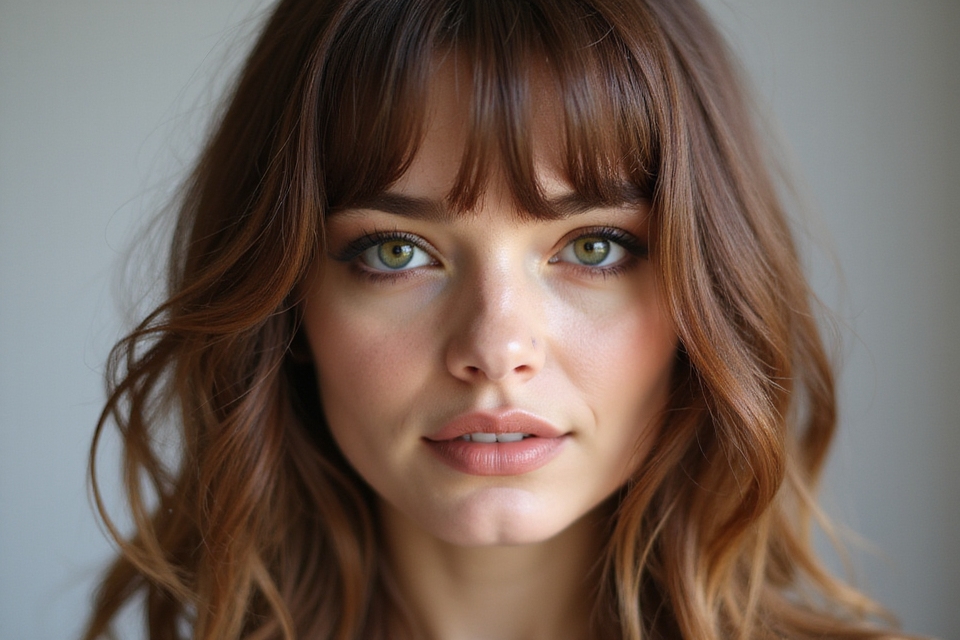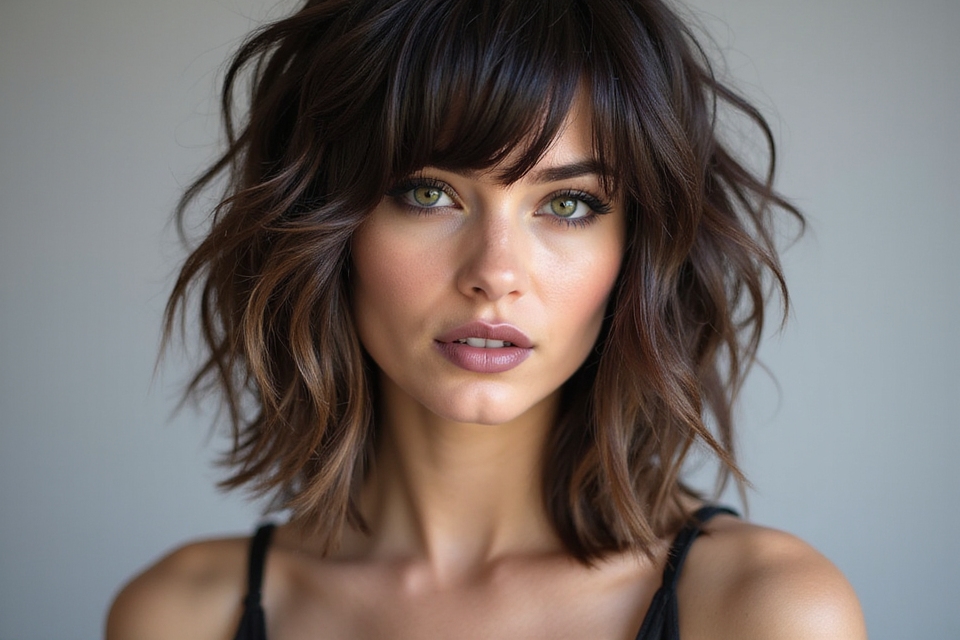

What do you do with shoulder-length hair that has gone flat and shapeless? Nine times out of ten, a wolf cut is the answer I land on. Medium hair is the natural home for this style, long enough to show off the layers and short enough to keep the crown standing up.
It is the version I cut most often, and the one I would point a first-timer toward. You get all the texture and edge of the trend without the commitment of going short or the styling weight of going long. Here is how a wolf cut on medium hair comes together, from the lifted fringe down to those curved, feathered ends.
Medium Wolf Cut Quick Notes
- A medium-length wolf cut sits between the chin and collarbone, with a heavy layered crown, a soft fringe, and choppy ends that curve in or flick out.
- It is the most forgiving length to start with, flattering on most faces and textures and quick to style with a texture spray and your fingers.
- Budget roughly $65 to $110 for the cut and plan a shaping trim every eight to ten weeks to keep the layers crisp.
The Evolution of a Rebellious Cut
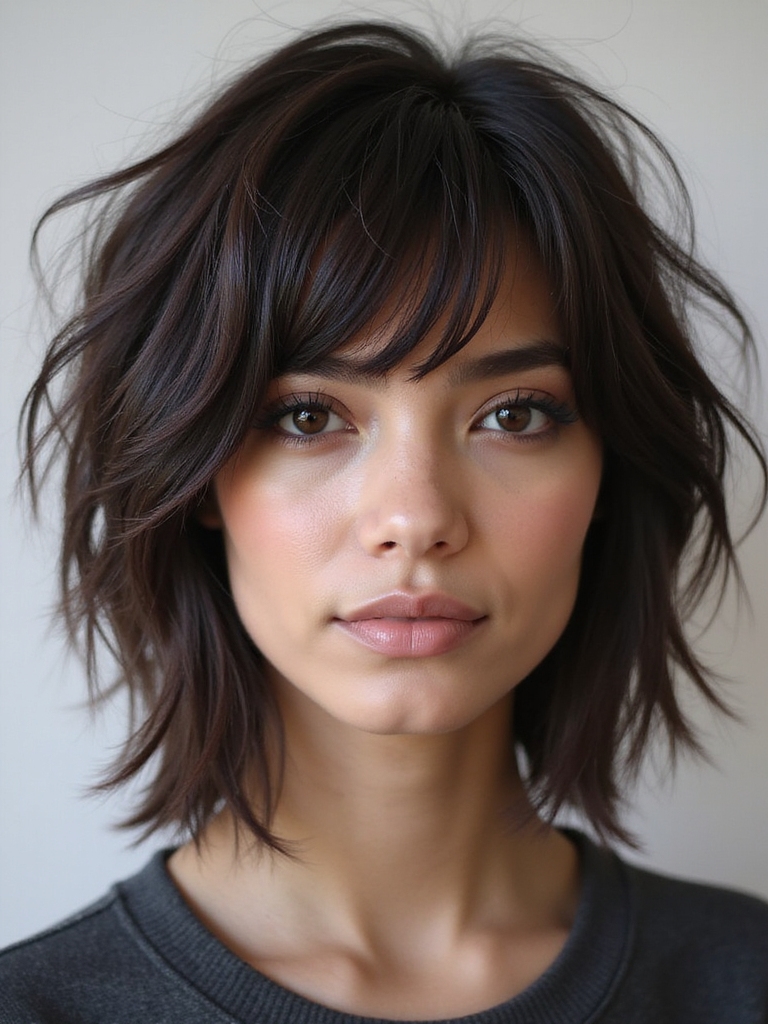
The wolf cut did not invent itself overnight. It is the latest step in a long evolution of shaggy, layered cuts, pulling the feathered crown from the 1970s shag and the choppy attitude from the mullet, then settling them onto a length most people can actually wear to work.
That medium length is what made it spread. The shorter versions ask for nerve and the longer ones ask for patience, but a shoulder-grazing wolf cut asks for almost nothing except a willingness to look a little undone. That accessibility is why it jumped from social feeds onto real heads so fast.
Edgy Layers That Add Volume
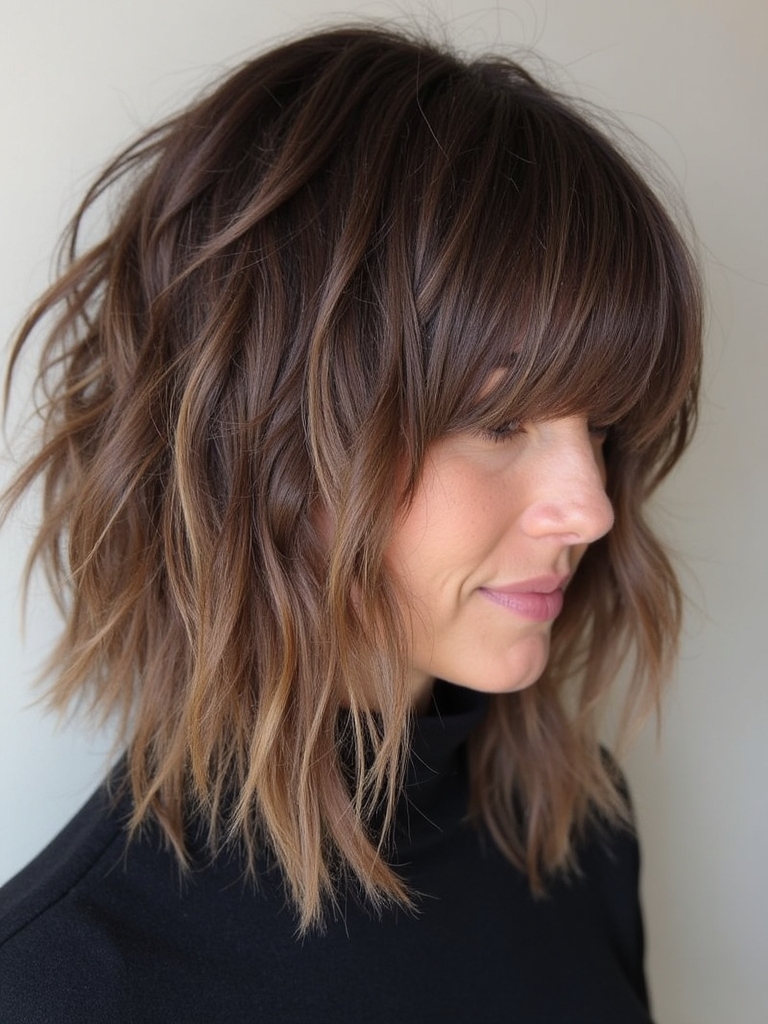
At medium length, the layers do something specific: they fight the flatness that shoulder-length hair is famous for. Heavy, blunt mid-length hair tends to sit there like a helmet, hanging in one solid sheet that swallows any movement, and the wolf cut breaks all of that up from the inside by carving out internal layers that let the hair separate and lift.
Here is what the layering buys you:
- Crown volume where medium hair usually collapses, lifting the roots and adding height.
- Movement through the lengths, so your hair swishes with life when you turn your head.
- Built-in shape that holds even on day two, since the cut does the styling work for you.
| Cut | Best for | Upkeep |
|---|---|---|
| Medium wolf cut | Volume, edge, movement | Trim every 8 to 10 weeks |
| Blunt lob | Sleek, polished look | Trim every 6 to 8 weeks |
| Medium shag | Soft texture, less drama | Trim every 10 to 12 weeks |
What Makes a Medium Wolf Cut
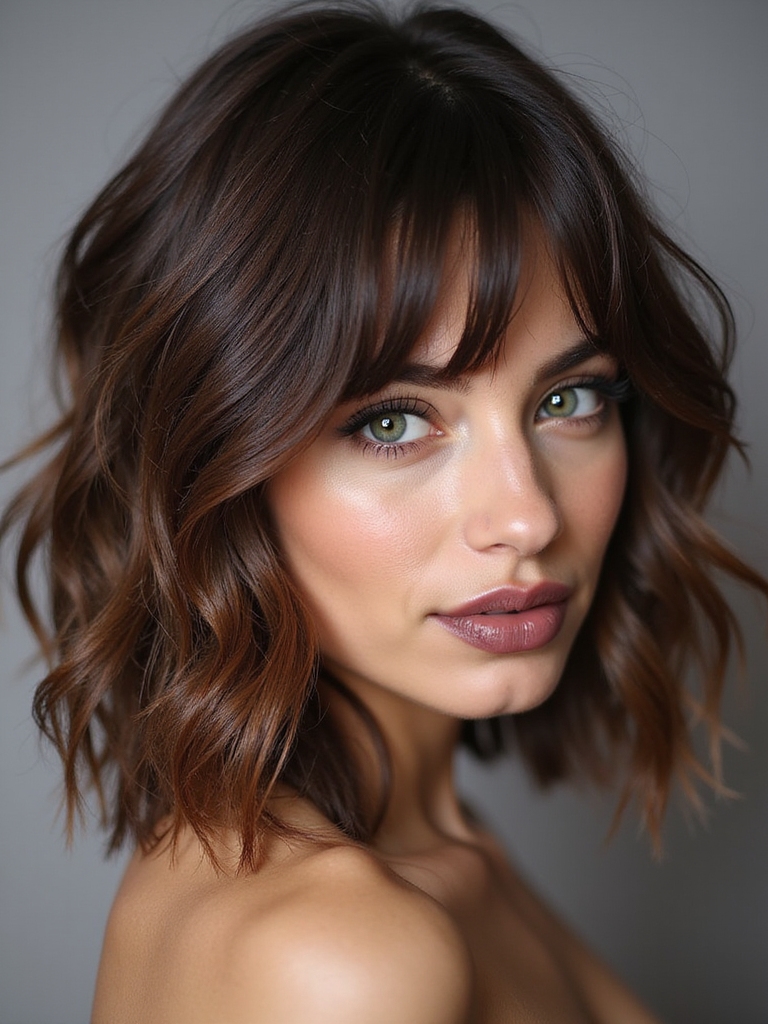
A medium wolf cut has three working parts. The crown is layered short and stacked for lift, the fringe frames the face, and the lengths are sliced into separate, piecey ends that you can curve in or flick out.
Three Parts That Matter
The sweet spot for the bottom usually lands right around the collarbone. That length is long enough to show the layers cascading and short enough that the crown keeps its height.
What separates it from ordinary medium layers is the contrast. The crown is full and the ends are wispy, so the eye catches the texture and edge a tidy, blended trim simply lacks. The classic wolf cut shows that contrast at its boldest.
Textured Layers for Shoulder Length
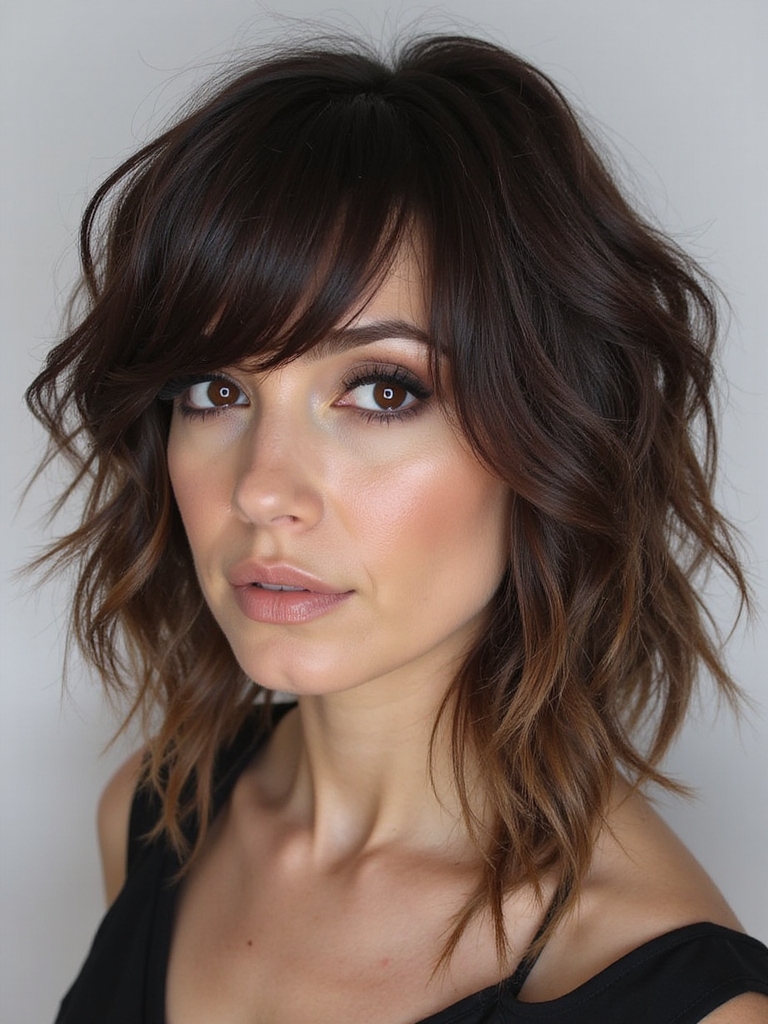
Shoulder-length hair has a problem the pros call the shelf. The moment your hair hits your shoulders, it kicks out or flips up in a way you did not ask for. Texturizing the layers is how a good stylist solves it.
By slicing the ends and varying the layer lengths, the hair gets permission to bend in several directions, which breaks up that single uniform flip and turns the awkward shelf into intentional, piecey movement you actually want.
It also keeps medium hair from looking heavy. Thick hair especially benefits, since the internal layering removes weight and lets the curved ends bend back up with some lightness.
👍Why people love it
- +Adds volume to flat, shoulder-length hair
- +Fast to style and forgiving day to day
- +Grows out softly into ordinary layers
👎Worth knowing
- –Needs regular trims to stay choppy
- –Sliced ends show dryness without care
- –Hard to cut well yourself; book a pro first
How the Fringe Shapes the Cut

The fringe is half of what makes a wolf cut a wolf cut. On medium hair it ties the short crown layers into your face and keeps the style from reading as plain shoulder-length hair with a few layers thrown in.
Pick a fringe that fits your face and your morning:
- Curtain bangs part down the center and sweep out, the softest and most forgiving choice. The curtain bangs pairing is the most popular by far.
- Wispy, piecey bangs match the choppy layers and grow out without a hard line.
- A heavier fringe makes more of a statement but wants a tidy-up every couple of weeks.
Transforming Into a Wolf Cut
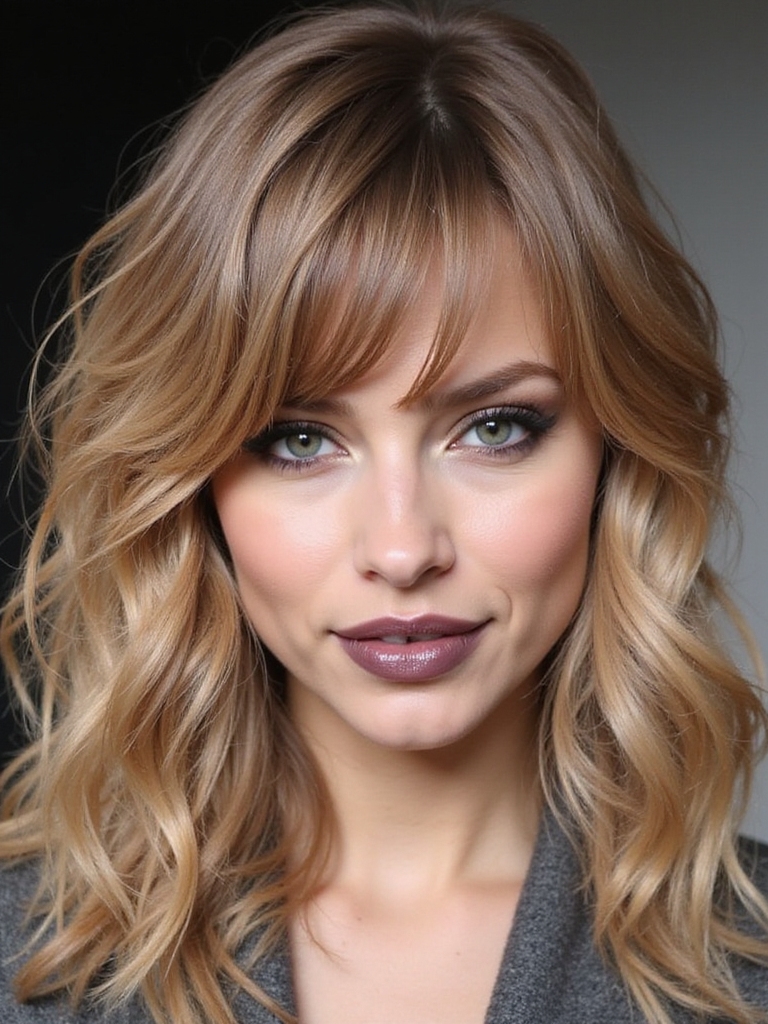
Most people come to a medium wolf cut from boring, grown-out layers or a blunt lob that lost its shape. The good part is that you barely lose any length, since the transformation is about adding layers and a fringe more than cutting it short.
If you are nervous, ask for a soft version on the first visit. A lighter layering and a longer fringe give you the shape to live with, and then, once you have seen how it falls and dries and behaves on an ordinary Tuesday, you can come back and go choppier with full confidence. Easing in beats over-cutting and regretting it.
Stylist Tip
On the first visit, ask for a softer, longer-fringe version. You can always go choppier at the next appointment, but you cannot un-cut an aggressive first attempt the same day.
Who Should Be Bold With It
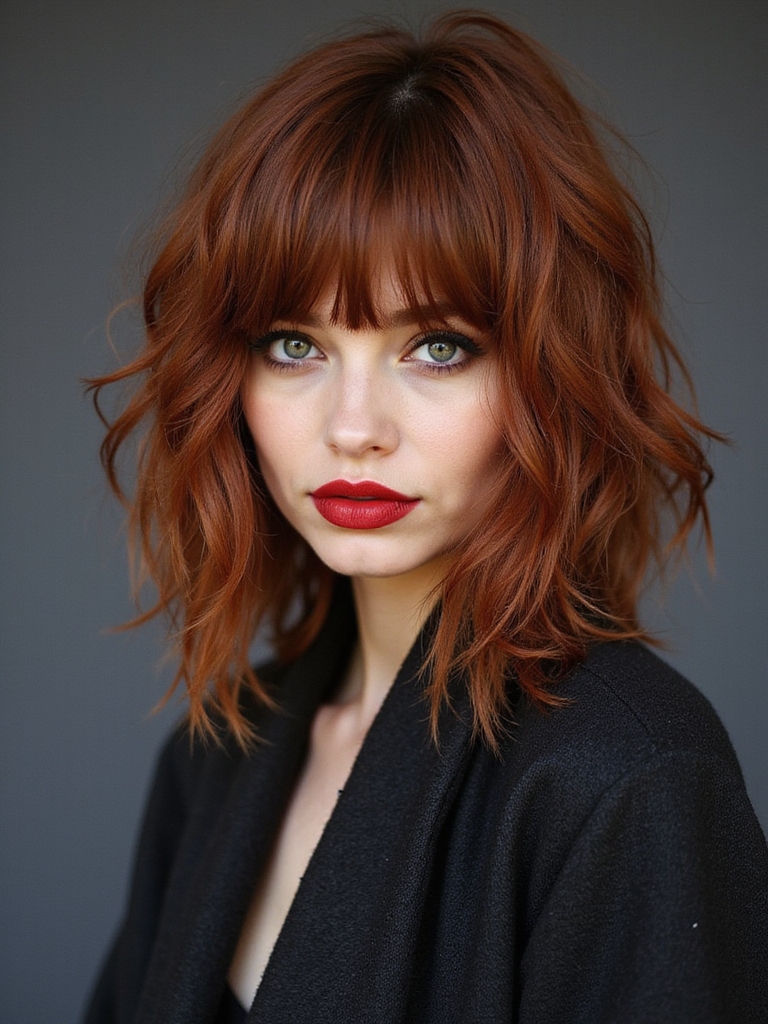
Medium wolf cuts suit a wide range of people, which is why I cut so many. If your hair is thick and you are tired of it sitting heavy, the layers will feel like a relief, and the curved ends finally get to move.
When to Go Choppier
Wavy hair is almost made for this length, since the natural bend separates the layers on its own. Fine hair can wear it too, as long as the layering stays light enough that the ends keep some body, and the lift built into the crown turns out to be a real gift for anyone whose roots go flat by midday.
Go bolder if your lifestyle backs it up. The choppier, more disconnected versions look incredible but suit people happy to scrunch in product and let the texture show.
Styling for Your Own Individuality
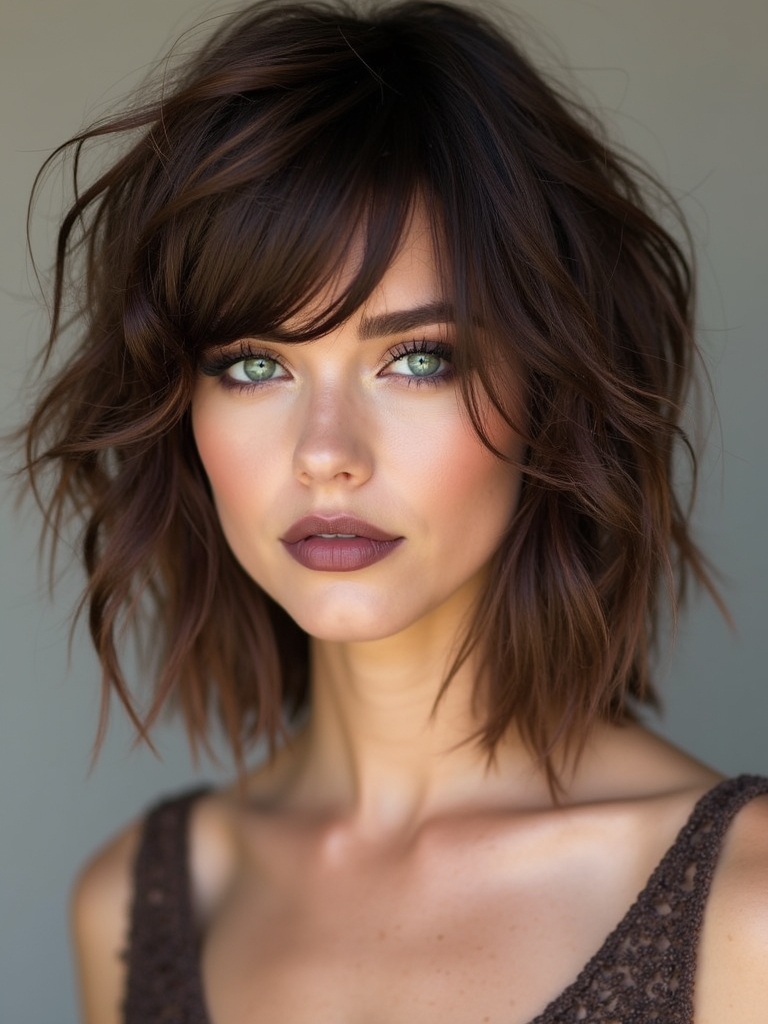
The same medium wolf cut can look completely different on two people, and that is the point. How you style it is where your own personality shows up.
One Cut, Many Moods
Push the crown high and rough up the ends for an edgy, gone-to-a-show feel. Or smooth everything down, curve the ends under, and the very same cut turns soft and polished for the office.
What surprises people is how little it takes to switch between the two. A change of parting and sixty seconds of product moves the look from sweet to fierce.
Not sure which medium wolf cut to ask for? Match it to your hair.
🎯Fine, flat hair
Go for a shorter, layered crown and lighter ends to get the most lift.
🎯Thick, heavy hair
Ask for deeper internal layers to remove weight and free the curved ends.
🎯Wavy hair
Keep it simple; let the natural bend separate the layers and add a salt spray.
Volume Up Top, Tapered Ends

The defining silhouette of a medium wolf cut is the imbalance between top and bottom. You want real height and fullness at the crown that tapers down to thin, wispy, almost pointed ends.
Where It Can Go Wrong
That taper is built by point-cutting, where the scissors go into the ends vertically to thin them out and soften the line. Done well, the ends look feathery and separated.
Getting the balance right is the hardest part of the cut, which is why the crown is worth leaving to a pro. I have re-cut more than a few triangle-shaped wolf cuts where someone built big volume up top but left the ends blunt and heavy, and the whole shape collapsed into a pyramid the second it dried.
The Hair Products That Help

A medium wolf cut runs on a tiny product kit, which keeps the look easy and cheap to maintain. You are mostly chasing separation and a little grit.
Three things cover almost every day:
- A texturizing or sea-salt spray for the piecey separation that defines the cut.
- A light mousse or root foam at the crown for the lift medium hair needs.
- A pea-sized smoothing serum for the ends on humid days, so wispy stays soft rather than frizzy.
Mastering the Carefree Look

The carefree, just-woke-up version is the most popular way to wear a medium wolf cut, and the easiest. Rough-dry your roots upside down, mist some texture spray through the mid-lengths, and scrunch with your hands. That is the whole routine, start to finish, usually under five minutes.
The part most people miss is to do less. Medium hair holds the cut’s shape on its own, so over-styling fights the look it is supposed to have. Touch it in the morning, then leave it alone, and let day-two texture do the heavy work for you.
Customized Wolf Cut Styles by Texture
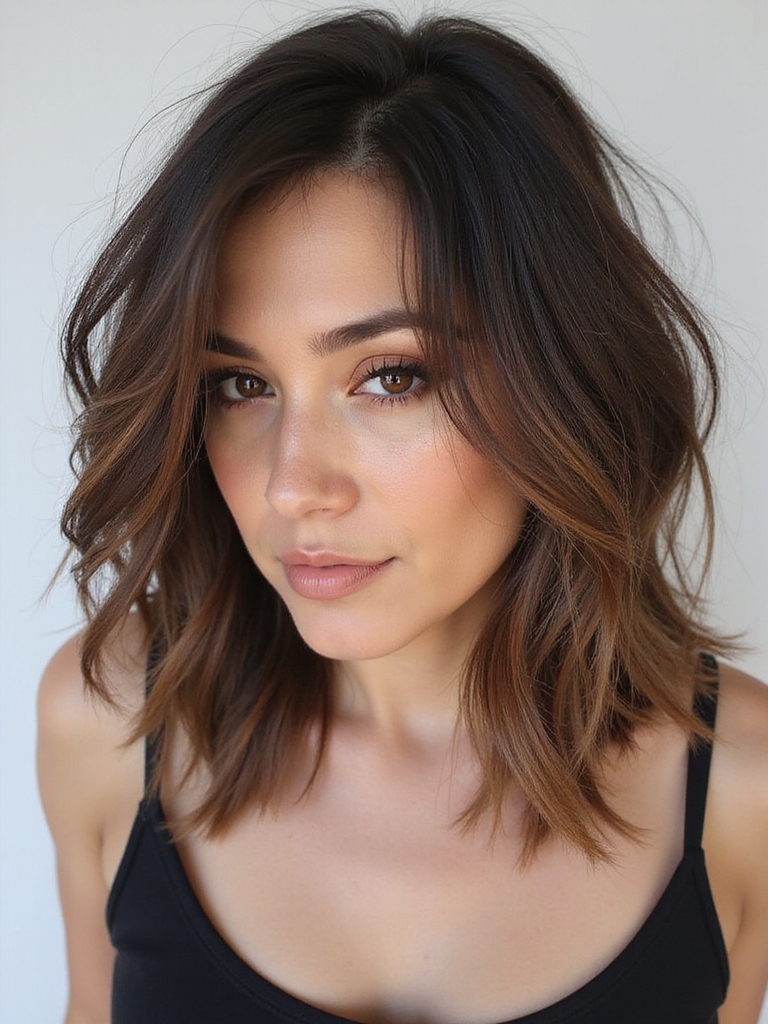
A medium wolf cut is tailored to what your hair already does, so the same name looks different across textures. Here is how it plays out:
- Straight hair needs point-cut ends and a little texture spray so the layers separate cleanly, with no stair-step lines.
- Wavy hair is the easy mode, with the bend doing the separating for you, much like the wolf cut for wavy hair.
- Curly and coily hair does best cut dry, coil by coil, so the layers land where your shrinkage actually falls.
Shaggy Layers and Soft Finishes

Not every medium wolf cut has to look feral. The softer, shaggier finish is a favorite for people who want texture with a gentler edge, closer to a medium shag than a mullet. Build it like this:
- Blow-dry with a round brush, curving the ends under for a soft, gentle bend.
- Use a light cream in place of a salt spray, so the layers stay piecey but smooth.
- Leave the crown with just a little lift, enough to keep the shape without going spiky.
Celebrity Medium Wolf Cuts

The medium length shows up everywhere once you start looking, which makes finding reference photos easy. Save a few you love and bring them in, since a picture says more than the words wolf cut ever could.
When you gather references, look for these clues:
- Photos that show the back and sides, so your stylist sees how the layers fall all around.
- Examples on hair like yours in texture and thickness, which matters more than the celebrity.
- A range from soft to bold, so you can point to exactly how choppy you want to go.
How to Maintain the Cut
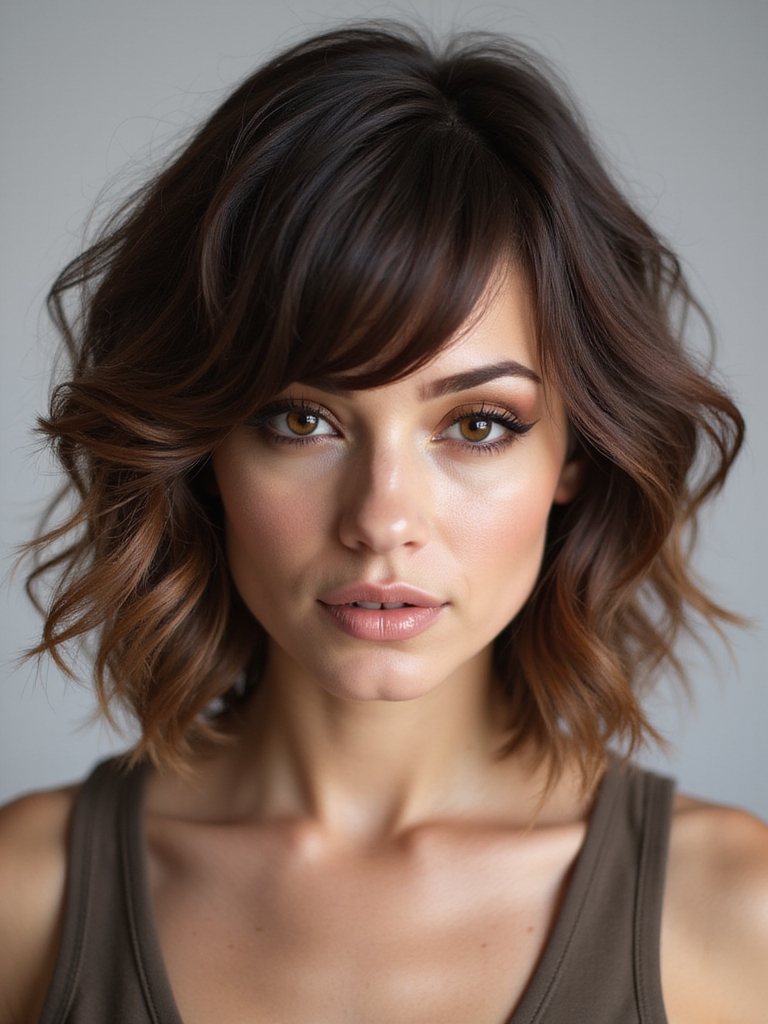
Medium wolf cuts are low fuss, but the layers do soften over time and need a refresh. Booking a shaping trim every eight to ten weeks, usually $45 to $60, keeps the choppy ends crisp and the crown lifted.
Push the trims too far and the cut blurs into ordinary medium layers, which some people actually like as a grow-out. Either way, healthy ends matter, so keep a leave-in or light mask in rotation to fight the dryness sliced ends are prone to.
Between visits, light fringe trims at home are fine, but leave the layering to a pro. The internal crown work is the piece almost no one can cut accurately on themselves.
Styling With Contrast and Texture

Contrast is where a medium wolf cut gets interesting. Playing smooth against rough, or a sleek crown against piecey ends, gives the look a depth that a one-note style lacks.
A few contrast tricks to try:
- Smooth the crown and rough up the ends for a polished-on-top, wild-on-the-bottom feel.
- Tuck one side behind your ear and leave the other loose for deliberate asymmetry.
- Pair sleek, straight lengths with a piecey, textured fringe so the contrast lands right at your face.
Colorful Takes on a Wolf Cut

Color and a medium wolf cut work well together, because the layers give the dye somewhere to show off. Even a subtle treatment looks intentional when it catches the piecey ends.
Color directions worth considering:
- A money-piece around the fringe lights up the face-framing layers for the least commitment, roughly $60 to $90.
- A soft, hand-painted balayage melts down through the layers and grows out cleanly, usually $150 to $250.
- A shadow root over brighter mid-lengths gives shoulder-length hair real depth and stretches the time between root touch-ups.
Face-Framing Layers for Medium Hair
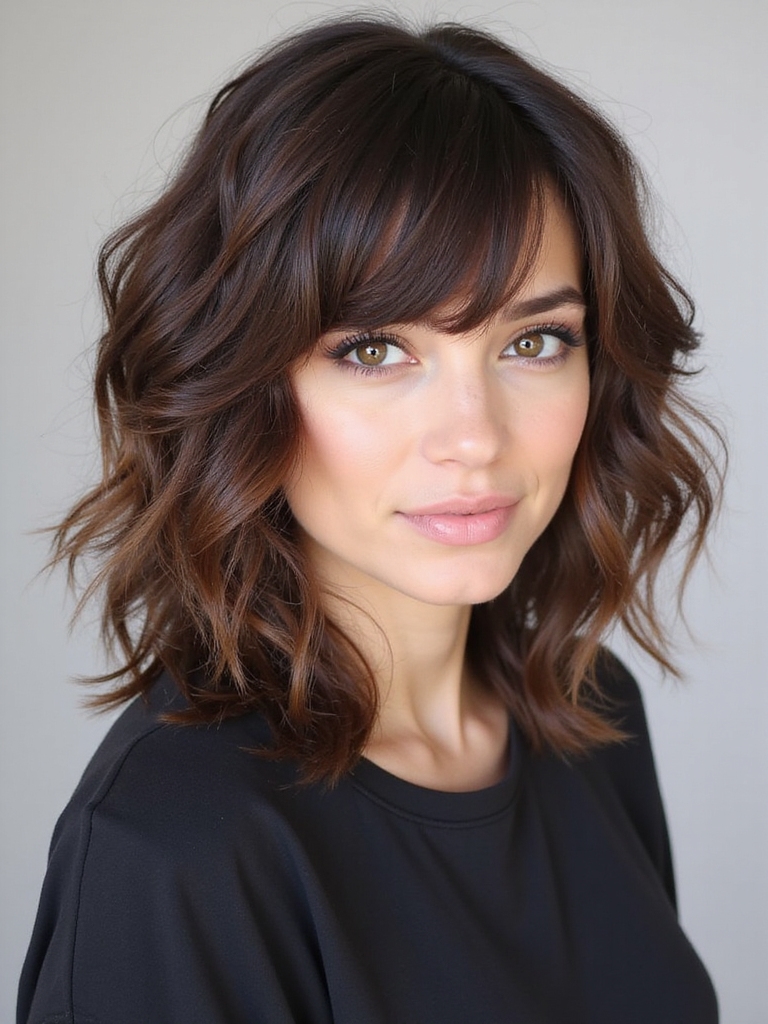
The face-framing pieces are the most flattering part of a medium wolf cut, and worth getting right. They are the shorter pieces that land along your cheekbones and jawline, pulling attention toward the middle of your face.
Where the Framing Should Land
On a round face, longer framing pieces add a slimming vertical line. On a long face, a fuller fringe and framing closer to the cheekbone keep things balanced.
Tell your stylist where you want the shortest framing piece to land. An inch makes a real difference, and it is the detail people most often forget to ask for.
The Power of Your Hair Parting
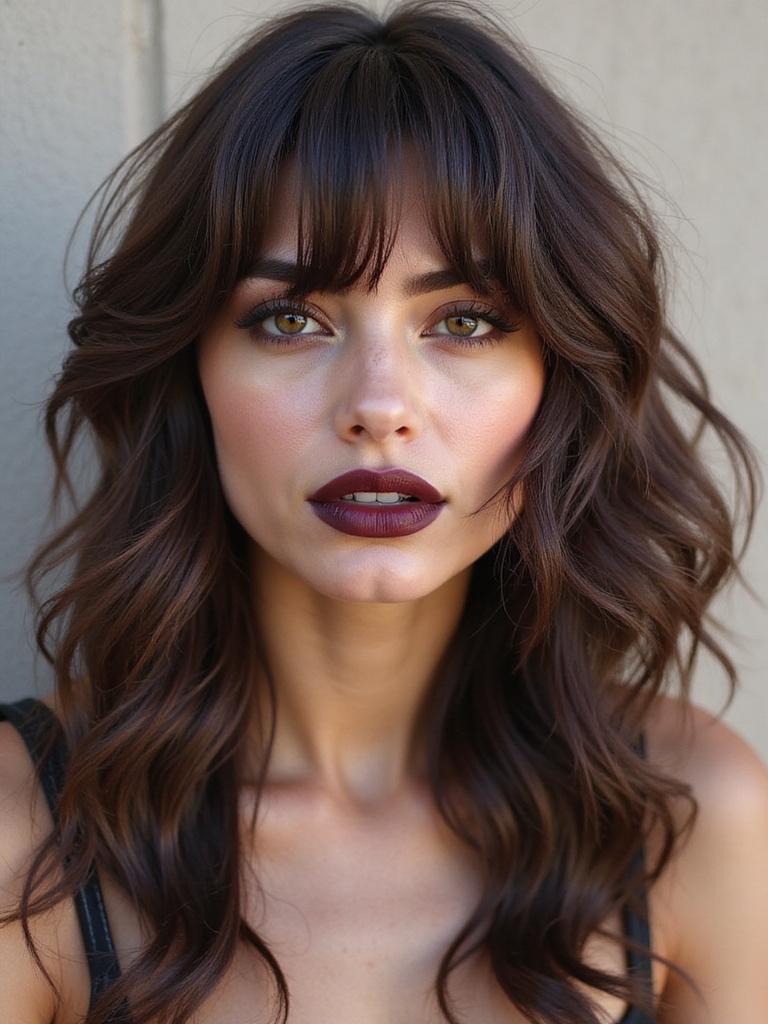
Your parting changes a medium wolf cut more than almost anything else, and it costs nothing. A quick switch resets the whole vibe:
- A middle part plays into the curtain-fringe, soft-and-symmetrical version of the cut.
- A deep side part adds drama and crown height, perfect for a dressed-up night.
- A zigzag or messy part breaks up flatness and buys extra volume on a lazy day.
Essential Tools for Styling
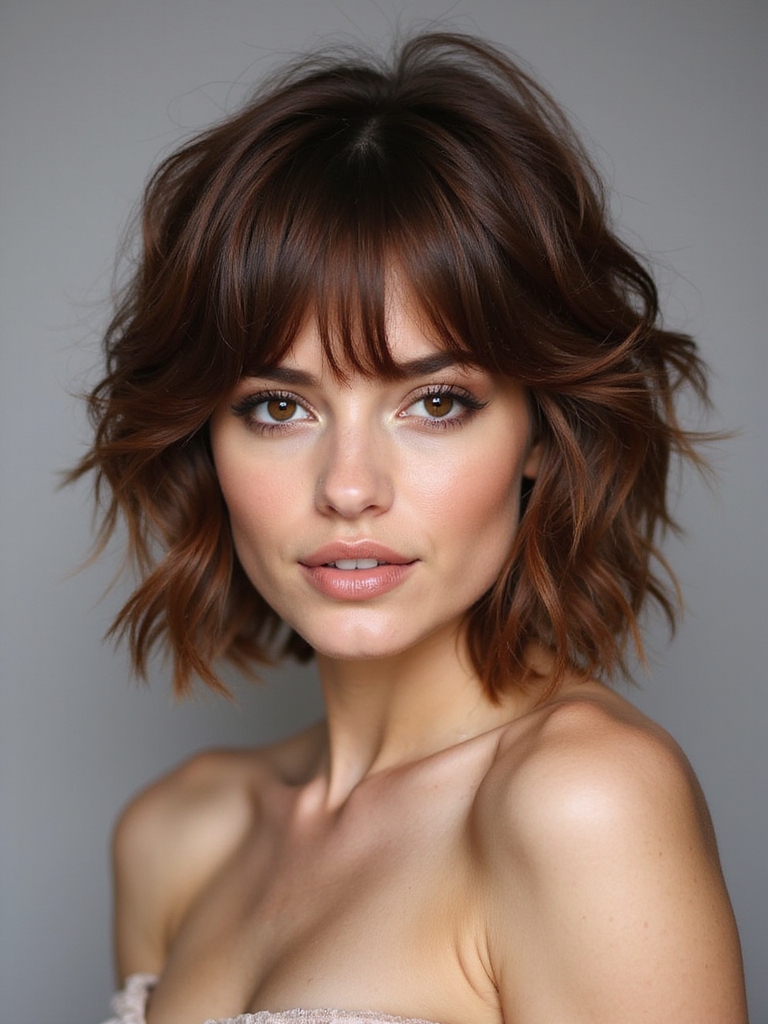
A medium wolf cut does not demand much hardware, which keeps the look low effort. A short tool kit handles nearly every style you will want.
The Short List
A medium round brush is the workhorse, building crown volume and curving the ends in or out. A diffuser helps if your hair waves or curls, setting the layers without roughing them up.
Past that, a wide-tooth comb for gentle detangling is all most people need. Skip the heavy arsenal; this cut is meant to be quick.
Seasonal Wolf Cut Tweaks

Medium hair reacts to the weather, so small seasonal tweaks keep the cut looking its best all year. The soft, curved-end take is the one filling my books this season, well ahead of the cropped look:
- Summer: let the humidity work for you with a salt spray and an air-dry, no hot tools required.
- Winter: after a beanie, a burst of dry shampoo and a finger-scrunch at the roots brings the lift back.
- Spring and fall: trade rich oils for a light leave-in so the ends stay soft and the layers keep moving.
Layered Movement With Real Bounce
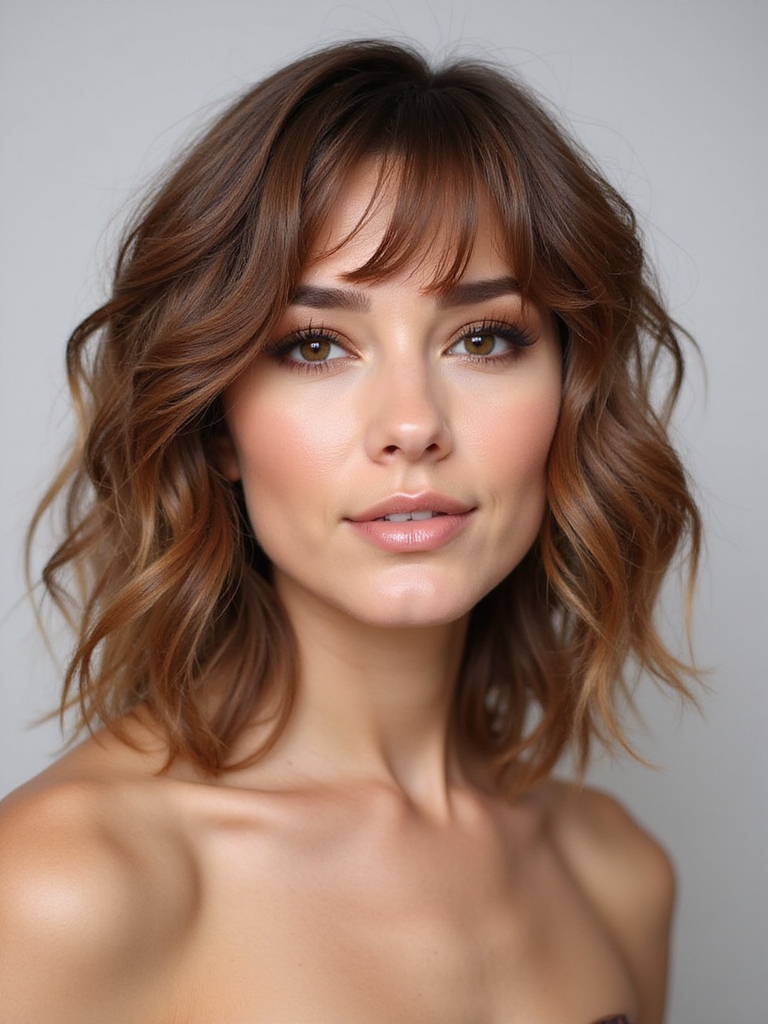
The bounce is the part people fall in love with. A medium wolf cut should swing and move when you turn your head, and that liveliness comes from the layering plus a little styling.
Keeping the Swing
Curving the ends, whether in or out, gives the movement somewhere to go. A round-brush bend or a quick pass with a curling iron on the bottom few inches is usually enough.
Keep the lengths light and conditioned so the bounce stays. Heavy product or dry, damaged ends kill the movement faster than anything, which defeats the whole point of the cut.
Wearing the Cut With Confidence

A wolf cut rewards a little confidence, and medium length makes that easy to find. Because it is the most wearable version, you get the edge without feeling like you have to perform it.
Give It a Day
The first day can feel like a lot of texture, which throws people. Give it one wash. By day two the layers settle, the shape relaxes, and most clients tell me that is when they fell for it.
Wear it like you meant it, because you did. The cut looks best on someone who lets it be a little messy and stops fussing it into submission.
Accessories for a Wolf Cut
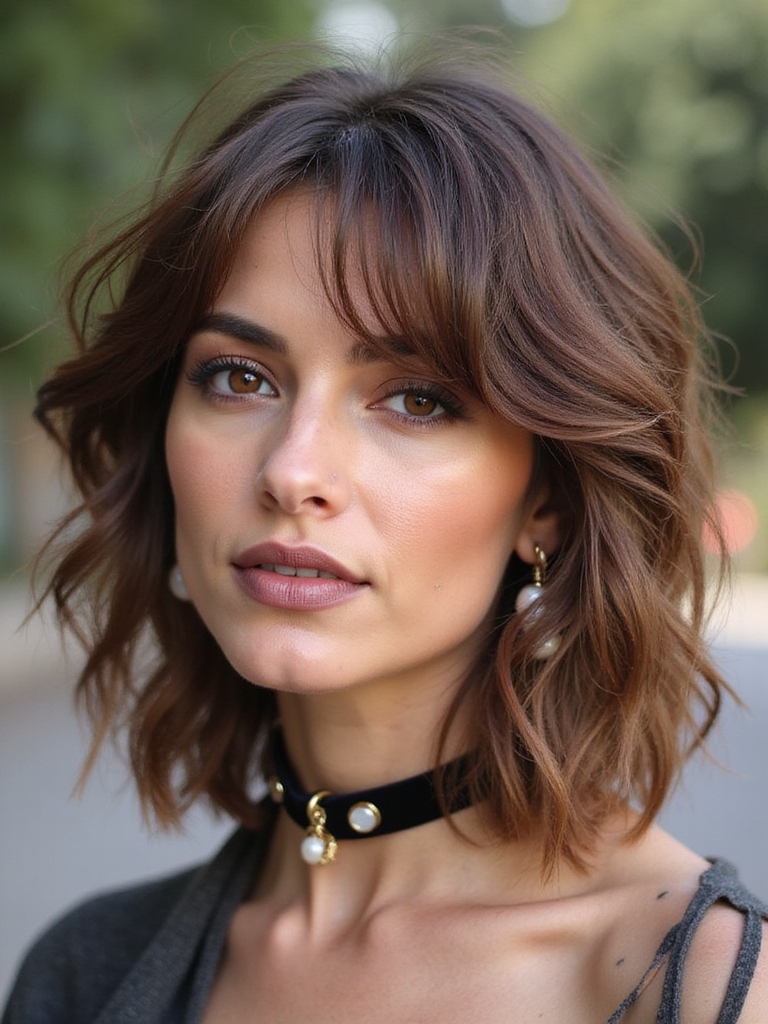
Medium hair and wolf-cut texture take accessories well, and they buy you an extra day between washes when the crown drops. Keep them simple so the cut still leads.
Less Is More
Claw clips are the easy win, twisting the lengths up while the fringe and front pieces stay out to frame your face. A thin headband or a knotted scarf hides flat roots on a low-effort morning.
For something subtle, a couple of pretty pins push the fringe back during an awkward grow-out. The texture does the talking; the accessory is just the accent.
Medium Wolf Cut Questions
?How long is a medium wolf cut exactly?
It usually falls between the chin and the collarbone, with the longest pieces grazing the collarbone. That range is long enough to show the layers and short enough to keep crown volume.
?Will it work on fine hair?
Yes. Ask for lighter layering so the ends keep some body, and the crown lift will actually help flat, fine hair look fuller.
?Why does my shoulder-length hair flip out?
That is the classic shoulder shelf, where hair kicks out as it hits your shoulders. Texturized wolf-cut layers break that up so the ends bend on purpose, scattering the flip in several directions.
?How do I keep the curved ends?
Bend the ends while they are still warm from the dryer or iron and let them cool in place, which locks the shape far better than shaping cold hair ever will. Healthy, lightly conditioned ends hold the curve longer too.
?Can I cut a medium wolf cut myself?
Get the first one done by a pro who can set the crown and layers. Once the shape exists, light fringe and face-framing trims at home between visits are reasonable.
The Easiest Wolf Cut to Love
If you have wanted to try a wolf cut but felt unsure about going short or long, medium length is the place to start. It hands you the crown volume, the fringe, and the curved, feathered ends with the lowest risk and the easiest daily routine of any version.
Save the looks here that caught your eye, then bring two or three photos to a stylist who can read your hair in person. Bookmark this page so the upkeep, product, and styling notes are right there when you are deciding how bold to go.
More Looks Worth Saving