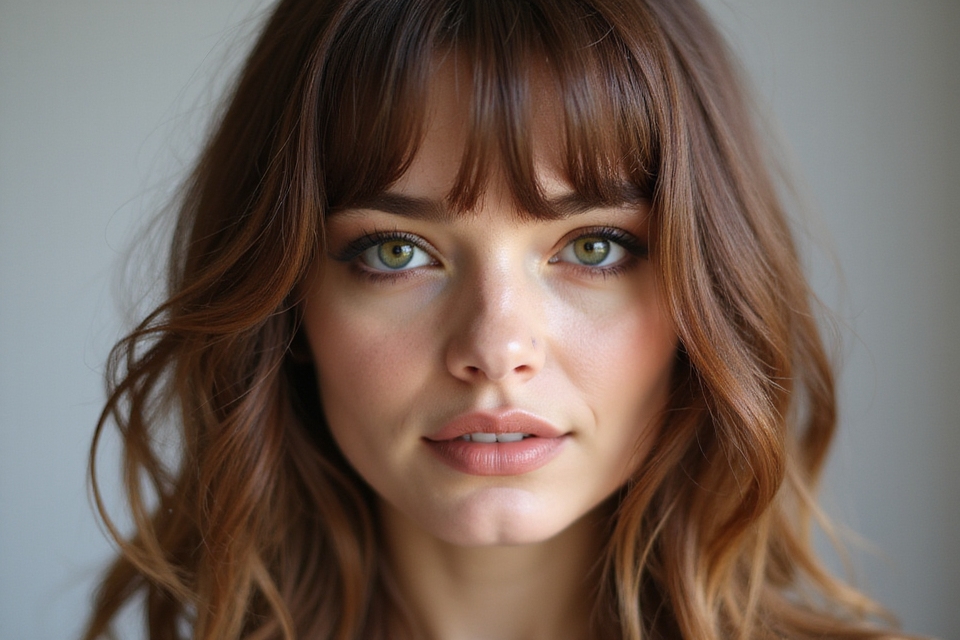

Picture the woman who flat-irons her waves for twenty minutes every morning, then watches them frizz by lunch. For years that was a lot of my clients, and honestly, me. The shag is the cut I send them home with once they are finally done fighting their hair.
A shag works with the texture you already have and plays it up. That is the whole pitch: less time, less heat, and hair that looks intentional precisely because it is a little undone. Here is how to make it work for your hair type, your face, and your actual mornings.
Match The Shag To Your Hair
| If you have | Ask for | Why it works |
|---|---|---|
| Fine, flat hair | Layers and crown texture | Fakes volume with no product |
| Curly hair | A dry-cut curly shag | Lets curls spring, cuts the frizz halo |
| No time | A wash-and-go shag | Air-dries into shape in minutes |
A Timeless, Adaptable Cut

The shag has been around since the 1970s and never fully left, which tells you something. Trends that survive fifty years do it by adapting, and the shag adapts to almost anyone: curly or straight, thick or fine, long or short. For the full backstory, see the classic shag haircut.
What carries through every version is the spirit. It is a cut that looks pulled-together without looking fussed-over, and that quiet confidence is exactly why women keep coming back to it decade after decade.
Shags Embrace Your Natural Texture

Most cuts ask your hair to behave. A shag does the opposite, building the style around whatever your hair does on its own.
Working With What You Have
Layers release weight so curls can spring. Textured ends play up your wave pattern. Face-framing pieces fall the way your hair already wants to fall. The cutting is customized to your texture, head by head.
When the cut honors your texture, styling stops being a daily battle. That is the thing clients tell me changed their whole relationship with their hair.
| Face shape | Layer placement | Effect |
|---|---|---|
| Oval | Balanced, all-over layers | Keeps natural proportions |
| Round | Longer face-framing pieces | Adds length |
| Square | Soft, feathered layers | Softens the jawline |
A Guide To Shag Layers

Layers are the whole technology of a shag. Short pieces at the crown create lift, longer pieces toward the ends keep length, and everything connects so it looks like one shape.
Where The Layers Sit
The face-framing layers do the flattering. Started at the right spot, they draw the eye and balance your features. This is the part worth getting from someone who cuts shags often.
On an oval face, balanced layers keep your proportions. Round faces gain length from longer face-framing pieces, and square jaws soften under feathered layers. Placement is everything.
Transforming Curls With Layers

Curly hair and shags are a brilliant match, as long as the cutting is done right. The wrong layering gives you a frizz halo and a triangle shape; the right layering lets your spirals bounce.
In my chair I cut curly shags dry, so I can see exactly how each curl falls before committing. That is how you keep the shape from shrinking up shorter than anyone wanted. Browse more curly hair shapes for ideas.
- Dry cutting so the layers fall true to your curl pattern
- Internal layers to release weight and spring the curl
- Less length removed than you expect, since curls shrink
A little shag vocabulary for the chair.
📖Face-framing layers
Shorter pieces cut around the face to flatter your features.
📖Point cutting
Cutting into the ends at an angle for a soft, textured finish.
📖Dry cutting
Cutting hair dry to see how curls and layers actually fall.
📖Money piece
Two brighter highlights framing the face.
A Shag For Fine Hair And Volume

Fine hair is where the shag really earns its keep. Strategically placed layers create the look of volume without a single product, by removing weight from the ends and building texture at the crown. The hair settles into its own lift so it stops hanging flat. It is the closest thing to thick hair you can fake with scissors alone.
- Layers remove weight so ends do not drag flat
- Crown texture builds height where fine hair needs it
- Movement passes for fullness, even on day-two hair
A Simple Shag Routine

Mornings get shorter once you stop fighting your hair. The everyday shag routine is close to nothing: spray in some water or leave-in, scrunch, and let it dry.
A quick finger-tousle usually beats a brush, which tends to break up the texture. If you have five minutes, diffuse. If you do not, air-dry and go. The cut does the work you used to do.
- Refresh with water or leave-in, then scrunch
- Finger-tousle instead of brushing to keep texture
- Diffuse for lift, or air-dry when time is short
📋Before You Book A Shag
- ✓Save two or three photos with your hair type and length
- ✓Know how much daily styling you realistically do
- ✓Decide on a fringe now or later
- ✓Find a stylist whose portfolio shows real shags
Building Movement Into The Cut

Movement is what makes a shag look alive when you have done nothing to it. Because the connected layers leave every strand a slightly different length, the hair bends and swings on its own.
Movement You Do Not Have To Create
On wavy hair the effect is strongest, since the waves catch on the layers. Even poker-straight hair picks up some swing once the weight comes out.
This is the payoff for fine and flat hair especially. The cut gives you the bounce a round brush used to, and it lasts all day with no extra effort.
Texture That Enhances Your Look

There is a reason the undone, textured look took over. It is forgiving, it suits real life, and it stops demanding the kind of perfection nobody has time for. A shag delivers exactly that texture by design.
- It forgives a missed wash day or a humid afternoon
- It flatters a wide range of faces and ages
- It frees you from daily heat styling
Which version fits your hair?
🎯Curly shag
Dry-cut layers that let spirals spring without the frizz halo.
🎯Fine-hair shag
Crown texture and weightless ends that fake volume.
🎯Wash-and-go shag
Low-layered and air-dried for the busiest mornings.
Wolf Cut Vs Shag

People mix up the wolf cut and the shag constantly, and they are cousins, not twins. The wolf cut is the spikier, more extreme relative; the shag is softer and more wearable. Here is how they actually differ.
- Length: wolf cuts keep longer layers throughout; shags favor shorter crown layers
- Origins: shags came from the 70s; the wolf cut blends a mullet with K-pop influence
- Volume: shags push crown volume; wolf cuts spread it more evenly
- Grow-out: wolf cuts grow out a little more smoothly
Adding Bangs To Your Shag

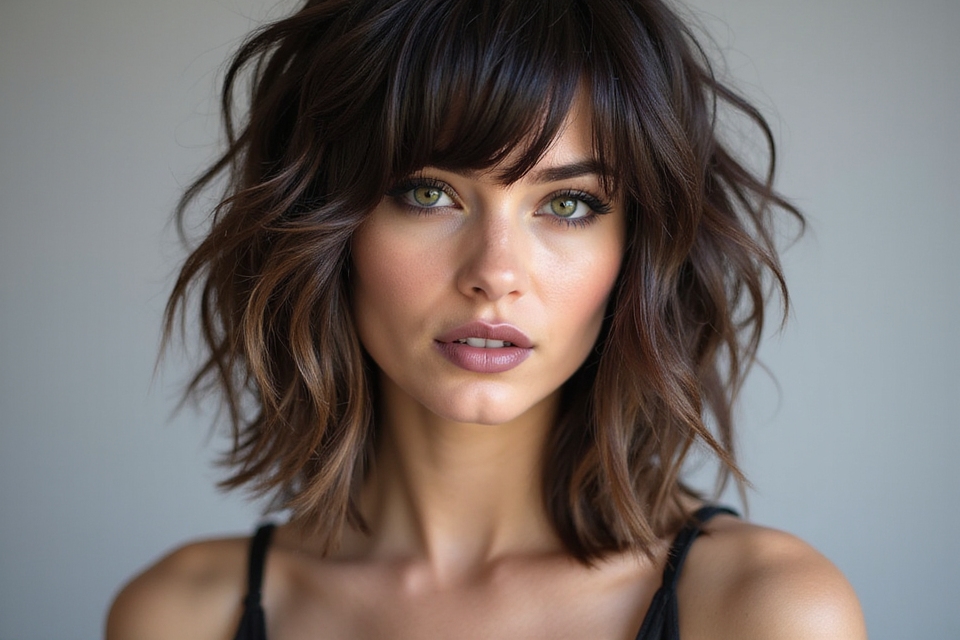
Bangs and shags belong together, and the fringe you pick sets the whole mood. Curtain bangs keep it soft and face-framing, while a micro-fringe brings unexpected edge.
The textured layers of a shag blend into almost any fringe, which is part of why they pair so well. Match the bangs to your face shape and your patience for upkeep.
Be honest about maintenance before you commit. A blunt micro-fringe needs trims every couple of weeks, while soft curtain bangs are far more forgiving as they grow.
Highlighting That Enhances Layers

Color can turn a good shag into a dimensional one, and the move is strategic highlighting placed along the layers. Light pieces woven through the cut make the movement pop.
A face-framing money piece, soft balayage that follows the cut, or a root-to-end shift all add depth. A little uneven placement actually helps, since it mimics how the sun would lift your hair. For a fuller blonde take, see the blonde shag.
- A money piece to brighten the face
- Balayage that follows the layers for depth
- A deeper root so grow-out stays soft
Celebrity-Inspired Shags To Save

Pop culture is the easiest shortcut for showing a stylist what you want, and you do not need a name to use it. You need the shape, the length, and the fringe.
Save The Shape, Not The Star
A curtain-bang shag with chocolate depth, a shoulder-skimming cut with feathery edges, a modern mullet-shag with platinum dimension, a curly shag with caramel pieces: these all land very differently. Clients bring me these screenshots constantly.
Screenshot two or three that match your hair type, ideally in natural light. A reference with your texture tells a stylist far more than a famous face with hair nothing like yours.
Finding A Stylist Who Gets Shags

A shag rises or falls on whoever is holding the scissors, so the right stylist matters more than the trendiest salon. Look for someone who clearly loves working with texture.
- Scan their portfolio or feed for real shags, healed and grown out
- Book a consultation and listen for talk about texture and movement
- Skip the fanciest chair if the passion for the cut is not there
A Quick Five-Minute Routine

Some mornings you have hit snooze three times and have exactly five minutes. The shag is built for that, and this is the routine I give clients for chaotic days.
Five Minutes, Out The Door
Spray the roots with water and scrunch the ends. Work a little texturizing product through the mid-lengths with your palms.
Finger-tousle while you blow-dry for ninety seconds, then hit the roots with dry shampoo for volume. Done, and it still looks deliberate.
Common Mistakes to Avoid
A few habits undo a good shag. The biggest is skipping trims; the layers lose their shape as they grow, and a neglected shag drifts into mullet territory around the eight-week mark. A quick dusting every six to eight weeks, usually $50 to $90, keeps it sharp.
The other traps are styling ones. Heavy products flatten the texture, flat-ironing the layers straight erases the movement, and brushing the texture out defeats the cut entirely. Treat it gently, keep the product light, and let the cut stay a touch messy. That was the whole point of getting it.
Done With Perfect, Happy With Real
The shag is not about giving up on your hair. It is about changing the goal. Instead of chasing a glassy blowout that frizzes by noon, you get a cut that looks good a little messy, works with your texture, and asks for five minutes instead of forty.
If you are tired of fighting your hair every morning, this is the cut that calls a truce. Bring a stylist a couple of photos that match your texture, ask for soft layers and a fringe, and let your hair finally do its own thing.
Keep Reading