There is a moment I have watched happen in the chair more times than I can count: a client takes down a protective style, sees her own coils spring back to life, and quietly relaxes her shoulders. Natural hair is not a problem to solve. It is a crown that happens to come in more shapes than almost any other texture on earth.
These twenty-five looks run from a wash-and-go you can do in ten minutes to braided styles with centuries of history behind them. Each one works with coily and kinky texture rather than against it, and each comes with the honest care, time, and tension notes that keep your hair and your edges healthy.
Natural Styles at a Glance
| Style family | Best for | Time and upkeep |
|---|---|---|
| Worn-out (afro, twist-out, wash-and-go) | Showing off your natural pattern | 10-40 min; refresh nightly with satin |
| Protective (braids, twists, crochet, locs) | Resting your hair, low daily fuss | 1-5 hr install; take down by 6-8 weeks |
| Sculpted (TWA, tapered, bantu knots) | Low maintenance with a bold shape | Quick to style; trim every 4-6 weeks |
The Classic Rounded Afro

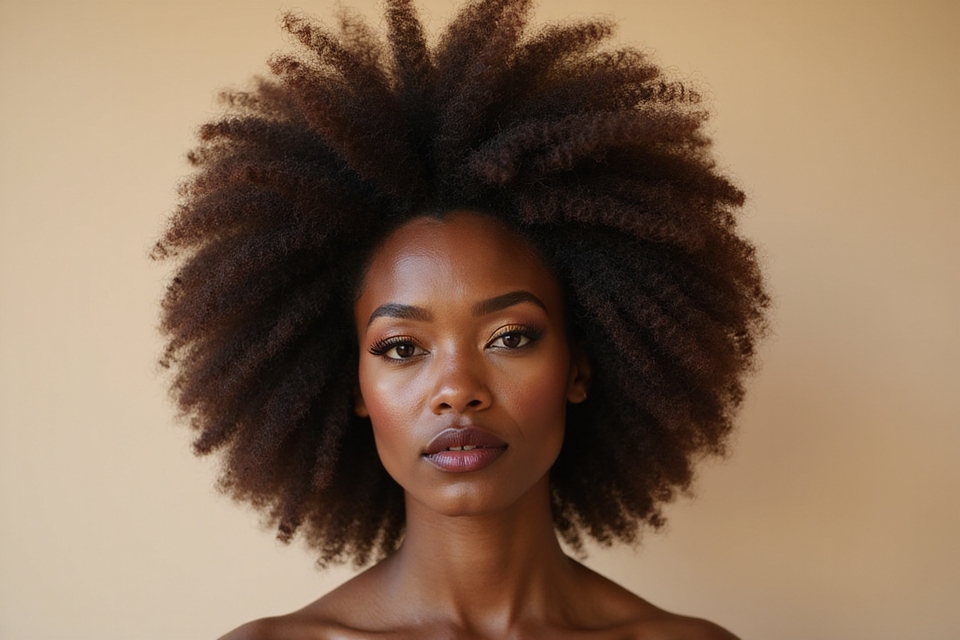
The full, rounded afro is where it all begins, hair worn out in its natural shape, picked up and out into a soft halo.
The shape comes from moisture and a wide-tooth pick, not from force. Work a leave-in and a curl cream through damp hair, let it dry, then fluff from the roots with a pick to build that even, rounded silhouette.
It suits every coily and kinky pattern, from a soft 4a to a tight 4c, and shrinkage only makes it look denser. Keep it alive with a nightly satin bonnet and a morning mist of water. For more ideas in this spirit, our black hairstyles guide goes wider.
The Twist-Out

A twist-out trades the picked-out halo for soft, defined waves and coils, and it is the style clients ask me about most. You two-strand twist damp, product-coated hair, let it dry fully, then unravel each twist into a ripple of definition.
The whole result lives in two habits: twisting on properly moisturized hair, and waiting until it is bone dry before you take it down. Unravel it damp and you get frizz instead of definition.
It stretches your shrinkage into length and lasts for days, refreshed each night under a bonnet.
A few terms that make natural styling easier to follow:
📖Protective style
Any style that tucks your ends away and limits daily handling, like braids, twists, or locs, to help retain length.
📖Twist-out
Twisting damp hair, letting it dry, then unraveling it for soft, defined waves and coils.
📖Shrinkage
The way coily hair draws up as it dries, so it looks far shorter than its actual length; a sign of healthy spring, not a flaw.
📖Edges
The fine, delicate hairline hair that is the first to suffer from too-tight styles, and worth protecting above all.
A Bold Color on Natural Texture

Color and natural texture are a beautiful pairing, since coils catch a bright or warm shade in a way straight hair cannot, scattering it across every bend. A copper, a honey, or a bold fashion tone turns a familiar shape into something new without changing the cut at all.
The honest note is that lightening coily hair takes care, because the same texture that holds color also tends toward dryness. A gentle hand and a deep commitment to moisture keep colored coils healthy.
- See a colorist who works with textured hair; lifting coils unevenly is easy to do and hard to fix.
- Lean harder into masks and leave-ins once colored, since processed coily hair thirsts faster.
- Glossed or semi-permanent color gives the look with far less stress on the strand.
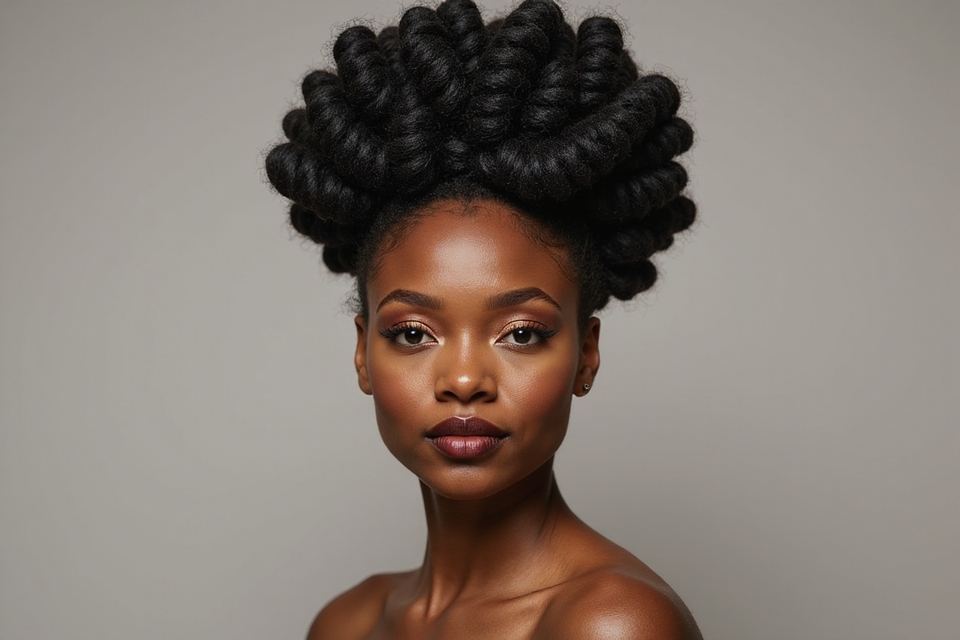
Bantu Knots

Bantu knots are small, coiled buns sectioned across the head, and they carry deep roots in southern African cultures long before they were ever a trend. Worn as the finished style, they are graphic and striking; taken down, they leave behind a soft, springy curl pattern.
Section clean, damp hair into squares, twist each section until it coils onto itself, and tuck the end underneath.
They suit every length that can wrap into a knot, and they double as a protective set worn for a few days. Keep the partings clean and the tension gentle, and our bantu knots guide walks through the take-down for curls.
Shrinkage Is a Feature
If your hair looks short when dry and far longer when stretched, that is shrinkage, and it is a sign of healthy, springy coils, not lost length.
Cornrows

Cornrows are braids worked flat against the scalp in rows, and they are one of the oldest styling traditions there is, carrying real cultural history across the African diaspora. Straight-back, curved, or laid into a pattern, they are protective, tidy, and endlessly adaptable.
The braid is built by feeding small sections of hair in as you go, keeping each row close to the scalp.
The one rule that matters most is tension. Cornrows braided too tight pull at the hairline and, over time, thin your edges, so they should feel secure but never sore. Our cornrow styles guide has more patterns to try.
A Sculpted Statement Afro

Shape a full afro deliberately, taller on top, tight at the sides, or carved into a clean line, and it becomes a sculpted statement rather than a simple wash-and-go.
- A high, rounded top with tapered sides flatters most face shapes and reads bold but tidy.
- Keep the shape sharp with a trim every four to six weeks, since coils grow up and out fast.
- Pick the silhouette out daily and moisturize, so the sculpted shape stays soft, not crunchy.
The clients with the healthiest natural hair are almost never the ones doing the most to it. They moisturize, they protect, and then they leave it alone long enough to grow.
A Versatile Everyday Look
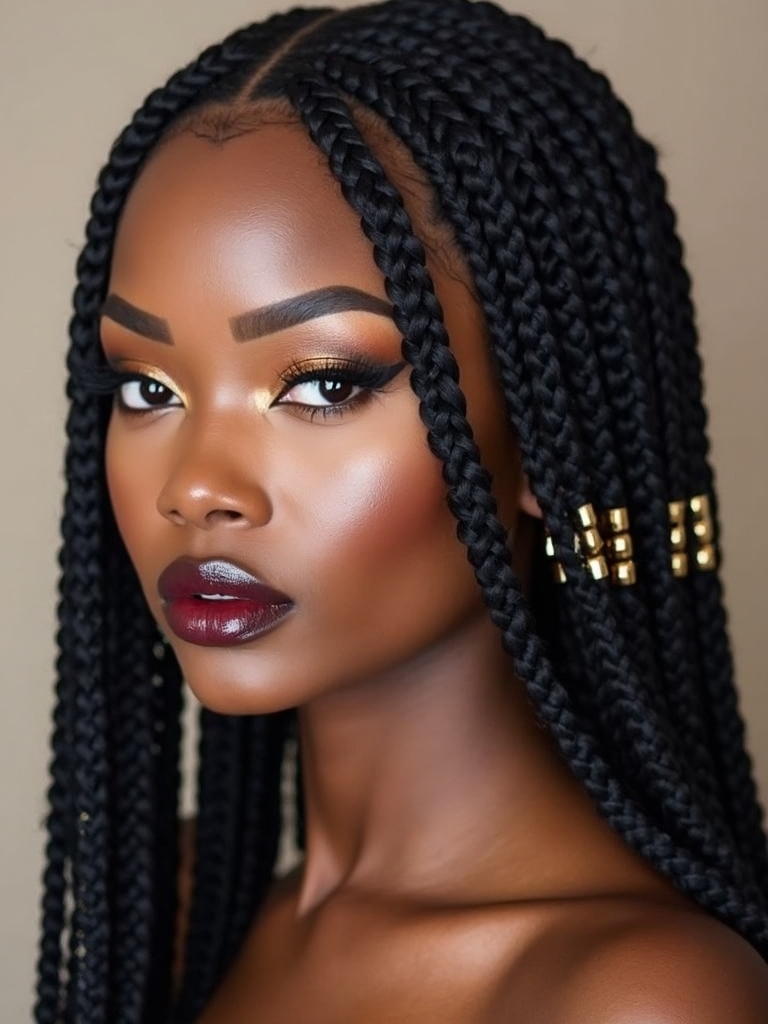
Not every day calls for a statement, and the most useful natural style is often the simple one you can wear anywhere. A half-up puff, a few flat twists into a bun, or curls pinned softly back all keep your texture on show while staying out of your way.
These everyday looks lean on the same handful of moves, gathering gently, pinning with care, and leaving the front soft. Keep any gathering loose at the hairline so the style protects your edges instead of stressing them, even on a rushed morning.
The TWA or Teeny-Weeny Afro
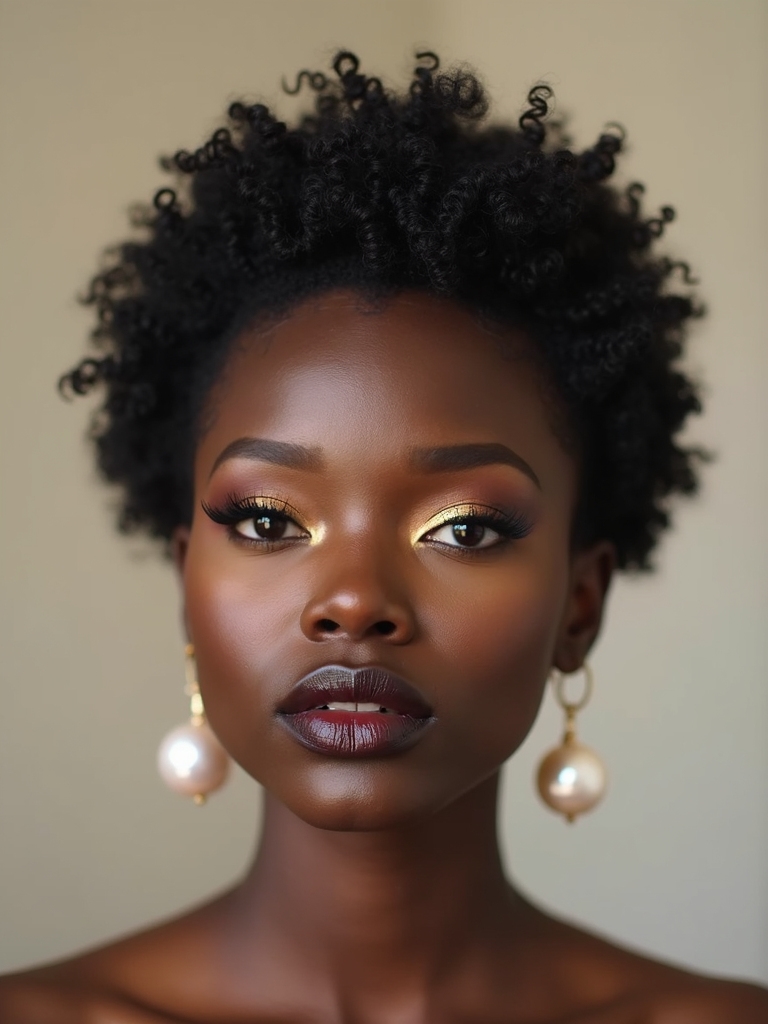
The teeny-weeny afro, or TWA, is the close-cropped natural cut that often follows a big chop, and it is anything but a compromise. Short, light, and fully your own texture, it puts your face and your coils front and center with nothing to hide behind.
It is the lowest-maintenance natural style there is, but low maintenance never means no care. A TWA still wants moisture and a gentle hand to look its best.
- Define it with a curl cream and a damp finger-coil here and there, or wear it picked out and soft.
- It is the kindest style to your wallet and your time, with a quick shape-up every three to four weeks.
- A bold lip or a pair of earrings finishes it, since a TWA leaves all the room for them.
📋Before a Braided or Twisted Install
- ✓Start on clean, moisturized hair so the style sits comfortably and lasts longer.
- ✓Speak up if it feels tight; a good braider will loosen it, and sore edges on day one are a warning sign.
- ✓Plan the take-down date now, by six to eight weeks, before new growth starts to matt at the roots.
- ✓Keep your scalp and edges moisturized while the style is in, not just when it comes out.
- ✓Choose a braider whose past work you have actually seen, especially around the hairline.
Protective Crochet Braids

Crochet braids loop pre-made hair, curly, straight, or coily, through a cornrowed base with a crochet hook, giving you a full protective style in a fraction of the install time of individual braids.
- One of the fastest protective installs, often two to four hours and around $100 to $200, which is gentle on your patience and your scalp.
- Choose a texture close to your own for the most natural blend, or go bold for an obvious change.
- Keep the cornrow base clean and moisturized, and take the set down by six to eight weeks.
Locs

Locs are sections of hair encouraged to coil and bind into permanent ropes over months and years, and for many who wear them they carry real spiritual and cultural meaning, not just a look. They are the ultimate low-manipulation style, growing and maturing into something really yours.
Gentle Roots Keep Them Healthy
The early months are the real commitment, when new locs look frizzy and unfinished on purpose while they settle.
Healthy locs come from a clean scalp and gentle roots, not constant retwisting. Retwisting too tight or too often is the fastest way to thin a hairline, so keep that tension light and let the locs do their slow, beautiful thing.
A Braided Updo

Gather braids or twists up and away from the neck and you have an updo that suits a wedding, a workday, or a hot afternoon equally well. Cornrows swept into a bun, twists pinned into a crown, or a few braids coiled at the nape all read polished with very little fuss.
The beauty of braiding before you style up is that the structure is already there, so pinning takes minutes. Vary where you gather the weight from day to day, a high bun one day, a low coil the next, so you never stress the same edge braids twice. Our braided hairstyles guide has more shapes to lift.
Defined Natural Curls

Sometimes the goal is simply your own curls at their most defined, clumped, springy, and full of life. Definition is less about a clever product and more about how you apply it: smooth and rake it through soaking-wet hair so every coil is coated, then leave it completely alone to dry.
The hardest part is really not touching it while it sets, because that is exactly what wakes up the frizz. Once it is dry, a drop of oil scrunched through softens any cast into bounce.
- Apply curl cream or gel to dripping-wet hair in sections, raking and shaping as you go.
- Dry undisturbed, by air or a diffuser on low, to keep the definition you just built.
- Refresh on day two with a water-and-leave-in mist rather than starting over.
Finger Coils

Finger coils wrap small sections of damp hair around a finger one at a time, setting each into a precise, springy coil. The result is uniform, polished definition that a wash-and-go cannot quite match, with every coil deliberate.
It is a patient style to create, since each coil is made by hand, so set aside an unhurried hour or two.
Work on freshly washed, well-moisturized hair with a curl cream or gel, and let it dry fully before touching it. On the tighter 4c textures I see most, finger coils hold especially well and last for days under a satin bonnet.
A Curl Definition Refresh

A few days into any curly style, the definition softens and a refresh brings it back without a full wash day. This is the quiet skill that makes natural hair sustainable, since nobody wants to start from wet every single morning.
Mix water with a little leave-in in a spray bottle, mist your hair section by section, and gently scrunch or re-coil the pieces that have lost their shape. A pea of curl cream on the stubborn spots revives them without weighing the whole head down.
Done at night and tucked under satin, a refresh buys you another day or two of definition.
Intricate Braided Designs

When cornrows become art, you get intricate braided designs, curves, swirls, and geometric patterns laid across the scalp that turn a protective style into something really personal. The design is mapped before a single braid goes in, much like a blueprint.
- Bring a clear reference photo, since complex patterns are planned and parted before braiding begins.
- Allow real time in the chair; detailed designs can run several hours of careful, close work.
- Keep the tension gentle even on tight patterns, and the design stays sharp for a week or two.
Two-Strand Twists

Two-strand twists are two sections of hair wound around each other from root to tip, and they are the workhorse of natural styling, worn as the finished look or taken down for a twist-out. They are gentler and faster than braids, which makes them a kind first protective style.
Worn out, they have a soft, rope-like texture; left in for a week or two, they rest your hair while you barely touch it. Our twist styles guide explores the range.
- Twist on moisturized, sectioned hair for the smoothest, longest-lasting result.
- Add a curl cream for hold, and seal the ends with a little oil so they do not unravel.
- Sleep in a bonnet to keep the twists tidy and stretch the style to a second week.
A Protective Style for Rest Days
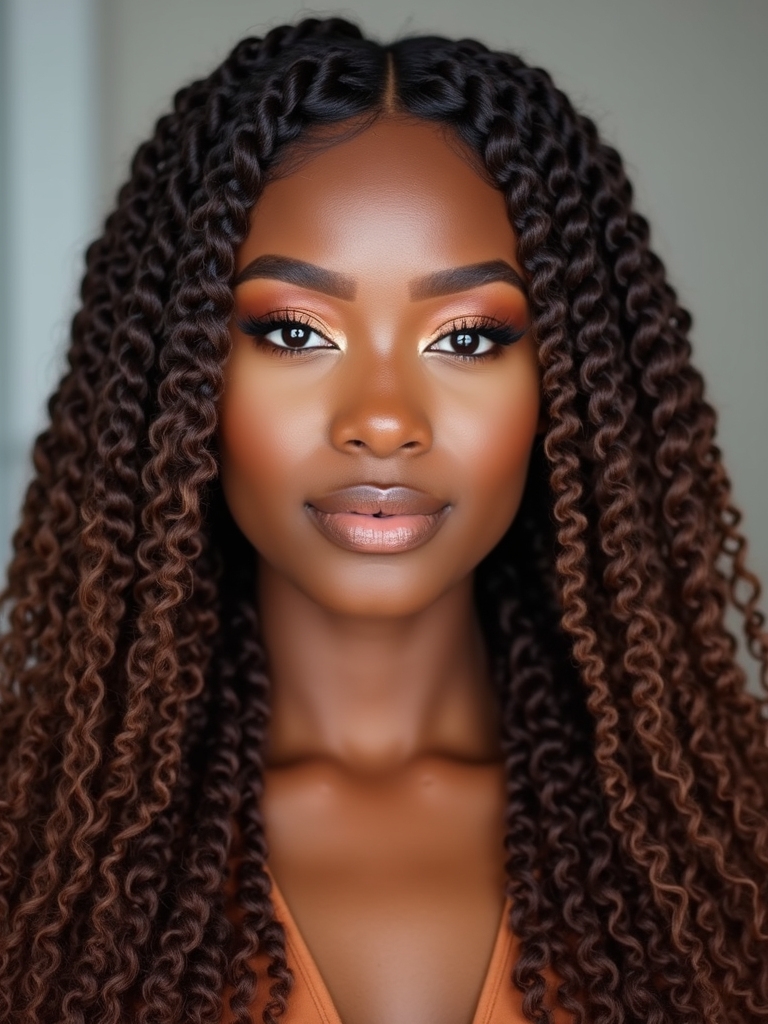
It is what I tell clients chasing length: some weeks your hair just needs to be left alone, and a simple protective style, ends tucked away, low manipulation, edges untouched, gives it the rest it needs to retain length and recover.
- Tuck your ends fully away, in a bun, a roll, or braids, since the ends are the oldest, most fragile part.
- Moisturize before you tuck, and leave the style really alone rather than restyling it daily.
- Rotate your protective styles so you are never stressing the same sections week after week.
An Elegant Braided Crown
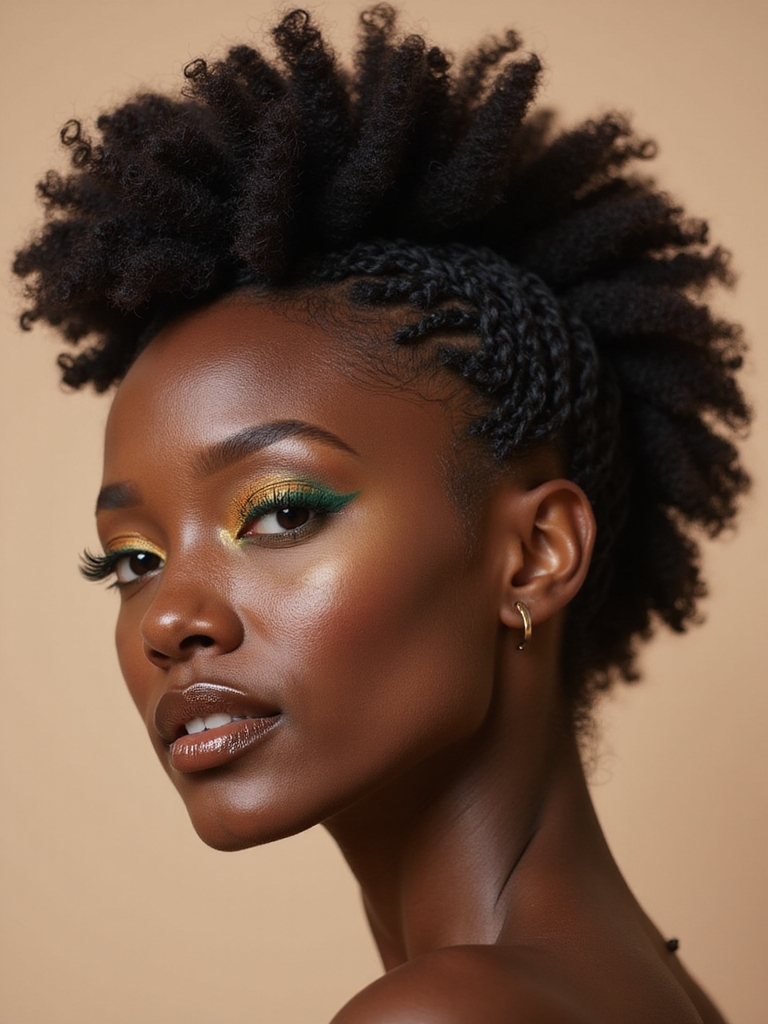
A braided crown wraps a plait or a row of braids up and around the head like a halo, and on natural hair it reads both regal and relaxed. It keeps your length tucked and protected while looking dressed up enough for any occasion that calls for it.
Because the braid is anchored around the crown, it holds all day with just a few pins. It is the look I reach for when a client wants something special that still protects her hair underneath.
- Braid loosely enough that the crown sits soft, never tight against the hairline.
- Tuck a flower or a gold cuff into the braid for an occasion, or leave it clean and simple.
- It holds for days, which makes it a quiet two-for-one of elegance and protection.
The Tapered Cut
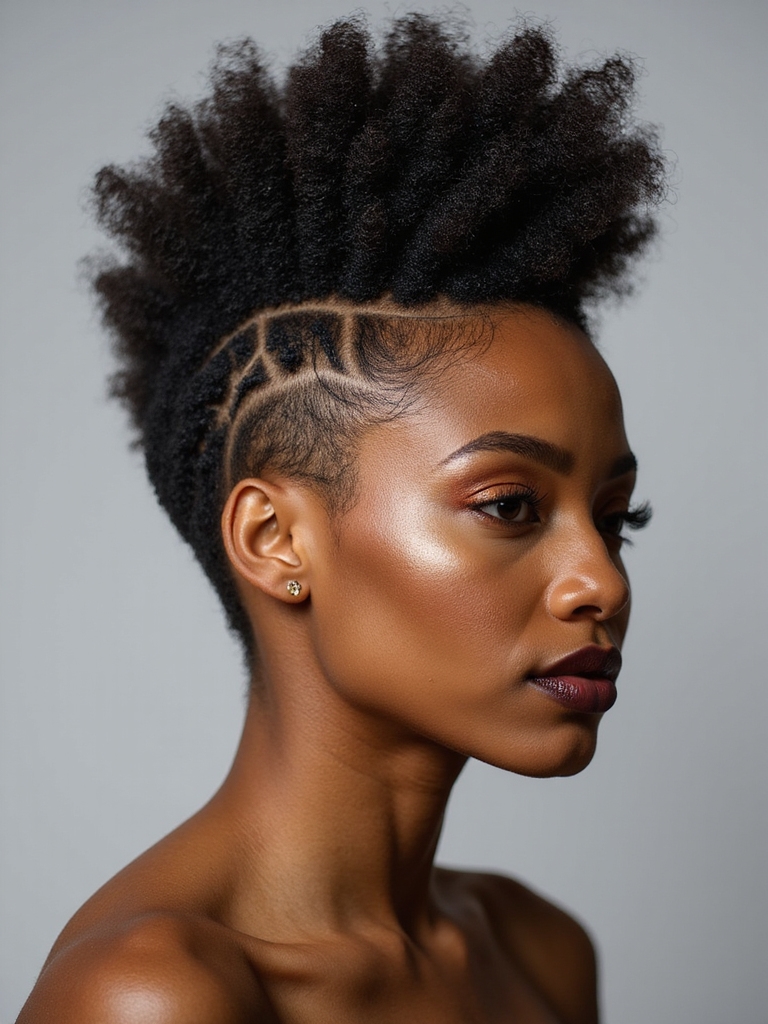
A tapered natural cut keeps length and volume on top while cutting the sides and back shorter, creating a shape that is bold, modern, and remarkably easy to wear.
- The fuller top gives you room to wear a twist-out, a wash-and-go, or a defined curl on top.
- The shorter sides are low effort, needing only a shape-up every three to four weeks.
- Ask for a taper matched to your density, so the shape reads intentional rather than uneven.
A Low-Manipulation Bun
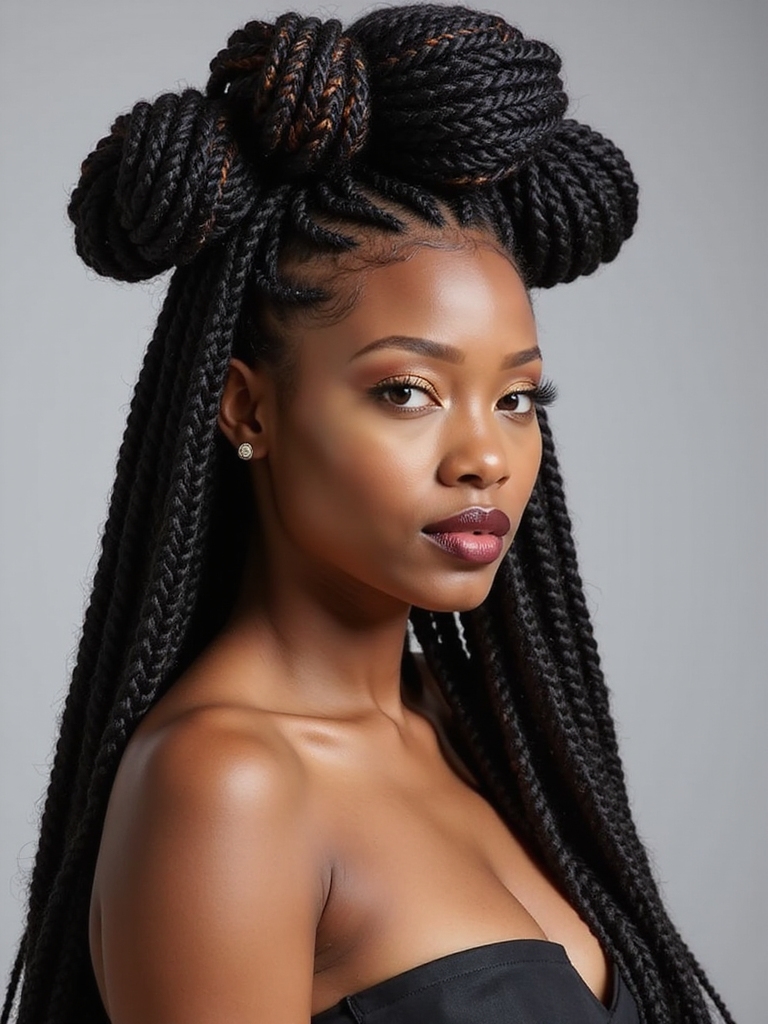
A soft bun is the natural-hair uniform for good reason: gathered gently at the crown or the nape, it tucks your ends away, stays put through anything, and asks almost nothing of you. Worn loose rather than slicked tight, it is really protective.
The whole game here is gentleness at the hairline. Use a soft scrunchie instead of a tight elastic, gather without pulling, and leave a little softness at the front so the bun frames your face rather than dragging on your edges. Done that way, it is a style you can wear again and again without paying for it.
Artistic Braid Patterns
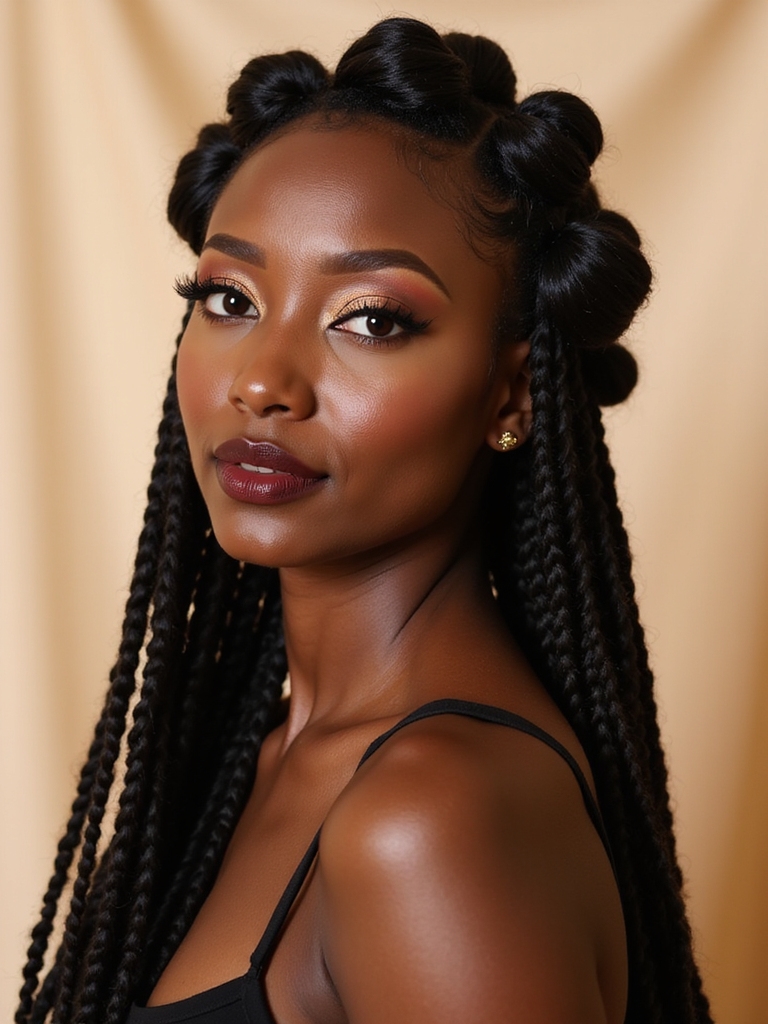
Where intricate cornrow designs carve into the scalp, artistic braid patterns play with the braids themselves, mixing sizes, curving the parts, or weaving feed-in braids into shapes that feel like a signature. It is protective styling treated as personal expression.
This is where finding a braider whose work you admire matters most, since the artistry lives entirely in their hands and their planning. Bring references, talk through your hairline and your tension comfort first, and let the design be a collaboration.
The Wash-and-Go

The wash-and-go is exactly what it sounds like and the truest celebration of your natural pattern, hair washed, product applied to soaking-wet curls, and left to dry into its own shape with no manipulation at all. On coily hair it is less about speed and more about letting your texture simply be.
- Apply a curl cream or gel to drenched hair in sections so every coil is fully coated, then do not touch it.
- Dry by air or a diffuser on low; rubbing or scrunching mid-dry trades definition for frizz.
- Embrace the shrinkage, since a wash-and-go celebrates the pattern rather than stretching it out.
Passion Twists

Passion twists use a soft, wavy braiding hair to create twists with a romantic, bohemian texture, lighter and more relaxed than the rope-like spring of regular twists. They have become a favorite protective style for good reason: they are pretty, versatile, and comfortable to wear.
The install layers added hair into two-strand twists along your own sections, and it takes time, often three to five hours, so plan an afternoon for it.
As with any added-hair style, the comfort is in the tension. They should feel secure but never tight at the roots, and a take-down by the six-to-eight-week mark keeps your own hair from matting underneath.
Braids Rooted in Heritage
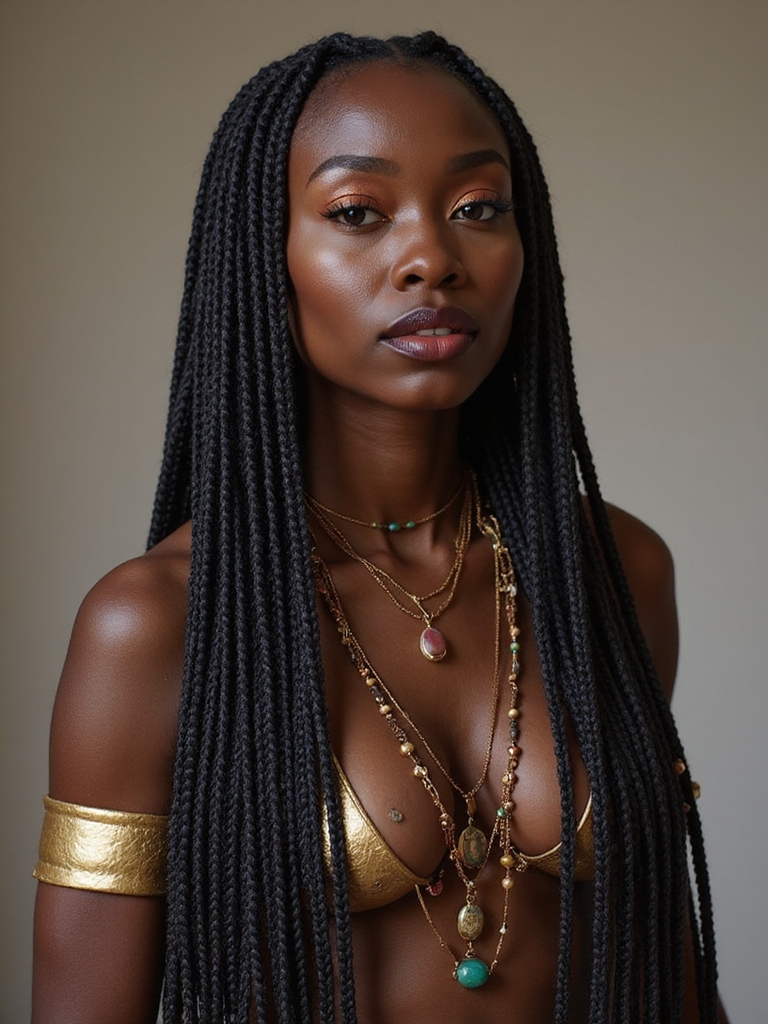
It is worth pausing on the history under all of this. Braiding is one of the oldest art forms there is, used across African cultures for centuries to signal age, status, community, and identity, long before it was ever a beauty trend. When you wear these styles, you are stepping into a living tradition.
Why These Styles Carry Weight
That history is part of what makes natural styling feel so meaningful to so many. The patterns passed from grandmother to granddaughter, the hours spent between hands, the knowledge held in a good braider, all of it is culture as much as it is hair.
You do not need to recite the history to honor it; you simply wear these styles with a little awareness of where they come from and the people who carried them here. That awareness is what turns a hairstyle into a celebration.
Natural and Undone
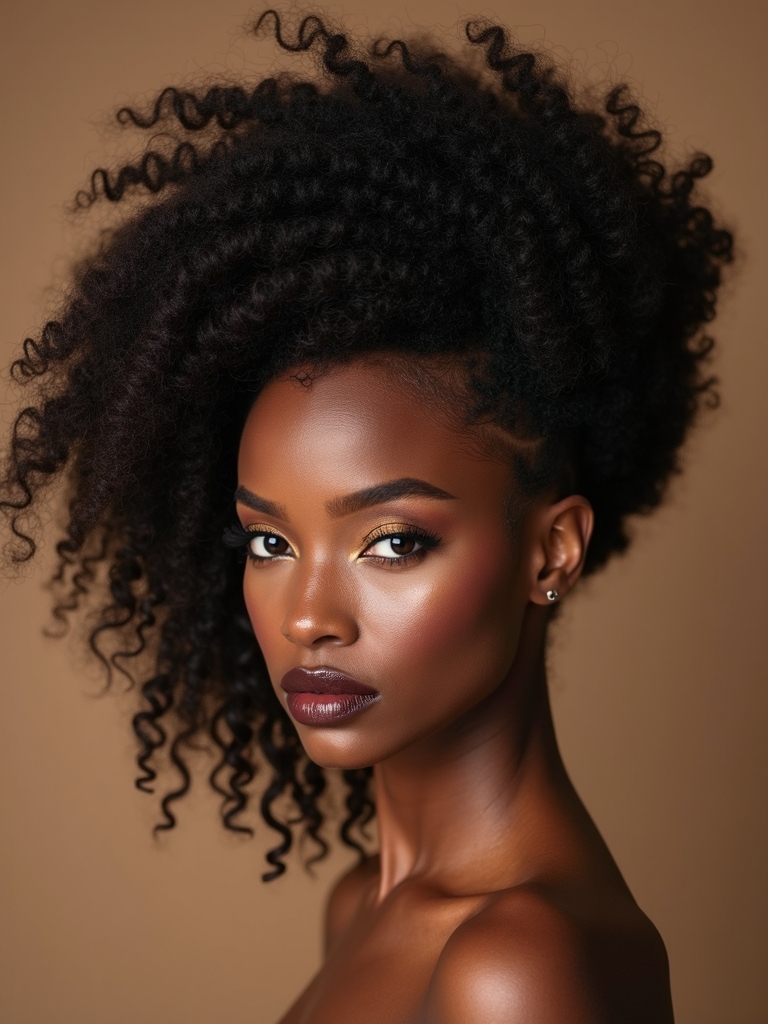
After all the structured braids and defined coils, there is real beauty in the undone, hair worn loose, a little wild, and entirely at ease. A second-day afro, a stretched and softened twist-out, or curls just gathered back with a headband all have a relaxed confidence that polish cannot fake.
The styling here is barely styling at all: a refresh of moisture, a gentle fluff, and a decision to let your hair be a little imperfect. Embracing a soft, worn-in shape is often what natural hair looks like at its most genuine.
This is the note to end on, because every style in this list comes back to the same idea. Natural hair does not need to be forced into something else to be beautiful; worn with care and a little pride, it already is.
A Crown You Already Have
Twenty-five styles, and every one of them starts in the same place: your own texture, treated as the beautiful thing it already is. Whether you wear a ten-minute wash-and-go or a set of braids with centuries of history behind them, the through-line is care, not control.
So save the few that pulled at you, learn the small habits that keep your coils and your edges healthy, and wear them with the pride they deserve. Natural hair rewards gentleness and patience far more than it rewards fussing, and the crown, as they say, has been yours all along.
Keep Reading