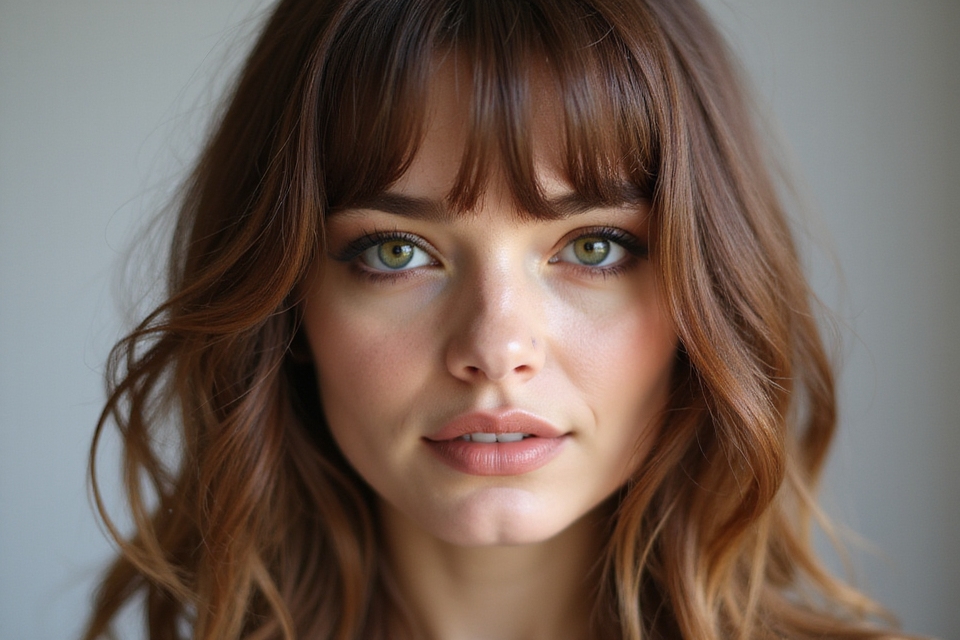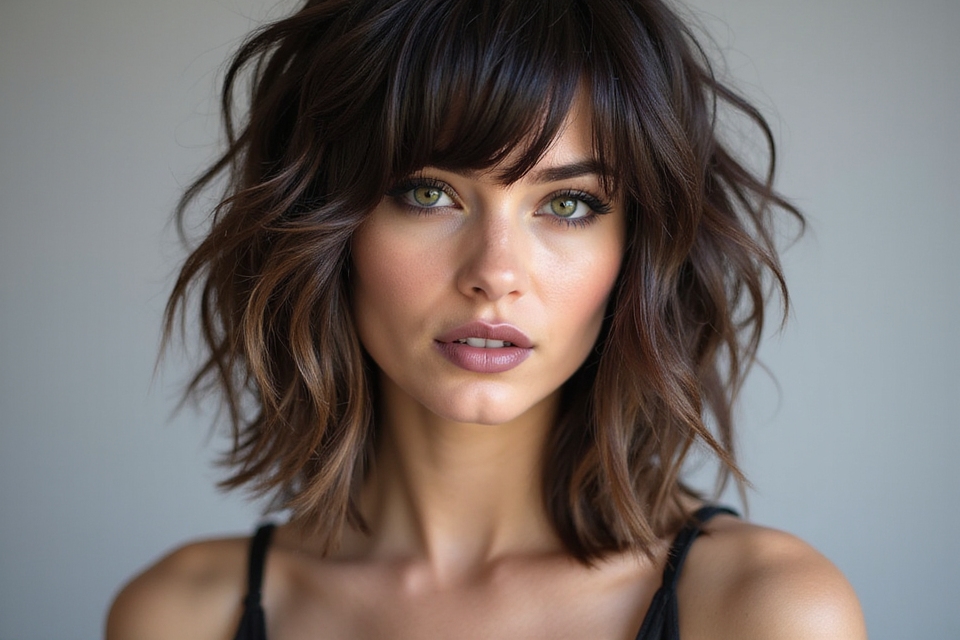

Plenty of women skip curtain bangs because they assume the fringe needs a daily blowout and a particular face shape to work. After years of cutting them on every texture and face that walked into my chair, I’d argue they’re the most forgiving fringe there is, and the low-parted, soft-blown version is the easiest of all.
Long curtain bangs, parted low and swept toward the cheekbones, frame the face without the upkeep of a blunt fringe, and they grow out so gently you barely notice the in-between. This is the full guide: how to cut them, style them, grow them out, and adapt them to your texture, with the honest trade-offs left in.
Curtain Bangs, the Short Version
- Curtain bangs are the most forgiving fringe you can get; they grow out softly and suit nearly every face.
- A low part and a soft, outward blow-dry give that swept, undone finish.
- Plan a quick trim every 4 to 6 weeks, though they forgive a stretched schedule since they blend as they grow.
- They work on straight, wavy, and curly hair when they’re cut for your texture.
The Timeless Versatility of Curtain Bangs
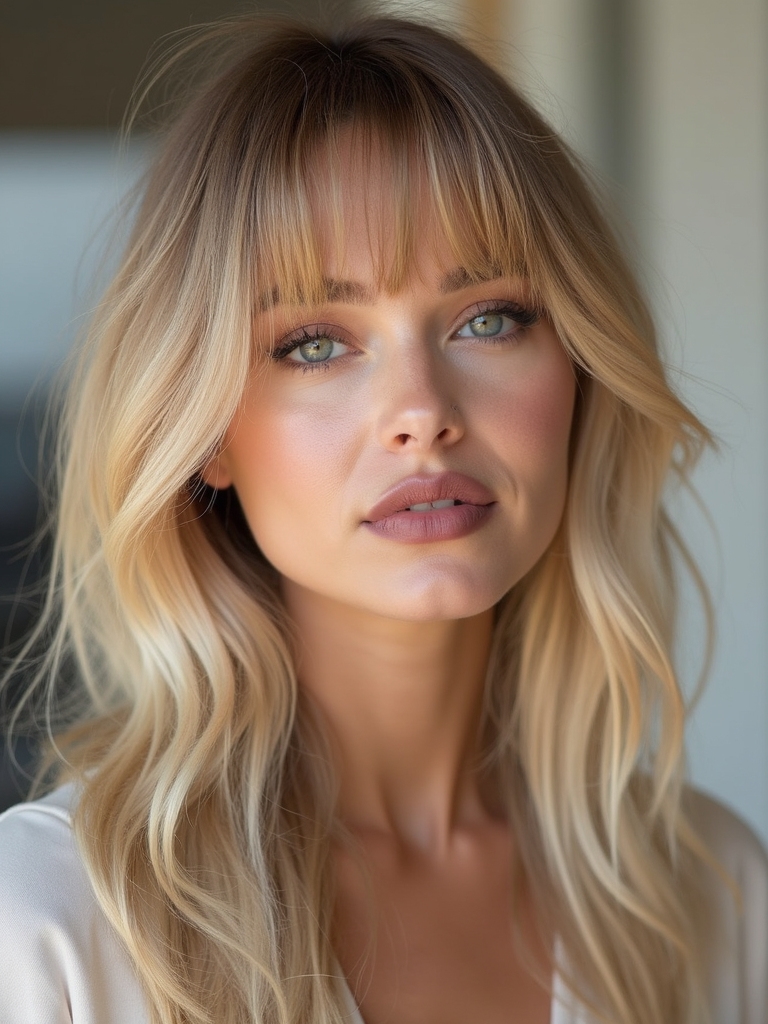
Curtain bangs have outlasted trend after trend for one reason: they bend to whatever’s current. Here’s why they keep coming back:
- They frame the face without hiding it, softening the forehead and opening up the eyes
- They suit every decade’s mood, from a soft 70s sweep to today’s undone version
- They grow out gracefully, blending into your layers instead of leaving a blunt line
- They work parted low or center, so you can shift the whole look in seconds
Why Chic Long Bangs Are Everywhere
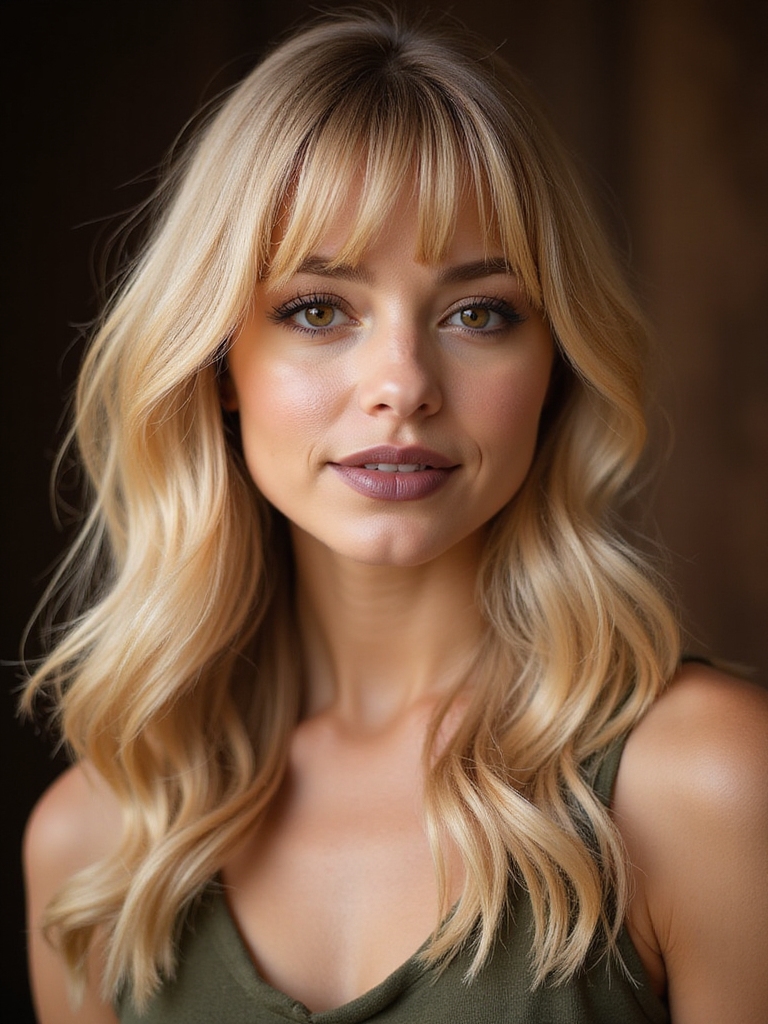
I cut more curtain bangs in a week than every other fringe combined, and the feeds explain why. They photograph beautifully, framing the face for the camera the way a good portrait crop does, which is exactly why they spread.
The appeal is the undone, slightly windswept quality. They look like you barely tried, which is exactly the point, and a little movement at the cheekbones reads relaxed and current.
They’re also a low-stakes way to change your look. You keep all your length and simply add a frame. For anyone nervous about a real chop, this is the gentlest way to feel new.
Two myths that keep women from trying them:
❌ Myth: Curtain bangs are high-maintenance
✅ Reality: They’re the lowest-upkeep fringe there is. They grow out blended, so a missed trim won’t leave a blunt, awkward line.
❌ Myth: You need a certain face shape
✅ Reality: Curtain bangs flatter every face because the length and part adjust. Round, square, long, or heart, there’s a version that works.
Benefits of Low-Parted Curtain Bangs
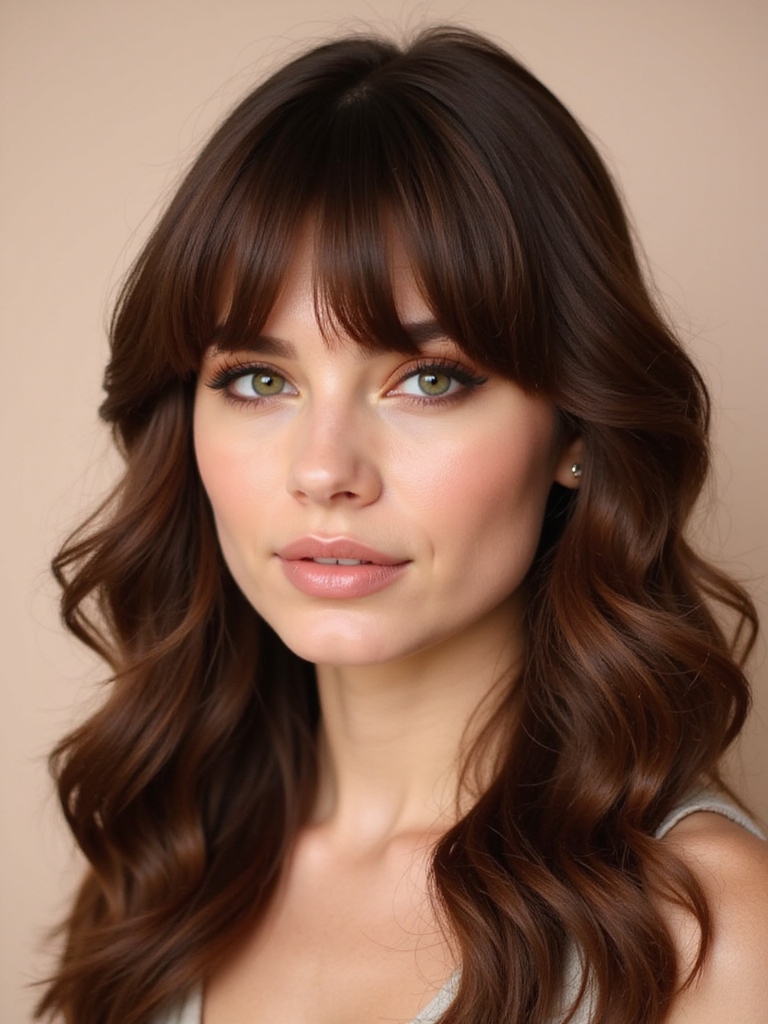
Parting curtain bangs low, closer to one side than dead center, changes the whole feel. It adds a little mystery, sweeps more hair across the forehead, and flatters a wider range of faces than a strict middle part.
The low part also gives you more to work with on a thin hairline or a high forehead, since it carries hair across instead of splitting it evenly. It’s my default suggestion for anyone trying curtain bangs for the first time.
- Softens a high or wide forehead by carrying hair across it
- Comes across a touch more dramatic than a center part
- Easy to switch back to center whenever you want a change
Matching Bangs to Your Face Shape
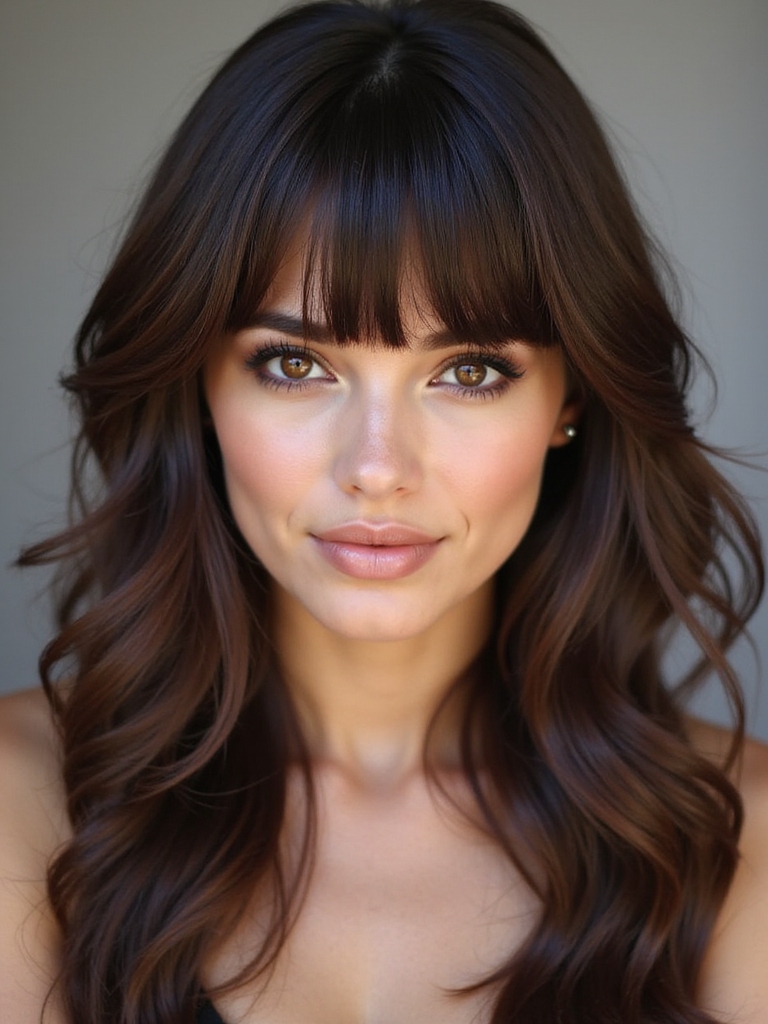
The length and angle of curtain bangs should follow your face, and that’s where most home jobs go wrong. The whole goal is to balance your proportions.
A round face wants bangs that start higher and fall longer at the sides to lengthen the face. A square jaw softens under pieces that graze the cheekbones. A long face does best with a fuller, slightly shorter sweep to break up the length, while heart shapes love a piece that widens down at the jaw.
When in doubt, longer is safer, since you can always trim more off. There’s more on balancing proportions in our guide to haircut ideas for round faces.
“If your bangs keep splitting into a gap in the middle, you’re parting them too cleanly. Rough them apart with your fingers while they dry, never a comb, and that hard part softens into a natural sweep.”
How Curtain Bangs Suit Different Hair Textures

One of the best things about curtain bangs is that there’s a version for every texture. The cut just changes to suit it:
- Straight hair: the classic silky sweep; a round brush gives the bend
- Wavy hair: a piece-y, soft fringe that moves with the texture
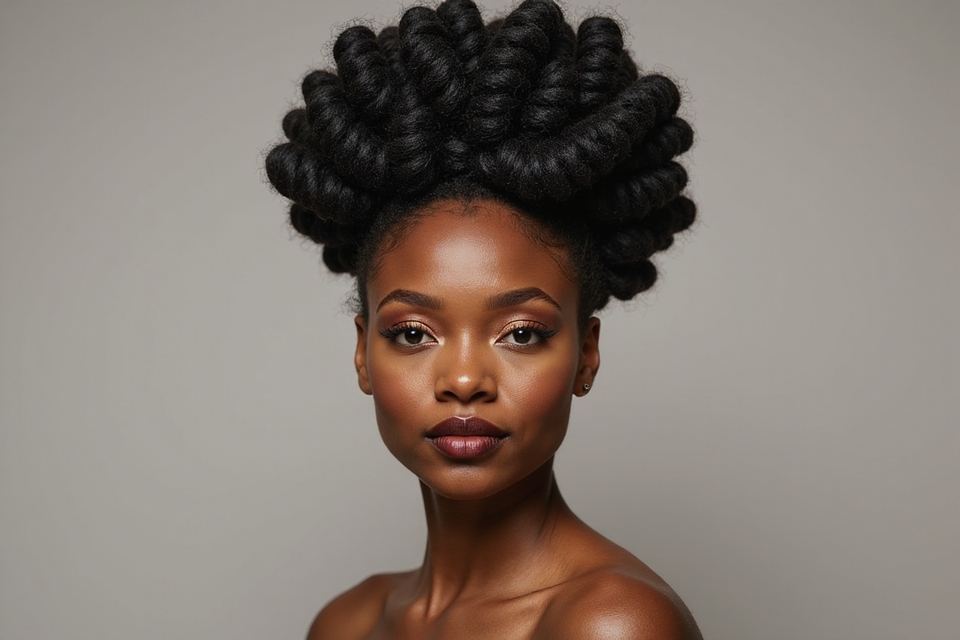
- Curly and coily: cut dry and longer, so the curl springs into a soft frame
- For more on working with your texture, see our curly hairstyles guide
Soft-Blown Styling Essentials
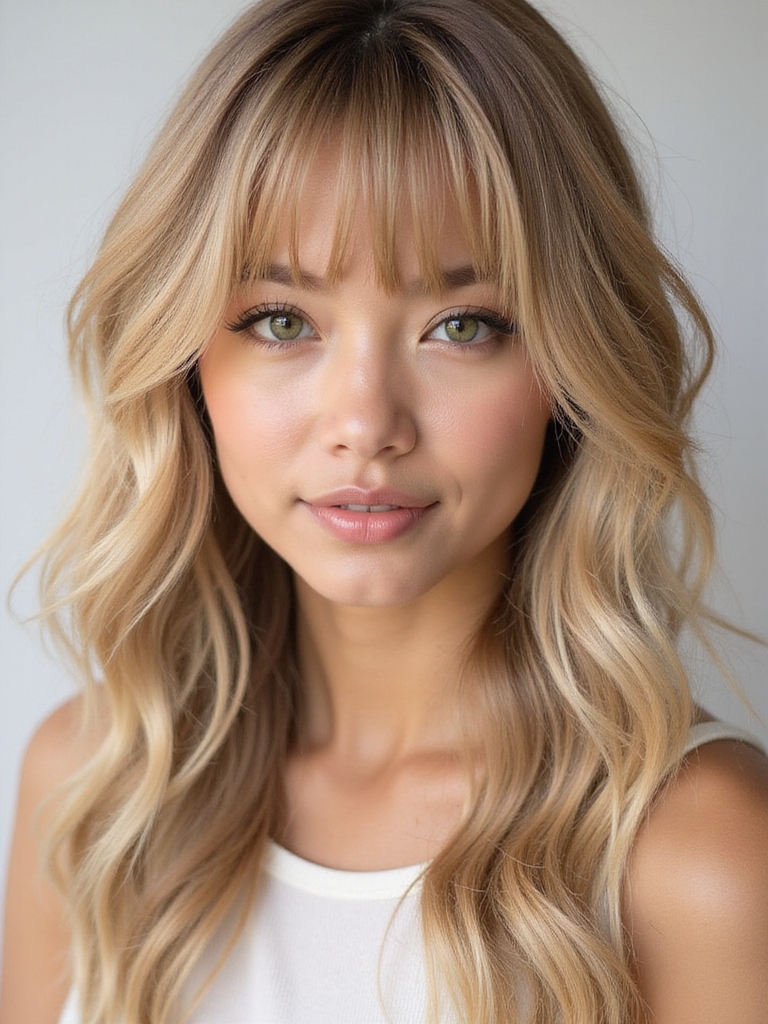
Before the technique, the kit: the soft-blown look comes down to a few tools, and you don’t need a salon’s worth. A round or paddle brush, a blow dryer with a nozzle, and one lightweight product cover it. Think of this as your shopping list; the actual blow-dry methods come further down.
A smoothing serum or light setting spray is what gives that airy, swingy finish without crunch. Heavy creams weigh curtain bangs down and kill the movement, so keep whatever you use minimal.
- Round brush for bend, paddle brush for a sleeker fall
- A nozzle on the dryer to aim the airflow precisely
- One lightweight product only, applied sparingly
🅰️Low part
Sweeps more hair across the forehead for a softer, slightly dramatic frame. Flatters high foreheads and most face shapes.
🅱️Center part
A classic, symmetrical curtain that opens the face up evenly. Best on balanced, oval-ish proportions.
Cutting Long Curtain Bangs: A Stylist’s Take
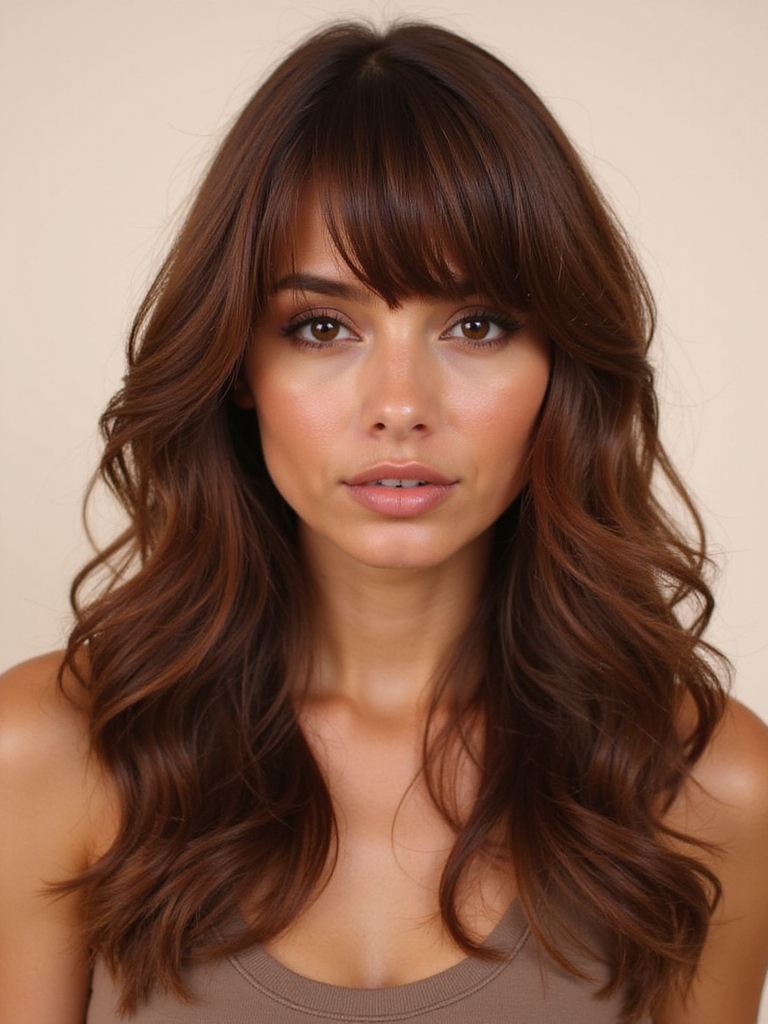
I’ll be honest about DIY here: a careful trim between salon visits is fine, but the very first cut is worth leaving to a pro. The shape, that soft arc from short in the middle to long at the sides, is easy to get wrong.
If you do maintain them yourself, the rule is to cut them dry, hold the scissors vertically, and nibble off small amounts. Going straight across or working on wet hair is how you end up with a blunt, too-short surprise.
- Cut dry so you see the real length
- Point-cut vertically for a soft, blended edge
- Trim a little at a time, because you can’t add it back
Low-Maintenance Long Curtain Bangs
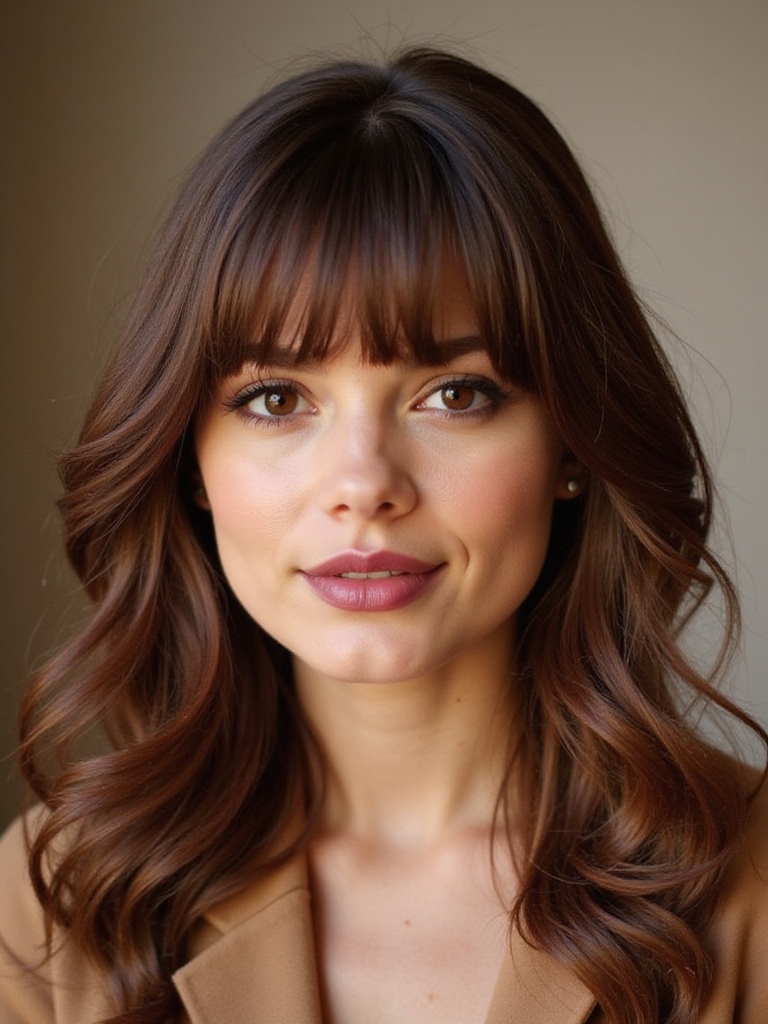
Curtain bangs earn their popularity by being low-effort. Because they’re long and blended, a missed wash or trim doesn’t wreck them the way it does a blunt fringe.
A spritz of dry shampoo at the roots keeps them fresh on day two, and a quick pass with a round brush resets the shape in seconds. A little serum on the ends tames frizz on a humid afternoon.
- Dry shampoo revives them between washes
- A 30-second round-brush pass resets the sweep
- They forgive a stretched-out trim schedule
📋Curtain bangs care checklist
- ✓Trim every 4 to 6 weeks to keep the frame
- ✓Wash or dry-shampoo the bangs more often than your lengths
- ✓Blow-dry them first, lifting at the root for volume
- ✓Keep product lightweight and off the roots
Switching to the Soft Elegance of Curtain Bangs

Plenty of my clients come to curtain bangs from a blunt or side fringe they’ve outgrown. The shift is painless because curtain bangs are really just grown-out, softened bangs.
If you have a straight-across fringe now, you can usually transition without cutting length, just grow the sides and part it open. A stylist can blend your existing bangs into longer face-framing pieces in a single appointment.
It’s a forgiving change and a great stepping stone if you’re unsure how much fringe you want. For a softer, feathered take on the idea, look at feathered bangs.
The Best Products for Curtain Bangs Styling
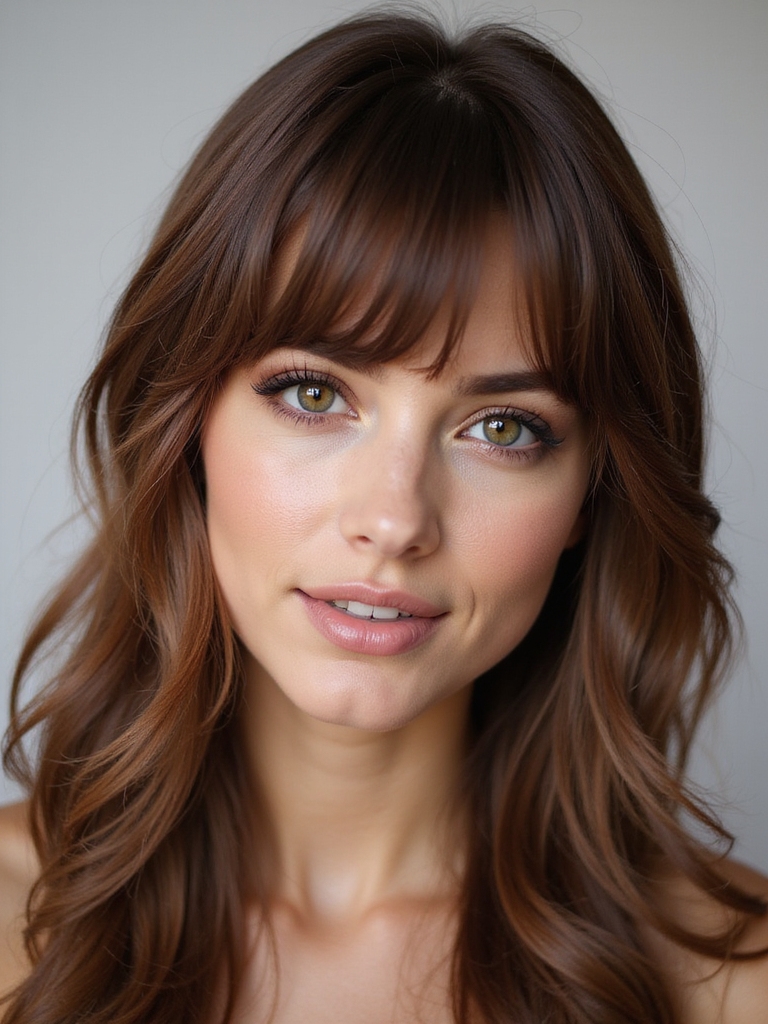
The right products make curtain bangs behave, and the theme is always lightweight. A texturizing spray adds grip and that piece-y separation, while a smoothing serum knocks down frizz on the ends.
For hold without stiffness, a flexible mousse or a light hairspray keeps the sweep in place. Steer clear of anything heavy or oil-based near the roots, since it flattens the lift that makes curtain bangs look good.
- Texturizing spray for separation and grip
- Smoothing serum on the ends only, for frizz
- Flexible hairspray to hold the sweep, used lightly
Day-to-Night Curtain Bangs

The same curtain bangs carry from a morning meeting to a night out with one or two quick tweaks:
- Day: sweep them softly to the side, light and natural
- Evening: part them lower and add a little root volume for drama
- A quick texture-spray refresh revives them after a long day
- Pin one side back for a third, dressed-up option
A Salon-Quality Blowout at Home
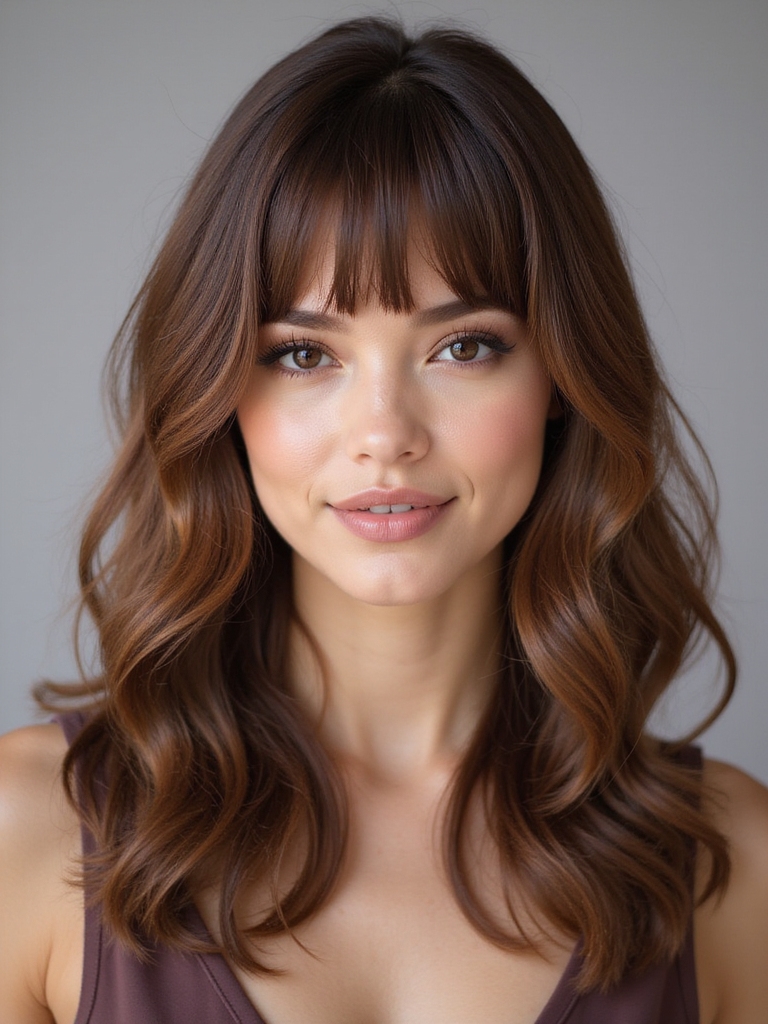
This section is about the smooth, glossy day look, the polished version of curtain bangs you’d wear to work or an event. (Chasing root volume is a different technique, covered later on.) Start on damp, towel-dried hair after a volumizing wash.
Section the bangs out, then use a round brush and direct the airflow downward and slightly out, rolling the brush under at the ends. That downward angle is what gives the sleek, mirror-smooth sweep. Finish with a cool shot to set it.
- Start on damp, not soaking hair
- Airflow downward for a smooth, glossy finish
- A cool shot at the end locks the sweep in place
Seasonal Curtain Bangs Tweaks

Curtain bangs shift with the weather, which keeps them from feeling stale. Right now, heading into the warmer months, I keep them airy with a texture spray for that beachy, windswept feel.
When it turns cold and dry, I switch to a round brush plus a little serum to keep things sleek and shiny against static and hat hair. Same bangs, different finish.
- Warm months: texture spray, airy and undone
- Cold months: round brush and serum for shine
- On flat hat days, part them and tuck the sides back
Color and Highlights for Your Bangs
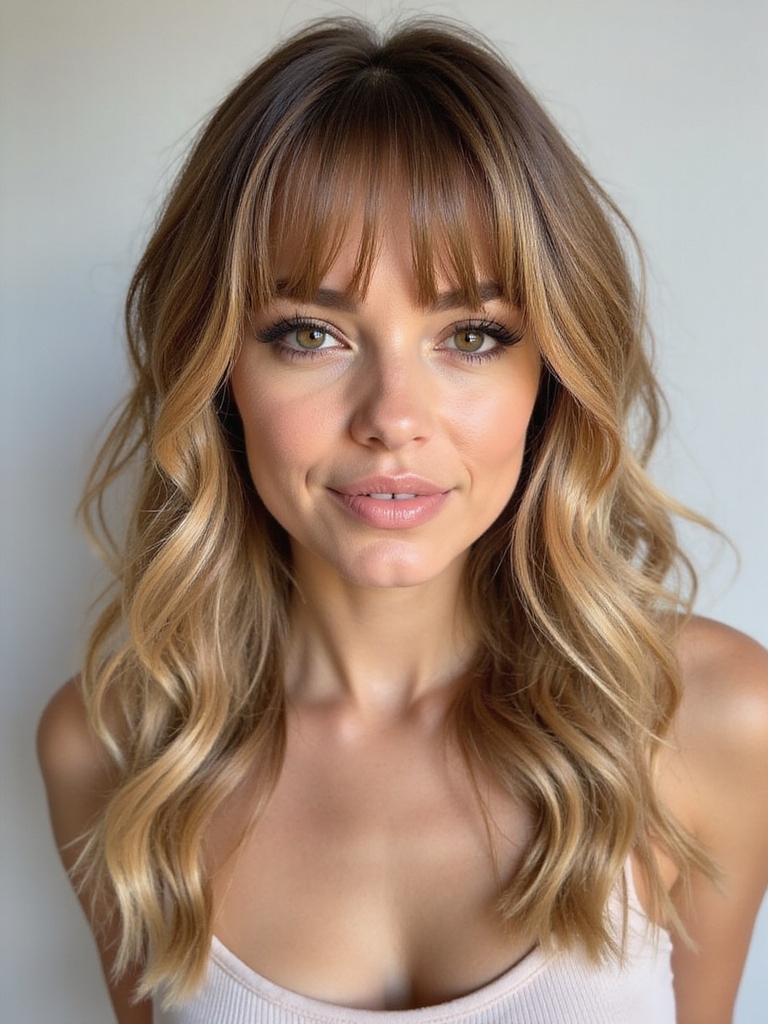
Curtain bangs are a natural canvas for color because they sit right at the front, catching the light. A few face-framing highlights brighten the whole face without a full head of foil.
A Little Brightness Goes a Long Way
A subtle ombre or a money piece around the bangs adds dimension and makes the sweep pop. Because the fringe frames the face, even a small amount of brightness here has an outsized effect.
Keep it low-commitment if you’re testing, since face-framing pieces grow out softly. For cool-weather shade ideas, see winter hair colors.
Iconic Curtain Bangs Inspiration

Curtain bangs have a long pedigree: the soft 70s sweep, the indie-girl revival, and the polished modern version all over red carpets now. They keep getting reinvented because the basic shape is so flattering.
When you bring a photo to your stylist, focus on the qualities you like rather than a specific famous face. The length, the part, how piece-y or smooth it is, those details translate to your hair where a celebrity’s exact cut rarely does.
- Note the length: cheekbone, jaw, or longer
- Note the part: low, center, or off to one side
- Note the finish: piece-y and undone, or smooth and glossy
Common Curtain Bang Mistakes to Avoid
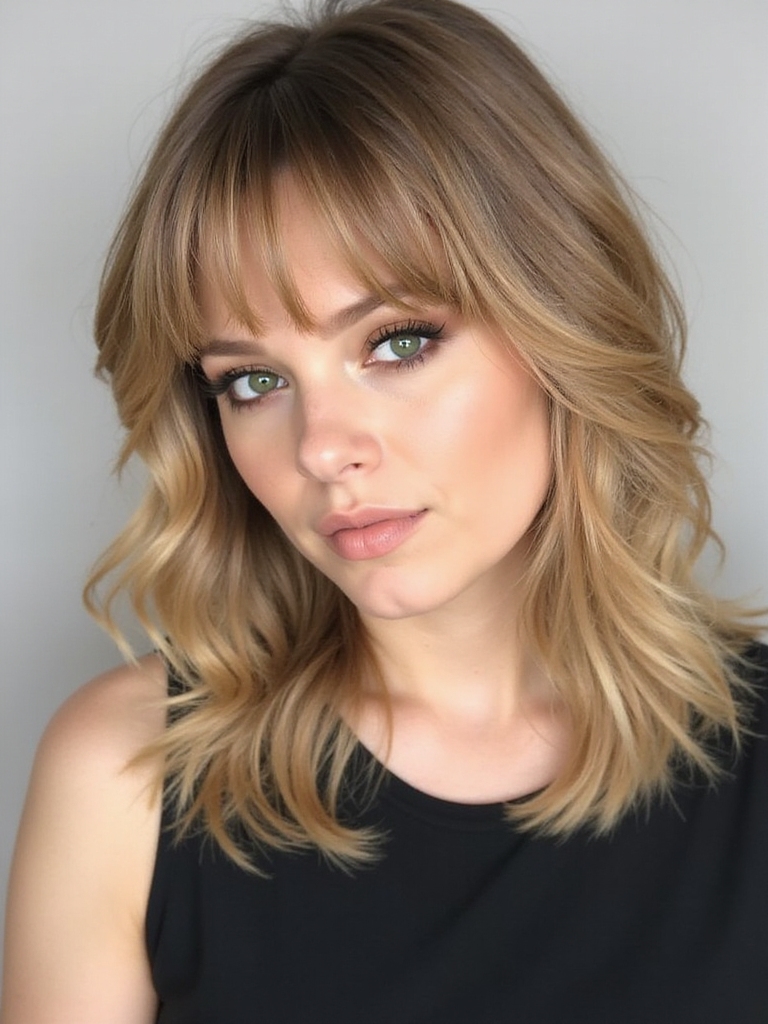
A few easy missteps separate great curtain bangs from frustrating ones:
- Cutting them wet: they’ll dry shorter than you wanted
- Parting too cleanly: rough them apart so they don’t split into a gap
- Skipping trims: they get long and lose the frame, even though grow-out is graceful
- Heavy product at the root: it flattens the lift that makes them work
Hairstyles That Complement Curtain Bangs
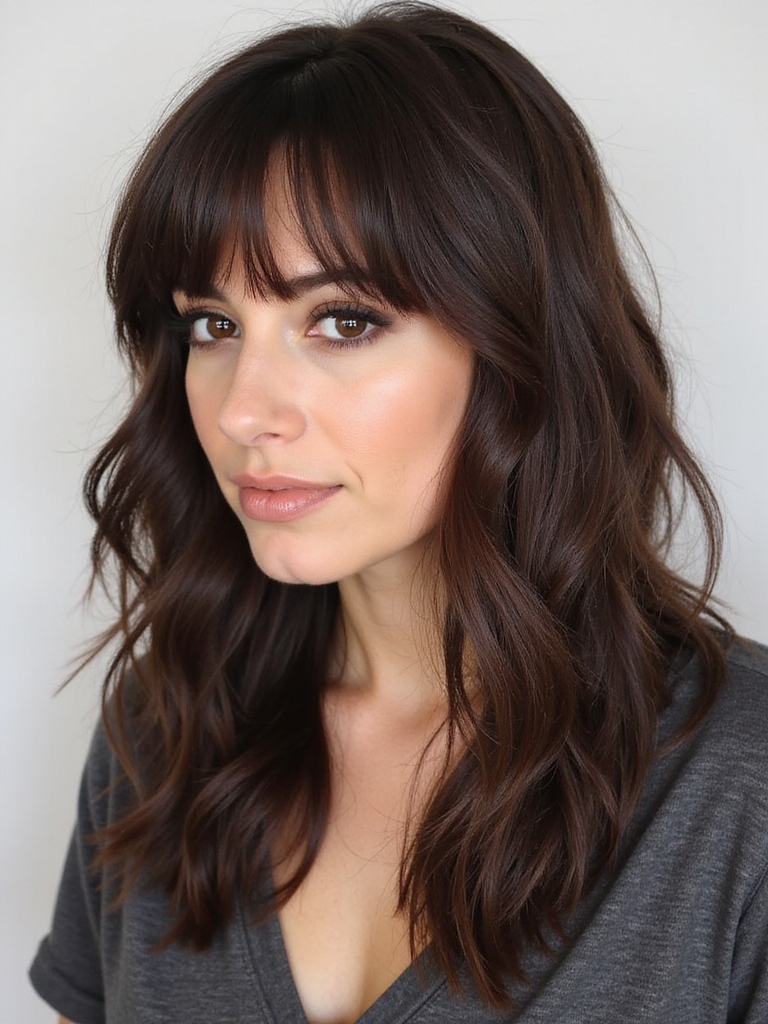
Curtain bangs play well with almost any length and style, which is a big part of their appeal. A loose low ponytail with the bangs left out looks soft and pretty, and voluminous waves let the fringe blend into the movement.
Even a sleek, straight blowout works, with the bangs framing a clean center line. They especially love long, soft layers that pick up where the fringe leaves off; see face-framing layers with bangs for that pairing. The one pairing I’d think twice about is a very tight, slicked-back style, which can leave curtain bangs looking stranded instead of integrated.
A Simple Maintenance Routine for Bangs
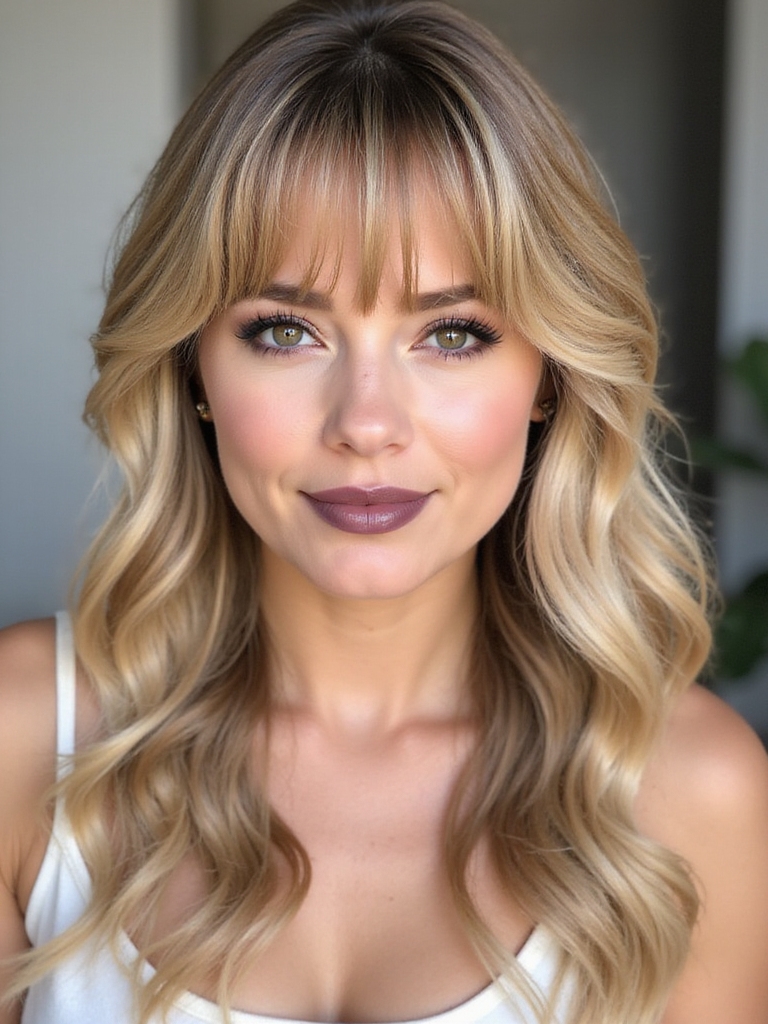
Keeping curtain bangs looking good is simple, but it does take a small routine. Because they sit against your forehead all day, they get greasy quicker than your lengths do.
Clean Bangs, Happy Bangs
I tell clients to wash or dry-shampoo the bangs more often than their lengths, use a heat protectant before any hot tool, and book a trim every 4 to 6 weeks. A leave-in keeps the ends soft.
That’s really the whole routine. Curtain bangs don’t ask for much, which is exactly why they’ve stayed popular for so long.
Hair Accessories That Transform Curtain Bangs

When curtain bangs hit an awkward length, too long to sweep and too short to tuck, accessories save the day. A thin headband pushes them back softly, claw clips pin one side for a half-up moment, and a silk scarf knotted at the crown turns a grow-out stage into a styled choice.
They’re the cheapest way to change the look and to buy yourself time between trims. I keep a couple of clips in my kit for exactly the week when bangs refuse to cooperate, and clients are always surprised how much a five-dollar headband can rescue an in-between length.
- Thin headbands to push back a too-long fringe
- Claw clips to pin one side back
- A silk scarf to style through the grow-out
Flattering Curtain Bangs for Square Faces
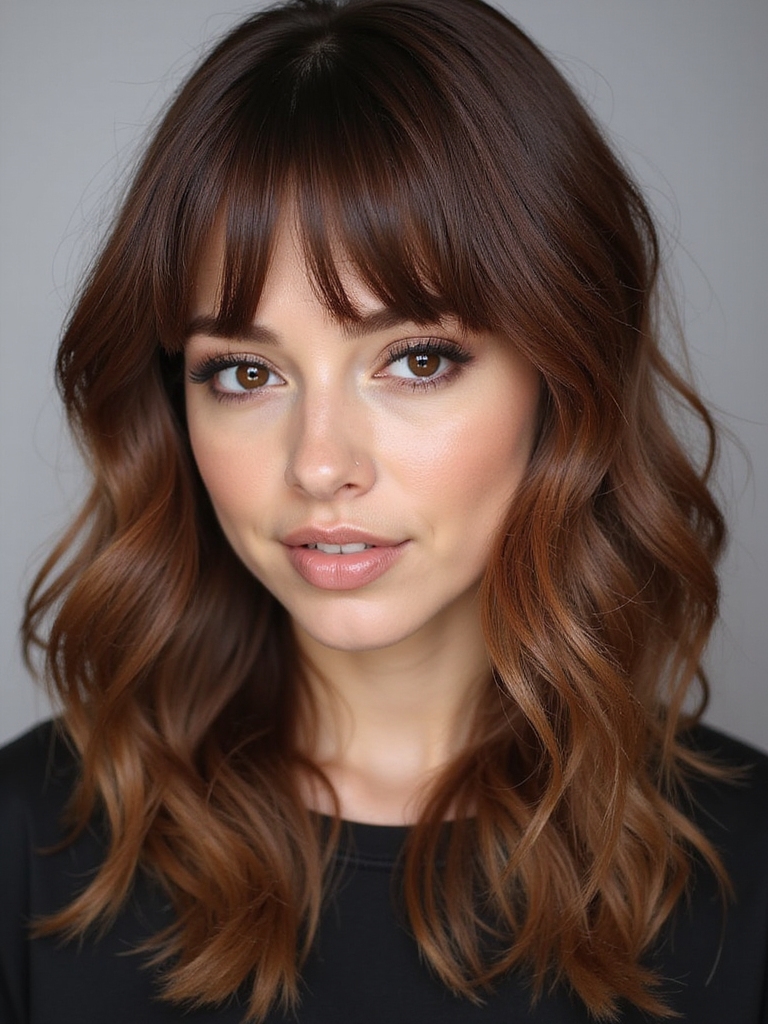
Square faces, with their strong jaw and straight hairline, are flattered beautifully by curtain bangs, despite the old idea that angular faces should avoid a fringe. The softness does all the balancing.
The move is to start the bangs higher, around the cheekbones, and blow them gently outward so they soften the jaw and pull attention off the corners. A low part adds a diagonal line that breaks up the square. Keep the sides long enough to graze past the jaw, since stopping short right at the corner only highlights the angle you’re trying to soften. For round faces, the opposite logic applies; see wispy bangs for round faces.
A Graceful Curtain Bangs Grow-Out
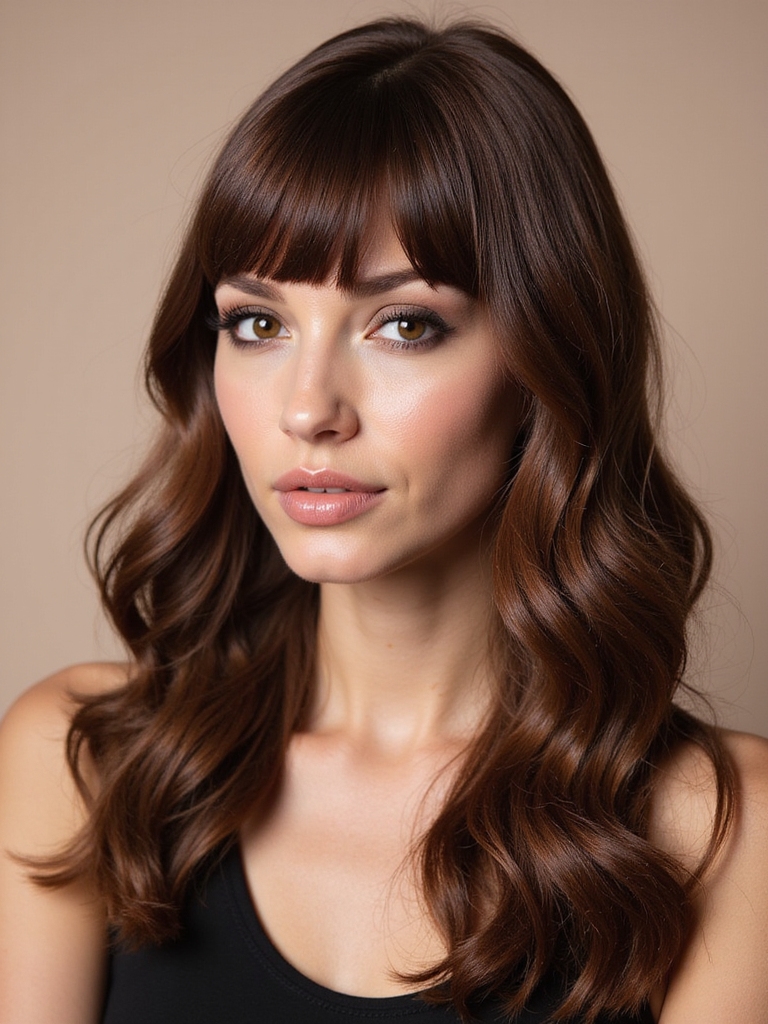
What surprises most clients is how painlessly curtain bangs grow out. Because they’re already long and blended at the sides, there’s no blunt line to suffer through; they simply melt into your face-framing layers.
To make the grow-out even smoother, flip the ends out as they lengthen, pin them back on awkward days, and keep a light trim schedule so the shape holds while the length catches up. Most clients tell me they stopped thinking of it as growing out a fringe at all and just let it become longer face-framing layers over a few months.
- No awkward blunt stage, since they blend as they grow
- Flip the ends out once they pass the cheekbone
- Keep dusting the very ends so the shape stays intentional
Blow-Drying Curtain Bangs for Volume
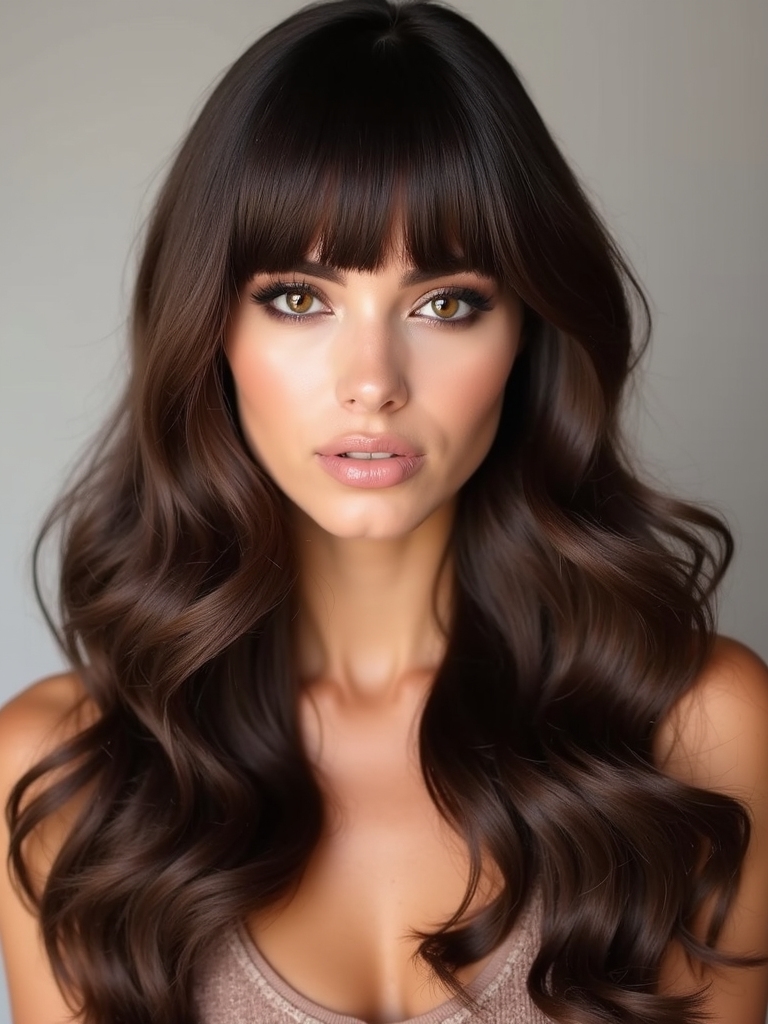
Where the polished blowout chases a smooth sweep, this one is purely about lift. If your curtain bangs fall flat, the fix lives at the root, so the direction you dry them matters more than the brush you reach for.
I dry the bangs first, while they’re wettest, lifting at the root and aiming air against the natural fall to build body. Then I round-brush them into the soft sweep. Drying them last, after they’ve half-dried flat, is why they go limp.
A pinch of root powder or dry shampoo underneath adds staying power. Cool-shot the roots to set the lift before it has a chance to drop.
Curtain Bangs Tips for Curly Hair
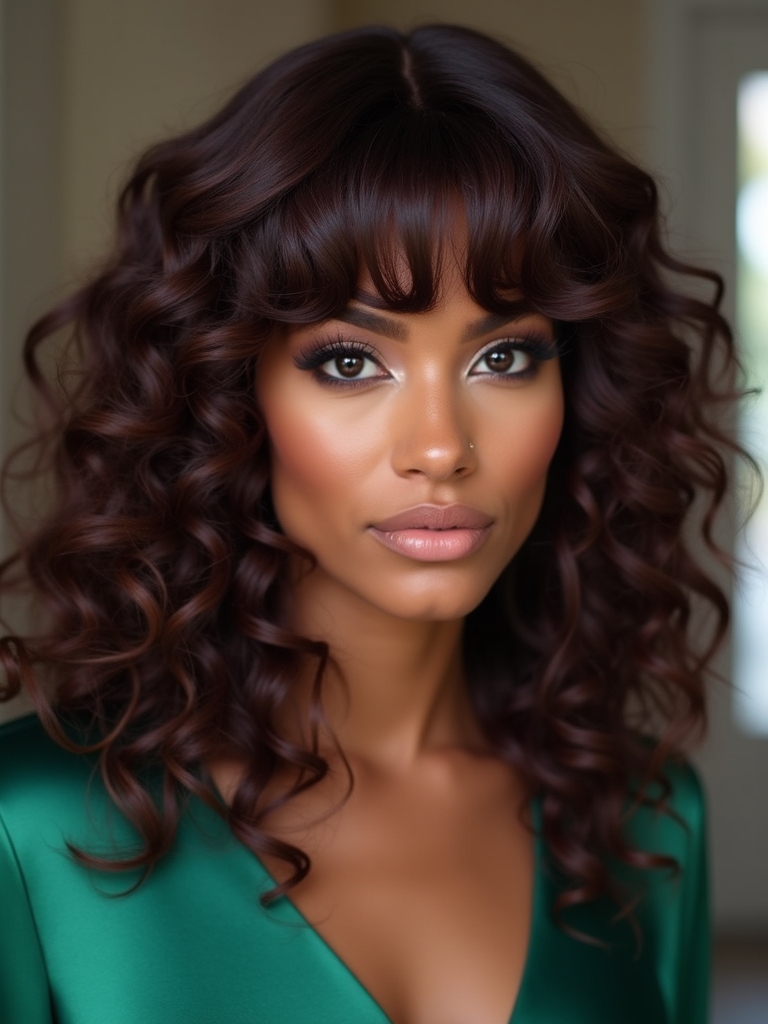
Curly and coily hair can absolutely wear curtain bangs; they just need to be cut and styled for the curl. The biggest rule is to cut them dry and longer than feels right, because curls shrink as they dry.
Cut Dry, Cut Long
A stylist who works with curly textures will cut to your curl pattern so the bangs spring into a soft frame instead of a too-short poof. A leave-in or curl cream defines the shape, and a diffuser keeps the volume up.
They’re lower-maintenance than you’d expect on curls, since the texture hides an imperfect line. For more curly styling, see our curly hair guide.
Curly Curtain Bangs: Styling That Works
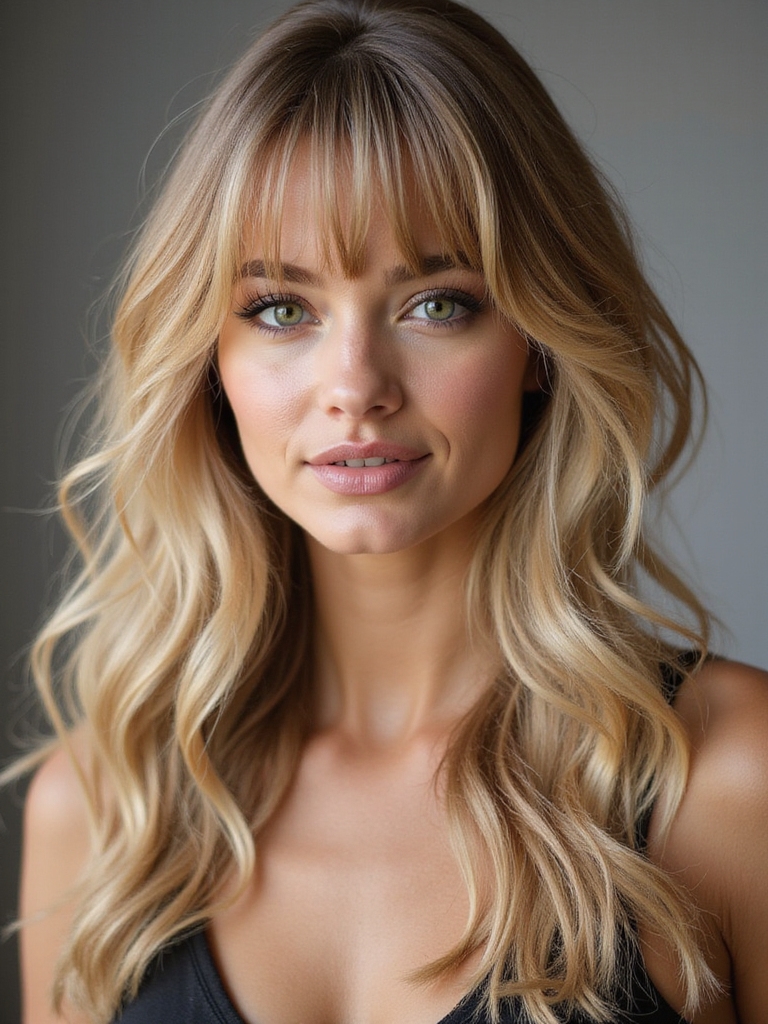
With the cut handled, the day-to-day is all about refreshing the curl rather than reshaping it. On wash day, apply a curl cream to soaking-wet bangs, scrunch, and diffuse on low until they set.
On day two and beyond, revive them with a little water and a pea of curl cream, or pineapple the rest of your hair and let the bangs do the framing. The natural volume of curls makes this fringe especially flattering.
- Wash day: curl cream on wet hair, then diffuse on low
- Day two: refresh with water and a touch of cream
- Lean into the volume, since that’s what makes curly curtain bangs work
Long Curtain Bangs: Quick Answers
?Will curtain bangs suit my face shape?
Almost certainly, because the length and part adjust to balance your features. Round faces want longer sides, square faces want a cheekbone start, and long faces want a fuller sweep. The cut adapts to you, which is the whole strength of curtain bangs.
?How often do curtain bangs need trimming?
Every 4 to 6 weeks keeps the shape crisp, but they’re forgiving. Because they grow out blended, you can stretch to 8 weeks without an awkward line, and many people dust the very ends themselves between salon visits.
?Can I cut curtain bangs myself?
A careful maintenance trim, yes; the first cut, ideally not. If you do DIY them, cut dry, point the scissors vertically, and take only tiny amounts. Cutting wet or straight across is how they end up too short.
?Do curtain bangs work on curly hair?
Yes, when they’re cut dry and a little longer to allow for shrinkage. A stylist who knows curls will shape them to your pattern, and the natural volume makes the frame especially flattering.
Your Easiest Fringe Yet
Long curtain bangs have stayed in style because they ask so little and give so much: a soft frame for your face, a low-stakes change, and a grow-out you’ll barely notice. Parted low and blown soft, they flatter nearly everyone who tries them.
If you’ve been on the fence, this is the fringe to start with. Bring a photo of the length and part you like, tell your stylist about your texture, and spend a few days getting the quick blow-dry down. You’ll wonder why you waited.
More Looks We Love