
What if the answer to thin hair is not more volume, but the right shape? Most of us with fine hair spend years and a drawer of products chasing fullness that was never going to last past lunch. The cuts that actually work do the opposite: they lean into clean lines and clever styling so the hair looks intentional, not sparse.
Here are nineteen trendy hairstyles for thin hair that flatter fine strands instead of fighting them, from blunt bobs and pixies to curtain bangs, tousled waves, and a few sculpted styling tricks. Each tells you why it works, who it flatters, and how to style it. Pick the one that fits your length and your patience.
Matching the Cut to Your Hair
| If your hair is | Try | Why it works |
|---|---|---|
| Fine and flat | A blunt bob or sleek pixie | A clean line looks denser than long, thin ends |
| Thin but long | Long layers and curtain bangs | Movement up top fakes volume without losing length |
| Limp at the roots | A faux hawk or tousled waves | Texture and lift at the crown do the heavy work |
A Bold Sleek Pixie

The fastest way to make thin hair look intentional is to cut it short and let the shape do the talking. A sleek pixie removes the long, wispy ends that drag fine hair down, and it reads sharp and modern instead.
I cut a little weight at the crown for lift and keep the sides close, so the silhouette stays clean. On fine hair this is freeing, because you stop fighting for volume you were never going to get from length.
A fresh cut runs about fifty to ninety dollars at a good salon, and you will want to rebook roughly every five or six weeks to keep the lines crisp, plus a pea-sized bit of pomade to define the ends. If a full pixie feels drastic, a pixie cut shows softer versions to ease into.
An Elegant Layered Bob

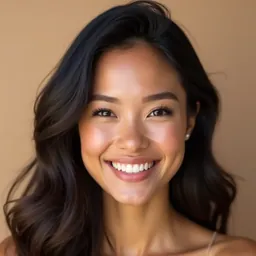
A jaw-to-shoulder bob is the cut I recommend most for thin hair, because a strong perimeter looks dense even when the hair itself is fine.
I keep the layers soft and few, since over-layering thins out the ends and undoes the whole effect. A blunt-ish bottom line with just enough movement on top gives body without sacrificing the weight that makes it look full. For longer options, long bobs for thin hair go a touch past the shoulder.
Heads-Up
Resist the urge to grow thin hair very long. Past a certain point the ends taper to almost nothing and the whole head looks sparser, not longer. A strong line at the collarbone or above almost always reads fuller.
Wispy Bangs for a Soft Finish

Wispy bangs are a small change with a big payoff on thin hair. They pull attention toward the face and bring a layer of interest up front without committing to a heavy fringe.
Trimming Wispy Bangs at Home
I cut them feather-light and slightly longer at the sides so they blend, never a thick blunt curtain that would only emphasize sparseness. They suit most face shapes and soften a high forehead.
The trade-off is upkeep. They grow into your eyes fast and need a tidy every couple of weeks, which you can do yourself between cuts.
Textured Layers

Done sparingly, a few textured layers give thin hair the movement it lacks. The key word is sparingly, because too many turn fullness into stringiness fast.
- Request long, soft layers beginning below the chin rather than at the crown.
- A point-cut end adds texture without removing density.
- Skip a razor on fine hair; it thins the ends too much.
Not sure which direction suits you?
1You want the lowest maintenance
A blunt bob or a short shag
2You want to keep your length
Long layers with curtain bangs
A Bold Asymmetrical Bob

An asymmetrical bob, longer on one side, builds the illusion of thickness through its angle. The diagonal line catches the eye and reads as deliberate volume rather than thin hair.
- Keep the difference subtle, an inch or two, so it stays wearable.
- Style the longer side with a slight bend for extra body.
- A deep side part exaggerates the asymmetry and adds lift.
A Sleek Blunt Cut

A blunt cut is thin hair’s best friend, because every strand ends at the same line and stacks up to look like more hair. There is no tapering to give away how fine it really is.
- Wear it one length from chin to collarbone for the densest look.
- Press the ends with a flat iron and a little smoothing serum to keep the line crisp.
- Avoid heavy oils that would make fine hair look flat and greasy.
Good to Know
Thin and fine are not the same thing. Fine describes the width of each strand; thin describes how many you have. You can be fine but dense, or thick-stranded but sparse. The cut that flatters you depends on which one you are.
A Short Shag With Layers

A short shag piles on choppy layers and texture, which is exactly the kind of controlled volume thin hair benefits from. It is also the most low-maintenance cut here.
Styling a Shag Without Weighing It Down
I keep the layers concentrated at the crown for lift, with piecey ends you can scrunch with a little mousse. The undone shape means it never looks flat, even on day-three hair.
It suits wavy and straight thin hair alike. For the fine-hair-specific version, shag haircuts for thin hair go deeper.
Cropped Hair With Highlights

A cropped cut and a smart highlight are a quiet trick for thin hair, because color contrast creates the depth and dimension fine hair lacks on its own. I place a few fine, dimensional highlights around the face and through the crown, where the eye reads them as texture. Lowlights woven underneath add the shadow that makes the top look fuller. It is purely visual volume, no product required, and it lasts as long as your color does.
- Ask for fine, dimensional highlights, not thick chunky ones.
- A few lowlights underneath fake depth and shadow.
- Keep the crown brightest, since that is where volume reads.
A quick way to fake fuller hair on a flat day:
1Mist dry shampoo at the roots
Even on clean hair, it adds grip and instant lift.
2Tease the crown gently
A light backcomb at the base builds quiet height.
3Smooth the top layer over
Hide the teasing and set it with a flexible spray.
A Bold Sleek Style

Sometimes leaning all the way into sleek beats fighting for volume. A glossy, polished style on thin hair looks deliberate and chic rather than limp, especially in a short cut. I smooth everything with a flat iron and a shine serum, tuck it behind the ears, and let the cleanness be the whole point.
The catch is that a sleek finish shows every uneven edge, so the cut underneath has to be precise. It is the look I reach for on a humid day, when volume was never going to last anyway.
- A touch of shine serum worked through the mid-lengths stops it looking flat.
- Tuck one side behind the ear for a sharp, intentional finish.
- Sleek depends on a clean cut, so book a stylist you trust.
Long Layered Hair

Long hair on a fine head can look stringy, but the right long layers fix that by building shape instead of letting the ends taper to nothing.
I keep the layers long and face-framing, with the bulk of the length intact, so it still reads as long hair with movement. A blow-dry with a round brush at the roots adds the lift that keeps it from falling flat. If you love your length, long layered hair has more on this.
- Layers should start at the chin or lower, never at the crown.
- Round-brush the roots up and back for lasting lift.
- Trim the ends every eight weeks so they never look wispy.
Sleek Tapered Ends

A gentle taper at the very ends keeps thin hair from looking blunt-heavy while still holding a clean shape. It is a softer option for anyone who wants movement without a hard line.
- Ask for a soft taper only in the last inch, not all over.
- Style with a flat iron flicked slightly under at the ends.
- A light hairspray holds the taper without any crunch.
A Faux Hawk for Thin Hair

A faux hawk sounds bold, but on thin hair it is a clever way to concentrate what volume you have right down the center. You sweep the sides in and lift the middle into a soft peak.
- Tease the crown section lightly at the roots for height.
- Pin the sides back and up toward the center line.
- Set it with a flexible hairspray so it holds the night.
Shoulder-Length Face-Framing Layers

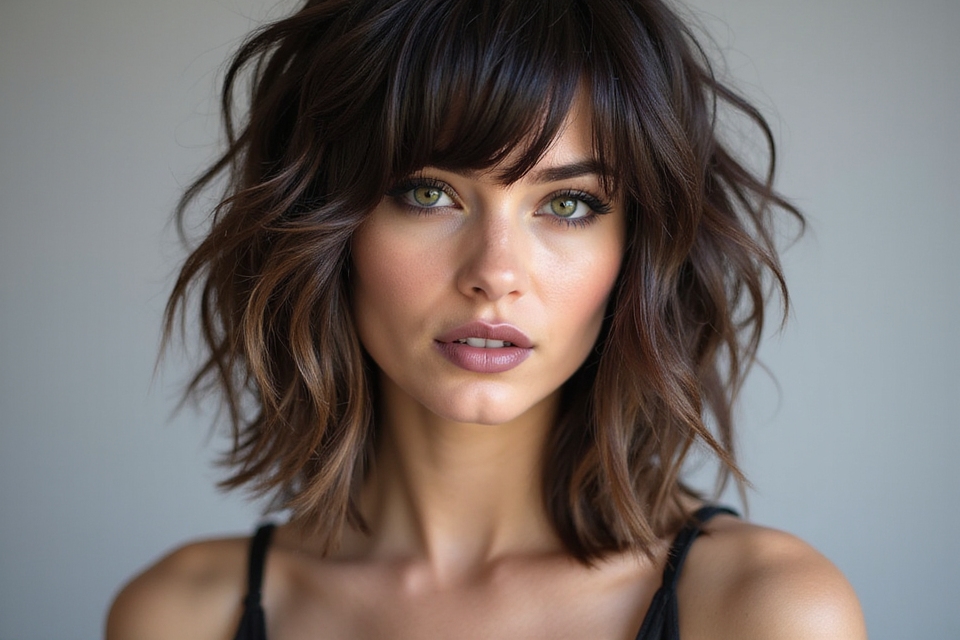
Shoulder length is a sweet spot for thin hair, long enough to style but short enough to keep weight in the ends. Face-framing layers at the front add movement exactly where it flatters, pulling attention to your features rather than the density of your hair.
I keep the back fuller and the framing pieces soft, so it never looks chopped. A little texture spray through the mid-lengths gives it an easy, lived-on body. It is the cut I suggest most when someone with thin hair is not ready to go short.
- Start the face-framing layers at the cheekbone for the best frame.
- Keep the back one length to hold weight and fullness.
- Texture spray adds grip and soft body to fine strands.
Soft Tousled Waves

Loose, tousled waves are an instant volume hack for thin hair, because the bends lift the strands away from the head and fill out the shape. The messier they are, the fuller the result.
- Reach for a slim curling wand and keep the ends out for a modern bend.
- Tousle with your fingers and a texture spray, never a brush.
- Curl away from the face so it opens up your features.
Curtain Bangs With Layers

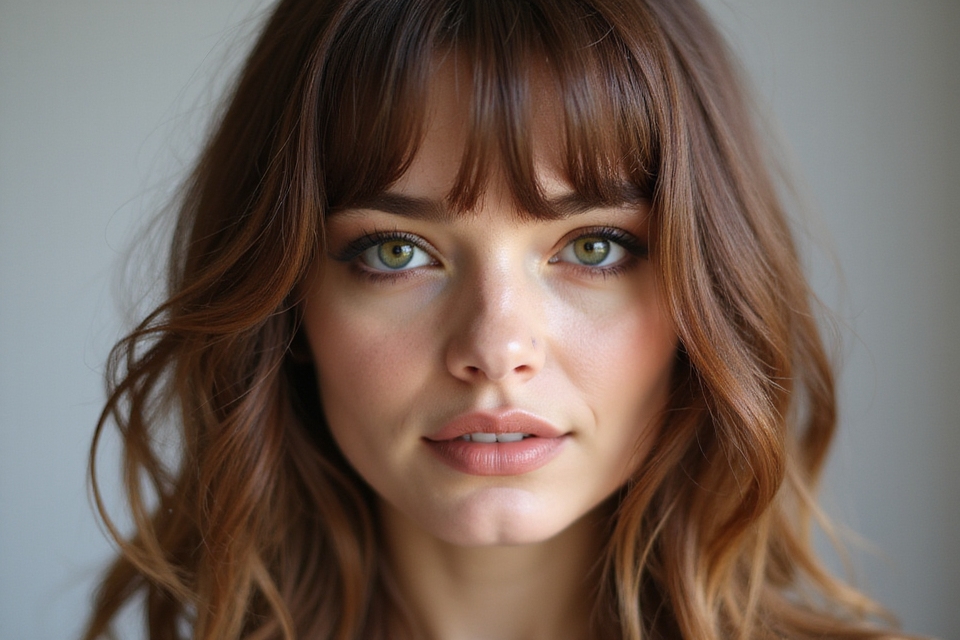
Curtain bangs are the most forgiving fringe for thin hair, splitting softly at the center and blending into the lengths so there is no harsh line to expose sparseness. They add a swoop of movement around the face and grow out gracefully, which means fewer trips for trims than a blunt fringe.
I cut them to hit around the cheekbone and feather the inner edges so they frame rather than cover. Paired with a few face-framing layers, they make the whole front look fuller. See curtain bangs for more shapes.
- Cut the bangs so they brush the cheekbone, which gives the softest frame.
- Blend them into your layers so there is no visible cut line.
- They grow out easily, so you can stretch six weeks between trims.
A Bold Choppy Lob

A choppy lob, a long bob hitting the collarbone, gives thin hair length and texture without the stringy ends that plague longer styles. The choppiness is what creates the body.
I cut piecey, uneven ends and a few internal layers, then style with a texture spray for that undone, full finish. The collarbone length keeps enough weight to look dense while the choppy ends add the movement.
It is endlessly wearable, up or down, and it suits almost every face. A deep side part adds even more lift at the root.
A Chin-Length Angled Bob

An angled bob, cropped shorter behind and left longer in front, stacks weight at the crown where thin hair needs it most. That built-in volume at the back is the whole trick.
Why the Angle Builds Volume
I keep the front pieces long enough to frame the jaw and the back tight enough to create the lift. The angle does the work, so you barely need to style it beyond a smooth blow-dry.
It is sharp, modern, and especially good for fine straight hair that falls flat. Round-brush the back upward for maximum stacked volume.
A Sleek Chic Ponytail

Thin hair can look thin in a ponytail, but a few tricks make it read full and polished. The goal is simply to disguise the actual density.
Faking a Fuller Ponytail
I tease the base lightly, pull the tail up, then coil a thin piece of hair over the band to hide it and make the ponytail itself look thicker. Gently easing the crown apart adds height, and a hidden pin tucked under the tail props it up so it does not droop.
It is my go-to for a fast pulled-together look. For more, sleek ponytail styles take it further.
Vintage Finger Waves

Finger waves are a vintage style that happens to love thin hair, because the sculpted S-shaped ridges sit flat and defined, with no volume required. The whole look is about precision, not fullness.
I set them with a strong gel and clips on damp hair, let them dry fully, then brush the surface lightly for a soft sheen. They work best on short to chin-length thin hair, and they turn a sparse head into something deliberately glamorous for an event. It takes practice, but the payoff is striking.
Thin Hair Questions, Answered
?What is the best haircut for thin hair?
A blunt bob or a sleek pixie tends to flatter thin hair most, because a clean, strong line stacks up to look denser than long, tapered ends. Short shags and angled bobs work well too.
?Should thin hair be long or short?
Shorter usually looks fuller, since length pulls fine hair flat and thins the ends. If you want to keep length, stay around the collarbone and add long layers and curtain bangs for movement.
?How do I make thin hair look thicker without products?
Cut and color do most of the work: a blunt or angled shape, plus fine highlights and lowlights for dimension. Styling tricks like tousled waves or a teased crown add the rest.
Working With Thin Hair, Not Against It
The thread through all of these is the same: stop chasing volume you cannot fake, and choose a shape that flatters fine hair instead. A strong line, a smart layer, a clever color, or a sculpted style will always beat piling on product every morning.
Pick the cut that fits your length and your patience, find a stylist who really cuts for thin hair, and you will spend far less time fighting it. The right shape carries the work for you, season after season.
More Hair Inspiration