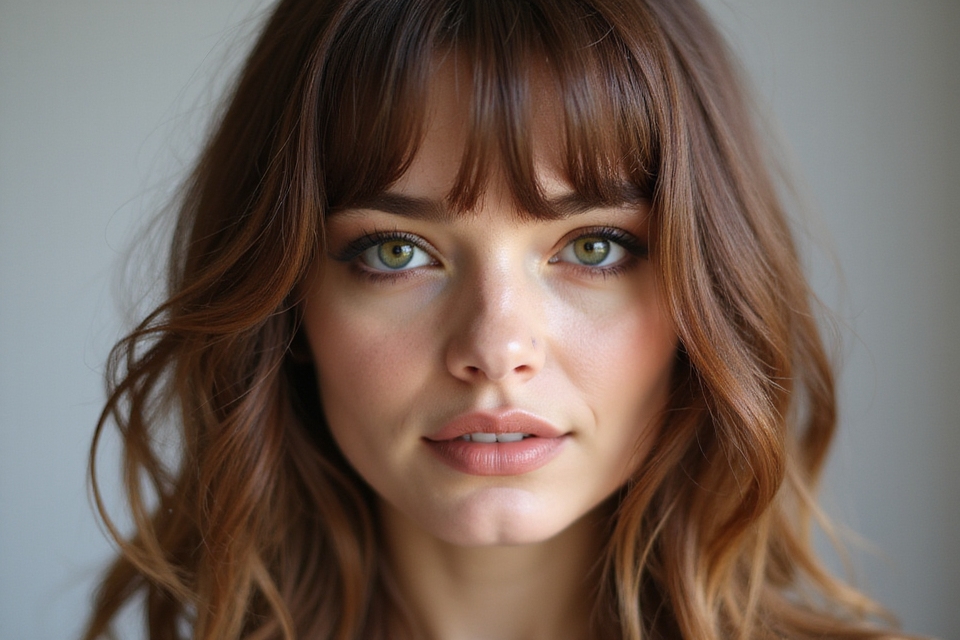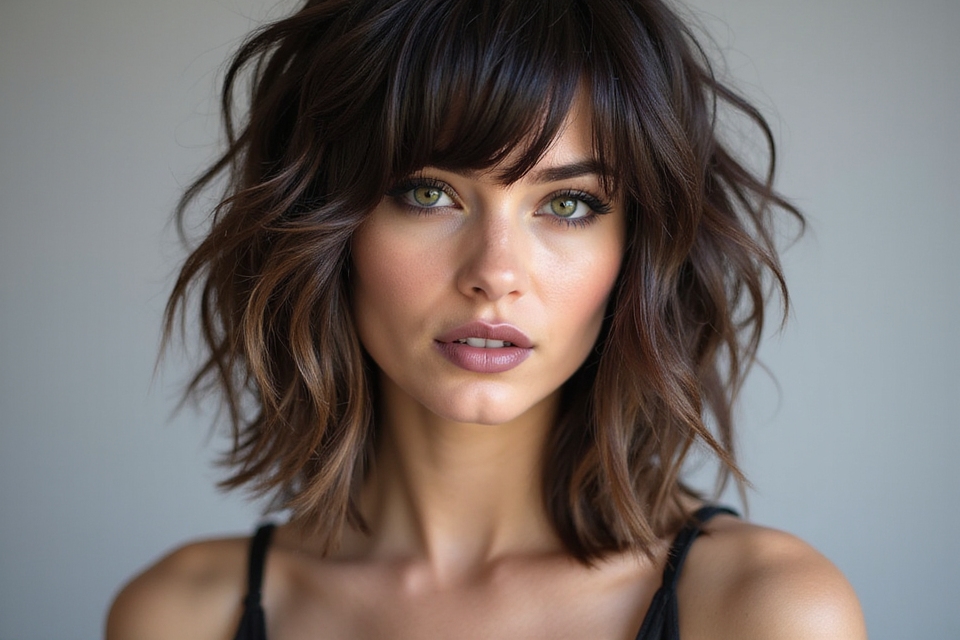

Most bang advice quietly assumes you want symmetry, a neat fringe sitting evenly across both brows. Asymmetric bangs throw that out on purpose. Cut longer on one side and shorter on the other, they slant across the forehead and turn a small detail into the most interesting thing about your whole haircut. The off-center line is the entire point.
What follows is an honest look at how asymmetric bangs actually work: who they flatter, how they are cut, what they cost in upkeep, and how to wear and grow them out. They are bolder than a standard fringe, but with the right angle they are also far easier to live with than you might expect.
Asymmetric Bangs, in Short
- An asymmetric fringe is cut longer on one side and shorter on the other, slanting across the forehead for a deliberately off-center line.
- They flatter most face shapes because a diagonal breaks up width and draws the eye on an angle, which is especially good for round and square faces.
- They want a trim every three to five weeks to hold the angle, and a stylist who is comfortable with bold, graphic fringe work.
What Makes Asymmetric Bangs Work

Strip the idea back and an asymmetric fringe is simply a bang with intention, one side deliberately longer than the other, cut on a slant rather than straight across. That single tilt changes everything. It separates the cut from an ordinary fringe and gives it all its quiet edge.
The Tilt Is the Point
The asymmetry does real work for your face, not just your style. A diagonal line pulls the eye across and down rather than straight on, which softens a strong forehead and adds movement to an otherwise even cut. It reads modern and a little artistic without much fuss.
It suits anyone willing to commit to a defined shape, and it flatters most faces when the angle is matched to your features. The bolder the slant, the bigger the statement, so the cut should start from a conversation, which is the first thing I raise with clients who ask me for one.
How They Reshape Your Features

Bangs frame the face more than almost any other detail, and an asymmetric one frames it on a diagonal, which changes the whole equation. The slant draws attention along its line, so it can lengthen a round face, soften a square jaw, or quietly balance a feature you would rather play down. Our bangs hairstyles guide covers gentler options too.
- Round faces: a longer, sweeping slant adds the vertical line that lengthens and slims.
- Square faces: a soft diagonal breaks up a strong jaw and the corners of the face.
- Long faces: keep the angle gentle and the fringe fuller so it does not stretch the face further.
Not sure how far to tilt the line? Match the slant to your nerve:
🎯I want subtle, easy-to-wear edge
A long, gentle slant just below the brow blends into your layers and grows out painlessly.
🎯I want a clear statement
A steeper slant sweeping toward the cheekbone makes the angle the focus of your whole look.
🎯I want bold and graphic
A short, sharp diagonal on a precise cut reads editorial, with frequent trims to keep it that way.
Choosing Your Length and Angle

The two decisions that define an asymmetric fringe are how long the longer side falls and how steep the slant runs between the two. A subtle version drops just below the brow on the long side; a bold one can sweep all the way to the cheekbone.
Start Longer Than You Think
Longer, gentler slants are the easiest to wear and to grow out, blending into your length with no hard line. Shorter, steeper angles make the boldest statement but ask for more frequent trims and a more confident hand on styling mornings.
Talk through both with your stylist before any cutting, and start longer than you think. It is the first thing I tell clients, since you can always take more off but you cannot add it back once the line is set.
The Products That Hold the Shape

An asymmetric fringe lives or dies on how it sits, so the right products matter more than they do with a softer bang. The goal is control without stiffness, keeping the slant clean while the hair still moves like hair.
Control Without Stiffness
A lightweight smoothing cream or a single drop of serum tames flyaways and keeps the line clean, while a flexible-hold spray sets the angle without freezing it solid. Skip anything heavy or greasy, since a fringe sits against your skin and shows oil within hours.
For a sharper finish, a touch of pomade on the longer side defines the sweep. For a softer one, a texturizing spray breaks the line into separated pieces. The product you reach for is really how you choose which version of the fringe you wear that day.
A few terms that make the salon conversation easier:
📖Point-cutting
Cutting into the ends at an angle so the fringe looks soft and piecey rather than a hard, blunt line.
📖Money piece
A brighter, lighter face-framing section, often used to trace and play up the slant of the fringe.
📖Face-framing
Pieces cut around the face that connect the fringe into the rest of the cut so nothing sits apart.
Styling Them in Five Minutes

The good news is that styling an asymmetric fringe is fast once the cut is right, because the shape does most of the work for you. The main job is simple. Dry it in the direction of the slant, and it falls cleanly the moment it dries.
Get that one step right and the rest is touch-ups. Fight the natural fall, though, and you will battle it all day, so always dry along the angle, not against it.
- Dry the fringe first, straight out of the shower, with a round brush sweeping along the angle.
- A flat iron on a low setting smooths the longer side into a clean sweep if you want it sharp.
- On a rushed day, a little dry shampoo at the roots and a finger-comb along the slant is plenty.
Red-Carpet and Runway Inspiration

Asymmetric fringes turn up again and again on runways and red carpets, precisely because they photograph as bold and editorial. You do not need to copy any particular look to borrow the idea, since the appeal lives in the angle, not in the face wearing it.
What the editorial versions get right is commitment. The boldest slants, paired with a sleek finish, read intentional rather than accidental, which is the whole secret of wearing one well. Confidence is half the look.
Take inspiration from the shapes you are drawn to, then bring a clear photo to your stylist and adapt it to your hair type and face. A dramatic angle behaves very differently on fine hair than on thick hair, so treat the photo as a starting point, never an exact target.
📋Before You Commit to the Slant
- ✓Decide how bold a slant you actually want, and bring a clear photo to show it.
- ✓Ask for it cut a touch longer than your reference, since you can always take more off.
- ✓Confirm you are happy with a trim every few weeks before you commit to the angle.
- ✓On curls, make sure your stylist cuts it dry and in your natural pattern.
Color That Plays Up the Angle
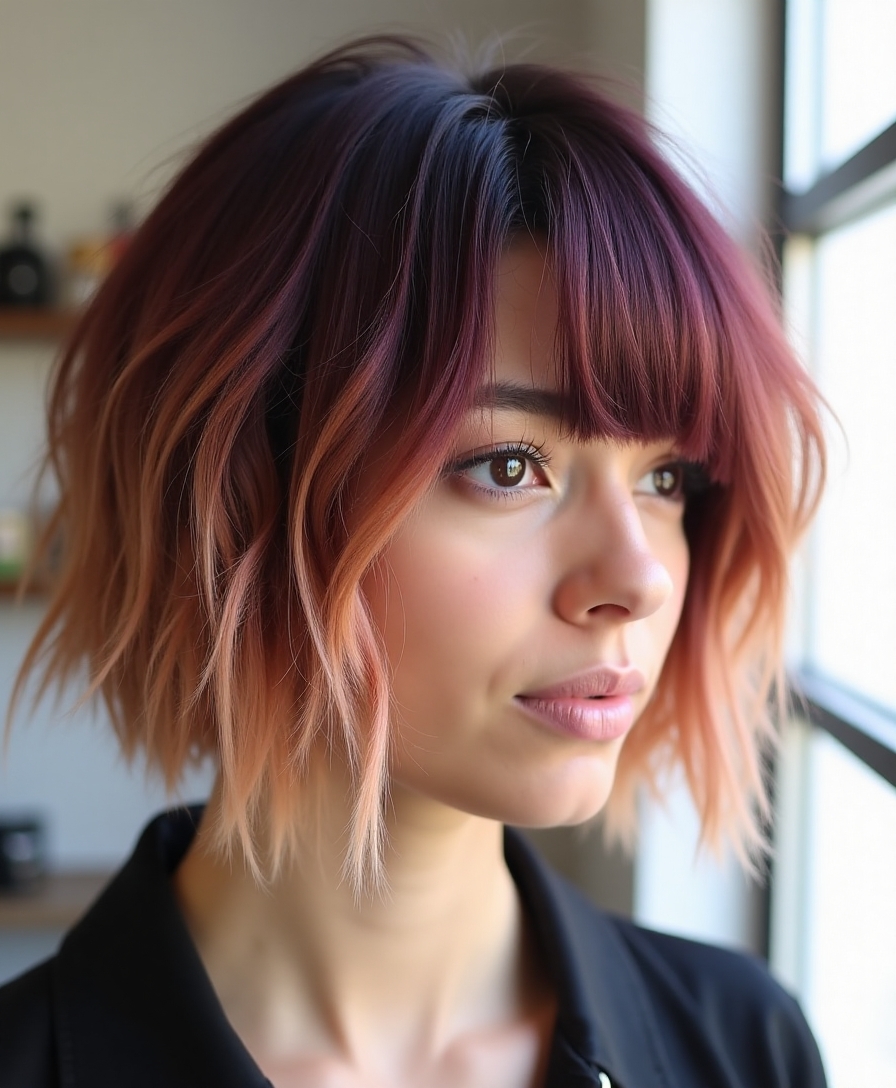
Color and an asymmetric fringe can amplify each other, since a slant gives a bright shade somewhere dramatic to live. A lighter piece along the longer side traces the diagonal and makes the angle impossible to miss.
A money-piece effect, lightening just the face-framing fringe, is the most popular way to do this, and it works because the eye follows the brightness right along the slant. Subtler tonal shifts add quiet dimension without shouting about it.
Keep any lightening to the surface and see a colorist for the placement, since color on a fringe sits right by your face where mistakes show most. Done well, the color and the cut read as one deliberate idea rather than two competing ones.
Growing Them Out Gracefully

Every fringe reaches a grow-out stage, and an asymmetric one is actually kinder than a blunt fringe here, since the angle already blends into your length. The longer side melts into your face-framing pieces while the shorter side slowly catches up to it.
That built-in blend is the quiet advantage of the style. There is no hard, straight line crawling down your forehead, just a slant that softens week by week. A curtain bangs shape is a natural place it can settle along the way.
- Let the short side grow toward the long side’s length, blending the slant into your layers.
- A few shaping trims through the grow-out keep it intentional rather than shapeless.
- When you are ready, it settles into long face-framing layers, a soft and stylish stopping point.
“The mistake I see most with a new fringe is styling it too hard. An asymmetric slant wants to move, so dry it in the direction of the angle and then leave it mostly alone. The cut should carry the shape, not your flat iron.”
Adjusting Them Through the Seasons

A fringe behaves differently as the weather turns, and an asymmetric one is no exception. Humidity lifts and frizzes the line in summer, while dry winter air can leave it flat and full of static, so the way you wear it shifts with the season.
In summer, lean into a softer, more textured version that forgives a little frizz, and keep a smoothing cream within reach for the line. In winter, a touch more moisture and a flexible spray keep it from going flat or flyaway against a hat.
None of this means recutting; it means adjusting your products and how hard you style. The same fringe can read sleek in October and tousled in July, which is part of why an asymmetric line stays interesting all year.
The Cutting Technique Behind the Slant
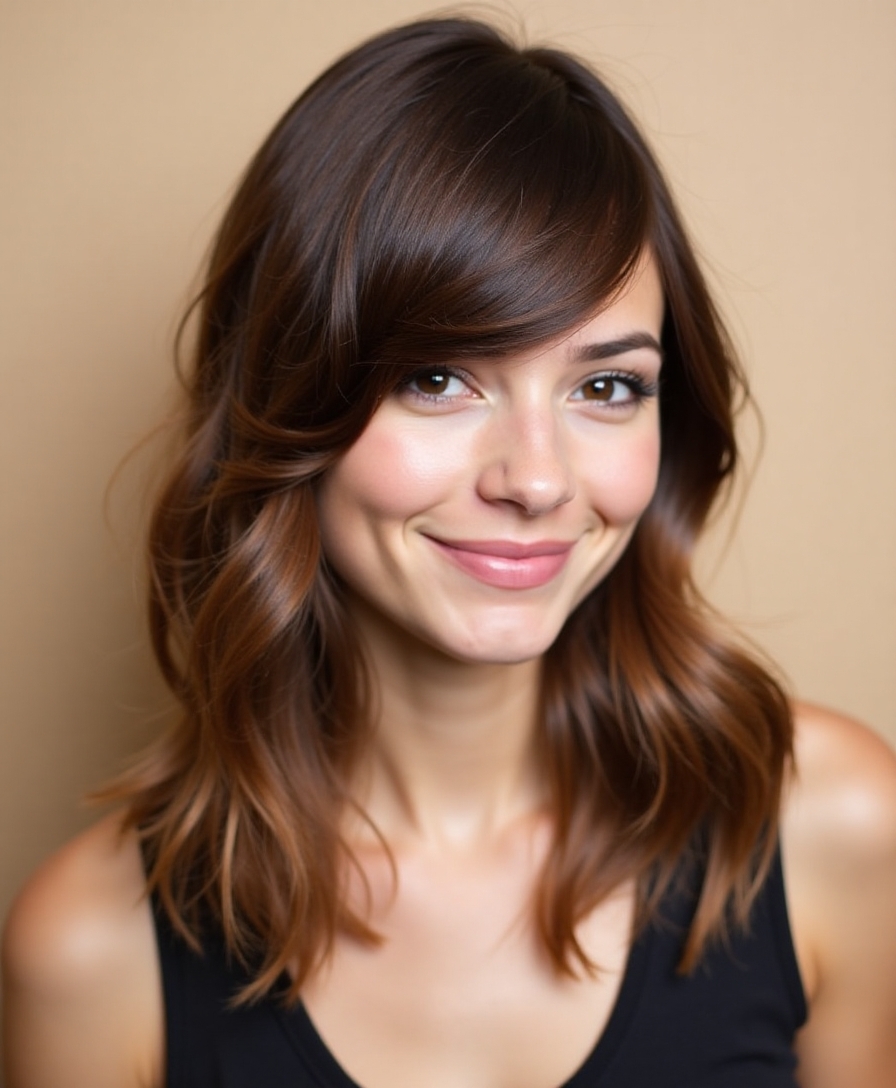
The slant is not simply cut shorter on one side; a good asymmetric fringe is built with real technique so it falls cleanly rather than looking blunt and lopsided. Understanding the basics helps you ask for exactly what you want.
- The line is cut on a diagonal, then point-cut into so the ends are soft instead of a hard, blocky slope.
- The fringe is sectioned to the right width for your part, so it sits and sweeps in the direction intended.
- It is always cut dry, or at least checked dry, so the stylist sees where the slant actually falls once it settles.
Pairing Them With Your Cut

An asymmetric fringe is never a standalone; it has to talk to the cut behind it. On a sharp bob, the slant echoes the geometry and sharpens the whole look. On long layers, it adds an unexpected edge to something otherwise soft and romantic.
The pairing that works best matches the boldness of the fringe to the cut. A dramatic slant on a precise, graphic cut reads as one strong idea, while the same slant on soft layers creates a deliberate contrast that can be just as striking. Our hairstyles with bangs guide shows more pairings.
This is the version I steer clients toward when they have a cut they already love but want to refresh it without starting over. A new fringe changes everything while leaving your length completely untouched.
How Often to Trim Them

The honest cost of any fringe is the trim schedule, and an asymmetric one is no different, since the angle blurs as it grows. Knowing the cadence up front saves the surprise later, and it is the question most people forget to ask.
- Plan on a shaping trim every three to five weeks to keep the slant clean and out of your eyes.
- Many salons trim a fringe for free or a few dollars between full cuts, so the cost is mostly your time.
- You can stretch it with clever styling, but a grown-out asymmetric line eventually just reads as untidy layers.
Asymmetric Bangs on Natural Texture

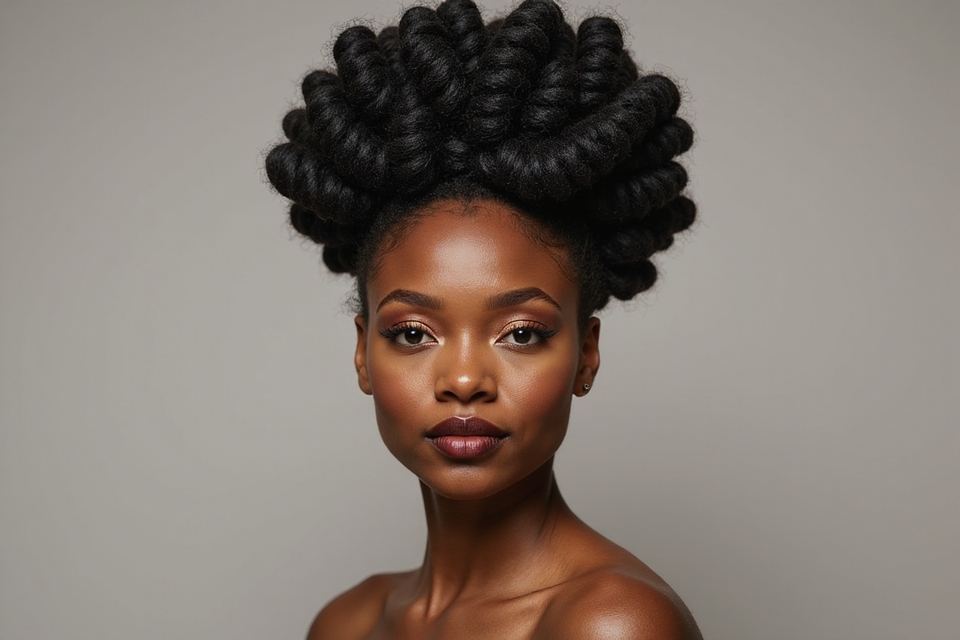
Asymmetric bangs are usually shown on straight hair, but they work beautifully on curly and coily texture too, as long as the cut respects the pattern. On natural texture the slant reads softer and more organic, the angle suggested by the shape rather than carved as a razor-sharp line.
The rule that matters most is to have them cut dry and in their natural state, so your stylist can see exactly where each curl falls and place the angle accordingly. Curls shrink as they dry, so a fringe cut wet ends up far shorter than you planned. The soft, worn-in angle is the charm, so lean into the texture rather than ironing it flat.
- Cut dry on curls so the slant lands where you expect once the hair springs up.
- Leave extra length to account for shrinkage, especially on tighter coils.
- Refresh the curl in the fringe with a little water and leave-in rather than heat, much like a feathered fringe.
Finishing With Accessories

Because an asymmetric fringe already draws the eye, it pairs beautifully with a well-placed accessory that follows its line rather than fighting it. A single pin, a small clip, or a thin headband tucked along the longer side frames the slant, much as face-framing layers would.
Restraint is what works: one accessory that complements the angle, not a handful competing with it. A bobby pin holding back the longer side turns the fringe into a half-pinned look, while a pretty clip at the part draws the eye up along the slant.
On a day the fringe is misbehaving or simply growing out, an accessory is the rescue I point clients to, pinning the long side back cleanly while still looking deliberate. It is the small finishing touch that makes the whole thing feel pulled together.
Asymmetric Bangs, Your Questions Answered
?Do asymmetric bangs suit every face shape?
Most of them, once the angle is matched to you. A diagonal line is especially flattering on round and square faces, since it breaks up width, while longer faces do best with a gentler slant and a fuller fringe. The angle is adjustable, which is exactly what makes the style so adaptable.
?How much upkeep do asymmetric bangs need?
A shaping trim every three to five weeks keeps the slant clean, since the angle blurs as it grows out. Many salons tidy a fringe for free between full cuts, so the real cost is your time more than your money. Daily styling is quick once the cut itself is right.
?Can I get asymmetric bangs on curly hair?
Yes, and they look lovely with a soft, organic slant. The one rule is to have them cut dry and in your natural curl pattern, because curls shrink as they dry and a wet cut finishes much shorter than planned. Lean into the texture rather than ironing it flat.
A Little Off-Center, Entirely on Purpose
If a standard fringe feels too safe, an asymmetric one is the small rebellion that changes your whole look without touching your length. The off-center line reads modern and confident, and the angle can be dialed from barely-there to boldly graphic depending on the day you are having and the face you are framing.
So if you are tempted, start with a gentle slant and grow into a bolder one as your confidence builds. Bring a photo, talk through your face shape and your texture with your stylist, and let the angle carry the rest. The best version is always the one cut for your own face, never copied straight from someone else’s.
Keep Reading